 Vorschau anzeigen
 Versenden
 Teilen
 Details anzeigen

 Herunterladen
 Ähnliche Objekte
 Röntgenaufnahme
 Diashow
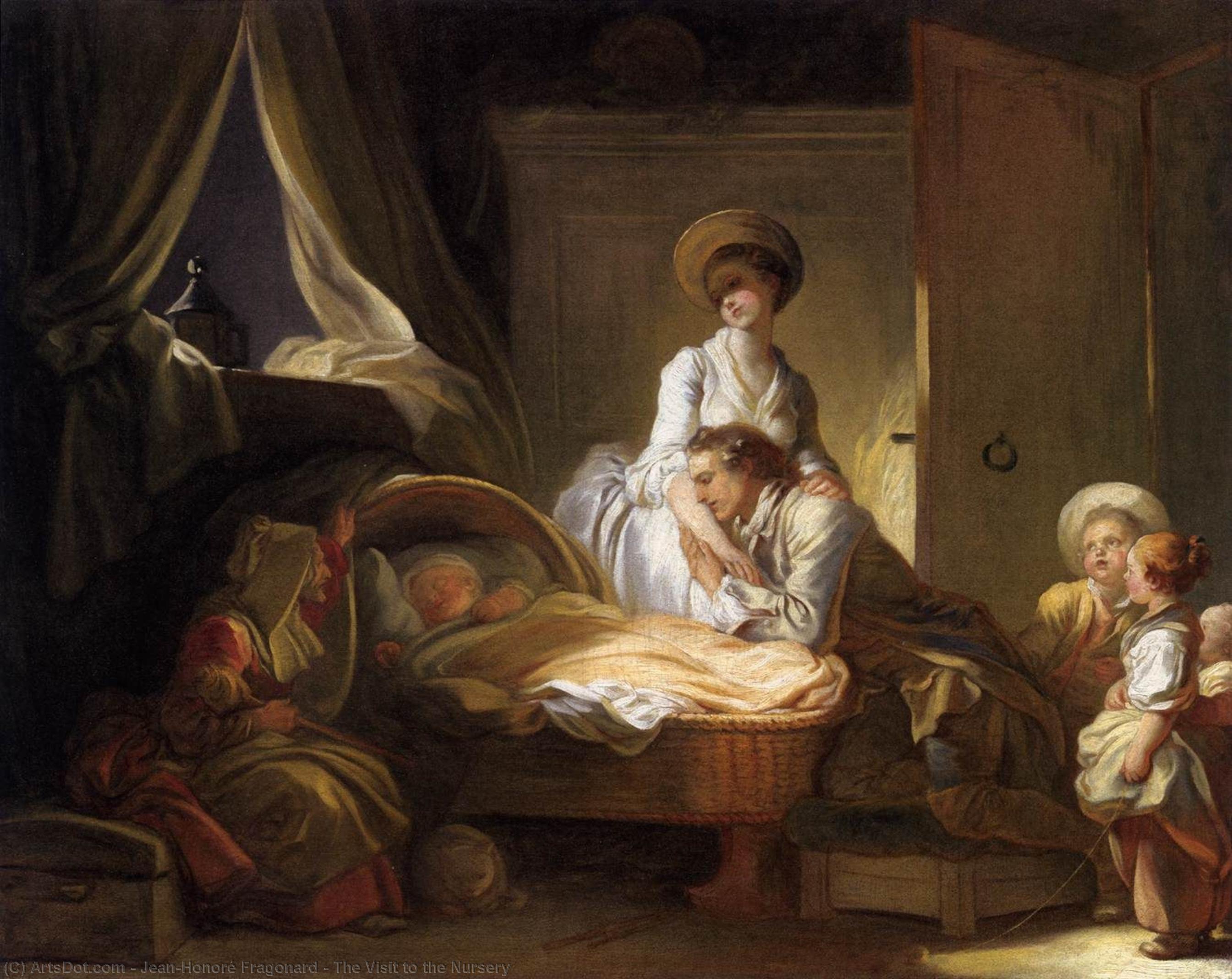
The Visit to the Nursery
 Oil On Canvas
- WallArt
- Rococo
 1775
1775 73.0 x 92.0 cm
 National Gallery of Art
 Weiterlesen
Handgefertigte Ölreproduktion
Handgemaltes Ölgemälde auf Leinwand in Ihrer Wunschgröße und mit Rahmen, auf Bestellung von unseren Künstlern angefertigt. ( Druck bestellen Bild kaufen)




P118B $10

P118H $10

P118W $10

P438Z $10

P508JH $12

P508YH $12

P805H $10

P805Z $10

P919BZ $10

P919G $10

P919XJ $10

P959ZH $10

P968JZ $12

W106C $8

W218G $10

W218JH $8

W218Y $10

W307PJ $10

W316G $10

W316PJ $8

W316Y $10

W398PJ $8

W4111J $10

W500HY $15

W500JH $15

W692G $12

W849H $8

W940BG $15

W953PJ $8




Wählen Sie aus unseren vordefinierten Formaten, die den ursprünglichen Proportionen des Kunstwerks entsprechen.

Sie können Ihre eigenen Maße eingeben, um einen bestimmten Rahmen oder Platz auszufüllen. Wenn die gewählte Größe nicht den Proportionen des Originalbildes entspricht, werden wir das Kunstwerk entweder beschneiden oder das Gemälde durch zusätzliche, handgemalte Elemente erweitern. Ein digitales Mockup wird Ihnen zur Genehmigung zugesandt, bevor die Produktion beginnt.
Bitte beachten Sie, dass die Bildschirmvorschau nicht die tatsächliche Beschneidung oder Erweiterung widerspiegelt. Nur das Mockup zeigt die endgültige Komposition exakt an.
Obwohl Sondermaße verfügbar sind, empfehlen wir, eine Größe aus der vordefinierten Liste zu wählen, um die ursprünglichen Proportionen beizubehalten.
Nach der Bestellung wird das ArtsDot.com-Team dem Kunden Anweisungen per E-Mail zusenden und eine Mockup-Vorschau bereitstellen.
Weltweiter Versand () in nur 3 bis 4 Wochen statt der üblichen 5 Wochen. (21 August). Keine Kompromisse bei der Qualität.

Kostenloser weltweiter Expressversand

Hochwertige Leinenleinwand

Umfassender Versicherungsschutz beim Versand

Zollgebühren-Rückerstattungsgarantie

Garantie für exakte Farbtreue

60 Tage Rückgaberecht (nur bei Mängeln)

100% Geld-zurück-Garantie

Mengenrabatt verfügbar
 Die Glasoption ist nur für Größen unter 110 cm verfügbar.

The Visit to the Nursery
Art der Reproduktion
Format der Reproduktion
-


Gesamtpreis
$ 338
Beschreibung des Kunstwerks
A Moment of Tender Vigilance: Jean-Honoré Fragonard’s “The Visit to the Nursery”
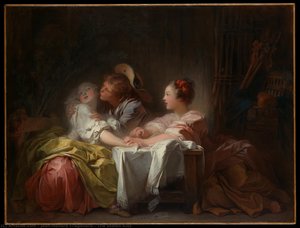
Jean-Honoré Fragonard's "The Visit to the Nursery," painted around 1775, is more than just a charming domestic scene; it’s a poignant meditation on motherhood, vulnerability, and the quiet strength of familial love. Held within the esteemed collection of the National Gallery of Art in Washington D.C., this Rococo masterpiece invites us into a world of delicate beauty and subtle emotion, capturing a fleeting moment of profound connection between a woman and her sleeping infant.
The painting immediately establishes a sense of serene tranquility. A young girl, dressed in a vibrant pink gown, playfully interacts with a man – likely the child’s father – while his wife attentively watches over their sleeping baby nestled within a woven basket. The composition is masterfully executed, adhering to the principles of Rococo art through its pyramidal structure and emphasis on graceful forms. Fragonard skillfully employs light and shadow to draw our attention to the central figures, particularly the faces of the women, imbuing them with an air of both tenderness and quiet concern.
The Language of Rococo: Style and Technique
Fragonard’s style is quintessential Rococo – characterized by its lightness, elegance, and a deliberate avoidance of rigid formality. Unlike the grand narratives favored in earlier periods, this painting focuses on intimate details and subtle gestures. The brushwork is remarkably fluid and loose, creating a sense of movement and spontaneity that mirrors the playful interaction between the figures. Notice how Fragonard uses delicate layering of paint to render the textures of the fabrics – the soft folds of the gown, the rough weave of the basket – adding depth and realism to the scene.
The color palette is dominated by warm, inviting tones: creams, browns, and golds create a sense of warmth and domestic comfort. Subtle touches of cooler blues and whites in the background provide contrast and enhance the overall harmony of the composition. The artist’s masterful use of chiaroscuro – the interplay of light and shadow – dramatically highlights key areas, drawing our eye to the faces of the figures and emphasizing their emotional expressions.
A Window into 18th-Century Life
"The Visit to the Nursery" offers a fascinating glimpse into the social and cultural landscape of 18th-century France. During this period, motherhood was increasingly valued as a cornerstone of society, and the image of the devoted mother nurturing her children held immense symbolic significance. Fragonard’s painting reflects these prevailing attitudes while simultaneously imbuing the scene with a sense of understated elegance and charm.
The setting itself – a nursery filled with simple comforts and surrounded by lush greenery – speaks to the growing emphasis on domesticity during this era. The inclusion of the young girl adds a touch of youthful innocence, further reinforcing the painting’s theme of familial love and continuity. It's important to note that Fragonard was working in a time when depictions of motherhood were evolving, moving away from purely religious themes towards more secular representations of family life.
Symbolism and Emotional Resonance
Beyond its surface beauty, “The Visit to the Nursery” is rich in symbolism. The sleeping infant represents vulnerability and innocence, while the attentive mother embodies protection and care. The man’s presence suggests a shared responsibility for nurturing the child, highlighting the importance of both parents in raising a family. The playful interaction between the girl and her father hints at the joys of childhood and the promise of future generations.
Ultimately, Fragonard's masterpiece evokes a powerful sense of tenderness and quiet devotion. It’s a reminder of the profound emotional bonds that connect us to our families and the enduring beauty of simple moments shared within the walls of home. The painting’s timeless appeal lies in its ability to resonate with viewers across generations, capturing a universal truth about the joys and challenges of motherhood.
Ähnliche Kunstwerke



Über den Künstler
Frühe Jahre und Ausbildung
Jean-Honoré Fragonard, ein bedeutender französischer Maler und Grafiker, wurde am 4. April 1732 in Grasse, Alpes-Maritimes geboren. Sein Vater, François Fragonard, war Handschuhmacher, und seine Mutter, Françoise Petit, Hausfrau. Im Alter von achtzehn Jahren wurde Fragonard an den renommierten Künstler François Boucher vermittelt, wo er seine Fähigkeiten verfeinerte.Künstlerische Karriere
Fragonards künstlerische Karriere lässt sich in mehrere Phasen unterteilen:- Frühwerk (1750er Jahre): Fragonard gewann 1752 den Prix de Rome mit einem Gemälde von Jeroboam, der zum goldenen Kalb opfert. Anschließend studierte er drei Jahre bei Charles-André van Loo.
- Italienische Einflüsse (1760er Jahre): Fragonard schloss Freundschaft mit dem Maler Hubert Robert und bereiste Italien, wo er zahlreiche Skizzen der lokalen Landschaft anfertigte. Diese Zeit sah die Entwicklung seines charakteristischen Stils.
- Rokoko-Reife (1770er Jahre): Fragonards Gemälde aus dieser Zeit, wie „Die Schaukel“ (1767) und „Der blinde Manns Fangspiel“ (1780), zeugen von seiner Meisterschaft des Rokostils.
- Neoklassizismus (späte 1770er Jahre): Fragonard experimentierte mit dem Neoklassizismus, wie in seinem Werk „Porträt von Denis Diderot“ (1769) zu sehen ist.
Wichtige Werke und Stil
Fragonards Stil zeichnet sich durch eine leichte Eleganz, sinnliche Darstellungen und lebendige Farben aus. Er bevorzugte Szenen des höfischen Lebens, Liebesbegegnungen und Porträts. Zu seinen bekanntesten Werken zählen:- „Die Schaukel“ (1767): Ein ikonisches Werk des Rokoko, das die Leichtigkeit und den Vergnügenstreib der Aristokratie einfängt.
- „Der blinde Manns Fangspiel“ (1780): Eine spielerische Szene, die Fragonards Fähigkeit zeigt, Bewegung und Emotionen darzustellen.
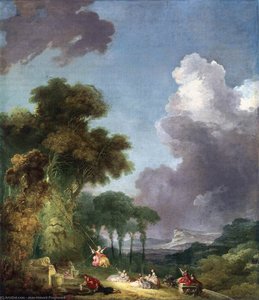
- „Die Bolt“: Zeigt eine idyllische Landschaftsszene mit Figuren.
- „Liebesgelübde“: Ein Gemälde, das romantische Gefühle und Zärtlichkeit vermittelt.
Vermächtnis und Bedeutung
Fragonards Werk hatte einen bedeutenden Einfluss auf die Entwicklung der französischen Malerei des 18. Jahrhunderts. Er gilt als einer der wichtigsten Vertreter des Rokoko und seine Werke werden für ihre Schönheit, Anmut und sinnliche Atmosphäre geschätzt. Sein Einfluss erstreckt sich bis in nachfolgende Kunstbewegungen hinein. Fragonards Gemälde befinden sich heute in zahlreichen Museen weltweit, darunter das Louvre-Museum. Er starb am 22. August 1806 in Paris.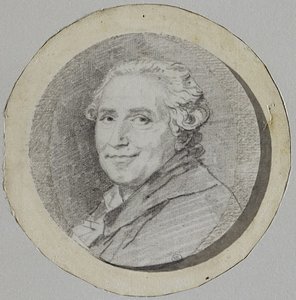
Jean-Honoré Fragonard
1732 - 1806 , Frankreich
Kurzinfos
- Beeinflusste Künstler: ['Alexis Grimou']
- Bemerkenswerte Werke:
- Der Schwinge
- Liebesgelübde
- Das Hemd entfernt
- Der Blinde Manns Spiel
- Geburtsdatum: 4. April 1732
- Geburtsort: Grasse, Frankreich
- Künstlerische Bewegung: Rokoko
- Nationalität: Französisch
- Sterbedatum: 22. August 1806
- Vollständiger Name: Jean-Honoré Fragonard
- Von Künstlern Beeinflusst:
- François Boucher
- Charles-André van Loo
Ähnliche Artikel
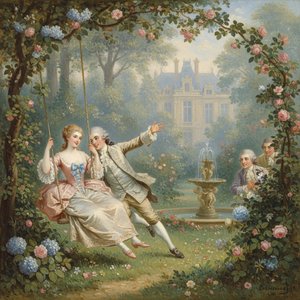
Fragonards Rokoko: Eine Ära der Liebe, des Vergnügens und des Lebensgefühls im Frankreich des 18. Jahrhunderts
Entdecken Sie die faszinierende Welt des Rokoko mit Fragonard! Erfahren Sie mehr über die Kunst, das Lebensgefühl und die Meisterwerke dieser einzigartigen Epoche im Frankreich des 18. Jahrhunderts – fundiert analysiert & hochwertig präsentiert.

Rococo Meisterwerke: Die Top 10, die eine Epoche prägten |
Entdecken Sie die Top 10 Rokoko Meisterwerke von Watteau, Boucher & Fragonard! Erfahren Sie die Geschichten hinter diesen ikonischen Gemälden und lassen Sie sich für Ihre Inneneinrichtung inspirieren. Hochwertige Kunstdrucke auf .

The Rococo Aesthetic: Opulence, Rebellion & the Pursuit of Pleasure in 18th-Century Art
Explore the opulent world of Rococo art! Discover its origins, key artists like Watteau & Boucher, and lasting influence on design. Expert insights for collectors & enthusiasts.
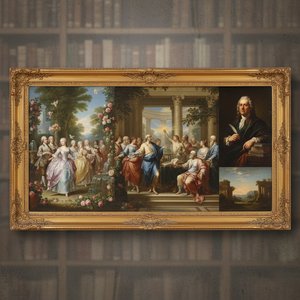
Illuminating the Enlightenment: A Comprehensive Exploration of 18th-Century Painting
Explore the captivating world of 18th-century painting! Discover Rococo's playful elegance & Neoclassicism’s Enlightenment ideals with expert insights into Fragonard, David, and more. A comprehensive guide for art enthusiasts.

Öl auf Leinwand: Eine historische und technische Erkundung eines zeitlosen künstlerischen Mediums
Entdecken Sie die faszinierende Welt der Ölmalerei! Von historischen Techniken bis zur modernen Anwendung – wir bieten Expertenwissen, Restaurierungstipps und hochwertige Reproduktionen. Jetzt informieren!