

 Vorschau anzeigen
 Versenden
 Teilen
 Details anzeigen

 Herunterladen
 Ähnliche Objekte
 Röntgenaufnahme
 Diashow
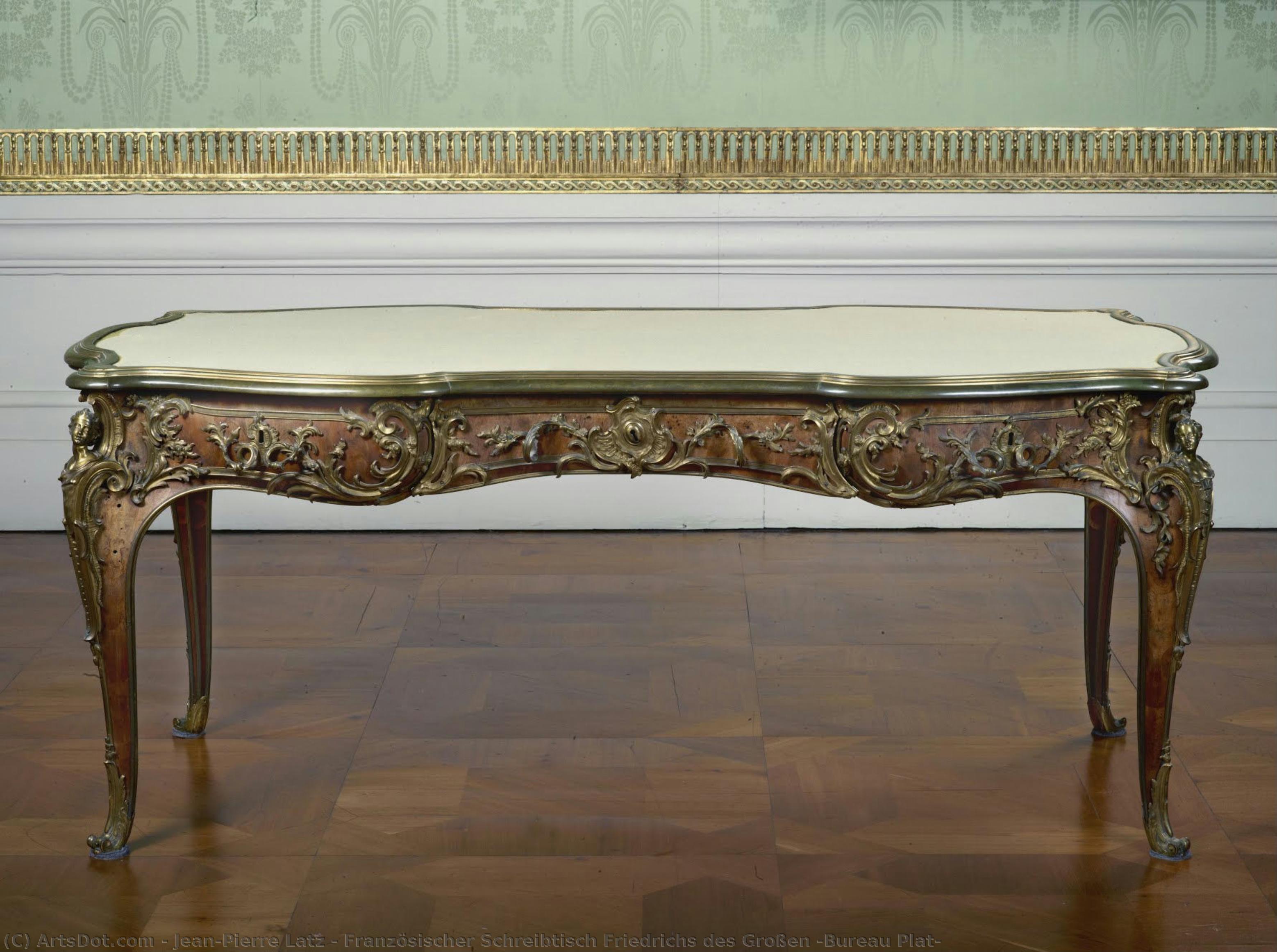
Französischer Schreibtisch Friedrichs des Großen (Bureau Plat)
 Oil On Canvas
- WallArt
- Baroque Rococo
Baroque Rococo
 1745
1745 81.0 x 194.0 cm
 Schloss Sanssouci
 Weiterlesen
Erwerben Sie ein hochauflösendes, optimiertes digitales Bild, das der Online-Vorschau weit überlegen ist.
Jede Datei wird von unseren hauseigenen Spezialisten mit modernsten Werkzeugen und fachmännischer manueller Retusche sorgfältig vorbereitet. Wir stellen sicher, dass jedes Bild eine außergewöhnliche Klarheit, präzise Farbgenauigkeit und feinste Details aufweist.
Die endgültige Datei wird innerhalb von 72 Stunden per E-Mail zugestellt und ist für den sofortigen Einsatz in professionellen, redaktionellen und Druckumgebungen optimiert. Es handelt sich um dieselbe Qualität, der führende Designstudios, Verlage und Galerien vertrauen.
Digitales Bild
Laden Sie eine hochauflösende Datei für die persönliche Präsentation, den Druck und kreative Projekte herunter. ( Druck bestellen Handgemalte Reproduktion bestellen)
In jeder Bestellung digitaler Bilder enthalten
Professionelle digitale Bereitstellung, garantiert
Wenn Sie sich für ArtsDot.com entscheiden, erhalten Sie nicht nur ein Bild – Sie erhalten ein professionell aufbereitetes digitales Kunstwerk, das mit höchster Präzision erstellt und durch eine Zufriedenheitsgarantie abgesichert wird. Hier ist alles, was automatisch mit Ihrer Bestellung geliefert wird:

Schnelle E-Mail-Zustellung
Ihre hochauflösende digitale Bilddatei wird Ihnen innerhalb von 72 Stunden nach der Bestellung per E-Mail zugestellt – bereit zur sofortigen Verwendung.

KI-optimierte digitale Datei
Ihre Kunstwerke werden professionell mithilfe fortschrittlicher KI-Tools und manueller Bearbeitung optimiert, um maximale Detailtreue, Klarheit und Farbgenauigkeit zu gewährleisten.

Lebenslanger kostenloser Neudruckservice
Datei versehentlich gelöscht oder verloren? Keine Sorge – wir senden sie Ihnen jederzeit kostenlos erneut zu.

Keine Einfuhrgebühren – jemals
Genießen Sie Ihr Kunstwerk sofort ohne Zollgebühren, Einfuhrabgaben oder Versandkosten – digitale Downloads sind immer steuerfrei.

Garantierte Farbtreue
Wir garantieren, dass Ihr digitales Bild mithilfe professioneller Werkzeuge und Farbmanagement die Originalfarben so präzise wie möglich wiedergibt.

60-Tage-Zufriedenheitsgarantie
Sollten Sie mit Ihrem digitalen Bild nicht zufrieden sein, werden wir es überarbeiten oder Ihnen innerhalb von 60 Tagen 100% erstatten – ohne Wenn und Aber.

100% Geld-zurück-Garantie
Nicht zufrieden? Erhalten Sie innerhalb von 60 Tagen nach Erhalt Ihrer digitalen Datei eine vollständige Rückerstattung – ohne Angabe von Gründen.

Rabatte bei Großbestellungen
3 Bilder kaufen, 10% sparen – 5 Bilder kaufen, 15% sparen – Ab 10 Bildern 20% sparen. Ideal für kreative Projekte, Galerien und Agenturen.
A Royal Legacy: The French Desk of Frederick II
This exquisite painting captures “Bureau Plat,” more commonly known as the French desk of Frederick II, King of Prussia, a pivotal artifact in the history of European furniture and a testament to the refined tastes of the Enlightenment. Created by Jean-Pierre Latz around 1745, this piece transcends mere functionality; it’s a tangible link to a monarch's personal space, a window into his world, and a remarkable example of Rococo craftsmanship.
- Subject Matter: The desk itself is the central focus – a meticulously crafted table designed for both work and contemplation. Its substantial size, evidenced by the dimensions of 81 x 194 cm, speaks to Frederick II’s status and the importance placed on his personal affairs.
- Artist's Hand: Jean-Pierre Latz, born in Cologne around 1691 and passing away in Paris in 1754, was a master of his craft. His work exemplifies the Rococo style – characterized by its flowing curves, opulent ornamentation, and playful asymmetry – that dominated French furniture design during the reign of Louis XV.
- Provenance: The desk’s journey through history is as fascinating as its creation. Initially purchased by Frederick II himself in Paris, it became a cherished possession until its eventual acquisition by Kronprinz Wilhelm in the early 20th century. Its subsequent ownership included prominent antiquities dealers and ultimately returned to the German state before being acquired by the Kulturstiftung der Länder in 2006.
The painting itself, executed with a delicate hand, highlights the desk’s key features. The white tabletop provides a pristine canvas for the intricate carvings that adorn the legs and sides – a hallmark of Latz's style. Three large, shallow drawers offer ample storage, while the overall design exudes an air of restrained elegance, reflecting the sophisticated sensibilities of the era.
Rococo Style and Decorative Techniques
Latz’s work is deeply rooted in the Rococo aesthetic. The flowing lines, asymmetrical arrangements, and shell motifs – a recurring symbol of fertility and abundance – are all characteristic of this style. The use of gilded accents, subtly suggested in the painting's frame, would have further enhanced the desk’s luxurious appearance. Latz employed advanced techniques for wood carving, utilizing precisely shaped components to achieve an almost seamless flow of design. The level of detail suggests a workshop employing skilled artisans dedicated to producing a piece of exceptional quality.
- Carving Techniques: Latz likely utilized techniques such as chip carving and incised detailing to create the intricate patterns, demonstrating mastery over wood grain and achieving remarkable precision.
- Materials: The desk was most probably constructed from walnut or rosewood – highly prized hardwoods for their rich color and durability – further contributing to its value and prestige.
Symbolism and Historical Context
The French desk of Frederick II is more than just a beautiful object; it’s a symbol of power, intellect, and refined taste. Frederick II, known as the “Old Lion of Prussia,” was a renowned military strategist, philosopher, and patron of the arts. The desk served as his workspace, reflecting his intellectual pursuits and administrative duties. Its acquisition by the state underscores its importance as a cultural artifact and a tangible link to Prussian history.
The desk’s journey through various owners – from royal princes to antiquities dealers – reflects the fluctuating fortunes of Prussia during the 18th and 20th centuries. Its eventual return to Schloss Sanssouci, Frederick II's beloved retreat, represents a poignant restoration of a lost piece of history.
Emotional Impact and Artistic Value
This painting offers a captivating glimpse into a bygone era, inviting the viewer to imagine Frederick II seated at his desk, contemplating strategy or engaging in scholarly pursuits. The meticulous detail and skillful execution evoke a sense of wonder and appreciation for the artistry of Jean-Pierre Latz and his contemporaries. A reproduction of this artwork would be a stunning addition to any collection, bringing a touch of historical elegance and artistic sophistication to any interior space.
Ähnliche Kunstwerke






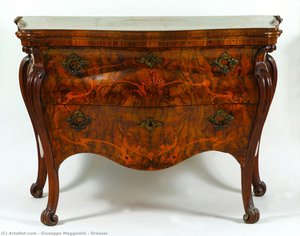
Biografie des Künstlers
Jean-Pierre Latz: The Sculptor of Parisian Rococo Elegance
Jean-Pierre Latz (c. 1691 – 1754) stands as a pivotal figure in the history of French furniture craftsmanship during the reign of Louis XV, embodying the zenith of Rococo style and demonstrating unparalleled technical skill. Born near Cologne, Germany, his early life remains shrouded in relative obscurity, yet he swiftly ascended to prominence within Paris’s vibrant artisan community, establishing himself as one of the most celebrated ébénistes – royal cabinetmakers – of his era. His legacy endures not merely for the beauty of his creations but also for his role in shaping artistic trends and securing a place among the masters of decorative arts.Early Training and Parisian Arrival
Latz’s formative years were spent honing his craft in Cologne, where he received training as a cabinetmaker—a profession deeply rooted in Germanic tradition. However, driven by ambition and opportunity, he relocated to Paris around 1719, immersing himself in the cosmopolitan atmosphere of the French capital and joining the guild of artisans. This decisive move proved instrumental in propelling his career forward, allowing him him to collaborate with influential patrons and gain access to innovative materials and techniques. Within a decade, Latz had secured a position as ébéniste privilégié du roi—a royal appointment granting him exclusive privileges—underscoring the esteem accorded to his artistry by the court. This patronage ensured he could experiment with new styles and push the boundaries of craftsmanship.The Rococo Style: Sculpture in Veneers
Latz’s furniture is instantly recognizable for its distinctive Rococo aesthetic, characterized by exuberant ornamentation and a masterful fusion of sculptural form and delicate inlay work. Unlike earlier styles prioritizing functionality, Latz embraced the Rococo impulse toward theatricality and sensory delight. He skillfully employed richly figured tropical veneers—such as satinwood, rosewood, and ebony—combined with meticulously crafted gilt-bronze mounts to create pieces that defied convention. These mounts weren’t merely decorative; they were sculpted with astonishing precision, depicting stylized floral motifs and swirling arabesques that echoed the undulating curves of Rococo architecture. The technique involved chasing – hammering delicate patterns onto the bronze surface – elevating it beyond mere embellishment into a form of artistic expression itself. He sought to impress viewers with grandeur and beauty—a hallmark of the era’s artistic sensibilities.Notable Commissions and Artistic Influences
Latz’s workshop produced an astonishing array of commissions for aristocratic families and royal residences, cementing his reputation as one of Paris's foremost craftsmen. Among his most celebrated achievements is the “Slant-Front Desk” housed in Stavros Niarchos Collection, Paris—a testament to his mastery of lacquer technique and sculptural design. This desk exemplifies Latz’s ability to capture the spirit of the Rococo movement, blending elegance with structural integrity. Furthermore, he collaborated closely with fellow artists like François Boucher, whose paintings mirrored Latz's penchant for opulent color palettes and dynamic compositions. The influence of Italian Baroque sculpture—particularly Bernini—can be discerned in Latz’s bold use of dramatic poses and expressive drapery within his furniture designs. He drew inspiration from the grandeur and dynamism of Baroque art, adapting its principles to the refined aesthetic of Rococo.Legacy and Enduring Recognition
Jean-Pierre Latz died in 1754, leaving behind a workshop that continued to produce exceptional pieces for decades after his passing. His work commands considerable admiration among collectors and historians alike, frequently fetching impressive sums at auction—a testament to its enduring beauty and artistic significance. More broadly, Latz’s contribution to the Rococo style established him as a pivotal figure in shaping Parisian decorative taste during Louis XV's reign. He remains an exemplar of craftsmanship, innovation, and artistic vision—a sculptor who transformed wood and bronze into emblems of aristocratic splendor and cemented his place among the titans of eighteenth-century art. His enduring influence can be seen in subsequent generations of furniture makers who sought to emulate his unparalleled skill and aesthetic sensibility.
Jean-Pierre Latz
1754 , Deutschland
Kurzinfos
- Artistic Movement Or Style: Rokoko
- Artists Or Movements Influenced By This Artist: ['François Boucher']
- Date Of Birth: c. 1691
- Date Of Death: 1754
- Full Name: Jean-Pierre Latz
- Nationality: Deutsch
- Notable Artworks:
- Uhr auf Dokumentenschrank
- Regal Parlor Organ
- Französischer Schreibtisch Friedrichs des Großen
- Place Of Birth: Köln, Deutschland

