

 Vorschau anzeigen
 Versenden
 Teilen
 Details anzeigen

 Herunterladen
 Ähnliche Objekte
 Röntgenaufnahme
 Diashow
 Statistiken
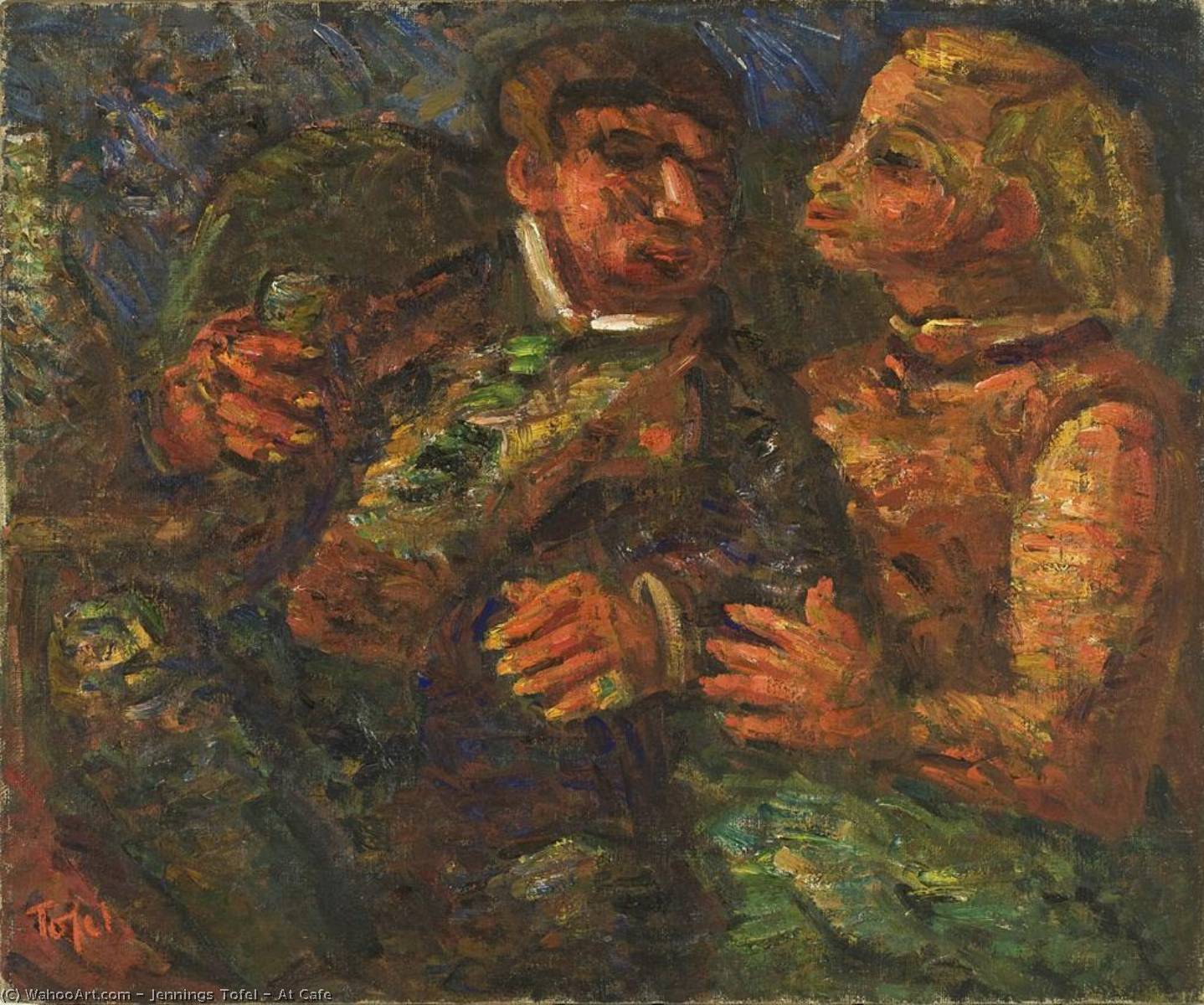
At Cafe
 1940
1940 51.0 x 61.0 cm
 Weiterlesen
Erwerben Sie ein hochauflösendes, optimiertes digitales Bild, das der Online-Vorschau weit überlegen ist.
Jede Datei wird von unseren hauseigenen Spezialisten mit modernsten Werkzeugen und fachmännischer manueller Retusche sorgfältig vorbereitet. Wir stellen sicher, dass jedes Bild eine außergewöhnliche Klarheit, präzise Farbgenauigkeit und feinste Details aufweist.
Die endgültige Datei wird innerhalb von 72 Stunden per E-Mail zugestellt und ist für den sofortigen Einsatz in professionellen, redaktionellen und Druckumgebungen optimiert. Es handelt sich um dieselbe Qualität, der führende Designstudios, Verlage und Galerien vertrauen.
Digitales Bild
Laden Sie eine hochauflösende Datei für die persönliche Präsentation, den Druck und kreative Projekte herunter. ( Zu Druck wechseln Handgemalte Reproduktion bestellen)
In jeder Bestellung digitaler Bilder enthalten
Professionelle digitale Bereitstellung, garantiert
Wenn Sie sich für ArtsDot.com entscheiden, erhalten Sie nicht nur ein Bild – Sie erhalten ein professionell aufbereitetes digitales Kunstwerk, das mit höchster Präzision erstellt und durch eine Zufriedenheitsgarantie abgesichert wird. Hier ist alles, was automatisch mit Ihrer Bestellung geliefert wird:

Schnelle E-Mail-Zustellung
Ihre hochauflösende digitale Bilddatei wird Ihnen innerhalb von 72 Stunden nach der Bestellung per E-Mail zugestellt – bereit zur sofortigen Verwendung.

KI-optimierte digitale Datei
Ihre Kunstwerke werden professionell mithilfe fortschrittlicher KI-Tools und manueller Bearbeitung optimiert, um maximale Detailtreue, Klarheit und Farbgenauigkeit zu gewährleisten.

Lebenslanger kostenloser Neudruckservice
Datei versehentlich gelöscht oder verloren? Keine Sorge – wir senden sie Ihnen jederzeit kostenlos erneut zu.

Keine Einfuhrgebühren – jemals
Genießen Sie Ihr Kunstwerk sofort ohne Zollgebühren, Einfuhrabgaben oder Versandkosten – digitale Downloads sind immer steuerfrei.

Garantierte Farbtreue
Wir garantieren, dass Ihr digitales Bild mithilfe professioneller Werkzeuge und Farbmanagement die Originalfarben so präzise wie möglich wiedergibt.

100-Tage-Zufriedenheitsgarantie
Wenn Sie mit Ihrem digitalen Bild nicht zufrieden sind, werden wir es überarbeiten oder 100% innerhalb von 100 Tagen erstatten – ohne Wenn und Aber.

100% Geld-zurück-Garantie
Nicht zufrieden? Erhalten Sie innerhalb von 100 Tagen nach Erhalt Ihrer digitalen Datei eine vollständige Rückerstattung – ohne Wenn und Aber.

Rabatte bei Großbestellungen
3 Bilder kaufen, 10% sparen – 5 Bilder kaufen, 15% sparen – Ab 10 Bildern 20% sparen. Ideal für kreative Projekte, Galerien und Agenturen.
Artistic Style and Composition
The brushwork in "At Cafe" is loose and expressive, suggesting movement and dynamism. The use of color is also noteworthy, with the artist employing a range of hues to create a warm and inviting atmosphere. The composition of the painting is well-balanced, with the two main subjects seated at a large table, engaged in conversation. The addition of another person in the background adds depth to the piece, while the two cups on the table provide a sense of intimacy. Key Features of the painting include:- The use of oil on canvas, which gives the artwork a rich and textured feel
- The loose and expressive brushwork, which adds to the overall sense of movement and energy
- The beautiful composition, which balances the main subjects with the background elements
Comparison with Other Artists
The style of Jennings Tofel can be compared to that of other notable artists, such as Pavel Filonov, who is known for his Analytical Realism. For example, the painting Faces by Pavel Filonov showcases a similar use of abstract composition and expressive brushwork. Similarly, the works of Pierre-Auguste Renoir, such as Ambroise Vollard Dressed as a Toreador, demonstrate a similar ability to capture the essence of everyday life.The Somerville College, Oxford, United Kingdom is also home to numerous masterpieces from renowned artists, and its collection can be seen as a testament to the enduring power of art. For more information on the artworks available at ArtsDot.com, including those by Jennings Tofel, please visit our website: /en/art/show/art-aqzv4m-en/
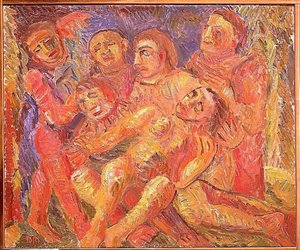
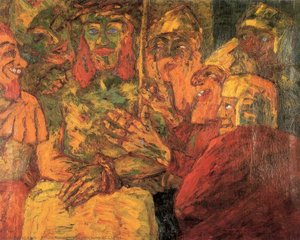
Ähnliche Kunstwerke








Biografie des Künstlers
Jennings Tofel: A Sculptor and Painter of Social Witness
Jennings Tofel (originally Idel Taflewicz), a name perhaps less familiar than many of his contemporaries, nevertheless stands as a significant figure in 20th-century American art. Born in Tomaszów Mazowiecki, Poland, in 1891, and immigrating to New York City with his family in 1905, Tofel’s life was shaped by displacement, hardship, and a profound engagement with the social realities of his time. His artistic journey, spanning decades and continents, reveals a persistent exploration of themes like labor, migration, and the complexities of the African American experience – all rendered through a distinctive blend of Expressionism, Social Realism, and a deeply personal visual language.
Tofel’s early years were marked by physical challenges. A childhood injury resulted in a permanently deformed shoulder, an impediment that profoundly influenced his artistic approach. Rather than shying away from this imperfection, he embraced it as a visible marker of human vulnerability, imbuing his figures with a palpable sense of struggle and resilience. This physicality is immediately apparent in works like “Comrades” (1943), a dynamic composition depicting laborers engaged in strenuous work – a testament to the enduring spirit of those who toiled under difficult conditions. The painting’s raw energy and intense color palette convey both the hardship and the camaraderie found within these communities.
His artistic development was shaped by a series of pivotal experiences, including two extended stays in Europe during the 1920s. These journeys provided him with exposure to European avant-garde movements while simultaneously reconnecting him with his Polish heritage. Returning to New York, Tofel established himself as a working artist, often residing in temporary spaces and relying on the support of patrons like Arthur Granick, who later compiled a comprehensive monograph documenting his career. His work during this period reflects a growing interest in social commentary, fueled by witnessing the struggles of immigrant communities and the rise of racial tensions within American society.
Thematic Concerns and Artistic Style
Tofel’s art is characterized by a potent combination of emotional intensity and formal innovation. He was deeply influenced by Expressionism, evident in his use of distorted forms, exaggerated gestures, and emotionally charged color palettes. However, unlike some of the more purely abstract Expressionists, Tofel remained firmly rooted in figurative representation, employing it to convey profound social and psychological truths. His figures are rarely idealized; instead, they are presented with a brutal honesty that confronts viewers with the realities of their circumstances.
A key element of his artistic vision is his engagement with the African American experience. Works like “Elegy” (1943) powerfully depict scenes of mourning and loss within Black communities, reflecting the devastating impact of racism and social injustice. The painting’s somber mood and carefully orchestrated composition evoke a sense of profound grief while simultaneously celebrating the resilience of the human spirit. His exploration of this subject matter was particularly significant during a time when mainstream American art largely overlooked or misrepresented the experiences of African Americans.
Furthermore, Tofel's work frequently grappled with themes of migration and displacement. His own experience as an immigrant profoundly shaped his artistic perspective, leading him to explore the challenges faced by those seeking new lives in a foreign land. The figures in “Strife” (1943), for example, embody the anxieties and uncertainties associated with navigating unfamiliar environments and confronting systemic barriers.
Key Works and Recognition
Among Tofel’s most notable works are "Comrades" (1943) and "Strife" (1943), both powerful depictions of labor and social struggle. “Elegy” (1943), a deeply moving portrayal of mourning, stands as one of his most emotionally resonant paintings. His sculpture, often characterized by its dynamic energy and expressive forms, further demonstrates his versatility as an artist.
Despite not achieving widespread fame during his lifetime, Tofel’s work has gained increasing recognition in recent years. A retrospective exhibition at the Zabriskie Gallery in New York in 1964 brought renewed attention to his oeuvre, and his art is now featured prominently in museum collections across the United States. The Artist's Gallery in New York continued to showcase his paintings until his death in 1959.
Legacy and Historical Significance
Jennings Tofel’s legacy lies not only in his individual artistic achievements but also in his commitment to using art as a vehicle for social commentary. His unflinching portrayal of the struggles faced by marginalized communities – particularly African Americans and immigrant laborers – offers a valuable counterpoint to more celebratory narratives of American progress. His work serves as a poignant reminder of the enduring challenges of inequality and injustice, urging viewers to confront uncomfortable truths and advocate for a more equitable society.
The Kenkeleba House in New York City, a unique museum dedicated to showcasing art from the African Diaspora, plays a crucial role in preserving and promoting Tofel’s legacy. The museum's collection highlights his contributions to the field of Social Realism Art, demonstrating his ability to capture the essence of human experience with both sensitivity and power.
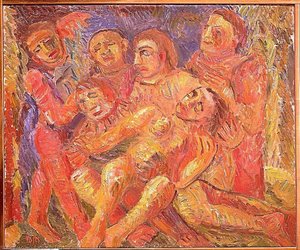
jennings tofel
1891 - 1959
Kurzinfos
- Artistic Movement Or Style: Social realism, Expressionism
- Artists Or Movements Influenced By This Artist: ['Kenkeleba House']
- Artists Who Influenced This Artist:
- Oscar Bluemner
- Gaston Lachaise
- Date Of Birth: 18 Oct 1891
- Date Of Death: 7 Sep 1959
- Full Name: Jennings (Yehuda) Tofel
- Nationality: American
- Notable Artworks:
- Comrades
- Elegy
- At Cafe
- Place Of Birth: Tomaszów Mazowiecki, Poland