

 Vorschau anzeigen
 Versenden
 Teilen
 Details anzeigen

 Herunterladen
 Ähnliche Objekte
 Röntgenaufnahme
 Diashow
 Statistiken
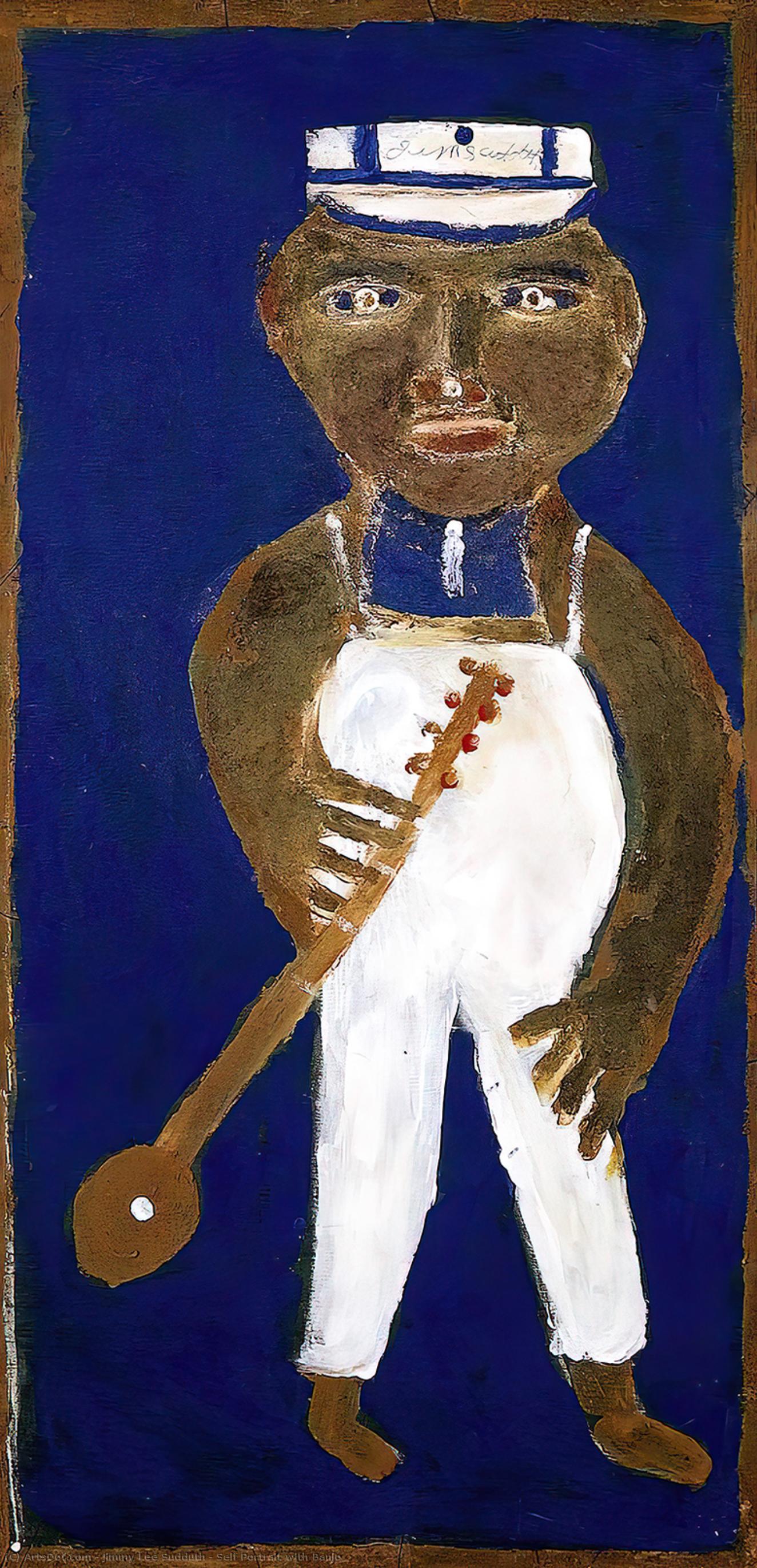
Self-Portrait with Banjo
 1986
1986 125.0 x 64.0 cm
 Weiterlesen
Giclée / Kunstdruck
Giclée- oder Leinwanddruck in Museumsqualität mit schneller Produktion und flexiblen Veredelungsoptionen. ( Handgemalte Reproduktion bestellen Zum digitalen Bild wechseln)




































Wählen Sie aus unseren vordefinierten Formaten, die den ursprünglichen Proportionen des Kunstwerks entsprechen.

Sie können Ihre eigenen Maße eingeben, um ein bestimmtes Format oder einen speziellen Platz einzupassen. Wenn das von Ihnen gewählte Format nicht den Proportionen des Originalbildes entspricht, werden wir das Kunstwerk entweder beschneiden oder das Bild mit einem gespiegelten oder einfarbigen Rand erweitern. Ein digitaler Entwurf wird Ihnen zur Genehmigung zugesandt, bevor die Produktion beginnt.
Bitte beachten Sie, dass die Vorschau auf dem Bildschirm nicht den tatsächlichen Zuschnitt oder die Erweiterung widerspiegelt. Nur der Entwurf zeigt die endgültige Komposition präzise an.
Obwohl Sondermaße verfügbar sind, empfehlen wir die Auswahl eines Maßes aus der vordefinierten Liste, um die ursprünglichen Proportionen zu bewahren.
Weltweiter Versand () innerhalb von 2 Wochen statt der üblichen 4/5 Wochen. (10 September)

Kostenloser weltweiter Expressversand

Hochwertige Leinenleinwand

Umfassender Versicherungsschutz beim Versand

Zollgebühren-Rückerstattungsgarantie

Garantie für exakte Farbtreue

100-Tage-Rückgaberecht (nur bei Mängeln)

100% Geld-zurück-Garantie

Mengenrabatt verfügbar
 Die Glasoption ist nur für Größen unter 110 cm verfügbar.

Self-Portrait with Banjo
Giclée / Kunstdruck
Format der Reproduktion
-


Gesamtpreis
$ 62
Ähnliche Kunstwerke



Über den Künstler
Jimmy Lee Sudduth: A Visionary of the Rural South
Born on March 10, 1910, in Caines Ridge, Alabama—a remote corner of the rural South steeped in folklore and a deep connection to the land—Jimmy Lee Sudduth’s life was one inextricably linked to his art. He wasn't formally trained; he didn’t study technique or theory. Instead, his artistic journey began organically, fueled by observation, instinct, and an intimate understanding of the materials at hand. Sudduth’s story is a remarkable testament to the power of self-taught artistry, revealing a profound connection between place, culture, and creative expression.
Growing up on a farm instilled in Sudduth a reverence for nature—a respect that permeated his work. His early years were spent surrounded by the rhythms of rural life: tending crops, observing animals, and absorbing the colors and textures of the natural world. He began creating rudimentary figures from wood scraps and drawing directly onto tree trunks with charcoal, honing his observational skills and developing a unique visual language. These initial explorations laid the foundation for his later, more ambitious projects – a testament to the enduring human impulse to create, regardless of formal instruction.
The Language of Mud and Found Materials
Sudduth’s artistic process was utterly unconventional, rooted in resourcefulness and an almost alchemical approach to materials. He eschewed traditional paints and canvases, instead utilizing a diverse range of readily available substances: mud, dirt, berries, coffee grounds, soot, pine needles, and even discarded industrial products like syrup and motor oil. His fingers became his brushes—a deliberate rejection of conventional tools that reflected his deep connection to the tactile nature of his materials. He meticulously mixed pigments with sugar water, soft drinks, and caulk to achieve desired hues and textures, demonstrating a remarkable understanding of color mixing through experimentation.
The surfaces he chose were equally significant – discarded plywood, doors salvaged from demolished buildings, and even railroad tracks—each imbued with its own history and character. This practice of utilizing “found” materials wasn’t merely economical; it was deeply symbolic, reflecting Sudduth's connection to the land and his ability to transform the overlooked into something beautiful and meaningful. His work became a visual record of his environment, a celebration of the beauty hidden within the mundane.
Themes and Subjects: A Reflection of Rural Life
Sudduth’s paintings are populated by figures drawn from his immediate surroundings—family members, farm animals, neighbors, and occasional glimpses of larger cities like New York. He frequently depicted self-portraits, often as a blues musician, reflecting his lifelong passion for music and his deep connection to the African American culture of rural Alabama. His subjects weren’t idealized; they were rendered with an honest and unpretentious quality, capturing the essence of everyday life in the South.
Beyond portraits, Sudduth depicted scenes from rural life—farm machinery, landscapes, and architectural details—all executed with a distinctive visual style characterized by bold colors, simplified forms, and a palpable sense of energy. His work is not simply representational; it’s infused with emotion and memory, offering a poignant glimpse into the soul of a forgotten corner of America.
Recognition and Legacy
Despite his talent and growing recognition, Sudduth remained largely unknown for much of his life. His first public exhibition occurred in 1968 at Stillman College in Tuscaloosa, followed by a significant show in Fayette in 1971 that garnered regional attention. His work gained wider acclaim in the late 1970s and early 1980s, culminating in invitations to exhibit at prestigious institutions such as the Smithsonian Institution’s Bicentennial Festival of American Folk Life (1976) and the New Orleans Museum of Art (1995). He was honored with the Alabama Arts Award in 1995, solidifying his place as a pivotal figure in Southern outsider art.
Today, Jimmy Lee Sudduth’s work is celebrated for its raw honesty, emotional depth, and unique artistic vision. His paintings are featured in collections across the United States, including the Smithsonian American Art Museum, the High Museum of Art, and the Birmingham Museum of Art. Sudduth's legacy extends beyond his individual creations; he represents a powerful reminder that art can emerge from unexpected places—from the hands of those who have no formal training but possess an unwavering passion for expression. He stands as one of the early masters of Southern self-taught art, a testament to the enduring spirit of creativity and the beauty found in the simplest of materials.
jimmy lee sudduth
1910 - 2007
Kurzinfos
- Artistic Movement Or Style: Outsider art, Finger painting
- Artists Or Movements Influenced By This Artist: ['']
- Artists Who Influenced This Artist: ['']
- Date Of Birth: March 10, 1910
- Date Of Death: September 2, 2007
- Full Name: Jimmy Lee Sudduth
- Nationality: American
- Notable Artworks:
- Bicycle Man
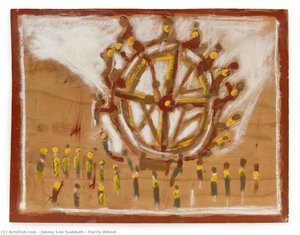
- Ferris Wheel
- Large Blue House
- Large Toto
- New York City Skyline
- Place Of Birth: Fayette, Alabama, USA