

 Vorschau anzeigen
 Versenden
 Teilen
 Details anzeigen

 Herunterladen
 Ähnliche Objekte
 Röntgenaufnahme
 Diashow
 Statistiken
Cabeza de campesino catalán 1


 Weiterlesen
Erwerben Sie ein hochauflösendes, optimiertes digitales Bild, das der Online-Vorschau weit überlegen ist.
Jede Datei wird von unseren hauseigenen Spezialisten mit modernsten Werkzeugen und fachmännischer manueller Retusche sorgfältig vorbereitet. Wir stellen sicher, dass jedes Bild eine außergewöhnliche Klarheit, präzise Farbgenauigkeit und feinste Details aufweist.
Die endgültige Datei wird innerhalb von 72 Stunden per E-Mail zugestellt und ist für den sofortigen Einsatz in professionellen, redaktionellen und Druckumgebungen optimiert. Es handelt sich um dieselbe Qualität, der führende Designstudios, Verlage und Galerien vertrauen.
Digitales Bild
Laden Sie eine hochauflösende Datei für die persönliche Präsentation, den Druck und kreative Projekte herunter. ( Zu Druck wechseln Handgemalte Reproduktion bestellen)
In jeder Bestellung digitaler Bilder enthalten
Professionelle digitale Bereitstellung, garantiert
Wenn Sie sich für ArtsDot.com entscheiden, erhalten Sie nicht nur ein Bild – Sie erhalten ein professionell aufbereitetes digitales Kunstwerk, das mit höchster Präzision erstellt und durch eine Zufriedenheitsgarantie abgesichert wird. Hier ist alles, was automatisch mit Ihrer Bestellung geliefert wird:

Schnelle E-Mail-Zustellung
Ihre hochauflösende digitale Bilddatei wird Ihnen innerhalb von 72 Stunden nach der Bestellung per E-Mail zugestellt – bereit zur sofortigen Verwendung.

KI-optimierte digitale Datei
Ihre Kunstwerke werden professionell mithilfe fortschrittlicher KI-Tools und manueller Bearbeitung optimiert, um maximale Detailtreue, Klarheit und Farbgenauigkeit zu gewährleisten.

Lebenslanger kostenloser Neudruckservice
Datei versehentlich gelöscht oder verloren? Keine Sorge – wir senden sie Ihnen jederzeit kostenlos erneut zu.

Keine Einfuhrgebühren – jemals
Genießen Sie Ihr Kunstwerk sofort ohne Zollgebühren, Einfuhrabgaben oder Versandkosten – digitale Downloads sind immer steuerfrei.

Garantierte Farbtreue
Wir garantieren, dass Ihr digitales Bild mithilfe professioneller Werkzeuge und Farbmanagement die Originalfarben so präzise wie möglich wiedergibt.

100-Tage-Zufriedenheitsgarantie
Wenn Sie mit Ihrem digitalen Bild nicht zufrieden sind, werden wir es überarbeiten oder 100% innerhalb von 100 Tagen erstatten – ohne Wenn und Aber.

100% Geld-zurück-Garantie
Nicht zufrieden? Erhalten Sie innerhalb von 100 Tagen nach Erhalt Ihrer digitalen Datei eine vollständige Rückerstattung – ohne Wenn und Aber.

Rabatte bei Großbestellungen
3 Bilder kaufen, 10% sparen – 5 Bilder kaufen, 15% sparen – Ab 10 Bildern 20% sparen. Ideal für kreative Projekte, Galerien und Agenturen.
A Visionary Fragment of Catalan Identity
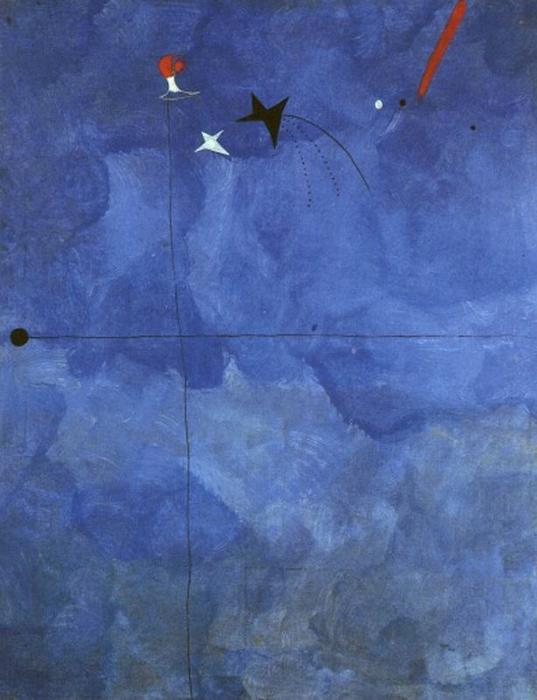
In the profound depths of Joan Miró’s 1948 masterpiece, Cabeza de campesino catalán, we encounter more than just a painting; we enter a dreamscape where the boundaries between the earthly and the celestial dissolve. This striking work serves as a distilled essence of Catalan identity, captured through the lens of a man deeply connected to his roots yet spiritually untethered. The canvas is dominated by an expansive, contemplative blue that immediately envelops the viewer in a sense of serene introspection. Yet, this stillness is punctuated by sudden, vibrant bursts of yellow and red, drawing the eye upward toward three luminous stars nestled in the upper left corner. These celestial bodies act as beacons of hope and aspiration, embodying Miró’s lifelong belief in the transformative power of the imagination and the ability of dreams to transcend the weight of reality.
The composition presents a surrealist ballet of symbols that dance across the blue void. Amidst the cosmic arrangement, an airplane glides through the ether, trailed by a rocket ship that seems to surge toward it with purposeful momentum. These elements, alongside the presence of stylized figures and a solitary red dot in the upper right, create a visual paradox that challenges our conventional understanding of space and gravity. For the collector or interior designer, this piece offers a captivating focal point—a window into a universe where the mundane is elevated to the mythic, making it an ideal centerpiece for spaces that demand both intellectual depth and aesthetic wonder.
The Alchemy of Surrealist Abstraction
Miró’s technique in this work is a masterclass in Surrealist Abstraction, utilizing what he famously termed “automatism” to bypass the rational mind. Rather than adhering to the rigid constraints of realistic representation, Miró allowed his brushstrokes to flow with a spontaneous, almost rhythmic energy. By applying paint with loose, gestural movements and incorporating dripping methods, he invited chance to participate in the creative act. This approach results in an arresting blend of abstraction and figuration; while we can recognize the simplified, iconic forms of a peasant farmer’s head, they are stripped of all anatomical detail to better tap into deeper emotional currents.
The artist’s use of geometric shapes—circles and squares—serves to anchor the more fluid, organic elements of the composition. This deliberate tension between structure and spontaneity creates a visual rhythm that keeps the eye moving, discovering new layers of meaning with every glance. The technique does not merely depict a subject; it constructs an atmosphere. For those seeking a high-quality reproduction, the magic lies in capturing this delicate balance of texture and color, ensuring that the energetic spirit of Miró’s hand is felt within the home.
Resilience Amidst Shadows
To truly appreciate Cabeza de campesino catalán, one must understand the turbulent historical landscape from which it emerged. Painted during the repressive era of Francisco Franco’s dictatorship in Spain, the work carries an undercurrent of quiet resistance. Miró, a son of Barcelona, used his art to preserve the soul of Catalonia when its culture was under threat of censorship and erasure. The depiction of the peasant farmer is not merely a pastoral nod; it is a profound tribute to the rural heart of Catalan tradition—a symbol of endurance and unyielding spirit in the face of political oppression.
This historical weight adds a layer of gravity to the painting’s whimsical elements, transforming a seemingly playful arrangement of stars and rockets into a poignant statement on human resilience. The artwork invites viewers to contemplate the struggle between the darkness of political reality and the light of creative freedom. Owning a reproduction of such a piece means bringing into one's environment a legacy of courage and a testament to the enduring power of the human spirit, making it an invaluable acquisition for any serious lover of art history.
Ähnliche Kunstwerke
Biografie des Künstlers
**frühes Leben und Karriere**
joan miró, ein renommierter spanischer Maler, Bildhauer und Keramiker, wurde am 20. April 1893 in Barcelona, Spanien, geboren. Seine Familie, von jüdischen (Marrano oder Konverso) Wurzeln, hatte einen bedeutenden Einfluss auf sein frühes Leben. Mirós Vater, Miquel Miró Adzerias, war Goldschmied und Uhrmacher, was möglicherweise der Künstlersein Interesse an komplizierten Details inspirierte.**Künstlerische Entwicklung**
Miró begann mit sieben Jahren mit Zeichenunterricht in einer privaten Schule in Barcelona. Später nahm er am Kunstakademie La Llotja auf, trotz Ablehnung durch seinen Vater. Dies markierte den Beginn von Mirós künstlerischer Reise, die schließlich zu seiner Pionierarbeit im Surrealismus und abstrakter Kunst führte.**Bekannte Werke und Kooperationen**
* The Farm (1922), ein Gemälde, das Mirós Übergang zu einem individuelleren Stil zeigt, mit nationalistischen Zügen. * Zusammenarbeit mit Max Ernst bei der Gestaltung von Sergei Diaghilews Ballett 1926, die die Technik des Grattage begründete. * The Dutch Interiors (1928), eine Reihe von Gemälden, inspiriert von Hendrik Martenszoon Sorth und Jan Steen, die Mirós einzigartigen Stil zeigt.**Museen und Vermächtnis**
* Die Fundació Joan Miró in Barcelona, gegründet 1975, die Mirós Werke präsentiert. * Die Fundació Pilar i Joan Miró in Palma de Mallorca, gegründet 1981, festigte Mirós Vermächtnis weiter.**Wichtige Werke und ihre Bedeutung**
- Painting (1933), ein abstraktes Ölgemälde, das Mirós surrealistische Vision veranschaulicht.
- Pintura 11, ein weiteres bemerkenswertes abstraktes Werk, das Mirós einzigartigen Stil zeigt.
- The Ear of Corn (37 x 46 cm), ein surrealistisches Werk, das komplizierte Details zeigt.
- The Birth of Day, ein abstraktes Kunstwerk, das Mirós Beiträge zur abstrakten Kunst weiter festigt.
**Fazit**
Mirós Vermächtnis als Pionier des Surrealismus und der abstrakten Kunst ist unbestreitbar. Seine Werke, die in verschiedenen Museen ausgestellt werden, darunter die Fundació Joan Miró, inspirieren weiterhin Künstler und Kunstliebhaber gleichermaßen. Für weitere Informationen über Mirós Werke besuchen Sie [https://ArtsDot.com/@/joan-miro](https://ArtsDot.com/@/joan-miro) oder erkunden Sie seine bemerkenswerten Werke unter [https://ArtsDot.com/@@/8ewky5-joan-miro-painting](https://ArtsDot.com/@@/8ewky5-joan-miro-painting).- Mehr Kunstwerke von Joan Miró auf ArtsDot.com
- Entdecken Sie das Museum Fundació Joan Miró in Barcelona, Spanien
- Erkunden Sie die Biografie und bemerkenswerten Werke des Künstlers unter [https://en.wikipedia.org/wiki/joan_mir%c3%b3](https://en.wikipedia.org/wiki/joan_mir%c3%b3)
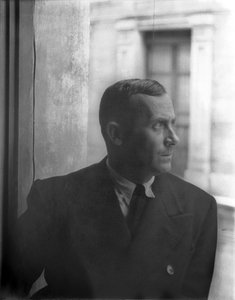
Joan Miró
1893 - 1983 , Spanien
Kurzinfos
- Beeinflusste Künstler:
- Vincent van Gogh
- Paul Cézanne
- Bemerkenswerte Werke:
- Die Farm (1922)
- Dutch Interiors (1928)
- Gemälde (1933)
- Geburtsdatum: 20. April 1893
- Geburtsort: Barcelona, Spanien
- Künstlerischer Stil: Surrealismus, abstrakte Kunst
- Nationalität: Spanisch
- Todatum: 1983
- Vollständiger Name: Joan Miró i Ferrà