 Vorschau anzeigen
 Versenden
 Teilen
 Details anzeigen

 Herunterladen
 Ähnliche Objekte
 Röntgenaufnahme
 Diashow
 Stats
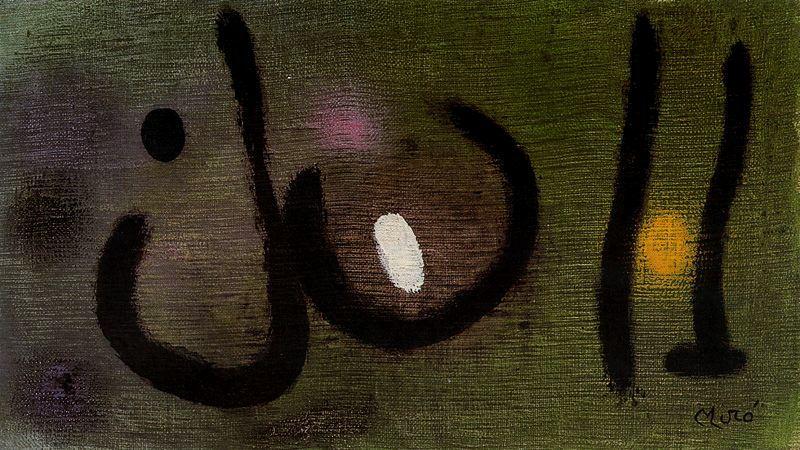
StatsMúsica del crepúsculo


 Weiterlesen
Handgefertigte Ölreproduktion
Handgemaltes Ölgemälde auf Leinwand in Ihrer Wunschgröße und mit Rahmen, auf Bestellung von unseren Künstlern angefertigt. ( Switch to Print Switch to Digital Image)




P118B $10

P118H $10

P118W $10

P438Z $10

P508JH $12

P508YH $12

P805H $10

P805Z $10

P919BZ $10

P919G $10

P919XJ $10

P959ZH $10

P968JZ $12

W106C $8

W218G $10

W218JH $8

W218Y $10

W307PJ $10

W316G $10

W316PJ $8

W316Y $10

W398PJ $8

W4111J $10

W500HY $15

W500JH $15

W692G $12

W849H $8

W940BG $15

W953PJ $8




Wählen Sie aus unseren vordefinierten Formaten, die den ursprünglichen Proportionen des Kunstwerks entsprechen.

Sie können Ihre eigenen Maße eingeben, um einen bestimmten Rahmen oder Platz auszufüllen. Wenn die gewählte Größe nicht den Proportionen des Originalbildes entspricht, werden wir das Kunstwerk entweder beschneiden oder das Gemälde durch zusätzliche, handgemalte Elemente erweitern. Ein digitales Mockup wird Ihnen zur Genehmigung zugesandt, bevor die Produktion beginnt.
Bitte beachten Sie, dass die Bildschirmvorschau nicht die tatsächliche Beschneidung oder Erweiterung widerspiegelt. Nur das Mockup zeigt die endgültige Komposition exakt an.
Obwohl Sondermaße verfügbar sind, empfehlen wir, eine Größe aus der vordefinierten Liste zu wählen, um die ursprünglichen Proportionen beizubehalten.
Nach der Bestellung wird das ArtsDot.com-Team dem Kunden Anweisungen per E-Mail zusenden und eine Mockup-Vorschau bereitstellen.
Weltweiter Versand () in nur 3 bis 4 Wochen statt der üblichen 5 Wochen. (8 September). Keine Kompromisse bei der Qualität.

Kostenloser weltweiter Expressversand

Hochwertige Leinenleinwand

Umfassender Versicherungsschutz beim Versand

Zollgebühren-Rückerstattungsgarantie

Garantie für exakte Farbtreue

100-Tage-Rückgaberecht (nur bei Mängeln)

100% Geld-zurück-Garantie

Mengenrabatt verfügbar
 Die Glasoption ist nur für Größen unter 110 cm verfügbar.

Música del crepúsculo
Art der Reproduktion
Format der Reproduktion
-


Gesamtpreis
$ 263
A Nocturnal Echo: Exploring Joan Miró’s “Música del Crepúsculo”
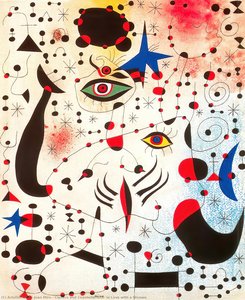
Joan Miró's "Música del Crepúsculo" (Music of Twilight) is more than just an abstract composition; it’s a deeply personal and evocative journey into the artist’s subconscious. Painted against a stark black canvas, this large-scale work pulsates with a restrained energy, dominated by the luminous white word – seemingly “do” or “joy” – that anchors the piece and draws the viewer into its enigmatic depths. Miró, born in Barcelona in 1893, was a pivotal figure of the Catalan avant-garde, relentlessly pursuing a visual language rooted in dreams, memory, and the raw essence of emotion. His work reflects a profound engagement with the intangible, a desire to capture not just what is seen but what *feels* – a characteristic particularly evident in this captivating piece.
Composition and Technique: A Dance of Form and Color
- Abstract Geometry: The painting’s strength lies in its carefully constructed abstraction. Miró employs a vocabulary of shapes—circles, dots, and flowing lines—arranged with meticulous precision. These aren't random gestures; they are deliberate building blocks contributing to the overall rhythm and balance of the composition.
- Limited Palette: The restricted color palette – primarily black and white – intensifies the impact of the central element. This monochrome approach allows the viewer’s eye to focus entirely on the word, amplifying its symbolic weight.
- Textural Layering: Scattered across the canvas are numerous dots, adding a crucial layer of texture and depth. These aren't merely decorative; they suggest a shimmering surface, perhaps evoking the twilight sky or the subtle vibrations of musical notes – hence the title’s evocative nature.
Symbolism and Meaning: The Word as Key
The central Arabic word, rendered in pristine white, is arguably the most significant element of “Música del Crepúsculo.” While its precise translation – "do" or "joy" – remains open to interpretation, it functions as a potent symbol. Miró frequently employed words and letters within his work, often drawn from his native Catalan language, imbuing them with personal significance. The word’s placement at the heart of the composition suggests a core concept, an emotional truth that the artist sought to express. Considering Miró's interest in Catalan identity and folklore, the word could represent a fundamental element of human experience – perhaps happiness or affirmation.
Historical Context and Artistic Influence
"Música del Crepúsculo" was created during a period of immense artistic experimentation. Miró’s work aligns with the broader trends of Surrealism and Abstract Expressionism, yet he forged his own distinct path. The influence of Barcelona's architectural heritage, particularly the organic forms championed by Antoni Gaudí, is subtly present in Miró’s approach to shape and space. This piece reflects a desire to move beyond representational art, embracing instead the expressive potential of pure form and color – a hallmark of Miró’s unique vision. The painting speaks to a broader artistic movement seeking to tap into the subconscious and explore universal themes through non-figurative means.
Emotional Impact and Collecting Considerations
“Música del Crepúsculo” possesses a quiet power, inviting contemplation and introspection. Its stark simplicity belies a complex emotional landscape. This artwork is ideal for those seeking to infuse their spaces with a sense of mystery, serenity, and artistic depth. A hand-painted reproduction offers an unparalleled opportunity to experience the full impact of Miró’s vision – capturing not just the image but also the spirit and emotion that define this iconic work.
Ähnliche Kunstwerke
Über den Künstler
**frühes Leben und Karriere**
joan miró, ein renommierter spanischer Maler, Bildhauer und Keramiker, wurde am 20. April 1893 in Barcelona, Spanien, geboren. Seine Familie, von jüdischen (Marrano oder Konverso) Wurzeln, hatte einen bedeutenden Einfluss auf sein frühes Leben. Mirós Vater, Miquel Miró Adzerias, war Goldschmied und Uhrmacher, was möglicherweise der Künstlersein Interesse an komplizierten Details inspirierte.**Künstlerische Entwicklung**
Miró begann mit sieben Jahren mit Zeichenunterricht in einer privaten Schule in Barcelona. Später nahm er am Kunstakademie La Llotja auf, trotz Ablehnung durch seinen Vater. Dies markierte den Beginn von Mirós künstlerischer Reise, die schließlich zu seiner Pionierarbeit im Surrealismus und abstrakter Kunst führte.**Bekannte Werke und Kooperationen**
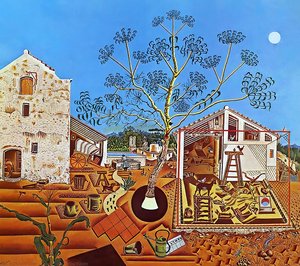
* The Farm (1922), ein Gemälde, das Mirós Übergang zu einem individuelleren Stil zeigt, mit nationalistischen Zügen. * Zusammenarbeit mit Max Ernst bei der Gestaltung von Sergei Diaghilews Ballett 1926, die die Technik des Grattage begründete. * The Dutch Interiors (1928), eine Reihe von Gemälden, inspiriert von Hendrik Martenszoon Sorth und Jan Steen, die Mirós einzigartigen Stil zeigt.**Museen und Vermächtnis**
* Die Fundació Joan Miró in Barcelona, gegründet 1975, die Mirós Werke präsentiert. * Die Fundació Pilar i Joan Miró in Palma de Mallorca, gegründet 1981, festigte Mirós Vermächtnis weiter.**Wichtige Werke und ihre Bedeutung**
- Painting (1933), ein abstraktes Ölgemälde, das Mirós surrealistische Vision veranschaulicht.
- Pintura 11, ein weiteres bemerkenswertes abstraktes Werk, das Mirós einzigartigen Stil zeigt.
- The Ear of Corn (37 x 46 cm), ein surrealistisches Werk, das komplizierte Details zeigt.
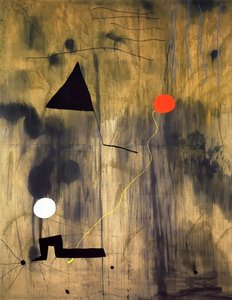
- The Birth of Day, ein abstraktes Kunstwerk, das Mirós Beiträge zur abstrakten Kunst weiter festigt.
**Fazit**
Mirós Vermächtnis als Pionier des Surrealismus und der abstrakten Kunst ist unbestreitbar. Seine Werke, die in verschiedenen Museen ausgestellt werden, darunter die Fundació Joan Miró, inspirieren weiterhin Künstler und Kunstliebhaber gleichermaßen. Für weitere Informationen über Mirós Werke besuchen Sie [https://ArtsDot.com/@/joan-miro](https://ArtsDot.com/@/joan-miro) oder erkunden Sie seine bemerkenswerten Werke unter [https://ArtsDot.com/@@/8ewky5-joan-miro-painting](https://ArtsDot.com/@@/8ewky5-joan-miro-painting).- Mehr Kunstwerke von Joan Miró auf ArtsDot.com
- Entdecken Sie das Museum Fundació Joan Miró in Barcelona, Spanien
- Erkunden Sie die Biografie und bemerkenswerten Werke des Künstlers unter [https://en.wikipedia.org/wiki/joan_mir%c3%b3](https://en.wikipedia.org/wiki/joan_mir%c3%b3)
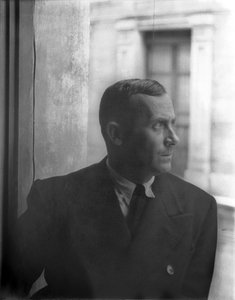
Joan Miró
1893 - 1983 , Spanien
Kurzinfos
- Beeinflusste Künstler:
- Vincent van Gogh
- Paul Cézanne
- Bemerkenswerte Werke:
- Die Farm (1922)
- Dutch Interiors (1928)
- Gemälde (1933)
- Geburtsdatum: 20. April 1893
- Geburtsort: Barcelona, Spanien
- Künstlerischer Stil: Surrealismus, abstrakte Kunst
- Nationalität: Spanisch
- Todatum: 1983
- Vollständiger Name: Joan Miró i Ferrà
Ähnliche Artikel

Abstrakter Expressionismus: Die 10 Meisterwerke, die eine Kunstbewegung prägten |
Entdecken Sie die 10 Meisterwerke des Abstrakten Expressionismus! Von Jackson Pollock bis Mark Rothko – erfahren Sie die Geschichten hinter ikonischen Gemälde und finden Sie hochwertige Reproduktionen für Ihr Zuhause. Jetzt bei entdecken!

Kandinsky: Die 25 Meisterwerke des Abstrakten – Kunst für Ihr Zuhause | ArtsDot
Entdecken Sie die 25 bedeutendsten Gemälde von Wassily Kandinsky! Tauchen Sie ein in die Welt der abstrakten Kunst, des Expressionismus und der Farbkomposition. Hochwertige Kunstdrucke & Inspiration für Ihr Zuhause auf ArtsDot.com.
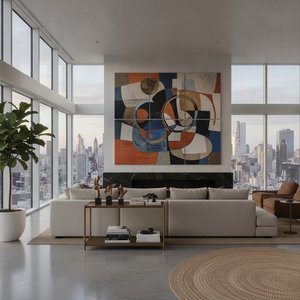
Designing Your Forever Space: An Expert Guide to Elevating Your New Home with Neo-Abstract Art
Elevate your first home with the bold energy of Neo-Abstract Art. Our expert guide helps newlyweds master modern geometric compositions, textures, and color palettes. Discover how custom hand-painted oils and multi-panel designs can transform your new space into a curated masterpiece.

Geometrische Abstraktion: Die 10 Meisterwerke, die Kunstgeschichte prägten | ArtsDot.com
Entdecken Sie die 10 Meisterwerke der geometrischen Abstraktion! Von Kandinsky bis Mondrian – erleben Sie die Geschichte, Farben & Formen dieser revolutionären Kunstrichtung. Hochwertige Kunstreproduktionen auf ArtsDot.com
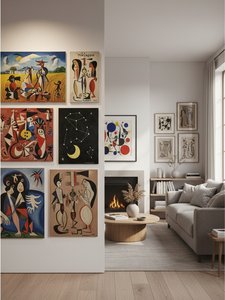
Joan Mirós Meisterwerke: Die Top 25 für Kunstliebhaber & stilvolles Wohnen
Entdecken Sie die Top 25 Gemälde von Joan Miró! Tauchen Sie ein in die Welt des Surrealismus, abstrakter Kunst & katalanischer Farben. Hochwertige Kunstdrucke & Reproduktionen für Ihr Zuhause – jetzt auf ArtsDot.com!