

 Vorschau anzeigen
 Versenden
 Teilen
 Details anzeigen

 Herunterladen
 Ähnliche Objekte
 Röntgenaufnahme
 Diashow
House Elza Berquó


 Weiterlesen
Giclée / Kunstdruck
Giclée- oder Leinwanddruck in Museumsqualität mit schneller Produktion und flexiblen Veredelungsoptionen. ( Handgemalte Reproduktion bestellen Bild kaufen)




P118B $10

P118H $10

P118W $10

P438Z $10

P508JH $12

P508YH $12

P805H $10

P805Z $10

P919BZ $10

P919G $10

P919XJ $10

P959ZH $10

P968JZ $12

W106C $8

W218G $10

W218JH $8

W218Y $10

W307PJ $10

W316G $10

W316PJ $8

W316Y $10

W398PJ $8

W4111J $10

W500HY $15

W500JH $15

W692G $12

W849H $8

W940BG $15

W953PJ $8




Wählen Sie aus unseren vordefinierten Formaten, die den ursprünglichen Proportionen des Kunstwerks entsprechen.

Sie können Ihre eigenen Maße eingeben, um ein bestimmtes Format oder einen speziellen Platz einzupassen. Wenn das von Ihnen gewählte Format nicht den Proportionen des Originalbildes entspricht, werden wir das Kunstwerk entweder beschneiden oder das Bild mit einem gespiegelten oder einfarbigen Rand erweitern. Ein digitaler Entwurf wird Ihnen zur Genehmigung zugesandt, bevor die Produktion beginnt.
Bitte beachten Sie, dass die Vorschau auf dem Bildschirm nicht den tatsächlichen Zuschnitt oder die Erweiterung widerspiegelt. Nur der Entwurf zeigt die endgültige Komposition präzise an.
Obwohl Sondermaße verfügbar sind, empfehlen wir die Auswahl eines Maßes aus der vordefinierten Liste, um die ursprünglichen Proportionen zu bewahren.
Weltweiter Versand () innerhalb von 2 Wochen statt der üblichen 4/5 Wochen. (1 September)

Kostenloser weltweiter Expressversand

Hochwertige Leinenleinwand

Umfassender Versicherungsschutz beim Versand

Zollgebühren-Rückerstattungsgarantie

Garantie für exakte Farbtreue

60 Tage Rückgaberecht (nur bei Mängeln)

100% Geld-zurück-Garantie

Mengenrabatt verfügbar
 Die Glasoption ist nur für Größen unter 110 cm verfügbar.

House Elza Berquó
Giclée / Kunstdruck
Format der Reproduktion
-


Gesamtpreis
$ 62
João Batista Vilanova Artigas’s ‘House Elza Berquó’: A Brutalist Masterpiece of Brazilian Modernism
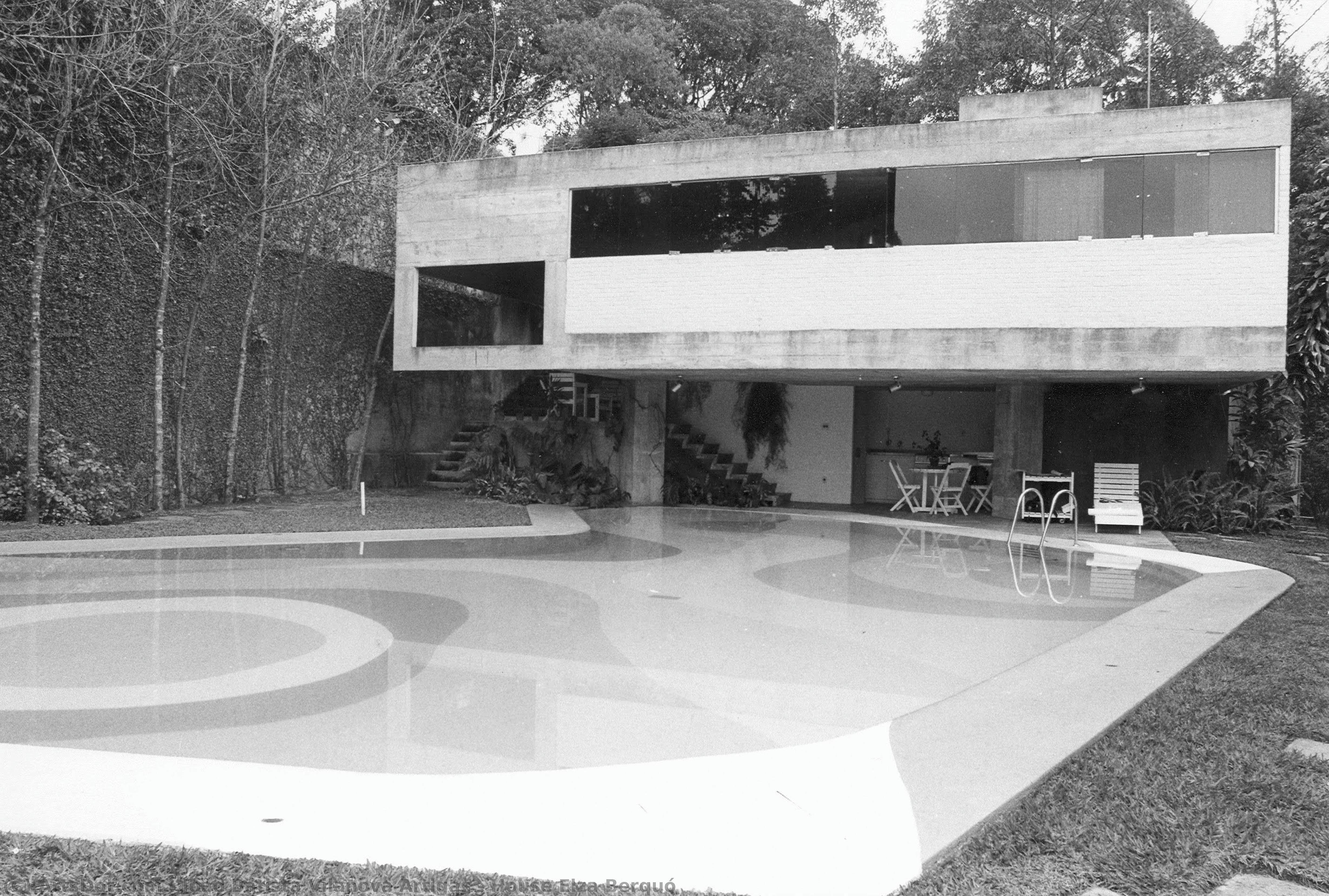
The photograph captures a pivotal moment in the trajectory of Brazilian architecture – the House Elza Berquó, designed by the visionary João Batista Vilanova Artigas. Constructed in 1967 and now presented as a striking black-and-white image, this residence transcends mere shelter; it’s a profound statement on social responsibility, artistic expression, and the very essence of modern living. More than just a building, ‘House Elza Berquó’ embodies Artigas's core philosophy – a belief that architecture should be intrinsically linked to its community and deeply rooted in the Brazilian landscape.
Artigas, a foundational figure of São Paulo’s Paulista School, emerged as a radical voice within Brazilian modernism. His early collaborations with Gregori Warchavchik on the Praça da República remodel demonstrated his burgeoning talent for integrating innovative design with social purpose. However, ‘House Elza Berquó’ represents a significant shift – a bold embrace of Brutalist principles and an exploration of raw materials that would define much of his later work. The house wasn't simply built; it was conceived as a dialogue between the human spirit and the concrete reality of its surroundings.
Form, Materiality, and Structural Drama
The photograph immediately draws the eye to the building’s imposing presence – a testament to Artigas’s masterful manipulation of form and material. Constructed primarily from exposed concrete and brick, the house eschews ornamentation in favor of stark geometric shapes and monumental proportions. The use of these materials isn't merely aesthetic; it speaks to a deliberate rejection of superfluous decoration, reflecting a commitment to honesty and transparency in design. The most striking element is undoubtedly the supporting structure – a series of tree-trunk-like concrete columns that appear to rise organically from the ground, creating an illusion of weightlessness and defying conventional architectural logic.
This innovative structural solution, documented in photographs taken by Nelson Kon, was a groundbreaking feat of engineering. Artigas’s ingenious design allowed for the distribution of roof loads through these timber supports, resulting in a remarkably light and airy interior space. The photograph beautifully captures this interplay between strength and grace – a visual representation of the architect's ability to transform industrial materials into works of art.
A Reflection of Brazilian Identity
‘House Elza Berquó’ is deeply intertwined with the socio-political context of 1960s Brazil. Artigas, a member of the Communist Party, faced significant challenges during this period, ultimately leading to his removal from academia. Despite these obstacles, he continued to push boundaries and explore new architectural languages. The house itself can be interpreted as a symbol of resilience – a testament to the enduring spirit of Brazilian modernism in the face of adversity.
The design’s simplicity and functionality also reflect a broader cultural shift towards social housing and community-oriented architecture. Artigas believed that buildings should serve not only as shelters but also as spaces for social interaction and personal growth. ‘House Elza Berquó,’ with its open floor plan and connection to the surrounding landscape, embodies this philosophy perfectly.
Symbolism and Emotional Resonance
Beyond its technical brilliance, ‘House Elza Berquó’ possesses a powerful emotional resonance. The stark contrast between the rough texture of concrete and the smooth curves of the swimming pool evokes a sense of tension and harmony – mirroring the complexities of human experience. The photograph's muted tones and dramatic lighting create an atmosphere of quiet contemplation, inviting viewers to reflect on the relationship between architecture, nature, and the individual.
The image’s enduring appeal lies in its ability to capture both the grandeur and the intimacy of this remarkable building. It is a reminder that great architecture can be not only visually stunning but also deeply meaningful – a reflection of our hopes, dreams, and aspirations for the future. Reproductions of ‘House Elza Berquó’ offer a unique opportunity to bring this iconic piece of Brazilian modernism into your own home, celebrating Artigas's legacy and his profound contribution to the world of architecture.
Ähnliche Kunstwerke
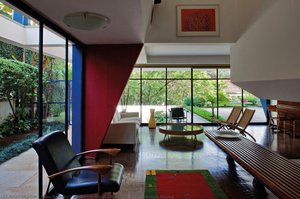
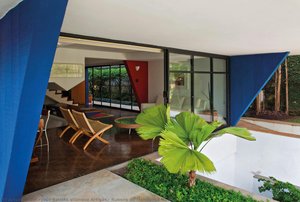
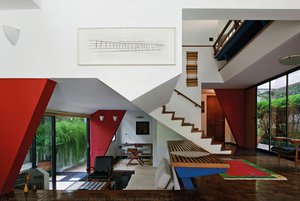
Über den Künstler
João Batista Vilanova Artigas: Ein Pionier des brasilianischen Modernismus
- Geboren: Curitiba, Brasilien (1915)
- Gestorben: 1985
Frühes Leben und Ausbildung
João Batista Vilanova Artigas war eine zentrale Figur in der brasilianischen modernistischen Architektur. Geboren 1915 in Curitiba, erlangte er als einer der einflussreichsten Architekten in der Geschichte von São Paulo Bekanntheit und gilt als die Gründungsfigur der Paulista Schule. Sein architektonischer Werdegang begann an der Polytechnischen Hochschule der Universität São Paulo, wo er 1937 graduierte. Eine bedeutende frühe Erfahrung war seine Zusammenarbeit mit dem russisch-brasilianischen Architekten Gregori Warchavchik bei der Umgestaltung des Praça da República. Von 1941 bis 1947 widmete sich Artigas der Lehre und unterrichtete Ästhetik, Architektur und Planung an der Universität São Paulo. Seine intellektuellen Bestrebungen wurden 1946 weiter anerkannt, als er ein Guggenheim-Stipendium erhielt, was seine wachsende Bedeutung in der Architekten-Community signalisierte.Architektonischer Stil und bemerkenswerte Werke
Artigas' architektonischer Stil entwickelte sich durch verschiedene Phasen, die wechselnde Einflüsse und persönliche Entwicklung widerspiegelten. Seine Arbeit wird im Allgemeinen in drei Perioden kategorisiert:- Phase 1 (1937-1945): Diese anfängliche Phase zeigte einen deutlichen Einfluss von Frank Lloyd Wright, insbesondere in seinen Wohndesigns.
- Phase 2 (1945-Mitte der 1950er Jahre): Eine Übergangsperiode sah Artigas die Aufnahme von Elementen des International Style, einschließlich Vorhangfassaden und Pilotis, in größere Projekte.
- Phase 3 (1960er-1970er Jahre): Diese letzte Phase markierte einen Wandel hin zu seinem persönlichen, dramatischen Stil, der stark vom Brutalismus beeinflusst war, den er auf groß angelegte öffentliche Gebäude anwandte.
- Haus Ariosto Martirani: Ein Paradebeispiel für seine frühe Arbeit, das Wrights Einfluss zeigt.
- Haus Elza Berquó: Zeigt eine minimalistische Ästhetik mit auffälliger geometrischer Abstraktion und Brutalistischer Beeinflussung.
- Guarulhos-Gymnasium: Steht für seinen späteren, dramatischeren Stil, der durch Betonexpressionismus gekennzeichnet ist.
Politisches Engagement und Anerkennung
Artigas' Leben war eng mit politischem Aktivismus verbunden. Seine Mitgliedschaft in der brasilianischen Kommunistischen Partei führte 1969 zur Entfernung von seiner Lehrtätigkeit an der Universität São Paulo, zusammen mit Paulo Mendes da Rocha. Diese Periode spiegelte das breitere politische Klima in Brasilien zu dieser Zeit wider. Ihre Beiträge wurden jedoch schließlich anerkannt; sowohl Artigas als auch Mendes da Rocha wurden in den 1980er Jahren in ihre Positionen zurückversetzt. Das 1946 erhaltene Guggenheim-Stipendium bestätigte weiter seine bedeutenden Beiträge zur Architektur. Seine Arbeit ist in Institutionen wie dem Museu Antonio Parreiras und dem Oscar Niemeyer Museum (Curitiba, Brasilien) zu finden, um sicherzustellen, dass sein Vermächtnis zukünftige Generationen von Architekten weiterhin inspiriert.Vermächtnis und historische Bedeutung
João Batista Vilanova Artigas hinterließ eine bleibende Spur in der brasilianischen Architektur. Er wird nicht nur für seine innovativen Designs, sondern auch für sein Engagement für soziale Verantwortung und seine Rolle bei der Gestaltung der Paulista Schule in Erinnerung behalten. Sein Fokus auf funktionales Design, ausdrucksstarke Betonstrukturen und die Erfüllung sozialer Bedürfnisse durch Architektur beeinflusst weiterhin zeitgenössische architektonische Praktiken in Brasilien und darüber hinaus. Artigas' Werk ist ein Beweis für die Kraft der Architektur, sowohl künstlerische Vision als auch gesellschaftliche Werte widerzuspiegeln.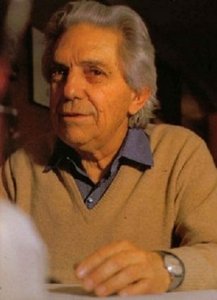
João Batista Vilanova Artigas
1915 - 1985 , Brasilien
Kurzinfos
- Beeinflusste Kunstrichtungen: ['Paulista Schule']
- Beeinflusste Künstler: ['Frank Lloyd Wright']
- Bemerkenswerte Werke:
- Haus Ariosto Martirani
- Haus Elza Berquó
- Guarulhos Gymnasium
- Geburtsdatum: 23. Juni 1915
- Geburtsort: Curitiba, Brasilien
- Künstlerischer Stil: Modernistische Architektur, Brutalismus
- Nationalität: Brasilianer
- Sterbedatum: 12. Januar 1985
- Vollständiger Name: João Batista Vilanova Artigas
Ähnliche Artikel
Benedito Calixto: A Brazilian Modernist's Landscape of Memory & National Identity
Explore the captivating world of Benedito Calixto, a pivotal Brazilian Modernist painter. Discover his iconic landscapes, the story behind the famous Bandeirante portrait, and his lasting impact on Brazilian national identity. Learn more at ArtsDot.
Alceu de Paula Penna: A Synthesis of Brazilian Modernism & Poetic Abstraction
Explore the captivating world of Alceu de Paula Penna, a pivotal figure in Brazilian Modernism. Discover his innovative concrete poetry & influence on Latin American art history. Expert insights for collectors.

Charles Sheeler Jr.: Precisionism, Industrial Aesthetics & the American Modernist Vision
Explore the groundbreaking work of Charles Sheeler Jr., a pivotal figure in American Precisionism. Discover his iconic industrial landscapes, photographic studies & lasting influence on modernist art. Expert insights for collectors.
Rafael Barradas: Die Synthese europäischer Avantgarde und uruguayischer Moderne – Eine künstlerische Annäherung
Entdecken Sie Rafael Barradas und seine Synthese aus europäischer Avantgarde und uruguayischer Moderne. Expertenanalyse, Sammlerperspektiven & Investitionspotenzial. Jetzt mehr erfahren!

Jean-Baptiste Debret: Witnessing Brazil’s Emergence Through Art & Identity
Explore the captivating art of Jean-Baptiste Debret, a key witness to Brazil’s imperial era. Discover his iconic portraits, historical scenes & insightful depictions of Brazilian life. Learn about his legacy and find museum-quality reproductions at ArtsDot.

