

 Vorschau anzeigen
 Versenden
 Teilen
 Details anzeigen

 Herunterladen
 Ähnliche Objekte
 Röntgenaufnahme
 Diashow
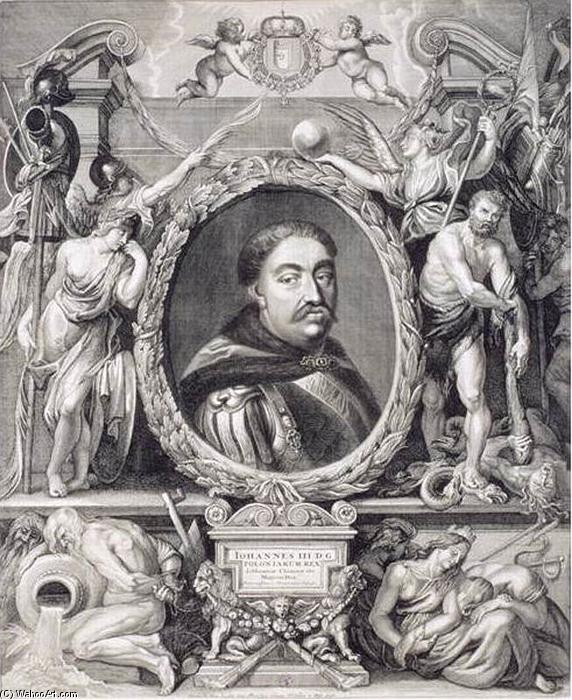
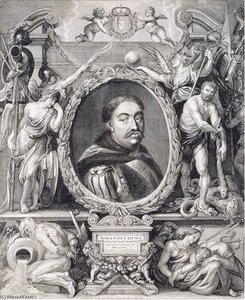
Jan Sobieski III , King of Poland


 Weiterlesen
Erwerben Sie ein hochauflösendes, optimiertes digitales Bild, das der Online-Vorschau weit überlegen ist.
Jede Datei wird von unseren hauseigenen Spezialisten mit modernsten Werkzeugen und fachmännischer manueller Retusche sorgfältig vorbereitet. Wir stellen sicher, dass jedes Bild eine außergewöhnliche Klarheit, präzise Farbgenauigkeit und feinste Details aufweist.
Die endgültige Datei wird innerhalb von 72 Stunden per E-Mail zugestellt und ist für den sofortigen Einsatz in professionellen, redaktionellen und Druckumgebungen optimiert. Es handelt sich um dieselbe Qualität, der führende Designstudios, Verlage und Galerien vertrauen.
Digitales Bild
Laden Sie eine hochauflösende Datei für die persönliche Präsentation, den Druck und kreative Projekte herunter. ( Druck bestellen Handgemalte Reproduktion bestellen)
In jeder Bestellung digitaler Bilder enthalten
Professionelle digitale Bereitstellung, garantiert
Wenn Sie sich für ArtsDot.com entscheiden, erhalten Sie nicht nur ein Bild – Sie erhalten ein professionell aufbereitetes digitales Kunstwerk, das mit höchster Präzision erstellt und durch eine Zufriedenheitsgarantie abgesichert wird. Hier ist alles, was automatisch mit Ihrer Bestellung geliefert wird:

Schnelle E-Mail-Zustellung
Ihre hochauflösende digitale Bilddatei wird Ihnen innerhalb von 72 Stunden nach der Bestellung per E-Mail zugestellt – bereit zur sofortigen Verwendung.

KI-optimierte digitale Datei
Ihre Kunstwerke werden professionell mithilfe fortschrittlicher KI-Tools und manueller Bearbeitung optimiert, um maximale Detailtreue, Klarheit und Farbgenauigkeit zu gewährleisten.

Lebenslanger kostenloser Neudruckservice
Datei versehentlich gelöscht oder verloren? Keine Sorge – wir senden sie Ihnen jederzeit kostenlos erneut zu.

Keine Einfuhrgebühren – jemals
Genießen Sie Ihr Kunstwerk sofort ohne Zollgebühren, Einfuhrabgaben oder Versandkosten – digitale Downloads sind immer steuerfrei.

Garantierte Farbtreue
Wir garantieren, dass Ihr digitales Bild mithilfe professioneller Werkzeuge und Farbmanagement die Originalfarben so präzise wie möglich wiedergibt.

60-Tage-Zufriedenheitsgarantie
Sollten Sie mit Ihrem digitalen Bild nicht zufrieden sein, werden wir es überarbeiten oder Ihnen innerhalb von 60 Tagen 100% erstatten – ohne Wenn und Aber.

100% Geld-zurück-Garantie
Nicht zufrieden? Erhalten Sie innerhalb von 60 Tagen nach Erhalt Ihrer digitalen Datei eine vollständige Rückerstattung – ohne Angabe von Gründen.

Rabatte bei Großbestellungen
3 Bilder kaufen, 10% sparen – 5 Bilder kaufen, 15% sparen – Ab 10 Bildern 20% sparen. Ideal für kreative Projekte, Galerien und Agenturen.
Ähnliche Kunstwerke

Biografie des Künstlers
The Cartographer of Light and Line: The Legacy of Johannes de Ram
In the vibrant, intellectually charged atmosphere of the Dutch Golden Age, few artists bridged the gap between scientific precision and artistic elegance as gracefully as Johannes de Ram. Born in Amsterdam around 1648, De Ram emerged during an era when the boundaries between art, geography, and exploration were fluid and deeply interconnected. While history often reserves its most luminous spotlights for masters like Rembrandt or Vermeer, De Ram carved out a unique niche that demanded a different kind of vision—one that required not just the soul of a painter, but the exacting eye of a surveyor. His life and work stand as a testament to a period when the act of mapping the world was as much an aesthetic pursuit as it was a scientific necessity.
The foundations of De Ram’s mastery were laid in the rigorous traditions of Dutch training. Though the specific details of his earliest years remain shrouded in the mists of time, traces of his artistic lineage suggest a profound connection to the era's great masters. He is noted for his association with Hendrick van Balen, a painter celebrated for his allegorical depth and landscape mastery. This early exposure to the interplay of light and composition undoubtedly shaped De Ram’s later ability to infuse even the most technical works with a sense of grandeur. Furthermore, records suggest he may have been a pupil of Romeyn de Hooghe, a connection that would have further refined his skills in printmaking and the intricate details required for high-level cartography.
A Vision of Delft and the Art of Precision
De Ram’s most enduring contribution to the visual record of the Netherlands lies in his breathtaking cartographic achievements. He possessed a rare talent for transforming topographical data into works of profound beauty. His Map of Delft remains a pinnacle of this achievement, commissioned by Willem Piso II, the Director-General of the Dutch East India Company (VOC). This was not merely a functional tool for navigation or urban planning; it was a masterpiece of detail that captured the very essence of the city. Through meticulous line work and an innovative approach to capturing architectural features, De Ram provided a window into the structural soul of Delft, elevating the map from a mere document to a piece of fine art.
This dedication to accuracy extended far beyond the borders of Dutch cities. His ability to synthesize vast amounts of geographical information allowed him to produce works that were both informative and visually captivating for the elite collectors of his time. His work reflected the humanist ideals of the 17th century, where the desire to document and understand the physical world was driven by a deep-seated curiosity about the expanding horizons of human knowledge.
Portraiture and the Nobility of the Dutch Golden Age
Beyond the measured lines of his maps, De Ram demonstrated a remarkable sensitivity as a portraitist. He possessed the ability to capture the psychological depth and social stature of his subjects, making him a preferred artist for the influential figures of Dutch society. His portraits were more than mere likenesses; they were carefully constructed narratives of status, power, and character. One of the most striking examples of his skill is preserved in the British Museum, featuring an engraving of Jan Sobieski III, King of Poland. In such works, De Ram utilized the nuances of light and shadow to convey the dignity and weight of royalty, proving that his artistic range was as vast as the territories he mapped.
The significance of De Ram’s career lies in this duality of purpose. He was an artist who could navigate both the rigid requirements of scientific documentation and the emotive demands of portraiture. His life, though relatively brief—ending in Amsterdam in 1693—left behind a legacy that celebrates the intersection of art and intellect. Through his maps and portraits, he helped define the visual identity of an age characterized by discovery, documenting both the physical landscapes of Europe and the faces of those who shaped its history.
johannes de ram
1648 - 1693 , Netherlands
Kurzinfos
- Artistic Movement Or Style: Golden Age
- Date Of Birth: Amsterdam, Netherlands (1648)
- Full Name: Johannes de Ram
- Nationality: Dutch
- Notable Artworks:
- Map of Delft
- Novissima et Accuratissima Totius Americae Descriptio
- Place Of Birth: Amsterdam

