 Vorschau anzeigen
 Versenden
 Teilen
 Details anzeigen

 Herunterladen
 Ähnliche Objekte
 Röntgenaufnahme
 Diashow
untitled (4071)


 Weiterlesen
Giclée / Kunstdruck
Giclée- oder Leinwanddruck in Museumsqualität mit schneller Produktion und flexiblen Veredelungsoptionen. ( Handgemalte Reproduktion bestellen Bild kaufen)




P118B $10

P118H $10

P118W $10

P438Z $10

P508JH $12

P508YH $12

P805H $10

P805Z $10

P919BZ $10

P919G $10

P919XJ $10

P959ZH $10

P968JZ $12

W106C $8

W218G $10

W218JH $8

W218Y $10

W307PJ $10

W316G $10

W316PJ $8

W316Y $10

W398PJ $8

W4111J $10

W500HY $15

W500JH $15

W692G $12

W849H $8

W940BG $15

W953PJ $8




Wählen Sie aus unseren vordefinierten Formaten, die den ursprünglichen Proportionen des Kunstwerks entsprechen.

Sie können Ihre eigenen Maße eingeben, um ein bestimmtes Format oder einen speziellen Platz einzupassen. Wenn das von Ihnen gewählte Format nicht den Proportionen des Originalbildes entspricht, werden wir das Kunstwerk entweder beschneiden oder das Bild mit einem gespiegelten oder einfarbigen Rand erweitern. Ein digitaler Entwurf wird Ihnen zur Genehmigung zugesandt, bevor die Produktion beginnt.
Bitte beachten Sie, dass die Vorschau auf dem Bildschirm nicht den tatsächlichen Zuschnitt oder die Erweiterung widerspiegelt. Nur der Entwurf zeigt die endgültige Komposition präzise an.
Obwohl Sondermaße verfügbar sind, empfehlen wir die Auswahl eines Maßes aus der vordefinierten Liste, um die ursprünglichen Proportionen zu bewahren.
Weltweiter Versand () innerhalb von 2 Wochen statt der üblichen 4/5 Wochen. (1 September)

Kostenloser weltweiter Expressversand

Hochwertige Leinenleinwand

Umfassender Versicherungsschutz beim Versand

Zollgebühren-Rückerstattungsgarantie

Garantie für exakte Farbtreue

60 Tage Rückgaberecht (nur bei Mängeln)

100% Geld-zurück-Garantie

Mengenrabatt verfügbar
 Die Glasoption ist nur für Größen unter 110 cm verfügbar.

untitled (4071)
Giclée / Kunstdruck
Format der Reproduktion
-


Gesamtpreis
$ 62
A Vision of Tranquility: The Soul of the English Landscape
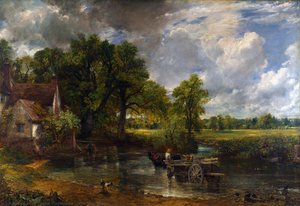
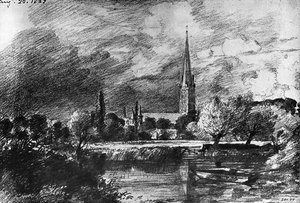
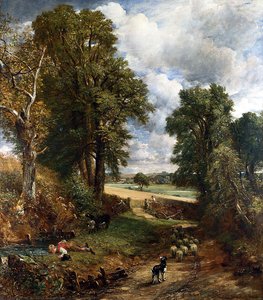
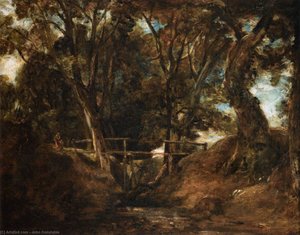
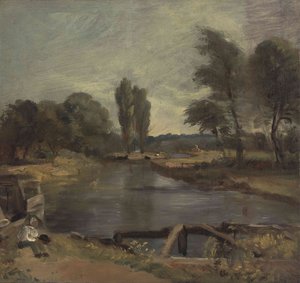
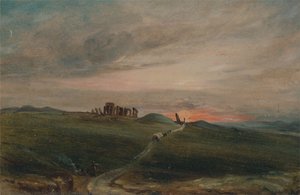
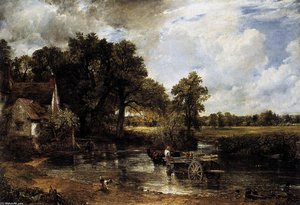
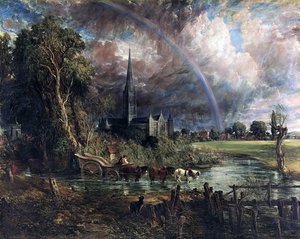
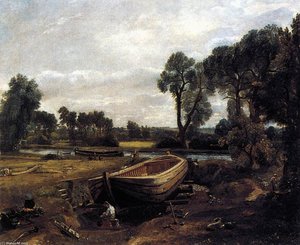
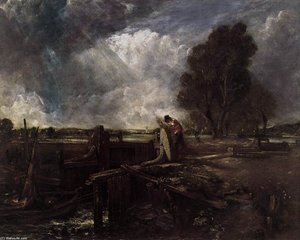
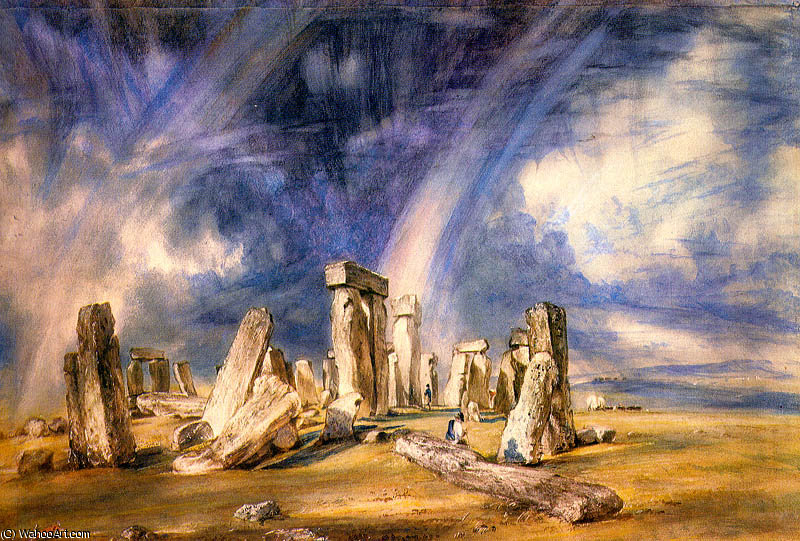
To stand before John Constable’s "Untitled (4071)" is to step beyond the boundaries of a mere canvas and enter a realm where time seems to suspend its flight. Painted around 1825, this evocative work serves as a profound embodiment of Romantic idealism, capturing a sense of sublime beauty that resonates deeply within the viewer. The scene transports us directly into the heart of the Dedham Vale—the beloved Suffolk landscape of Constable’s youth—where the ethereal glow of twilight begins to drape itself over rolling hills and meandering streams. It is not simply a depiction of geography, but an intimate portrait of a moment caught between light and shadow, offering a window into the very pulse of the natural world.
The composition is anchored by a dramatic interplay of solidity and grandeur. In the foreground, vast, weathered rocks command attention, providing a rugged foundation for the eye before it wanders toward the horizon. Here, towering pillars punctuate the skyline, lending an air of ancient mystery to the landscape. As one’s gaze drifts through the scene, small figures can be seen scattered throughout the terrain—some lingering near the foreground, others receding into the distance—suggesting a quiet human connection to these monumental ruins. This presence of life amidst the stone creates a poignant dialogue between the fleeting nature of humanity and the enduring strength of the earth.
Mastery of Light and Atmospheric Emotion
Constable’s technical brilliance is most evident in his revolutionary approach to light and atmosphere. Rejecting the stiff, idealized conventions of his predecessors, he embraced a more honest, immediate portrayal of nature. Through the use of loose, expressive brushstrokes and a sophisticated mastery of atmospheric perspective, he captures the subtle gradations of color that occur when sunlight filters through a moving canopy of clouds. This technique allows the viewer to feel the dampness of the air and the shifting temperature of the twilight breeze, making the atmosphere itself a central character in the narrative.
This method was deeply rooted in the historical context of the Romantic movement, a period defined by an embrace of emotion, imagination, and the spiritual connection to the wild. Much like the poets of his era, Wordsworth and Coleridge, Constable sought to capture the sublime—that overwhelming sensation of awe experienced when confronting the immense power and beauty of nature. For the discerning collector or interior designer, this painting offers more than just aesthetic appeal; it provides a profound emotional anchor. Whether placed in a sun-drenched gallery or a quiet study, "Untitled (4071)" brings with it an enduring sense of peace, making it a timeless choice for those looking to infuse their spaces with inspiration, depth, and a touch of the eternal.
Ähnliche Kunstwerke
Über den Künstler
**frühes Leben und Schwierigkeiten**
John Constable, ein renommierter britischer Künstler, wurde am 23. Juni 1776 in East Bergholt, Suffolk, geboren. Sein frühes Leben war geprägt von einer tiefen Verbundenheit mit der Natur, die später das Markenzeichen seines künstlerischen Stils werden sollte. Trotz zahlreicher Herausforderungen auf dem englischen Kunstmarkt ebnete Constable mit seiner unerschütterlichen Hingabe an sein Handwerk den Weg für ein Vermächtnis, das weit über seine Zeit hinausgeht.**Künstlerischer Stil und Einfluss**
Constables einzigartiger Ansatz in der Landschaftsmalerei, der durch seinen Fokus auf natürliche Schönheit und emotionale Tiefe geprägt war, markierte einen bedeutenden Wandel im Genre. Sein Einfluss war insbesondere in Frankreich tiefgreifend, wo er eine Schlüsselrolle bei der Gestaltung des Barbizon-Malerkollegs spielte. Diese Schule, die sich auf Realismus und Natur konzentrierte, zog direkt Inspiration von Constables Techniken und Themen.- Netley Abbey (Öl auf Leinwand), ein Beweis für seine Fähigkeit, den Kern natürlicher Landschaften einzufangen.
- The Judges Walk, Hampstead (Romantik, Öl), das seine Fähigkeit demonstriert, persönliche Note in seine Arbeit zu legen.
- A View on the Stour near Dedham (129 x 188 cm, Romantik, Öl auf Leinwand), ein Paradebeispiel für seinen Einfluss auf das Landschaftsgemälde.
**Vermächtnis und Erinnerung**
Heute wird John Constable nicht nur als Landschaftsmaler, sondern auch als Pionier in Erinnerung behalten, der neue Möglichkeiten für emotionale Ausdrucksweise in der Kunst eröffnete. Sein tiefgreifender Einfluss auf die Entwicklung der Landschaftsmalerei im 19. Jahrhundert und darüber hinaus ist unbestreitbar. Wichtige Punkte:** * Beeinflussend bei der Entwicklung des Barbizon-Kollegs in Frankreich * Pionier einer neuen Herangehensweise an die Landschaftsmalerei, mit Fokus auf natürliche Schönheit und emotionale Tiefe * Kämpfte während seines Lebenszeit für Anerkennung- Entdecken Sie weitere Werke von Constable hier: https://ArtsDot.com/@/john-constable
- Erkunden Sie die Meisterwerke des Blake Museums (Vereinigtes Königreich) hier: https://ArtsDot.com/@@/d3bux7
- Erfahren Sie mehr über das Barbizon-Kolleg und seinen Einfluss auf die Landschaftsmalerei hier: https://en.wikipedia.org/wiki/barbizon_school
**Fazit**
Das Vermächtnis von John Constable ist ein Beweis für die transformative Kraft der Kunst. Sein Einfluss auf die Landschaftsmalerei, sowohl in seiner Zeit als auch darüber hinaus, erinnert uns daran, wie tiefgreifend ein einzelner Künstler die Welt beeinflussen kann.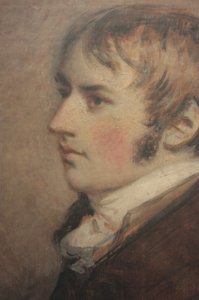
John Constable
1776 - 1837 , Vereinigtes Königreich
Kurzinfos
- Beeinflusste Kunstrichtungen: Barbizon-Schule
- Beeinflusste Künstler:
- Claude Lorrain
- Jacob van Ruisdael
- Bemerkenswerte Werke:
- Netley Abbey
- The Judges Walk, Hampstead
- A View on the Stour
- Geburtsdatum: 23. Juni 1776
- Geburtsort: East Bergholt, Vereinigtes Königreich
- Künstlerischer Stil: Romantik
- Nationalität: Britisch
- Sterbedatum: 1837
- Vollständiger Name: John Constable
Ähnliche Artikel

John Constable: Die 25 Meisterwerke des englischen Landschaftsgenies – ArtsDot
Entdecken Sie die 25 Meisterwerke von John Constable! Erleben Sie englische Landschaftsmalerei vom Hay Wain bis zur Stour Valley. Hochwertige Reproduktionen & Kunst für Ihr Zuhause auf ArtsDot.com.

Romantische Landschaften: Die 10 Meisterwerke, die eine Epoche prägten | ArtsDot
Entdecken Sie die 10 Meisterwerke der Romantischen Landschaftsmalerei! Von Caspar David Friedrich bis Turner – erleben Sie die Kunst, Emotion & Natur. Hochwertige Reproduktionen auf ArtsDot.com
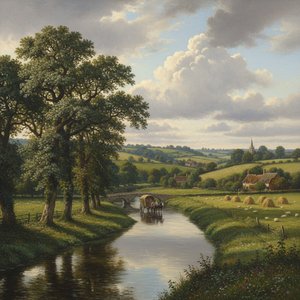
John Constable und die Romantische Vision der englischen Landschaft: Licht, Natur und emotionale Tiefe
Entdecken Sie die Romantik John Constables! Analysieren Sie seine meisterhaften Landschaftsgemälde und erfahren Sie mehr über Licht, Natur und emotionale Tiefe in der englischen Kunst des 19. Jahrhunderts.

John Singer Sargent: Die 25 Meisterwerke des Porträts – Kunst für Ihr Zuhause | ArtsDot
Entdecken Sie die 25 Meisterwerke von John Singer Sargent! Tauchen Sie ein in die Welt der Porträtmalerei, des Impressionismus & der Belle Époque. Hochwertige Kunstdrucke & Reproduktionen für Ihr Zuhause – jetzt auf ArtsDot.com!
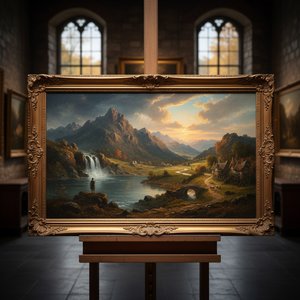
The Sublime and the Picturesque: Exploring Emotion & Nature in Romantic Landscape Painting
Explore the emotional power of Romantic landscape painting! Discover the sublime & picturesque traditions, key artists like Friedrich & Cole, and find your perfect artwork at ArtsDot.