

 Vorschau anzeigen
 Versenden
 Teilen
 Details anzeigen

 Herunterladen
 Ähnliche Objekte
 Röntgenaufnahme
 Diashow
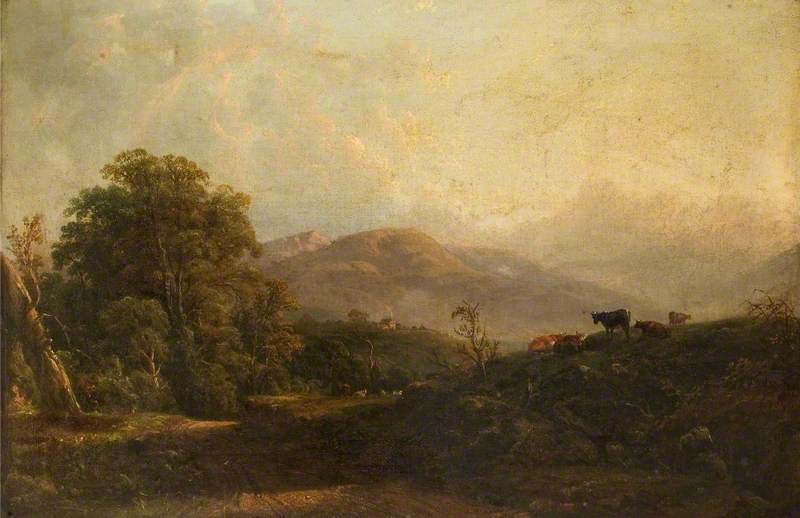
Cattle in a Mountain Landscape
 1870
1870 24.0 x 35.0 cm
 Weiterlesen
Erwerben Sie ein hochauflösendes, optimiertes digitales Bild, das der Online-Vorschau weit überlegen ist.
Jede Datei wird von unseren hauseigenen Spezialisten mit modernsten Werkzeugen und fachmännischer manueller Retusche sorgfältig vorbereitet. Wir stellen sicher, dass jedes Bild eine außergewöhnliche Klarheit, präzise Farbgenauigkeit und feinste Details aufweist.
Die endgültige Datei wird innerhalb von 72 Stunden per E-Mail zugestellt und ist für den sofortigen Einsatz in professionellen, redaktionellen und Druckumgebungen optimiert. Es handelt sich um dieselbe Qualität, der führende Designstudios, Verlage und Galerien vertrauen.
Digitales Bild
Laden Sie eine hochauflösende Datei für die persönliche Präsentation, den Druck und kreative Projekte herunter. ( Druck bestellen Handgemalte Reproduktion bestellen)
In jeder Bestellung digitaler Bilder enthalten
Professionelle digitale Bereitstellung, garantiert
Wenn Sie sich für ArtsDot.com entscheiden, erhalten Sie nicht nur ein Bild – Sie erhalten ein professionell aufbereitetes digitales Kunstwerk, das mit höchster Präzision erstellt und durch eine Zufriedenheitsgarantie abgesichert wird. Hier ist alles, was automatisch mit Ihrer Bestellung geliefert wird:

Schnelle E-Mail-Zustellung
Ihre hochauflösende digitale Bilddatei wird Ihnen innerhalb von 72 Stunden nach der Bestellung per E-Mail zugestellt – bereit zur sofortigen Verwendung.

KI-optimierte digitale Datei
Ihre Kunstwerke werden professionell mithilfe fortschrittlicher KI-Tools und manueller Bearbeitung optimiert, um maximale Detailtreue, Klarheit und Farbgenauigkeit zu gewährleisten.

Lebenslanger kostenloser Neudruckservice
Datei versehentlich gelöscht oder verloren? Keine Sorge – wir senden sie Ihnen jederzeit kostenlos erneut zu.

Keine Einfuhrgebühren – jemals
Genießen Sie Ihr Kunstwerk sofort ohne Zollgebühren, Einfuhrabgaben oder Versandkosten – digitale Downloads sind immer steuerfrei.

Garantierte Farbtreue
Wir garantieren, dass Ihr digitales Bild mithilfe professioneller Werkzeuge und Farbmanagement die Originalfarben so präzise wie möglich wiedergibt.

60-Tage-Zufriedenheitsgarantie
Sollten Sie mit Ihrem digitalen Bild nicht zufrieden sein, werden wir es überarbeiten oder Ihnen innerhalb von 60 Tagen 100% erstatten – ohne Wenn und Aber.

100% Geld-zurück-Garantie
Nicht zufrieden? Erhalten Sie innerhalb von 60 Tagen nach Erhalt Ihrer digitalen Datei eine vollständige Rückerstattung – ohne Angabe von Gründen.

Rabatte bei Großbestellungen
3 Bilder kaufen, 10% sparen – 5 Bilder kaufen, 15% sparen – Ab 10 Bildern 20% sparen. Ideal für kreative Projekte, Galerien und Agenturen.
Ähnliche Kunstwerke










Biografie des Künstlers
John Frederick Tennant: A Painter of Welsh Rivers and Romantic Landscapes
John Frederick Tennant (1796-1872) emerged as a significant figure in 19th-century British art, primarily celebrated for his evocative depictions of the landscapes of Wales and beyond. More than simply a recorder of scenery, Tennant’s work embodies the Romantic spirit—a deep connection to nature, an appreciation for light and atmosphere, and a subtle undercurrent of melancholy. His artistic journey was largely self-directed, honed through observation and a keen eye for detail, though he did benefit from instruction in his early years. Tennant's legacy rests not only on the beauty of his paintings but also on his role as a bridge between the established academic tradition and the burgeoning Romantic movement.
Born in Newcastleton, Yorkshire, into a family with strong agricultural roots—his father was a sheep farmer—Tennant’s early life instilled within him a profound respect for the natural world. He received a modest education, attending St Leonards School in St Andrews and Marlborough College before pursuing studies at the Winchester School of Art, specializing in sculpture. This grounding in three-dimensional form would later inform his approach to landscape painting, imbuing his canvases with a sense of depth and spatial awareness. Notably, Tennant’s family history included connections to prominent figures like Stephen Tennant (a flamboyant socialite), William Cavendish, the 11th Duke of Devonshire, and even the Mitford sisters—connections that subtly shaped his artistic sensibilities.
The Development of a Distinctive Style
Tennant’s artistic style evolved significantly over his long career. Initially influenced by the meticulous detail and atmospheric effects of J.M.W. Turner, he gradually developed a more personal approach, characterized by loose brushwork, vibrant color palettes, and an emphasis on capturing fleeting moments of light and shadow. He was particularly drawn to the dramatic lighting conditions found in Welsh rivers and valleys—the way sunlight filtered through mist-shrouded hillsides, or reflected off the water’s surface. His compositions often feature a sense of quiet contemplation, inviting the viewer to lose themselves in the beauty of the scene.
A key element of Tennant's style was his ability to render the textures and surfaces of nature with remarkable accuracy—the rough bark of trees, the glistening wetness of rocks, the flowing movement of water. He achieved this through a combination of careful observation and a mastery of color theory. His use of complementary colors—such as blues and oranges—created a sense of vibrancy and luminosity that is characteristic of his work. Furthermore, Tennant’s paintings often incorporate subtle details—a shepherd tending to his flock, a lone cottage nestled in the valley—that add narrative depth and human connection to the landscapes.
Subjects and Themes: Rivers, Wales, and Romanticism
Tennant's most celebrated subjects were the rivers and valleys of Wales. He spent considerable time exploring this region, meticulously documenting its diverse scenery—from the dramatic cliffs of the coastline to the tranquil meadows of the interior. His paintings of Welsh rivers—the Wye, the Severn, the Usk—are particularly renowned for their atmospheric quality and sense of scale. These landscapes are not merely picturesque; they evoke a profound emotional response in the viewer, reflecting Tennant’s own deep appreciation for nature's beauty and power.
Beyond Wales, Tennant also painted scenes from other parts of Britain, including Devon and Cornwall. His work often explores themes of solitude, contemplation, and the relationship between humanity and the natural world. Tennant’s paintings are infused with a Romantic sensibility—a belief in the sublime power of nature and its ability to inspire awe and wonder. He was influenced by the writings of poets such as Wordsworth and Coleridge, who celebrated the beauty and spiritual significance of the English countryside.
Legacy and Recognition
John Frederick Tennant exhibited his work at the Royal Academy from 1820 until his death in 1872, gaining recognition for his distinctive style and masterful technique. His paintings are now held in major collections around the world, including the Museum of Montreal. Tennant’s influence can be seen in the works of later landscape painters, particularly those associated with the Pre-Raphaelite Brotherhood and the Aesthetic movement.
Despite not achieving widespread fame during his lifetime, Tennant's work has experienced a resurgence of interest in recent decades. His paintings are valued for their beauty, emotional depth, and historical significance. John Muir House, where Tennant was born, now serves as a museum dedicated to preserving his legacy and showcasing his art. He remains a vital figure in the history of British landscape painting—a painter who captured the essence of Wales and the spirit of the Romantic era.
john f tennant
1796 - 1872
Kurzinfos
- Artistic Movement Or Style: Romantic Landscape
- Artists Or Movements Influenced By This Artist: ['Tennant & Son']
- Artists Who Influenced This Artist:
- Turner
- Masters
- Date Of Birth: 1796
- Date Of Death: 1872
- Full Name: John Frederick Tennant
- Nationality: British
- Notable Artworks:
- River Landscapes
- Coastal Scenes
- Place Of Birth: Devon, England

