 Vorschau anzeigen
 Versenden
 Teilen
 Details anzeigen

 Herunterladen
 Ähnliche Objekte
 Röntgenaufnahme
 Diashow
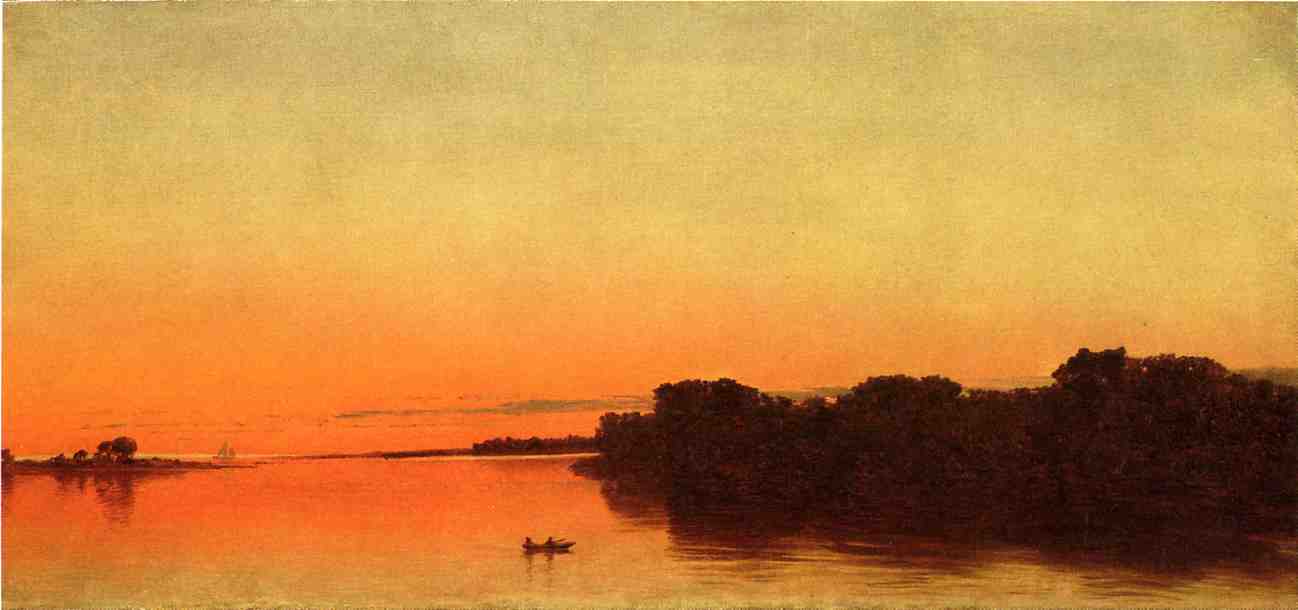
Twilight on the Sound, Darien, Connecticut


 Weiterlesen
Giclée / Kunstdruck
Giclée- oder Leinwanddruck in Museumsqualität mit schneller Produktion und flexiblen Veredelungsoptionen. ( Handgemalte Reproduktion bestellen Bild kaufen)




P118B $10

P118H $10

P118W $10

P438Z $10

P508JH $12

P508YH $12

P805H $10

P805Z $10

P919BZ $10

P919G $10

P919XJ $10

P959ZH $10

P968JZ $12

W106C $8

W218G $10

W218JH $8

W218Y $10

W307PJ $10

W316G $10

W316PJ $8

W316Y $10

W398PJ $8

W4111J $10

W500HY $15

W500JH $15

W692G $12

W849H $8

W940BG $15

W953PJ $8




Wählen Sie aus unseren vordefinierten Formaten, die den ursprünglichen Proportionen des Kunstwerks entsprechen.

Sie können Ihre eigenen Maße eingeben, um ein bestimmtes Format oder einen speziellen Platz einzupassen. Wenn das von Ihnen gewählte Format nicht den Proportionen des Originalbildes entspricht, werden wir das Kunstwerk entweder beschneiden oder das Bild mit einem gespiegelten oder einfarbigen Rand erweitern. Ein digitaler Entwurf wird Ihnen zur Genehmigung zugesandt, bevor die Produktion beginnt.
Bitte beachten Sie, dass die Vorschau auf dem Bildschirm nicht den tatsächlichen Zuschnitt oder die Erweiterung widerspiegelt. Nur der Entwurf zeigt die endgültige Komposition präzise an.
Obwohl Sondermaße verfügbar sind, empfehlen wir die Auswahl eines Maßes aus der vordefinierten Liste, um die ursprünglichen Proportionen zu bewahren.
Weltweiter Versand () innerhalb von 2 Wochen statt der üblichen 4/5 Wochen. (26 August)

Kostenloser weltweiter Expressversand

Hochwertige Leinenleinwand

Umfassender Versicherungsschutz beim Versand

Zollgebühren-Rückerstattungsgarantie

Garantie für exakte Farbtreue

60 Tage Rückgaberecht (nur bei Mängeln)

100% Geld-zurück-Garantie

Mengenrabatt verfügbar
 Die Glasoption ist nur für Größen unter 110 cm verfügbar.

Twilight on the Sound, Darien, Connecticut
Giclée / Kunstdruck
Format der Reproduktion
-


Gesamtpreis
$ 62
Sammlerstück-Beschreibung
Twilight on the Sound, Darien, Connecticut: A Luminist Masterpiece
John Frederick Kensett’s “Twilight on the Sound, Darien, Connecticut” isn't merely a depiction of a coastal sunset; it’s an immersion into a serene and contemplative mood. Painted in 1872, during a period when Kensett was deeply committed to capturing the subtle nuances of American light and landscape, this work exemplifies his mastery of Luminism – a style that sought to evoke atmosphere and emotion through delicate brushwork and luminous color palettes. The painting transports us to a quiet evening on Long Island Sound, where the drama of the setting sun is tempered by an underlying sense of tranquility.
The scene unfolds with remarkable precision. A dark, silhouetted island—Darien itself—looms in the distance, anchoring the composition and providing a grounding element against the ethereal glow of the sky. A small boat, rendered with careful attention to detail, glides across the water, its presence suggesting human connection within this vast natural expanse. Two figures are subtly integrated into the landscape, adding a touch of life and scale without disrupting the overall sense of peace. Kensett’s skill lies not in dramatic contrasts but in the subtle gradations of light and shadow, creating an almost palpable atmosphere.
The Language of Luminism
Kensett's approach to painting was profoundly influenced by his time in Europe, particularly his study of the works of J.M.W. Turner. However, he adapted these influences to create a distinctly American style. Unlike the often-bold and dramatic landscapes of the Hudson River School, Kensett favored a more restrained palette—predominantly cool blues, violets, and grays—and employed incredibly fine brushstrokes to build up layers of color and texture. This technique, known as “broken color,” allowed him to capture the fleeting effects of light and atmosphere with remarkable subtlety. The painting’s luminosity isn't achieved through bright highlights but rather through a delicate layering of translucent washes, mimicking the way sunlight filters through clouds or reflects off water.
The composition itself is carefully balanced, drawing the eye across the canvas from left to right. The dark foreground elements—the island and boat—create a sense of depth, while the expansive sky dominates the upper portion of the painting, inviting the viewer to lose themselves in its vastness. Kensett’s use of atmospheric perspective – where distant objects appear paler and less distinct – further enhances this effect, creating an illusion of immense space.
Historical Context and Artistic Significance
“Twilight on the Sound” was painted during a pivotal moment in American art history. The late 19th century witnessed a growing interest in capturing the unique beauty of the American landscape, driven by a desire to establish a distinctly national artistic identity. Kensett’s work played a significant role in this movement, helping to define the aesthetic principles of Luminism and establishing him as one of its leading practitioners. His dedication to portraying the subtle effects of light and atmosphere resonated with a public increasingly seeking solace and inspiration in nature.
Furthermore, Kensett's personal life deeply informed his art. His purchase of an island on Long Island Sound provided him with a private sanctuary—Contentment Island—where he could dedicate himself to capturing the beauty of the surrounding landscape. The painting reflects this deep connection to place and his profound appreciation for the natural world.
A Timeless Evocation of Peace
“Twilight on the Sound, Darien, Connecticut” is more than just a beautiful painting; it’s an invitation to pause and contemplate the serenity of nature. The soft light, the quiet stillness, and the subtle details all combine to create a deeply evocative experience. It's a testament to Kensett's skill as a painter and his ability to capture not only the appearance but also the feeling of a particular moment in time. Reproductions of this masterpiece offer a window into a world of tranquility—a reminder that even amidst the complexities of modern life, there is always beauty to be found in the simple wonders of nature.
Ähnliche Kunstwerke

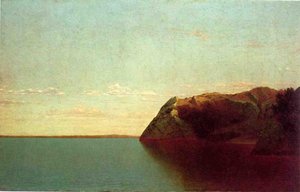

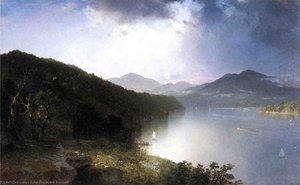
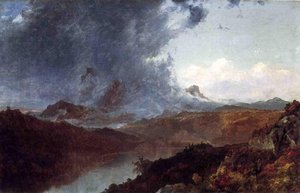

Über den Künstler
Ein Leben in der Hingabe an friedliche Landschaften
John Frederick Kensett wurde am 22. März 1816 in Cheshire, Connecticut, geboren. Als Mitglied der zweiten Generation der Hudson River School Künstler sind Kensetts charakteristische Werke durch ihre friedlichen und leuchtenden Qualitäten gekennzeichnet, die die transzendenten Aspekte der Natur feiern.Frühes Leben und Ausbildung
Kensett besuchte die Cheshire Academy und studierte Gravur bei seinem Vater, Thomas Kensett. Er arbeitete später in New Haven als Graveur, bevor er 1838 nach New York City zog, um dort Banknotengravuren zu fertigen. Im Jahr 1840 reiste Kensett nach Europa, um seine Fähigkeiten im Malen zu verfeinern und lernte dabei Benjamin Champney kennen.Etablierter Stil und Luminismus
Nach der Eröffnung seines Ateliers in New York City bereiste Kensett ausgiebig die nordöstliche Region und die Colorado Rockies und hielt das Wesen dieser Landschaften fest. Sein Stil entwickelte sich von der traditionellen Hudson River School hin zu einem raffinierteren Luminismus, der durch unbefangene Pinselstriche gekennzeichnet ist, die die Qualitäten des atmosphärischen Lichts vermitteln.- Mount Washington from the Valley of Conway (1851), ein ikonisches Gemälde, wurde von der American Art Union erworben und an 13.000 Abonnenten verteilt.
- Eaton's Neck, Long Island (1872), ein Paradebeispiel für Kensetts Luminismus-Stil, befindet sich nun in der Sammlung des Metropolitan Museum of Art in New York.
Vermächtnis und Beiträge
Kensett war Mitbegründer des Metropolitan Museum of Art und Vollmitglied der National Academy of Design. Seine Arbeit, die zu Lebzeiten hoch angesehen war, beeinflusst weiterhin die Landschaftsmalerei. Wichtige Werke:- Sunset Sky (ca. 1870), The Metropolitan Museum of Art, New York
- Three Mile Harbor (ca. 1860), Museum of Fine Arts, Tallahassee
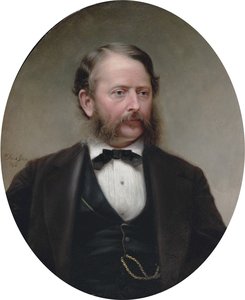
John Frederick Kensett
1816 - 1872 , Vereinigte Staaten von Amerika
Kurzinfos
- Beeinflusste Künstler:
- Thomas Cole
- Benjamin Champney
- Bemerkenswerte Werke:
- Mount Washington from the Valley
- Eaton’s Neck, Long Island
- Sunset Sky
- Three Mile Harbor
- Geburtsdatum: 22. März 1816
- Geburtsort: Cheshire, USA
- Künstlerische Richtung: Hudson River School, Luminismus
- Nationalität: Amerikanisch
- Sterbedatum: 14. Dezember 1872
- Vollständiger Name: John Frederick Kensett
Ähnliche Artikel

John Frederick Kensett: Luministische Ästhetik und nationale Identität in der amerikanischen Landschaftsmalerei
Entdecken Sie das Werk von John Frederick Kensett und die Ästhetik des Luminismus! Erfahren Sie mehr über seine Bedeutung für die amerikanische Landschaftsmalerei und die Suche nach nationaler Identität. Expertenanalyse & Hintergrundinformationen.
John Singer Sargent: Die 25 Meisterwerke des Porträts – Kunst für Ihr Zuhause | ArtsDot
Entdecken Sie die 25 Meisterwerke von John Singer Sargent! Tauchen Sie ein in die Welt der Porträtmalerei, des Impressionismus & der Belle Époque. Hochwertige Kunstdrucke & Reproduktionen für Ihr Zuhause – jetzt auf ArtsDot.com!

John Constable: Die 25 Meisterwerke des englischen Landschaftsgenies – ArtsDot
Entdecken Sie die 25 Meisterwerke von John Constable! Erleben Sie englische Landschaftsmalerei vom Hay Wain bis zur Stour Valley. Hochwertige Reproduktionen & Kunst für Ihr Zuhause auf ArtsDot.com.

John Frederick Lewis: Orientalismus, Detail und Genremalerei im 19. Jahrhundert der britischen Kunst
Entdecken Sie das faszinierende Werk von John Frederick Lewis! Wir analysieren seinen Orientalismus, Detailreichtum und seine Genremalerei im Kontext des 19. Jahrhunderts. Expertenwissen zur britischen Kunstgeschichte.
John Frederick Herring Senior: Meister der Pferde und Aufstieg der Sportmalerei im viktorianischen England
Entdecken Sie das Leben und Werk von John Frederick Herring Senior, dem Meister der viktorianischen Pferdeporträts. Erfahren Sie mehr über seinen Stil, seine königlichen Aufträge und sein Vermächtnis in der englischen Kunstgeschichte.