

 Vorschau anzeigen
 Versenden
 Teilen
 Details anzeigen

 Herunterladen
 Ähnliche Objekte
 Röntgenaufnahme
 Diashow
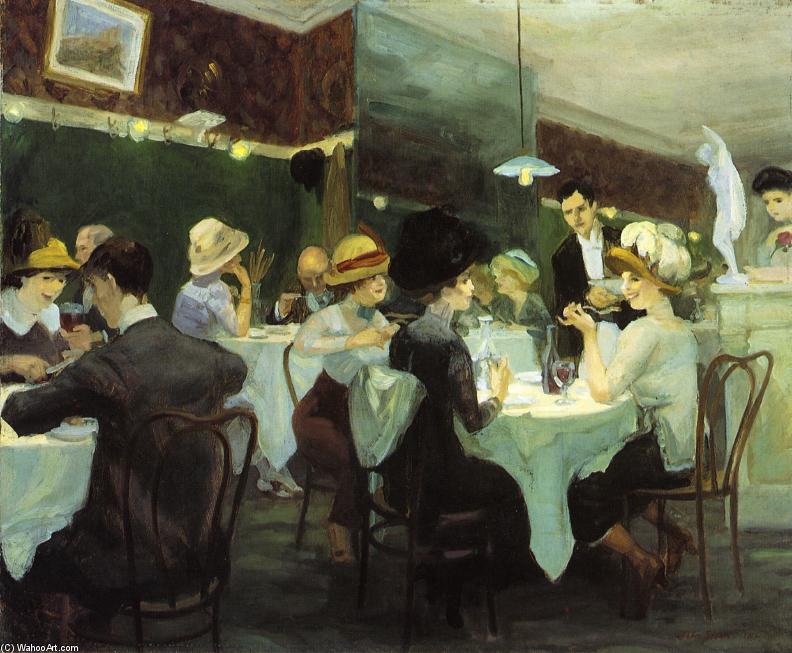
Renganeschi's Saturday Night


 Weiterlesen
Erwerben Sie ein hochauflösendes, optimiertes digitales Bild, das der Online-Vorschau weit überlegen ist.
Jede Datei wird von unseren hauseigenen Spezialisten mit modernsten Werkzeugen und fachmännischer manueller Retusche sorgfältig vorbereitet. Wir stellen sicher, dass jedes Bild eine außergewöhnliche Klarheit, präzise Farbgenauigkeit und feinste Details aufweist.
Die endgültige Datei wird innerhalb von 72 Stunden per E-Mail zugestellt und ist für den sofortigen Einsatz in professionellen, redaktionellen und Druckumgebungen optimiert. Es handelt sich um dieselbe Qualität, der führende Designstudios, Verlage und Galerien vertrauen.
Digitales Bild
Laden Sie eine hochauflösende Datei für die persönliche Präsentation, den Druck und kreative Projekte herunter. ( Druck bestellen Handgemalte Reproduktion bestellen)
In jeder Bestellung digitaler Bilder enthalten
Professionelle digitale Bereitstellung, garantiert
Wenn Sie sich für ArtsDot.com entscheiden, erhalten Sie nicht nur ein Bild – Sie erhalten ein professionell aufbereitetes digitales Kunstwerk, das mit höchster Präzision erstellt und durch eine Zufriedenheitsgarantie abgesichert wird. Hier ist alles, was automatisch mit Ihrer Bestellung geliefert wird:

Schnelle E-Mail-Zustellung
Ihre hochauflösende digitale Bilddatei wird Ihnen innerhalb von 72 Stunden nach der Bestellung per E-Mail zugestellt – bereit zur sofortigen Verwendung.

KI-optimierte digitale Datei
Ihre Kunstwerke werden professionell mithilfe fortschrittlicher KI-Tools und manueller Bearbeitung optimiert, um maximale Detailtreue, Klarheit und Farbgenauigkeit zu gewährleisten.

Lebenslanger kostenloser Neudruckservice
Datei versehentlich gelöscht oder verloren? Keine Sorge – wir senden sie Ihnen jederzeit kostenlos erneut zu.

Keine Einfuhrgebühren – jemals
Genießen Sie Ihr Kunstwerk sofort ohne Zollgebühren, Einfuhrabgaben oder Versandkosten – digitale Downloads sind immer steuerfrei.

Garantierte Farbtreue
Wir garantieren, dass Ihr digitales Bild mithilfe professioneller Werkzeuge und Farbmanagement die Originalfarben so präzise wie möglich wiedergibt.

60-Tage-Zufriedenheitsgarantie
Sollten Sie mit Ihrem digitalen Bild nicht zufrieden sein, werden wir es überarbeiten oder Ihnen innerhalb von 60 Tagen 100% erstatten – ohne Wenn und Aber.

100% Geld-zurück-Garantie
Nicht zufrieden? Erhalten Sie innerhalb von 60 Tagen nach Erhalt Ihrer digitalen Datei eine vollständige Rückerstattung – ohne Angabe von Gründen.

Rabatte bei Großbestellungen
3 Bilder kaufen, 10% sparen – 5 Bilder kaufen, 15% sparen – Ab 10 Bildern 20% sparen. Ideal für kreative Projekte, Galerien und Agenturen.
Details zum Sammlerstück
The Scene Unfolds: A Snapshot of Chelsea's Vibrant Heart
John French Sloan’s “Renganeschi’s Saturday Night,” painted in 1912, isn’t merely a depiction of a restaurant scene; it’s a meticulously crafted slice of life captured within the bustling heart of New York City. The painting transports us to Renganeschi's, a popular Italian eatery nestled in Chelsea – a neighborhood then brimming with artists, writers, and the burgeoning energy of a rapidly changing metropolis. Sloan masterfully avoids romanticizing this urban landscape; instead, he presents it with an honest, almost gritty realism that reflects the everyday experiences of its inhabitants. The composition is deliberately crowded, a deliberate visual representation of the lively atmosphere – tables packed close together, conversations overlapping, and a general sense of contained excitement.
The focal point is undoubtedly the central table, where three women are engaged in animated conversation. They’re not posed heroically or idealized; their postures are relaxed, even slightly languid, suggesting a comfortable familiarity and a shared enjoyment of the evening. Notice the details: one woman leans back with her legs casually draped over the chair, another playfully adjusts her pinky finger – gestures that subtly challenge Victorian conventions of decorum and hint at a newfound freedom for women in public spaces. The inclusion of men at other tables further emphasizes this shift, suggesting a loosening of social constraints.
A Masterclass in Ashcan Realism: Sloan’s Technique
Sloan's style firmly places “Renganeschi’s Saturday Night” within the Ashcan School movement. This group of artists rejected the idealized subjects and polished techniques favored by academic art, instead choosing to depict the realities of urban life – often focusing on working-class communities and everyday scenes. Sloan’s brushwork is loose and expressive, capturing the fleeting moments and vibrant energy of the scene with remarkable immediacy. He employs a technique known as “broken color,” applying thin layers of paint in short, irregular strokes, allowing the underlying colors to peek through—a method that creates a sense of movement and depth.
The use of light is particularly noteworthy. Sloan doesn’t rely on dramatic contrasts; instead, he employs a diffused, almost hazy illumination, typical of city life at night. This subtle lighting contributes to the painting's overall mood—a feeling of warmth, conviviality, and understated drama. The artist’s attention to detail extends beyond the figures themselves; observe the carefully rendered glassware, the patterned tablecloths, and the glimpses of other patrons in the background – all contributing to a richly textured and believable environment.
Symbolism and Social Commentary: A Glimpse into the Era
Beyond its immediate depiction of a restaurant scene, “Renganeschi’s Saturday Night” carries significant social commentary. The painting reflects the changing role of women in early 20th-century America—a period marked by increasing opportunities for education and employment, as well as evolving social norms. The women's relaxed behavior at the table represents a subtle rebellion against traditional expectations of female propriety. Furthermore, Sloan’s choice to portray this scene within a working-class establishment highlights the growing accessibility of leisure activities for all segments of society.
The inclusion of Renganeschi’s itself is also significant. The restaurant was known for its lively atmosphere and diverse clientele, attracting artists, writers, and laborers alike. Sloan's decision to depict this particular establishment suggests a deliberate engagement with the social fabric of Chelsea—a neighborhood that served as a vital hub for artistic innovation during this period. The painting serves as a poignant reminder of a time when New York City was undergoing rapid transformation, and its diverse communities were shaping the city’s cultural identity.
A Timeless Reflection: The Enduring Appeal
“Renganeschi’s Saturday Night” remains a captivating work of art due to its ability to transport us back in time—to a vibrant, bustling New York City and a moment of social change. Sloan's masterful technique, combined with his insightful portrayal of everyday life, creates an image that is both visually arresting and emotionally resonant. It’s a testament to the power of art to capture not just a scene, but also the spirit of an era—a timeless reflection on urban life, social dynamics, and the enduring human desire for connection and enjoyment.
Ähnliche Kunstwerke

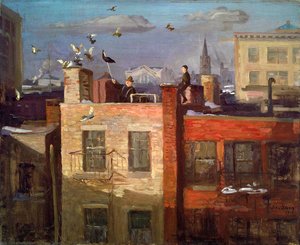
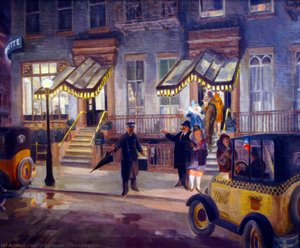
Biografie des Künstlers
Early Life and Artistic Awakening
John French Sloan, born August 2, 1871, in Lock Haven, Pennsylvania, emerged from humble beginnings that profoundly shaped his artistic vision. His childhood was marked by a familial need for support; his father’s struggles with mental health necessitated young John taking on responsibilities beyond his years. This early exposure to the realities of working-class life—a world often overlooked by the established art circles—would become a defining characteristic of his oeuvre. He moved with his family to Philadelphia, where he honed his skills initially not through formal academic training, but as an assistant cashier at Porter and Coates, a bookstore brimming with prints and illustrations. This environment proved formative; it allowed him to study masters like Dürer and Rembrandt, fostering a deep appreciation for draftsmanship and etching techniques. It was here, amidst the commerce of printed images, that Sloan began creating his own art, quietly developing a style rooted in observation and meticulous detail. His early work wasn’t born from privilege or leisure, but from necessity and a keen eye for the world around him—a foundation upon which he would build a remarkable career.The Ashcan School and Urban Realism
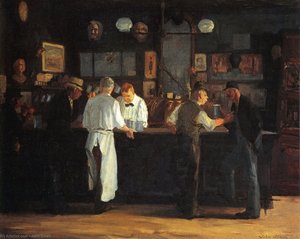
Sloan's trajectory shifted dramatically with his encounter with Robert Henri, a charismatic painter who championed artistic independence and a commitment to portraying everyday life. This connection led Sloan to the heart of what became known as the Ashcan School—a group of artists dedicated to depicting the gritty realities of turn-of-the-century New York City. Alongside William Glackens, George Luks, Everett Shinn, and others, Sloan rejected the idealized landscapes and portraits favored by many of their contemporaries, instead turning their attention to the bustling streets, crowded tenements, and vibrant social life of the city’s poorer neighborhoods. His work became a visual chronicle of this often-ignored world—capturing scenes from McSorley’s Bar to women drying their hair on rooftops. Sloan wasn’t merely documenting; he was imbuing these scenes with a sense of empathy and dignity, elevating the lives of ordinary people onto the canvas. He possessed an uncanny ability to capture the *essence* of neighborhood life, the subtle gestures and fleeting moments that revealed the character of a place and its inhabitants. This commitment to realism wasn’t simply aesthetic; it was also informed by his socialist leanings, though he always maintained a distinction between his art and his political beliefs.Style and Influences
Sloan's artistic style is characterized by a distinctive blend of influences. While rooted in realism, his work wasn’t devoid of stylistic nuance. He employed dark, rich hues—often emphasizing the contrast between light and shadow—to create a sense of drama and atmosphere. His compositions were carefully constructed, often utilizing strong diagonals to draw the viewer's eye into the scene. The influence of etching is evident in his precise linework and attention to detail, even in his paintings. Beyond Henri, Sloan drew inspiration from European masters like Edgar Degas and Honoré Daumier, admiring their ability to capture movement and social commentary. However, he forged a uniquely American voice, one that resonated with the energy and dynamism of New York City. His work wasn’t about grand narratives or historical events; it was about the small moments, the everyday experiences that constituted the fabric of urban life. He found beauty in the mundane, transforming ordinary scenes into compelling works of art. Wake of the Ferry exemplifies his ability to imbue a seemingly simple scene with emotional depth and symbolic resonance.Major Achievements
Sloan’s career as a commercial newspaper artist began while he was still in his teens. As a young man, he was forced to leave the prestigious Central High School to help support his family. One of his early jobs was at A. Edward Newton, where he produced cards, gift books, and other novelties. Many of these items were produced as etchings, a medium he taught himself in the late 1880s. For Newton, Sloan depicted the homes of famous poets, designed pretty calendars, and etched booklets like *Thoughts* *from Tennyson*. His delicate, precise renderings reveal a flair for decoration, which helped him earn a position on the staff of the *Philadelphia Inquirer *in 1892. He continued at the *Inquirer*, until he received a better offer from the competing *Philadelphia Press*. At the newspapers, Sloan produced a wide range of illustrations including on-the-spot news pictures, though it quickly became apparent that this was not his strength, unlike his friends William Glackens, George Luks, and Everett Shinn who excelled at rapid sketches. He specialized in decorative work, like headings, puzzles, and illustrations for fiction and the society pages. His later paintings explored themes of solitude and melancholy, reflecting a profound sensitivity to human emotion. ## Legacy and Lasting Impact Sloan’s influence can be seen in the works of subsequent realist painters and continues to inspire artists who seek to find beauty and meaning in the everyday world. He was a dedicated teacher, sharing his knowledge and passion with countless students throughout his career. His paintings are not merely historical documents; they are timeless portraits of life, love, and loss. Sloan’s legacy extends far beyond his contributions to the Ashcan School.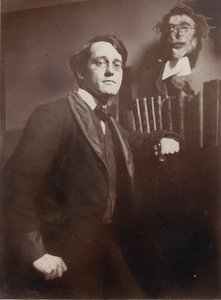
John French Sloan
1871 - 1951 , Vereinigte Staaten
Kurzinfos
- Artistic Movement Or Style: Ashcan School
- Artists Who Influenced This Artist: ['Robert Henri']
- Date Of Birth: August 2, 1871
- Full Name: John French Sloan
- Nationality: Amerikaner
- Notable Artworks:
- Wake of the Ferry
- McSorley’s Bar
- Place Of Birth: Lock Haven, USA

