

 Vorschau anzeigen
 Versenden
 Teilen
 Details anzeigen

 Herunterladen
 Ähnliche Objekte
 Röntgenaufnahme
 Diashow
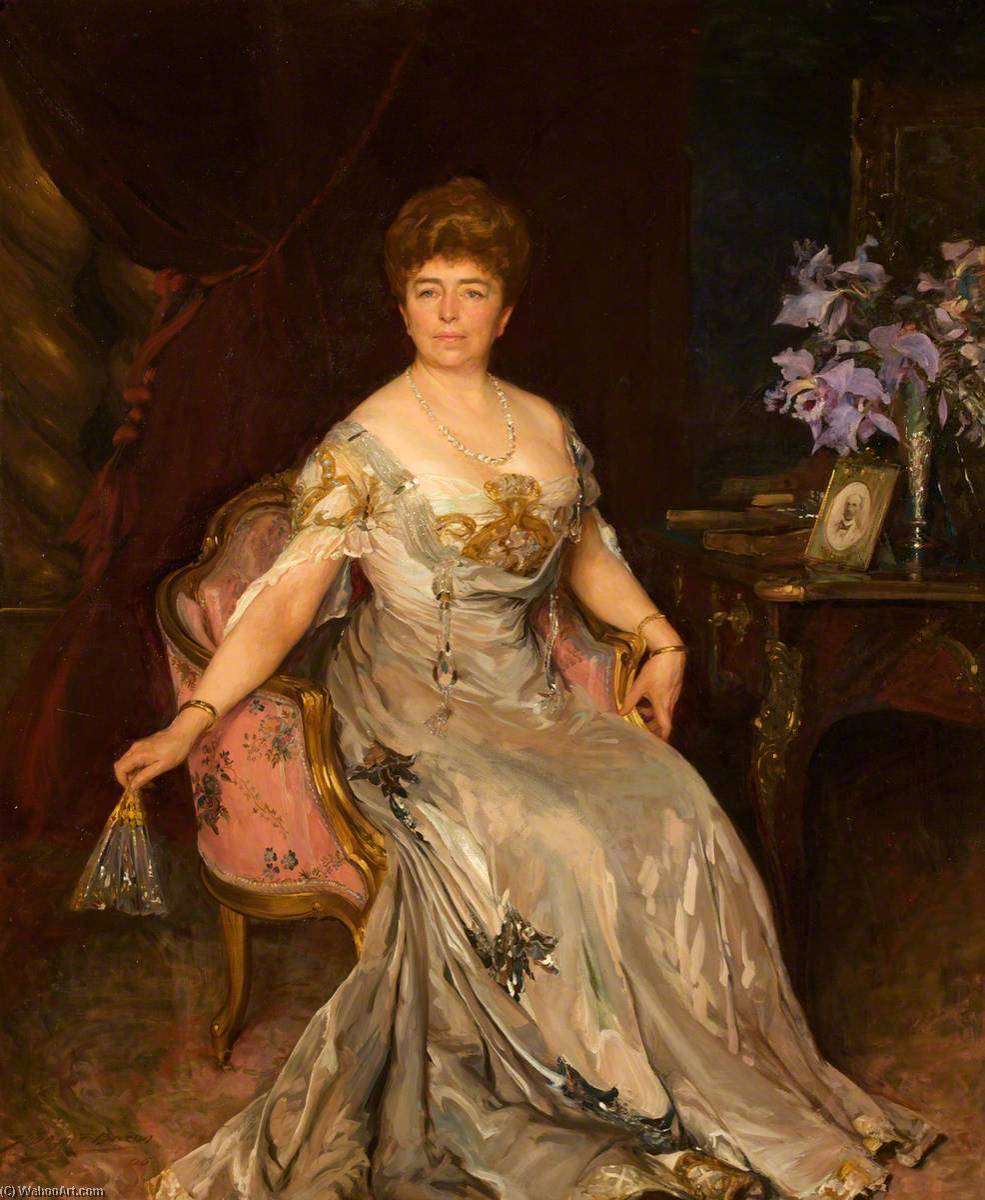
Florentia Maria Crawshay, née Wood
 1906
1906 181.0 x 150.0 cm
 Weiterlesen
Erwerben Sie ein hochauflösendes, optimiertes digitales Bild, das der Online-Vorschau weit überlegen ist.
Jede Datei wird von unseren hauseigenen Spezialisten mit modernsten Werkzeugen und fachmännischer manueller Retusche sorgfältig vorbereitet. Wir stellen sicher, dass jedes Bild eine außergewöhnliche Klarheit, präzise Farbgenauigkeit und feinste Details aufweist.
Die endgültige Datei wird innerhalb von 72 Stunden per E-Mail zugestellt und ist für den sofortigen Einsatz in professionellen, redaktionellen und Druckumgebungen optimiert. Es handelt sich um dieselbe Qualität, der führende Designstudios, Verlage und Galerien vertrauen.
Digitales Bild
Laden Sie eine hochauflösende Datei für die persönliche Präsentation, den Druck und kreative Projekte herunter. ( Druck bestellen Handgemalte Reproduktion bestellen)
In jeder Bestellung digitaler Bilder enthalten
Professionelle digitale Bereitstellung, garantiert
Wenn Sie sich für ArtsDot.com entscheiden, erhalten Sie nicht nur ein Bild – Sie erhalten ein professionell aufbereitetes digitales Kunstwerk, das mit höchster Präzision erstellt und durch eine Zufriedenheitsgarantie abgesichert wird. Hier ist alles, was automatisch mit Ihrer Bestellung geliefert wird:

Schnelle E-Mail-Zustellung
Ihre hochauflösende digitale Bilddatei wird Ihnen innerhalb von 72 Stunden nach der Bestellung per E-Mail zugestellt – bereit zur sofortigen Verwendung.

KI-optimierte digitale Datei
Ihre Kunstwerke werden professionell mithilfe fortschrittlicher KI-Tools und manueller Bearbeitung optimiert, um maximale Detailtreue, Klarheit und Farbgenauigkeit zu gewährleisten.

Lebenslanger kostenloser Neudruckservice
Datei versehentlich gelöscht oder verloren? Keine Sorge – wir senden sie Ihnen jederzeit kostenlos erneut zu.

Keine Einfuhrgebühren – jemals
Genießen Sie Ihr Kunstwerk sofort ohne Zollgebühren, Einfuhrabgaben oder Versandkosten – digitale Downloads sind immer steuerfrei.

Garantierte Farbtreue
Wir garantieren, dass Ihr digitales Bild mithilfe professioneller Werkzeuge und Farbmanagement die Originalfarben so präzise wie möglich wiedergibt.

60-Tage-Zufriedenheitsgarantie
Sollten Sie mit Ihrem digitalen Bild nicht zufrieden sein, werden wir es überarbeiten oder Ihnen innerhalb von 60 Tagen 100% erstatten – ohne Wenn und Aber.

100% Geld-zurück-Garantie
Nicht zufrieden? Erhalten Sie innerhalb von 60 Tagen nach Erhalt Ihrer digitalen Datei eine vollständige Rückerstattung – ohne Angabe von Gründen.

Rabatte bei Großbestellungen
3 Bilder kaufen, 10% sparen – 5 Bilder kaufen, 15% sparen – Ab 10 Bildern 20% sparen. Ideal für kreative Projekte, Galerien und Agenturen.
Ähnliche Kunstwerke









Biografie des Künstlers
A Legacy of Light and Devotion: The Life of John Henry Frederick Bacon
In the heart of the Victorian era, a period defined by its profound spiritual inquiries and burgeoning imperial identity, the works of John Henry Frederick Bacon emerged as luminous windows into both the divine and the historical. Born on November 4th, 1865, in Kennington, London, Bacon was destined for a life shaped by the brush and the ink. As the son of the lithographer John Cardanall Bacon, he was raised within an environment where the meticulous craft of image-making was second nature. This early immersion in the technicalities of print and illustration provided him with a foundational precision that would later define his mastery of oil painting.
Bacon’s artistic journey was one of both academic rigor and worldly exploration. His formal education at the Westminster School of Art and the prestigious Royal Academy Schools in London equipped him with the classical vocabulary necessary to navigate the competitive London art scene. However, it was a formative expedition at the tender age of eighteen to India and Burma that truly expanded his visual lexicon. Immersed in the vibrant colors, exotic textures, and spiritual atmospheres of Southeast Asia, the young artist developed an eye for detail and a sensitivity to light that would later infuse his religious and historical compositions with an almost palpable vitality.
The Intersection of Faith and Realism
Upon his return to England in 1889, Bacon quickly ascended the ranks of the Royal Academy exhibitors, establishing himself as a painter capable of profound emotional resonance. He found his greatest acclaim in the realm of biblical narrative, where he sought to bridge the gap between ancient scripture and contemporary Victorian sensibility. In masterpieces such as Peace Be Unto You (1897) and Gethsemane (1899), Bacon did not merely illustrate holy events; he breathed life into them through a sophisticated command of tonal gradation. By employing the painstaking technique of layering glazes, he achieved a luminous quality that allowed light to appear as if emanating from within the canvas itself.
This technical brilliance served a higher purpose: to invite the viewer into a state of theological contemplation. His religious works are characterized by a seamless blend of realism and spiritual depth, where the physical textures of cloth, skin, and stone serve to ground the miraculous in the recognizable world. This ability to render the sacred through the lens of the tangible made his work deeply relatable to a public navigating the complexities of faith in a rapidly modernizing age.
Chronicler of an Empire
While his religious paintings captured the eternal, Bacon was equally adept at capturing the ephemeral moments of British history. He possessed a unique talent for historical painting, utilizing his skill to document the grandeur and the gravity of the British monarchy. His commissions for significant state events—such as Homage Giving, Westminster Abbey for the coronation of Edward VII and The Coronation Ceremony of George V (1911)—demonstrate his ability to manage large-scale compositions with dramatic flair and historical accuracy. These works functioned as much as historical records as they did high art, freezing pivotal moments of national identity in oil.
Beyond the halls of Westminster, Bacon’s brush touched upon the pulse of contemporary life. He was a master of genre painting, capable of capturing the intimate joys and quiet dramas of the era. Works like The Wedding Morning (1892) showcase his ability to evoke warmth and intimacy through soft lighting and a delicate color palette, while his illustrations for various periodicals allowed him to maintain a connection with the broader public. His versatility extended from the monumental to the miniature, from the epic scale of imperial returns to the tender details of a bride's preparation.
Final Reflections on a Distinguished Career
The life of John Henry Frederick Bacon was marked by significant honors, including his appointment as an Associate of the Royal Academy (ARA) and being awarded the MVO (Member of the Royal Victorian Order) for his distinguished service to the King. These accolades reflect a career that was deeply intertwined with the cultural and political fabric of his time. Tragically, his life was cut short by acute bronchitis in 1914, at the age of only forty-eight, leaving behind a body of work that stands as a testament to the Victorian spirit.
Today, Bacon’s legacy survives through the enduring power of his imagery. His paintings remain significant not only for their technical excellence but for their ability to evoke the atmosphere of a bygone era—a time when art served as a bridge between the earthly and the divine, and between the individual and the grand sweep of history. To look upon a Bacon canvas is to witness a masterfully orchestrated dance of light, shadow, and devotion.
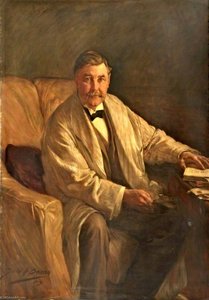
john henry frederick bacon
1865 - 1914
Kurzinfos
- Artistic Movement Or Style: Genre Painting
- Artists Or Movements Influenced By This Artist: ['Victorian Art']
- Artists Who Influenced This Artist:
- Gustave Dore
- William Holman Hunt
- Date Of Birth: November 4, 1865
- Date Of Death: January 24, 1914
- Full Name: John Henry Frederick Bacon
- Nationality: British
- Notable Artworks:
- Peace be unto you
- Gethsemane
- Homage giving, Westminster Abbey
- Place Of Birth: Kennington, England

