

 Vorschau anzeigen
 Versenden
 Teilen
 Details anzeigen

 Herunterladen
 Ähnliche Objekte
 Röntgenaufnahme
 Diashow
 Stats
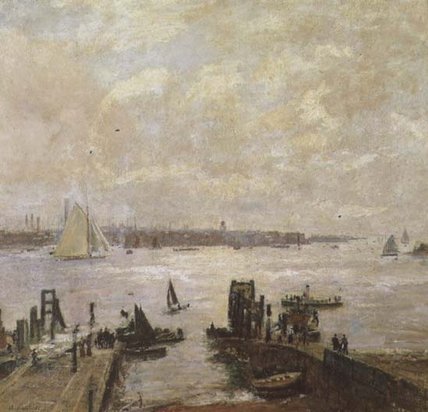
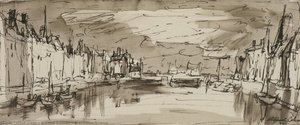
StatsPortsmouth Harbour
 Weiterlesen
Handgefertigte Ölreproduktion
Handgemaltes Ölgemälde auf Leinwand in Ihrer Wunschgröße und mit Rahmen, auf Bestellung von unseren Künstlern angefertigt. ( Switch to Print Switch to Digital Image)




































Wählen Sie aus unseren vordefinierten Formaten, die den ursprünglichen Proportionen des Kunstwerks entsprechen.

Sie können Ihre eigenen Maße eingeben, um einen bestimmten Rahmen oder Platz auszufüllen. Wenn die gewählte Größe nicht den Proportionen des Originalbildes entspricht, werden wir das Kunstwerk entweder beschneiden oder das Gemälde durch zusätzliche, handgemalte Elemente erweitern. Ein digitales Mockup wird Ihnen zur Genehmigung zugesandt, bevor die Produktion beginnt.
Bitte beachten Sie, dass die Bildschirmvorschau nicht die tatsächliche Beschneidung oder Erweiterung widerspiegelt. Nur das Mockup zeigt die endgültige Komposition exakt an.
Obwohl Sondermaße verfügbar sind, empfehlen wir, eine Größe aus der vordefinierten Liste zu wählen, um die ursprünglichen Proportionen beizubehalten.
Nach der Bestellung wird das ArtsDot.com-Team dem Kunden Anweisungen per E-Mail zusenden und eine Mockup-Vorschau bereitstellen.
Weltweiter Versand () in nur 3 bis 4 Wochen statt der üblichen 5 Wochen. (7 September). Keine Kompromisse bei der Qualität.

Kostenloser weltweiter Expressversand

Hochwertige Leinenleinwand

Umfassender Versicherungsschutz beim Versand

Zollgebühren-Rückerstattungsgarantie

Garantie für exakte Farbtreue

100-Tage-Rückgaberecht (nur bei Mängeln)

100% Geld-zurück-Garantie

Mengenrabatt verfügbar
 Die Glasoption ist nur für Größen unter 110 cm verfügbar.

Portsmouth Harbour
Art der Reproduktion
Format der Reproduktion
-


Gesamtpreis
$ 263
Ähnliche Kunstwerke


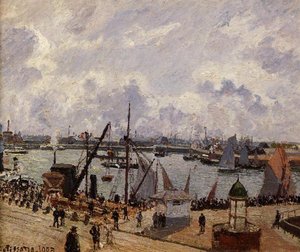
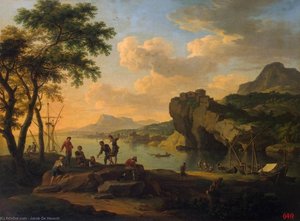
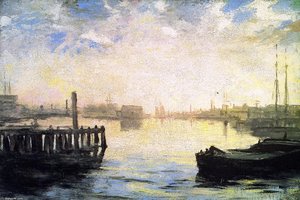
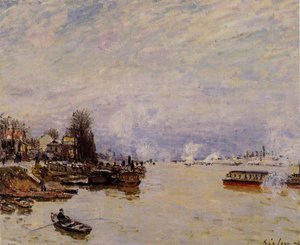
Über den Künstler
The Soul of the English Landscape: The Life and Legacy of John William Buxton Knight
In the golden age of Victorian landscape painting, few artists possessed the ability to translate the fleeting whispers of the British countryside into enduring visual poetry quite like John William Buxton Knight. Born in 1843 in the picturesque surroundings of Sevenoaks, Kent, Knight was a child of the very landscapes he would later immortalize. Raised by his father, William Knight—an accomplished artist and teacher himself—the young painter’s education began not within the sterile confines of a studio, but amidst the vibrant, living textures of nature. This early immersion in the open air instilled in him a lifelong devotion to plein air painting, a practice that would become the heartbeat of his creative existence.
Knight’s journey from a schoolmaster to a celebrated member of the Royal Society of British Artists is a testament to a profound, singular passion. While he initially pursued teaching, the call of the canvas proved irresistible. By 1861, his talent had already begun to command attention, with his first work hung at the prestigious Royal Academy. His approach was fundamentally rooted in an unyielding truth to nature; he eschewed the temptation of fashionable artifice in favor of a rigorous, observational honesty. This commitment to the authentic atmosphere of the outdoors allowed him to capture the subtle shifts in light and the heavy, moisture-laden air of the English coast and rural meadows with unparalleled sensitivity.
Mastery of Light and Atmosphere
The brilliance of Knight’s oeuvre lies in his sophisticated command of luminism and tonal gradation. Influenced by the sweeping vistas of Frederic Church and the delicate harmonies found in the works of George Frederic Leighton, Knight developed a technique that emphasized the emotional weight of light. He was a master of the "golden hour," that ephemeral moment when the sun dips low, bathing fields and harbors in warm, amber hues. His palette, while often leaning toward the muted greens, deep blues, and earthy browns characteristic of the British landscape, frequently erupted with sudden, breathtaking splashes of orange and red to mark a sunset or a break in the clouds.
His technical execution was equally remarkable for its versatility. In his expansive meadow scenes, one finds a meticulous attention to detail—the delicate sway of wildflowers and the intricate textures of grass. Conversely, when depicting the rugged coastlines of Dorset or the bustling serenity of Poole Harbour, Knight employed looser, more expressive brushstrokes. This stylistic fluidity allowed him to convey the palpable movement of water and the shifting mists of the sea, creating a sense of depth and motion that draws the viewer directly into the scene. His work does not merely represent a place; it evokes the very feeling of standing within it.
A Lasting Impression on British Art
Throughout his prolific career, which saw the creation of over 300 paintings, Knight remained a steadfast observer of the English spirit. His ability to find the sublime in the everyday—whether in the starkness of a winter field or the tranquil reflection of a twilight sea—earned him a place among the great exponents of English landscape art. Critics of his time often drew comparisons to the legendary John Constable, noting that while Knight may not have sought to imitate the master, he shared a similar spirit of unconventionality and an intense, intelligent connection to the land.
The historical significance of Knight’s work is preserved in the permanent collections of some of the world's most esteemed institutions, including the Tate and the British Museum. His legacy is defined by a refusal to succumb to mere trend, choosing instead to document the enduring beauty of his homeland with a sincerity that transcends the Victorian era. Today, his paintings serve as luminous windows into a bygone landscape, reminding us of the profound emotional resonance found in the quiet, unadorned corners of the natural world.
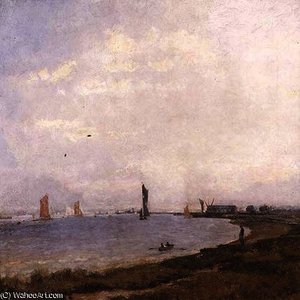
john william buxton knight
1843 - 1908 , United Kingdom
Kurzinfos
- Artistic Movement Or Style: Victorian Watercolor
- Date Of Birth: 1843
- Full Name: John William Buxton Knight
- Nationality: British
- Notable Artworks:
- Portsmouth Harbour
- Poole harbour
- Meadow Scene
- Place Of Birth: County Kent, United Kingdom