

 Vorschau anzeigen
 Versenden
 Teilen
 Details anzeigen

 Herunterladen
 Ähnliche Objekte
 Röntgenaufnahme
 Diashow
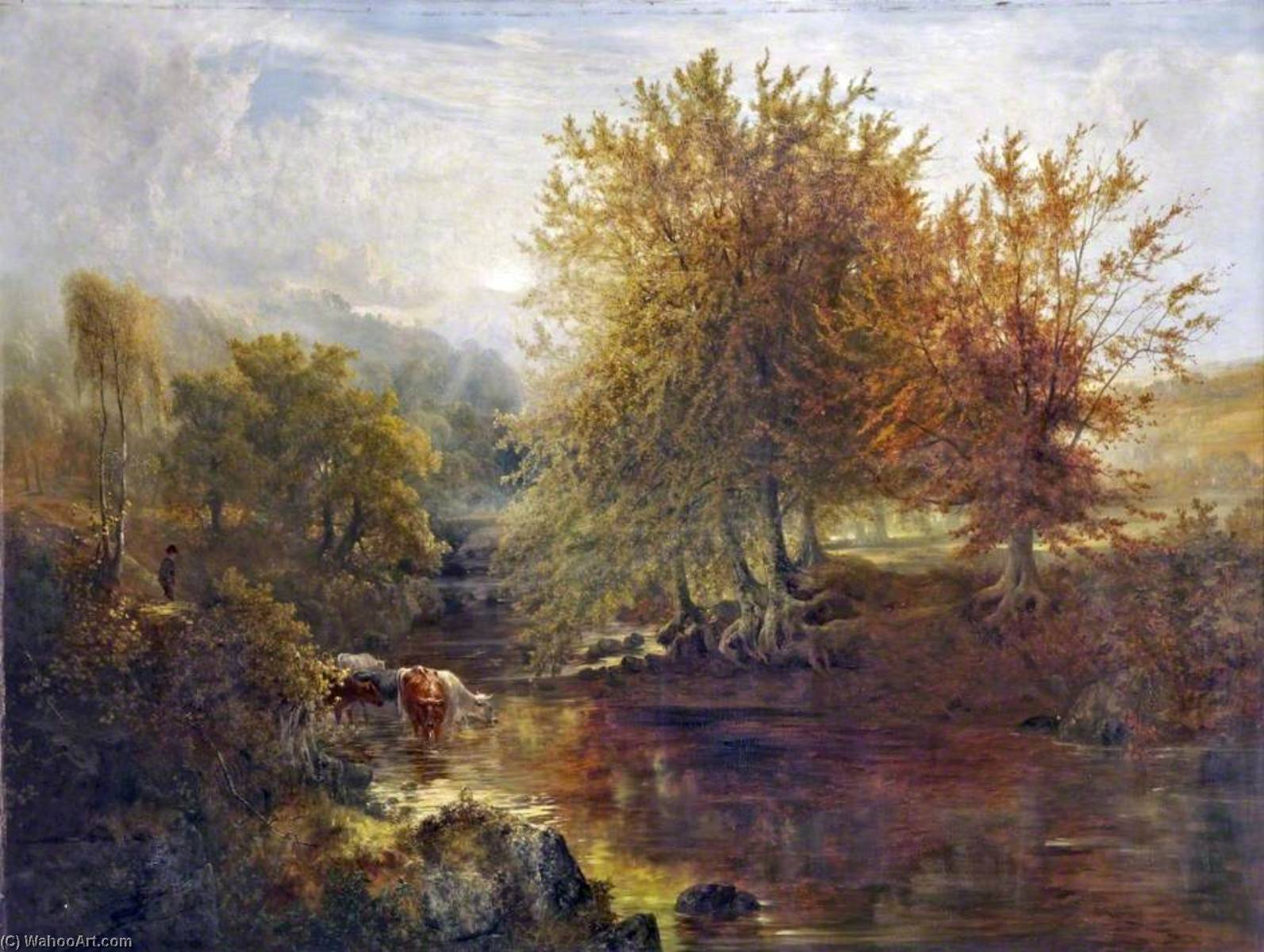
A North Devon Glen, Autumn
 Romanticism
 1870
1870 124.0 x 167.0 cm
 Walker Art Gallery
 Weiterlesen
Handgefertigte Ölreproduktion
Handgemaltes Ölgemälde auf Leinwand in Ihrer Wunschgröße und mit Rahmen, auf Bestellung von unseren Künstlern angefertigt. ( Druck bestellen Bild kaufen)




































Wählen Sie aus unseren vordefinierten Formaten, die den ursprünglichen Proportionen des Kunstwerks entsprechen.

Sie können Ihre eigenen Maße eingeben, um einen bestimmten Rahmen oder Platz auszufüllen. Wenn die gewählte Größe nicht den Proportionen des Originalbildes entspricht, werden wir das Kunstwerk entweder beschneiden oder das Gemälde durch zusätzliche, handgemalte Elemente erweitern. Ein digitales Mockup wird Ihnen zur Genehmigung zugesandt, bevor die Produktion beginnt.
Bitte beachten Sie, dass die Bildschirmvorschau nicht die tatsächliche Beschneidung oder Erweiterung widerspiegelt. Nur das Mockup zeigt die endgültige Komposition exakt an.
Obwohl Sondermaße verfügbar sind, empfehlen wir, eine Größe aus der vordefinierten Liste zu wählen, um die ursprünglichen Proportionen beizubehalten.
Nach der Bestellung wird das ArtsDot.com-Team dem Kunden Anweisungen per E-Mail zusenden und eine Mockup-Vorschau bereitstellen.
Weltweiter Versand () in nur 3 bis 4 Wochen statt der üblichen 5 Wochen. (23 August). Keine Kompromisse bei der Qualität.

Kostenloser weltweiter Expressversand

Hochwertige Leinenleinwand

Umfassender Versicherungsschutz beim Versand

Zollgebühren-Rückerstattungsgarantie

Garantie für exakte Farbtreue

60 Tage Rückgaberecht (nur bei Mängeln)

100% Geld-zurück-Garantie

Mengenrabatt verfügbar
 Die Glasoption ist nur für Größen unter 110 cm verfügbar.

A North Devon Glen, Autumn
Art der Reproduktion
Format der Reproduktion
-


Gesamtpreis
$ 263
Beschreibung des Kunstwerks
The Painting's Composition
The scene depicts a tranquil atmosphere, with a man riding a horse near a river, surrounded by trees and other figures. The presence of birds adds depth and life to the composition, creating an overall sense of peace. The use of warm colors and soft brushstrokes evokes a sense of autumnal coziness, inviting the viewer to step into the serene world of the painting.John Wright Oakes: A Renowned Artist
John Wright Oakes was a talented artist known for his landscapes and genre scenes. His work can be found in various museums, including the Walker Art Gallery, which also features pieces by other notable artists such as Philip Westcott and Edward Coley Sir Burne-Jones. To learn more about these artists and their works, visit The Walker Art Gallery page on ArtsDot.- The Tivey at Newcastle Emlyn, Cardiganshire by John Wright Oakes is another notable piece that showcases the artist's skill in capturing the beauty of landscapes.
- Morning at Angera, Lago Maggiore by John Wright Oakes is a stunning example of the artist's ability to evoke a sense of serenity and tranquility in his paintings.
The Walker Art Gallery is a must-visit destination for art enthusiasts, featuring an impressive collection of fine and decorative arts. To learn more about the gallery and its collections, visit The Walker Art Gallery page on ArtsDot.
Ähnliche Kunstwerke
Über den Künstler
The Soul of the Welsh Landscape: The Life and Art of John Wright Oakes
In the heart of the Victorian era, a period defined by both industrial expansion and a profound romantic longing for the untouched natural world, the works of John Wright Oakes emerged as a poignant bridge between reality and imagination. Born in 1820 at Sproston House near Middlewich, Cheshire, Oakes was a man whose lineage and upbringing provided a stable foundation for a life dedicated to the pursuit of aesthetic truth. While his early years were rooted in the English countryside, his artistic spirit found its true home amidst the rugged, mist-shrouded peaks and dramatic coastlines of Wales. His journey from a student of fine details to a master of atmospheric grandeur represents one of the most compelling narratives of nineteenth-century British landscape painting.
Oakes’s formal training began in Liverpool, where he studied under the guidance of John Bishop at the school attached to the Liverpool Mechanics’ Institution. This early education instilled in him a meticulous discipline that would later serve as the bedrock for his more expansive works. Interestingly, his initial foray into the art world was not through the sweeping vistas for which he is now celebrated, but through the delicate and precise genre of fruit paintings. These early still lifes, exhibited at the Liverpool Academy—where he eventually served as an honorary secretary—demonstrated a profound understanding of texture, light, and form. However, around 1843, a transformative shift occurred; drawn by the raw power of nature, Oakes began painting directly from the landscape, trading the controlled environment of the studio for the unpredictable beauty of the outdoors.
A Mastery of Light and Romantic Grandeur
The transition from still life to landscape allowed Oakes to explore the tenets of Romanticism, an art movement that prioritized emotion, the sublime, and the awe-inspiring power of the natural world. Influenced by the legendary techniques of masters like Turner and Constable, Oakes developed a signature style characterized by masterful tonal modulation and atmospheric perspective. He possessed a rare ability to capture the fleeting, ephemeral qualities of light—the way a sudden sunbeam pier sculpting through heavy clouds, or the soft, melancholic glow of twilight over a mountain glen. His canvases were not merely topographical records but emotional landscapes that invited the viewer to feel the dampness of the mist and the chill of the wind.
His technical prowess was particularly evident in his treatment of diverse terrains:
- Mountainous Vistas: In works inspired by Snowdonia, he utilized rugged textures and dramatic shadows to convey the intimidating majesty of the Welsh peaks.
- Coastal Scenes: His depictions of places like Aberffraw Bay and Malldraeth Sands showcased a fluid command of water, capturing the turbulent energy of the sea meeting the shore.
- Rural Serenity: In pieces such as A North Devon Glen, Autumn, he employed warm palettes and soft brushstrokes to evoke a sense of pastoral peace and seasonal transition.
Legacy and Artistic Triumph
The trajectory of Oakes’s career was marked by consistent recognition from the most prestigious institutions of his time. His debut in London at the Royal Academy in 1847, featuring On the River Greta, Keswick, signaled his arrival as a significant force in British art. Throughout his prolific life, he became a regular contributor to the Society of British Artists, the Dudley Gallery, and the Portland Gallery. His accolades were numerous, including being elected an Associate of the Royal Academy in 1876 and receiving honorary membership in the Royal Scottish Academy in 1883. Even as ill health began to impede his physical practice in his final years, his dedication to the craft remained unshaken, continuing to exhibit at the Royal Academy until the very end.
Today, the historical significance of John Wright Oakes lies in his ability to have captured the vanishing essence of the nineteenth-century landscape. His works, now held in esteemed collections such as the Walker Art Gallery and the Nottingham Castle Museum, serve as windows into a world of sublime beauty and quiet contemplation. He remains a vital figure for anyone seeking to understand the Victorian fascination with the wild, untamed corners of the British Isles, leaving behind a legacy of over 300 canvases that continue to resonate with visual splendor and psychological depth.
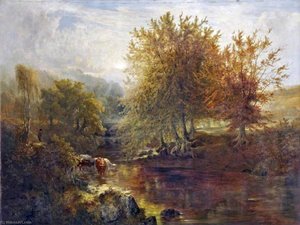
john wright oakes
1820 - 1887
Kurzinfos
- Artistic Movement Or Style: Romantic Landscape Painting
- Artists Or Movements Influenced By This Artist: ['Romanticism']
- Artists Who Influenced This Artist: ['John Bishop']
- Date Of Birth: 1820
- Date Of Death: 1887
- Full Name: John Wright Oakes
- Nationality: English
- Notable Artworks:
- A North Devon Glen, Autumn
- A Sandy Bit of Road
- Slate Quarries, Llanberis
- Place Of Birth: Sproston House, Cheshire
Ähnliche Artikel
Marianne North: Die 25 schönsten Blumenmalereien der viktorianischen Reisenden | ArtsDot
Entdecken Sie die 25 schönsten Werke der viktorianischen Blumenmalerin Marianne North! Erleben Sie ihre exotischen Reisebilder & botanischen Illustrationen. Hochwertige Kunst Reproduktionen für Ihr Zuhause auf ArtsDot.com.

John Constable: Die 25 Meisterwerke des englischen Landschaftsgenies – ArtsDot
Entdecken Sie die 25 Meisterwerke von John Constable! Erleben Sie englische Landschaftsmalerei vom Hay Wain bis zur Stour Valley. Hochwertige Reproduktionen & Kunst für Ihr Zuhause auf ArtsDot.com.

Romantische Landschaften: Die 10 Meisterwerke, die eine Epoche prägten | ArtsDot
Entdecken Sie die 10 Meisterwerke der Romantischen Landschaftsmalerei! Von Caspar David Friedrich bis Turner – erleben Sie die Kunst, Emotion & Natur. Hochwertige Reproduktionen auf ArtsDot.com

John Singer Sargent: Die 25 Meisterwerke des Porträts – Kunst für Ihr Zuhause | ArtsDot
Entdecken Sie die 25 Meisterwerke von John Singer Sargent! Tauchen Sie ein in die Welt der Porträtmalerei, des Impressionismus & der Belle Époque. Hochwertige Kunstdrucke & Reproduktionen für Ihr Zuhause – jetzt auf ArtsDot.com!
John Varley I: Intimate Observation & the British Romantic Landscape
Explore the serene landscapes of John Varley I, a key figure in British Romanticism. Discover his unique watercolour style, collaboration with William Blake & lasting artistic legacy. Learn about collecting Varley's work.


