

 Vorschau anzeigen
 Versenden
 Teilen
 Details anzeigen

 Herunterladen
 Ähnliche Objekte
 Röntgenaufnahme
 Diashow
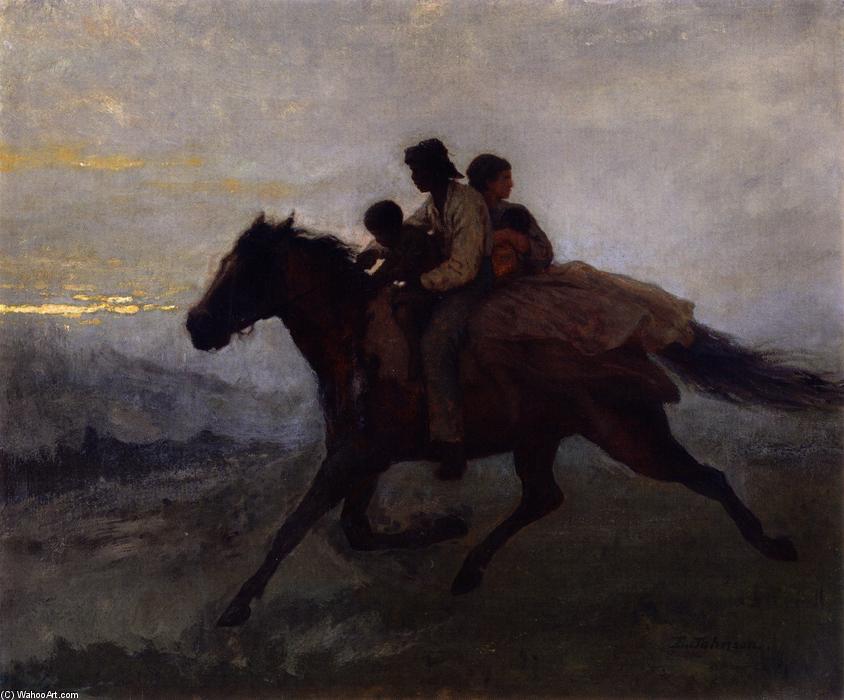
A Ride for Liberty - The Fugitive Slaves


 Weiterlesen
Erwerben Sie ein hochauflösendes, optimiertes digitales Bild, das der Online-Vorschau weit überlegen ist.
Jede Datei wird von unseren hauseigenen Spezialisten mit modernsten Werkzeugen und fachmännischer manueller Retusche sorgfältig vorbereitet. Wir stellen sicher, dass jedes Bild eine außergewöhnliche Klarheit, präzise Farbgenauigkeit und feinste Details aufweist.
Die endgültige Datei wird innerhalb von 72 Stunden per E-Mail zugestellt und ist für den sofortigen Einsatz in professionellen, redaktionellen und Druckumgebungen optimiert. Es handelt sich um dieselbe Qualität, der führende Designstudios, Verlage und Galerien vertrauen.
Digitales Bild
Laden Sie eine hochauflösende Datei für die persönliche Präsentation, den Druck und kreative Projekte herunter. ( Druck bestellen Handgemalte Reproduktion bestellen)
In jeder Bestellung digitaler Bilder enthalten
Professionelle digitale Bereitstellung, garantiert
Wenn Sie sich für ArtsDot.com entscheiden, erhalten Sie nicht nur ein Bild – Sie erhalten ein professionell aufbereitetes digitales Kunstwerk, das mit höchster Präzision erstellt und durch eine Zufriedenheitsgarantie abgesichert wird. Hier ist alles, was automatisch mit Ihrer Bestellung geliefert wird:

Schnelle E-Mail-Zustellung
Ihre hochauflösende digitale Bilddatei wird Ihnen innerhalb von 72 Stunden nach der Bestellung per E-Mail zugestellt – bereit zur sofortigen Verwendung.

KI-optimierte digitale Datei
Ihre Kunstwerke werden professionell mithilfe fortschrittlicher KI-Tools und manueller Bearbeitung optimiert, um maximale Detailtreue, Klarheit und Farbgenauigkeit zu gewährleisten.

Lebenslanger kostenloser Neudruckservice
Datei versehentlich gelöscht oder verloren? Keine Sorge – wir senden sie Ihnen jederzeit kostenlos erneut zu.

Keine Einfuhrgebühren – jemals
Genießen Sie Ihr Kunstwerk sofort ohne Zollgebühren, Einfuhrabgaben oder Versandkosten – digitale Downloads sind immer steuerfrei.

Garantierte Farbtreue
Wir garantieren, dass Ihr digitales Bild mithilfe professioneller Werkzeuge und Farbmanagement die Originalfarben so präzise wie möglich wiedergibt.

60-Tage-Zufriedenheitsgarantie
Sollten Sie mit Ihrem digitalen Bild nicht zufrieden sein, werden wir es überarbeiten oder Ihnen innerhalb von 60 Tagen 100% erstatten – ohne Wenn und Aber.

100% Geld-zurück-Garantie
Nicht zufrieden? Erhalten Sie innerhalb von 60 Tagen nach Erhalt Ihrer digitalen Datei eine vollständige Rückerstattung – ohne Angabe von Gründen.

Rabatte bei Großbestellungen
3 Bilder kaufen, 10% sparen – 5 Bilder kaufen, 15% sparen – Ab 10 Bildern 20% sparen. Ideal für kreative Projekte, Galerien und Agenturen.
Details zum Sammlerstück
A Window Into Victorian America: Exploring Jonathan Eastman Johnson’s “A Ride for Liberty”
The painting "A Ride for Liberty – The Fugitive Slaves" by Jonathan Eastman Johnson stands as a poignant emblem of the American Civil War era, capturing not merely a picturesque scene but also the profound anxieties and aspirations simmering beneath the surface of Victorian society. Completed in 1862, this oil on panel masterpiece resides within the Virginia Museum of Fine Arts’ collection, offering viewers an unparalleled glimpse into a moment defined by moral reckoning and the fervent pursuit of freedom. Johnson's artistic vision was firmly rooted in realism—a stylistic choice that prioritized truthful representation over idealized beauty. He eschewed theatrical grandeur, opting instead for a muted palette dominated by earthy tones – browns, greens, and ochres – reflecting the rural landscape through which the family traversed. This deliberate restraint serves to heighten the emotional impact of the composition, forcing the viewer to confront the stark realities of the time without resorting to sentimental embellishment. The brushstrokes themselves are visible, conveying a sense of immediacy and capturing the texture of horsehair and weathered clothing—details that speak volumes about Johnson’s meticulous craftsmanship. The narrative unfolds with quiet dignity as a family – father, mother, and two children – embark on horseback through a sunlit meadow. Their posture exudes confidence and determination, mirroring the spirit of those advocating for emancipation during the Civil War. The man skillfully maneuvers the horse, while his wife watches attentively, her gaze conveying both concern and unwavering support. Two young children cling to their father’s shoulders, embodying innocence amidst turbulent circumstances. This depiction isn't merely a snapshot of daily life; it’s imbued with symbolic significance. The horse itself represents strength and mobility—essential qualities in the struggle for liberation—while the meadow symbolizes hope and renewal. Beyond its stylistic merits, “A Ride for Liberty” resonates deeply with themes prevalent throughout Victorian art and literature. It reflects the burgeoning interest in depicting ordinary individuals confronting moral dilemmas, mirroring the broader societal debates surrounding slavery and abolitionism. The painting’s melancholic undertones subtly convey the pervasive sense of loss associated with the institution of slavery—a loss felt acutely by those who championed its demise. Simultaneously, it celebrates the resilience of the human spirit and the unwavering belief in a brighter future. The Virginia Museum of Fine Arts' acquisition of this artwork underscores its enduring appeal to collectors and interior designers alike. Its understated elegance lends itself beautifully to creating serene spaces infused with historical resonance—a testament to Johnson’s ability to distill complex emotions into a single, unforgettable image. Furthermore, reproductions crafted by skilled artisans like ArtsDot allow enthusiasts worldwide to experience the beauty and depth of “A Ride for Liberty” firsthand, preserving its legacy for generations to come.Technical Considerations: Impressionistic Brushwork & Atmospheric Depth
Johnson’s technique exemplifies the burgeoning influence of Impressionism on American painting during this period. Rather than meticulously blending colors to achieve photographic accuracy—a hallmark of academic art—he employed loose, visible brushstrokes to capture fleeting moments of light and atmosphere. This approach prioritizes capturing the sensory experience of observing a scene rather than presenting an idealized representation. The artist skillfully utilized glazing techniques – applying thin layers of translucent paint over thicker underlayers – to build up tonal depth and create a luminous effect that mimics the dappled sunlight filtering through the meadow foliage. Detailed observation of the painting reveals subtle nuances in color and texture—evidence of Johnson’s painstaking attention to detail. Note particularly how he renders the horsehair, capturing its roughness and sheen with delicate brushstrokes. Similarly, the artist skillfully portrays the folds of clothing, conveying a sense of realism that transcends mere visual representation. The atmospheric perspective – achieved through gradual diminution of color intensity as objects recede into the distance – contributes significantly to the painting’s overall mood, evoking a feeling of tranquility and contemplation.Symbolism Beyond the Surface: Hope Amidst Uncertainty
The seemingly simple composition of “A Ride for Liberty” is laden with symbolic meaning that extends far beyond its literal depiction. As previously mentioned, the horse represents strength and mobility—essential attributes in the fight for emancipation—while the meadow symbolizes hope and renewal. However, deeper analysis reveals connections to broader Victorian philosophical concepts concerning faith and moral responsibility. The family’s unwavering gaze toward the horizon embodies a steadfast belief in divine providence—a conviction that underpinned much of Victorian spiritual life. Furthermore, the painting subtly acknowledges the pervasive anxieties surrounding the Civil War. Despite the idyllic setting, there's an unspoken awareness of the dangers inherent in their journey—a recognition that freedom is rarely achieved without sacrifice and hardship. This duality – juxtaposing beauty with apprehension – reflects the complex moral landscape of the era and underscores Johnson’s artistic sensitivity to the psychological dimensions of human experience.Emotional Resonance: A Portrait of Victorian Values
Ultimately, “A Ride for Liberty” succeeds in conveying a profound emotional resonance that transcends time and cultural boundaries. The painting captures the essence of Victorian values—characterized by compassion, duty, and unwavering faith—while simultaneously acknowledging the pervasive anxieties surrounding social upheaval. Viewing this artwork evokes feelings of serenity, contemplation, and admiration for the resilience of the human spirit. It serves as a powerful reminder of the importance of confronting moral dilemmas with courage and conviction—values that continue to inspire artists and audiences alike.Reproductions & Preservation: Bringing Victorian Beauty Home
High-quality reproductions crafted by artisans like ArtsDot offer art lovers worldwide an opportunity to experience the enduring allure of “A Ride for Liberty.” These meticulously executed prints capture the painting’s luminous palette and textural nuances—preserving its legacy for future generations. When selecting a reproduction, consider factors such as archival quality paper and pigment inks to ensure that the artwork remains vibrant and stable over time—a testament to Johnson's artistic vision and the enduring power of Impressionistic technique.Further Exploration: The Virginia Museum of Fine Arts Collection
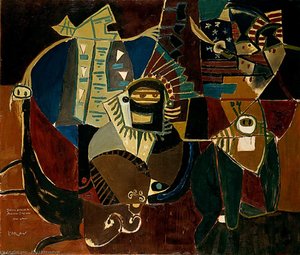
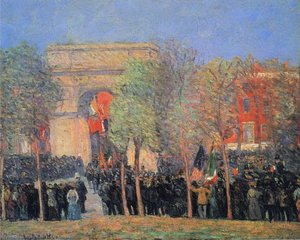
For those interested in delving deeper into Victorian art history, a visit to the Virginia Museum of Fine Arts is highly recommended. Alongside “A Ride for Liberty,” the museum houses an impressive collection of artworks spanning diverse styles and periods—including Shipyard Society by George Wesley Bellows—providing invaluable insights into the artistic landscape of the era.Ähnliche Kunstwerke
![Indian Tobacco Shop Sign [rückwärts, Indianer Rechtsblickend] — Winslow Homer, American Folk Realism](/media/artworks/images-thumb/74/22/7422432cafc295265ef3b7f7fa62d35d.jpg)
Biografie des Künstlers
Jonathan Eastman Johnson: Ein Leben in der amerikanischen Kunst
- Geboren: 29. Juli 1824, Lovell, Maine
- Gestorben: 5. April 1906, New York City
- Nationalität: Amerikaner
Frühes Leben und künstlerische Anfänge
- Johnson wurde in eine Familie hineingeboren, die starke Bindungen zu Geschäfts- und Geheimgesellschaften hatte. Sein Vater, Philip Carrigan Johnson, spielte in beiden Bereichen eine aktive Rolle.
- Er wuchs in Fryeburg und Augusta, Maine, auf und erlangte frühzeitig Einblicke in das Gemeindeleben, die später seine künstlerischen Themen beeinflussten.
- Seine formelle künstlerische Ausbildung begann 1840, als er bei einem Lithographen in Boston in die Lehre ging, was den Beginn seiner Karriere als Künstler markierte.
- Er zog Ende der 1840er Jahre mit seiner Familie aufgrund der Position seines Vaters in der Marineabteilung nach Washington D.C. Diese Zeit setzte ihn vielfältigen Themen und Erfahrungen aus, die seine spätere Arbeit beeinflussten.
Künstlerischer Stil, Einflüsse und Entwicklung
- Genrebildnerei: Johnson ist am besten bekannt für seine Genrebilder – Szenen, die den Alltag darstellen. Diese Werke boten eine einzigartige Perspektive auf die amerikanische Gesellschaft und fingen die Geschichten gewöhnlicher Menschen ein.
- Porträtmalerei: Neben der Genrebildnerei war er auch ein begabter Porträtist und schuf Likenesses sowohl von einfachen Individuen als auch von bedeutenden Persönlichkeiten wie Abraham Lincoln, Nathaniel Hawthorne, Ralph Waldo Emerson und Henry Wadsworth Longfellow.
- Einfluss der niederländischen Meister: Ein wichtiger Wendepunkt in seiner künstlerischen Entwicklung war die 1850er Jahre, als er die Werke des 17. Jahrhunderts niederländischer Meister in Den Haag studierte. Dieser Einfluss ist in der Komposition, Beleuchtung und dem Realismus seiner späteren Gemälde erkennbar, was ihm den Spitznamen "Der amerikanische Rembrandt" einbrachte.
- Realismus: Johnsons Werk lässt sich mit der breiteren Strömung des Realismus vereinbaren, die genaue Darstellungen des Alltags betont, anstatt idealisierter oder romantischer Darstellungen.
Wichtige Werke und Errungenschaften
- Negro Life at the South (1859): Gilt als eines der wichtigsten Gemälde in der amerikanischen Kunst des 19. Jahrhunderts. Dieses Werk zeigt Afroamerikaner bei Freizeitaktivitäten. Es löste eine beträchtliche Debatte über Rassenbeziehungen und soziale Bedingungen im Vorabend-Süden aus.
- Bilder des Bürgerkriegs: Johnson dokumentierte die Auswirkungen des Bürgerkriegs auf das zivile Leben durch eine Reihe ergreifender Gemälde, die besorgte Familien und Szenen abseits des Schlachtfelds darstellen. Ride For Liberty (1862) ist ein bemerkenswertes Beispiel, das eine entflohene Sklavenfamilie zeigt.
- Neuen-England-Szenen: Seine Darstellungen des ländlichen Lebens in Neuengland, darunter die Ernte von Ahornsirup und Cranberries, feierten traditionelle amerikanische Werte und Handwerkskunst.
- Porträtaufträge: Johnson erlangte Anerkennung für seine Porträts von bedeutenden Persönlichkeiten, darunter der US-Präsidenten Chester Arthur, Grover Cleveland und Benjamin Harrison sowie einflussreiche Geschäftsleute wie Jay Gould und John D. Rockefeller.
- Mitbegründer des Metropolitan Museum of Art: Johnsons Engagement für die Kunst ging über seine eigene Praxis hinaus; er war Mitbegründer des Metropolitan Museum of Art in New York City, wobei sein Name am Eingang verzeichnet ist, was seinen bedeutenden Beitrag zur amerikanischen Kunstwelt verdeutlicht.
Historische Bedeutung und Vermächtnis
- Pionier der Genrebildnerei: Johnson spielte eine entscheidende Rolle bei der Etablierung der Genrebildnerei als respektable Form des künstlerischen Ausdrucks in Amerika.
- Sozialkritik: Seine Werke boten oft subtile Sozialkritik und regten zum Nachdenken über Themen wie Rassenbeziehungen, Klassenunterschiede und die Auswirkungen des Krieges an.
- Einfluss auf den amerikanischen Realismus: Johnsons Hingabe an die Darstellung des Alltags mit Ehrlichkeit und Detailreichtum trug dazu bei, die Entwicklung der amerikanischen realistischen Malerei zu prägen.
- Nachhaltende Anerkennung: Heute wird Jonathan Eastman Johnson als eine bedeutende Figur in der amerikanischen Kunstgeschichte in Erinnerung behalten, gefeiert für seine technische Fertigkeit, seinen aufschlussreichen Beobachtungssinn und seine bleibenden Beiträge zum künstlerischen Erbe des Landes.
Jonathan Eastman Johnson
1824 - 1906 , Vereinigtes Königreich
Kurzinfos
- Bemerkenswerte Werke:
- Negro Life at the South
- Ride For Liberty
- In den Feldern
- Einflussreiche Künstler: ['Niederländische Meister (17. Jh.)']
- Geburtsdatum: 29. Juli 1824
- Geburtsort: Lovell, Vereinigtes Königreich
- Künstlerische Richtung: Genremalerei, Realismus
- Nationalität: Amerikanisch
- Sterbedatum: 5. April 1906
- Vollständiger Name: Jonathan Eastman Johnson

