

 Vorschau anzeigen
 Versenden
 Teilen
 Details anzeigen

 Herunterladen
 Ähnliche Objekte
 Röntgenaufnahme
 Diashow
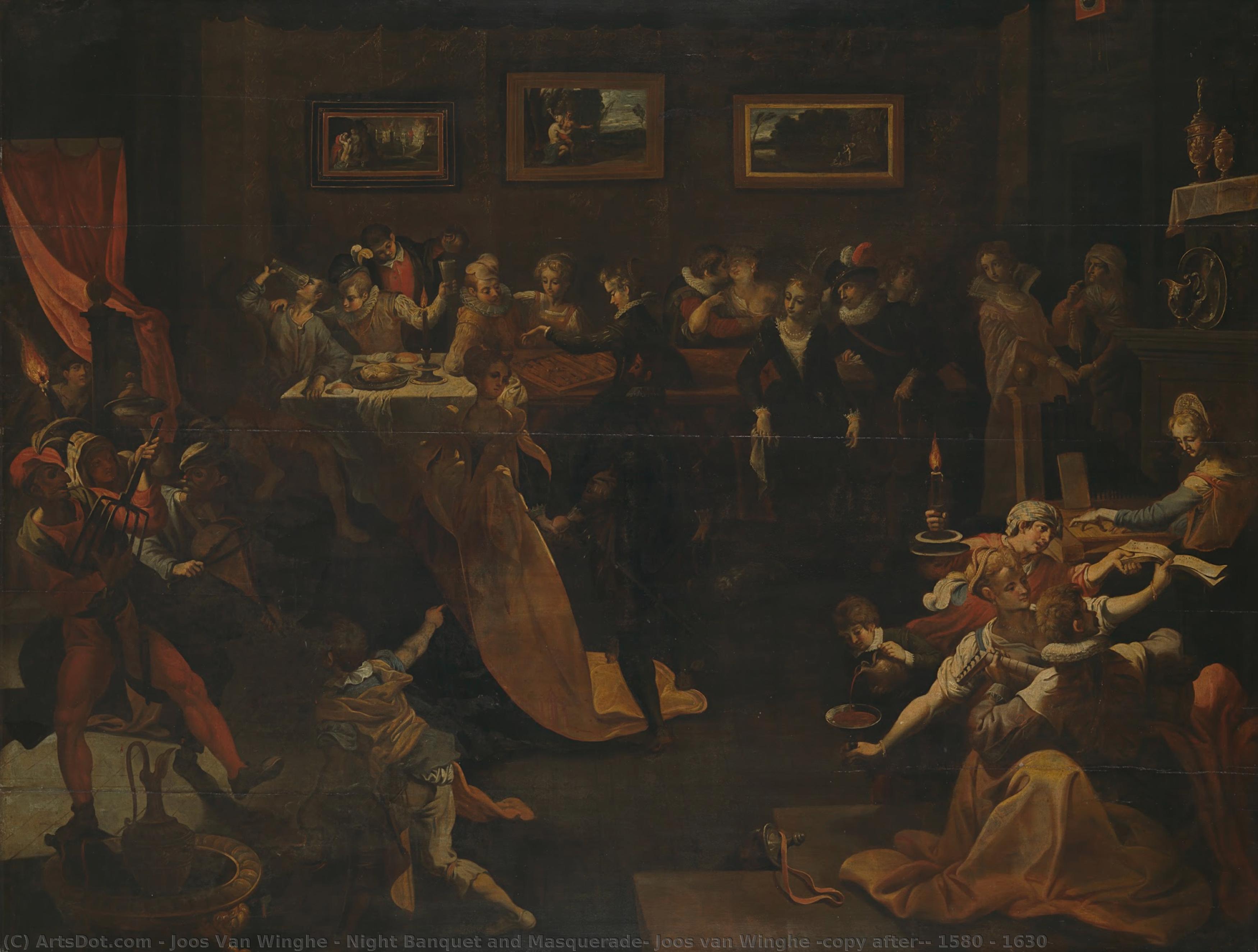
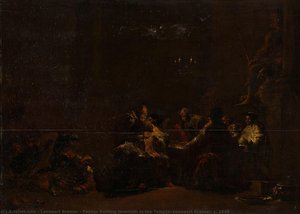
Night Banquet and Masquerade, Joos van Winghe (copy after), 1580 - 1630
 1630
1630 116.0 x 152.0 cm
 Weiterlesen
Erwerben Sie ein hochauflösendes, optimiertes digitales Bild, das der Online-Vorschau weit überlegen ist.
Jede Datei wird von unseren hauseigenen Spezialisten mit modernsten Werkzeugen und fachmännischer manueller Retusche sorgfältig vorbereitet. Wir stellen sicher, dass jedes Bild eine außergewöhnliche Klarheit, präzise Farbgenauigkeit und feinste Details aufweist.
Die endgültige Datei wird innerhalb von 72 Stunden per E-Mail zugestellt und ist für den sofortigen Einsatz in professionellen, redaktionellen und Druckumgebungen optimiert. Es handelt sich um dieselbe Qualität, der führende Designstudios, Verlage und Galerien vertrauen.
Digitales Bild
Laden Sie eine hochauflösende Datei für die persönliche Präsentation, den Druck und kreative Projekte herunter. ( Druck bestellen Handgemalte Reproduktion bestellen)
In jeder Bestellung digitaler Bilder enthalten
Professionelle digitale Bereitstellung, garantiert
Wenn Sie sich für ArtsDot.com entscheiden, erhalten Sie nicht nur ein Bild – Sie erhalten ein professionell aufbereitetes digitales Kunstwerk, das mit höchster Präzision erstellt und durch eine Zufriedenheitsgarantie abgesichert wird. Hier ist alles, was automatisch mit Ihrer Bestellung geliefert wird:

Schnelle E-Mail-Zustellung
Ihre hochauflösende digitale Bilddatei wird Ihnen innerhalb von 72 Stunden nach der Bestellung per E-Mail zugestellt – bereit zur sofortigen Verwendung.

KI-optimierte digitale Datei
Ihre Kunstwerke werden professionell mithilfe fortschrittlicher KI-Tools und manueller Bearbeitung optimiert, um maximale Detailtreue, Klarheit und Farbgenauigkeit zu gewährleisten.

Lebenslanger kostenloser Neudruckservice
Datei versehentlich gelöscht oder verloren? Keine Sorge – wir senden sie Ihnen jederzeit kostenlos erneut zu.

Keine Einfuhrgebühren – jemals
Genießen Sie Ihr Kunstwerk sofort ohne Zollgebühren, Einfuhrabgaben oder Versandkosten – digitale Downloads sind immer steuerfrei.

Garantierte Farbtreue
Wir garantieren, dass Ihr digitales Bild mithilfe professioneller Werkzeuge und Farbmanagement die Originalfarben so präzise wie möglich wiedergibt.

60-Tage-Zufriedenheitsgarantie
Sollten Sie mit Ihrem digitalen Bild nicht zufrieden sein, werden wir es überarbeiten oder Ihnen innerhalb von 60 Tagen 100% erstatten – ohne Wenn und Aber.

100% Geld-zurück-Garantie
Nicht zufrieden? Erhalten Sie innerhalb von 60 Tagen nach Erhalt Ihrer digitalen Datei eine vollständige Rückerstattung – ohne Angabe von Gründen.

Rabatte bei Großbestellungen
3 Bilder kaufen, 10% sparen – 5 Bilder kaufen, 15% sparen – Ab 10 Bildern 20% sparen. Ideal für kreative Projekte, Galerien und Agenturen.
Details zum Sammlerstück
Ähnliche Kunstwerke






Biografie des Künstlers
A Life Bridging Courts and Canvases: The World of Joos van Winghe
Joos van Winghe, a name resonating softly through the annals of Flemish Renaissance art, embodies a fascinating transition between the grandeur of courtly patronage and the burgeoning artistic freedoms of the late 16th century. Born in Brussels around 1544, his life was one marked by travel, adaptation, and a quiet mastery of both portraiture and genre scenes. While biographical details remain somewhat fragmented – largely reliant on the observations of Karel van Mander, a contemporary artist and historian – enough is known to paint a picture of an individual deeply connected to the artistic currents of his time, yet forging a path uniquely his own. Van Winghe’s early education likely took place within Brussels itself, a vibrant center for painting under the Spanish Netherlands. However, it was a four-year sojourn in Rome that fundamentally shaped his aesthetic sensibilities. Living with a cardinal afforded him access to the rich artistic heritage of the Italian Renaissance and exposure to the burgeoning Mannerist style. This period proved pivotal; he absorbed the elegance and sophistication of Roman art, which would later subtly infuse his own work. His time wasn’t confined solely to Rome, as van Mander notes experiences in Parma where he painted a fresco of the Last Supper for the Servites monastery, further broadening his artistic vocabulary under the guidance of Jacopo Bertoja, alongside fellow Flemish artist Bartholomaeus Spranger.From Brussels Court to Frankfurt Refuge
Upon returning to Brussels around 1568, van Winghe swiftly ascended to become a court painter in the service of Alexander Farnese, Duke of Parma. This position secured him a degree of financial stability and access to prominent members of society, providing ample opportunities for portraiture – a genre he would consistently return to throughout his career. However, the political turmoil brewing within the Netherlands cast a long shadow over his life. The Fall of Antwerp in 1584, a watershed moment in the Eighty Years’ War, prompted van Winghe and his family to seek refuge elsewhere. This exodus was not merely a relocation; it represented a shift away from the constraints of Spanish rule and towards a more tolerant environment. He settled in Frankfurt am Main, joining a growing community of Flemish artists who had similarly fled religious persecution and political instability. The loss of his court position was filled by Otto van Veen, marking a definitive end to his life within the established artistic circles of Brussels. In Frankfurt, he became a burgher in 1588, integrating himself into the local society while continuing to practice his art.A Diverse Palette: Portraits, Allegories and Genre Scenes
Van Winghe’s oeuvre is characterized by its diversity, encompassing portraits, allegorical paintings, and genre scenes – often depicting merry companies or intimate domestic moments. His portraits are notable for their refined elegance and psychological insight, capturing not just the likeness of his sitters but also a sense of their inner character. While he initially adhered to the established conventions of Flemish portraiture, his time in Italy instilled a certain gracefulness and sophistication into his depictions. Beyond portraiture, van Winghe demonstrated a keen interest in allegorical subjects, often imbued with moral or political undertones. One painting described by Van Mander depicts a chained personification of Belgica (the Netherlands), suggesting a sympathetic stance towards the cause of Dutch independence. His genre scenes, lively and detailed, offer glimpses into the everyday life of his time. These works are not simply depictions of merriment; they often contain subtle narratives or symbolic elements that reward closer examination.Legacy and Influence: A Father’s Hand and a Son's Continuation
The influence of Joos van Winghe extends beyond his own artistic production, notably through his son, Jeremias van Winghe (1578-1645). Jeremias followed in his father’s footsteps, becoming a painter himself and contributing to the artistic landscape of Frankfurt. While Jeremias developed his own distinct style – specializing in kitchen scenes and still lifes – he undoubtedly benefited from his father's training and guidance. The elder van Winghe’s impact can also be seen in the broader context of Flemish art during this period. His ability to blend Italianate elegance with Flemish realism helped bridge the gap between Renaissance traditions and the emerging Baroque style. Although not as widely celebrated as some of his contemporaries, Joos van Winghe remains a significant figure in understanding the complexities of artistic life during a time of profound political and religious upheaval. He represents a generation of artists who were forced to adapt, innovate, and seek new patrons while striving to maintain their artistic integrity. His works offer a captivating window into the world of 16th-century Europe, reflecting both the splendor of courtly life and the anxieties of a nation in turmoil.- Born: Brussels, c. 1544
- Died: Frankfurt am Main, 1603
- Style: Flemish Renaissance, Mannerism
- Key Subjects: Portraits, Genre Scenes, Allegories
joos van winghe
1544 - 1603
Kurzinfos
- Artistic Movement Or Style: Renaissance
- Artists Or Movements Influenced By This Artist: ['Dutch Masters']
- Artists Who Influenced This Artist: ['Pieter Bruegel the Elder']
- Date Of Birth: 1544
- Date Of Death: 1603
- Full Name: Joos van Winghe
- Nationality: Flemish
- Notable Artworks:
- Night Banquet and Masquerade
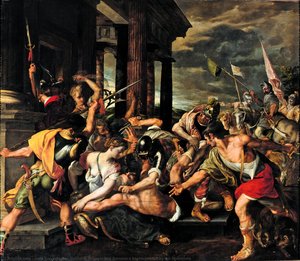
- Delilah’s Betrayal and Samson’s Imprisonment by the Philistines
- Samson and Delila
- Place Of Birth: Brussels

