

 Vorschau anzeigen
 Versenden
 Teilen
 Details anzeigen

 Herunterladen
 Ähnliche Objekte
 Röntgenaufnahme
 Diashow
 Statistiken
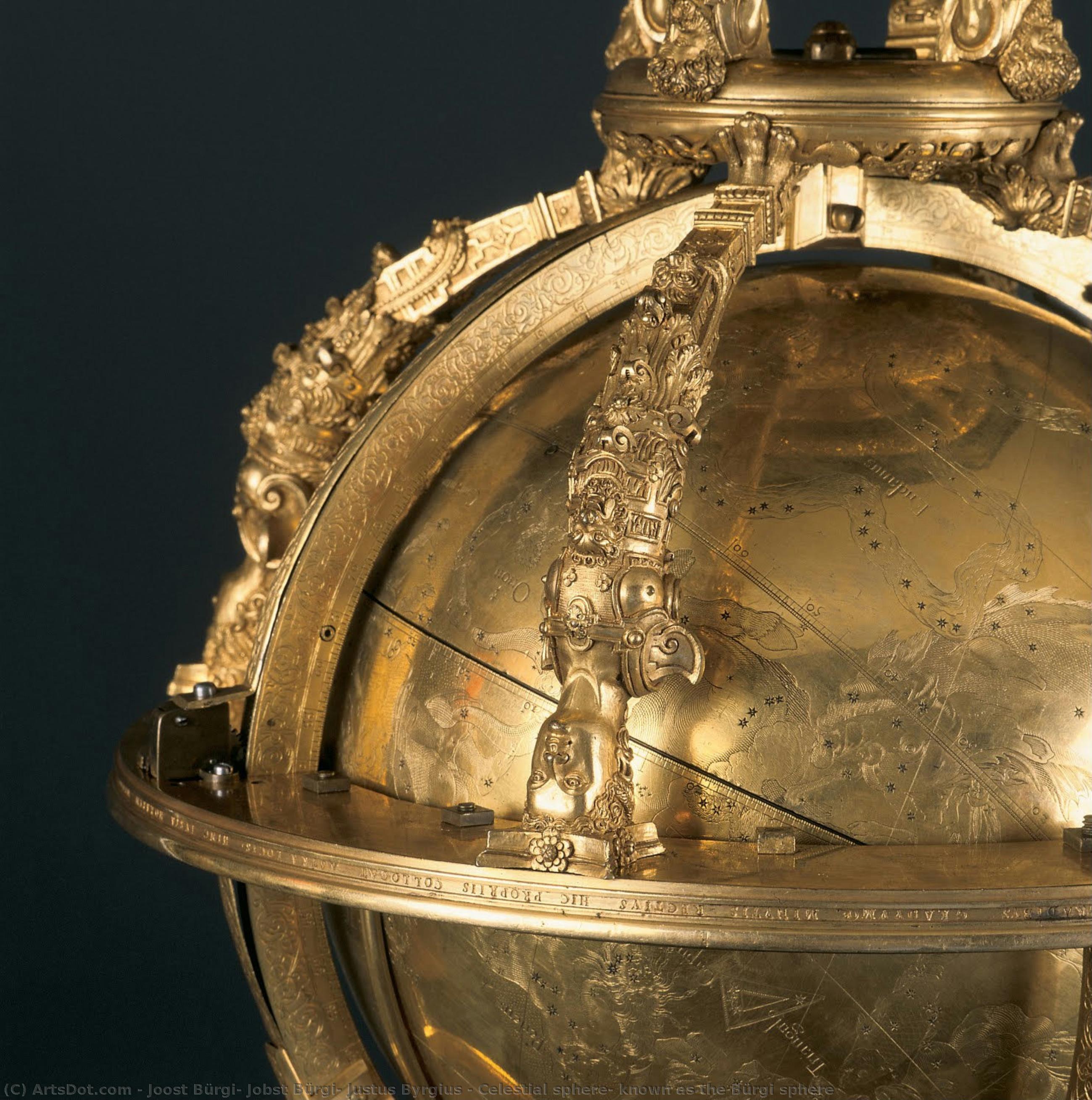
Celestial sphere, known as the Bürgi sphere


 Weiterlesen
Giclée / Kunstdruck
Giclée- oder Leinwanddruck in Museumsqualität mit schneller Produktion und flexiblen Veredelungsoptionen. ( Handgemalte Reproduktion bestellen Zum digitalen Bild wechseln)




P118B $10

P118H $10

P118W $10

P438Z $10

P508JH $12

P508YH $12

P805H $10

P805Z $10

P919BZ $10

P919G $10

P919XJ $10

P959ZH $10

P968JZ $12

W106C $8

W218G $10

W218JH $8

W218Y $10

W307PJ $10

W316G $10

W316PJ $8

W316Y $10

W398PJ $8

W4111J $10

W500HY $15

W500JH $15

W692G $12

W849H $8

W940BG $15

W953PJ $8




Wählen Sie aus unseren vordefinierten Formaten, die den ursprünglichen Proportionen des Kunstwerks entsprechen.

Sie können Ihre eigenen Maße eingeben, um ein bestimmtes Format oder einen speziellen Platz einzupassen. Wenn das von Ihnen gewählte Format nicht den Proportionen des Originalbildes entspricht, werden wir das Kunstwerk entweder beschneiden oder das Bild mit einem gespiegelten oder einfarbigen Rand erweitern. Ein digitaler Entwurf wird Ihnen zur Genehmigung zugesandt, bevor die Produktion beginnt.
Bitte beachten Sie, dass die Vorschau auf dem Bildschirm nicht den tatsächlichen Zuschnitt oder die Erweiterung widerspiegelt. Nur der Entwurf zeigt die endgültige Komposition präzise an.
Obwohl Sondermaße verfügbar sind, empfehlen wir die Auswahl eines Maßes aus der vordefinierten Liste, um die ursprünglichen Proportionen zu bewahren.
Weltweiter Versand () innerhalb von 2 Wochen statt der üblichen 4/5 Wochen. (9 September)

Kostenloser weltweiter Expressversand

Hochwertige Leinenleinwand

Umfassender Versicherungsschutz beim Versand

Zollgebühren-Rückerstattungsgarantie

Garantie für exakte Farbtreue

100-Tage-Rückgaberecht (nur bei Mängeln)

100% Geld-zurück-Garantie

Mengenrabatt verfügbar
 Die Glasoption ist nur für Größen unter 110 cm verfügbar.

Celestial sphere, known as the Bürgi sphere
Giclée / Kunstdruck
Format der Reproduktion
-


Gesamtpreis
$ 62
A Celestial Testament: Exploring Joost Bürgi’s Bürgi Sphere
The Bürgi Sphere, crafted in 1580 by the Swiss clockmaker and instrument maker Joost Bürgi, stands as a remarkable confluence of artistry and scientific ambition. More than just a decorative object—though undeniably beautiful—it embodies the burgeoning Renaissance fascination with understanding the cosmos and represents a pivotal moment in the history of astronomical instrumentation. Located at the Musée des Arts et Métiers in Paris, this gilt bronze masterpiece continues to inspire awe and intrigue visitors today.The Science Behind the Ornamentation
Bürgi’s genius wasn't merely aesthetic; it resided in his meticulous construction of complex scientific instruments. Like many of his contemporaries, he sought to replicate Ptolemy’s geocentric model of the universe—a belief that placed Earth at the center—within a tangible form. The Bürgi Sphere meticulously depicts celestial bodies orbiting around Earth, utilizing rings and spheres crafted from bronze and gilded with gold to accurately represent their relative positions and movements. This ambitious undertaking demanded exceptional precision and craftsmanship, reflecting the intellectual fervor of the era.Symbolism Rooted in Ancient Knowledge
The sphere itself is laden with symbolic significance. Throughout antiquity and medieval times, circles represented wholeness, perfection, and divine order—concepts deeply ingrained in Greek philosophy. Bürgi’s incorporation of this geometric form underscores the desire to capture not only astronomical reality but also a profound spiritual understanding of creation. Furthermore, the depiction of constellations served as a guide for navigation and divination, reflecting the practical applications alongside philosophical contemplation inherent in Renaissance scholarship.Technique and Material Choice: A Reflection of Status
The Bürgi Sphere’s exquisite appearance speaks volumes about its creator's skill and resources. Gilt bronze—copper alloyed with gold—was chosen as the primary material, signifying wealth and prestige. The painstaking process involved casting intricate molds, polishing the bronze to a gleaming surface, and applying thin layers of gold leaf to create a luminous effect. This technique exemplifies the mastery of metalworking prevalent in Basel during Bürgi’s lifetime, demonstrating the dedication required to produce such a monumental achievement.An Enduring Legacy: Inspiration for Reproduction
Today, high-quality reproductions of the Bürgi Sphere offer art lovers and interior designers alike the opportunity to experience the grandeur of this historic artifact. Capturing the sphere's delicate detail and radiant gold hue faithfully recreates its original splendor, allowing viewers to appreciate both its scientific accuracy and artistic beauty. Bringing a piece of Renaissance ingenuity into your home is more than just acquiring an artwork; it’s embracing a testament to human curiosity and the pursuit of knowledge—a legacy that continues to resonate across centuries.Ähnliche Kunstwerke






Über den Künstler
Early Life and Scientific Foundations
Joost Bürgi, a name often rendered as Jost oder Justus, emerged from the heart of Lichtenstein in 1552 – a small Swiss canton steeped in both tradition and burgeoning intellectual curiosity. His origins within the Bürgi family, a lineage deeply rooted in local craftsmanship and administration, provided him with an early exposure to practical skills and a keen eye for detail. While precise details of his formative years remain somewhat elusive, it’s clear that young Joost received a rudimentary education, primarily focused on literacy and numeracy – essential tools for any aspiring artisan. However, this wasn't merely a foundation in basic trades; the environment fostered an innate desire to understand the world around him, a seed that would blossom into a remarkable synthesis of art, science, and engineering. His grandfather, Lienhard Bürgi, a respected locksmith and official, instilled within him a sense of precision and a deep appreciation for the mechanics of creation – qualities that would prove invaluable in his later endeavors. The religious divisions prevalent in Lichtenstein at the time, between Protestants and Catholics, likely contributed to a spirit of independence and a desire to seek knowledge beyond local constraints. Crucially, Bürgi’s early exposure to mathematical concepts, perhaps through interactions with visiting scholars or merchants, laid the groundwork for his future breakthroughs in astronomy and instrument design.The Master Craftsman: Instruments and Astronomical Observation
Joost Bürgi's career truly took flight when he entered the service of Landgraf Wilhelm IV of Hesse-Kassel in 1579. This marked a pivotal moment, placing him within the orbit of one of Europe’s most enlightened patrons – a ruler deeply invested in both the arts and sciences. Kassel, then a burgeoning center of learning and innovation, provided Bürgi with an unparalleled opportunity to hone his skills as a clockmaker, instrument maker, and astronomer. He quickly established himself as a master craftsman, renowned for his ability to create exquisitely accurate timekeeping devices – a testament to his meticulous attention to detail and profound understanding of mechanics. However, Bürgi’s ambitions extended far beyond mere horology. Wilhelm IV, a keen observer of the heavens, recognized Bürgi's potential and tasked him with developing instruments specifically designed for astronomical observation. This led to the construction of sophisticated sextants, armillary spheres, and other tools that revolutionized the field. Notably, Bürgi was instrumental in establishing one of Europe’s first dedicated observatories – a groundbreaking initiative that facilitated systematic celestial observations. His work wasn't simply about building instruments; it involved a deep engagement with astronomical theory, reflecting his own burgeoning understanding of the cosmos.A Revolutionary Discovery: The Invention of Logarithms
Perhaps Bürgi’s most enduring legacy lies in his independent discovery of logarithms – a mathematical concept that fundamentally transformed the way astronomers and mathematicians approached complex calculations. While John Napier is typically credited with inventing logarithms, Bürgi developed a remarkably similar system around 1587/1592, documented in a meticulously crafted manuscript now known as *Fundamentum Astronomiae*. This groundbreaking work demonstrated a novel method for simplifying astronomical computations, particularly those involving trigonometric functions and spherical trigonometry. Bürgi’s approach was notably more intuitive and accessible than Napier's, relying on a system of additions and subtractions rather than complex tables. The significance of this discovery cannot be overstated; logarithms dramatically reduced the time and effort required to solve intricate astronomical problems, paving the way for further advancements in celestial mechanics and navigation. Interestingly, Bürgi’s work was largely overlooked during his lifetime, overshadowed by the fame of other contemporary figures like Johannes Kepler. However, modern scholarship has rightly recognized Bürgi's pivotal role in the development of this essential mathematical tool.Collaborations and Artistic Influence
Bürgi’s career wasn’t a solitary pursuit; he engaged in fruitful collaborations with other prominent figures of his time. His association with the jeweller Antonius Eisenhoit resulted in the creation of several elaborate armillary spheres, showcasing a shared aesthetic sensibility and technical expertise. Perhaps most significantly, Bürgi forged a close intellectual partnership with Johannes Kepler, the renowned astronomer and mathematician who served as imperial mathematician under Emperor Rudolf II in Prague. Their collaboration spanned eight years (1604-1612), during which Kepler benefited immensely from Bürgi’s mathematical innovations, astronomical data, and instrument designs. In return, Bürgi gained invaluable insights into Kepler's groundbreaking theories on planetary motion – a relationship that profoundly influenced the course of scientific thought. The meticulous documentation of this partnership, particularly through Kepler’s own writings, provides compelling evidence of Bürgi’s intellectual contributions to the Copernican revolution.Legacy and Enduring Significance
Joost Bürgi’s life represents a remarkable confluence of artistry, science, and engineering – a testament to the boundless potential of human ingenuity. His legacy extends far beyond his individual achievements; he stands as a pivotal figure in the history of astronomy, mathematics, and instrument making. The *Fundamentum Astronomiae*, rediscovered only recently, reveals a depth of mathematical sophistication that challenges conventional narratives about the Renaissance period. His celestial sphere, now housed at the Musée des Arts et Métiers in Paris, remains a stunning example of 16th-century craftsmanship and scientific understanding. Bürgi’s work continues to inspire awe and admiration, reminding us of the profound impact one individual can have on our collective knowledge of the universe. His story is a powerful reminder that innovation often arises from unexpected places – from the hands of a skilled craftsman in a small Swiss town.
Jost Bürgi
1552 - 1632 , Schweiz
Kurzinfos
- Artistic Movement Or Style: Renaissance
- Artists Or Movements Influenced By This Artist: ['Kepler']
- Artists Who Influenced This Artist: ['Konrad Dasypodius']
- Date Of Birth: 1552
- Date Of Death: 1632
- Full Name: Joost Bürgi
- Nationality: Schweizer
- Notable Artworks:
- Himmelsglobe
- Bürgi-Kugel
- Place Of Birth: Lichtensteig, Schweiz
Ähnliche Artikel

The Enduring Legacy of Bronze: A Historical & Artistic Exploration for the Collector
Explore the rich history & enduring appeal of bronze sculpture with expert insights for collectors at ArtsDot. Learn about casting techniques, iconic artists, collecting tips & contemporary interpretations.

Die 10 legendärsten Bronzestatuen: Meisterwerke, die Kunstgeschichte schrieben | ArtsDot
Entdecken Sie die 10 legendärsten Bronzestatuen der Kunstgeschichte! Von Rodin bis Michelangelo – erfahren Sie die Geschichten hinter ikonischen Skulpturen und finden Sie hochwertige Reproduktionen für Ihr Zuhause. Jetzt bei ArtsDot entdecken!

Bronze-Meisterwerke: Die 10 Skulpturen, die Kunstgeschichte schrieben | ArtsDot
Entdecken Sie die 10 legendärsten Bronze Skulpturen der Kunstgeschichte! Von Michelangelo bis Rodin – erfahren Sie die Geschichten hinter den Meisterwerken und lassen Sie sich von Wanddeko-Ideen inspirieren. Hochwertige Kunstdrucke auf ArtsDot.com.

The Enduring Legacy of Bronze: History, Technique & Artistic Expression for the Collector
Explore the rich history & enduring appeal of bronze sculpture with expert insights for collectors at ArtsDot. Learn about casting techniques, iconic artists, and collecting tips.

The Enduring Legacy of Bronze Sculpture: A Collector's Guide to Form & Cultural Significance
Explore the rich history & enduring appeal of bronze sculpture with expert insights for collectors at ArtsDot. Learn about casting techniques, iconic artists, and collecting tips to build a discerning art collection.