 Vorschau anzeigen
 Versenden
 Teilen
 Details anzeigen

 Herunterladen
 Ähnliche Objekte
 Röntgenaufnahme
 Diashow
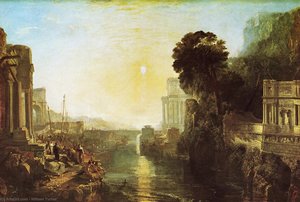
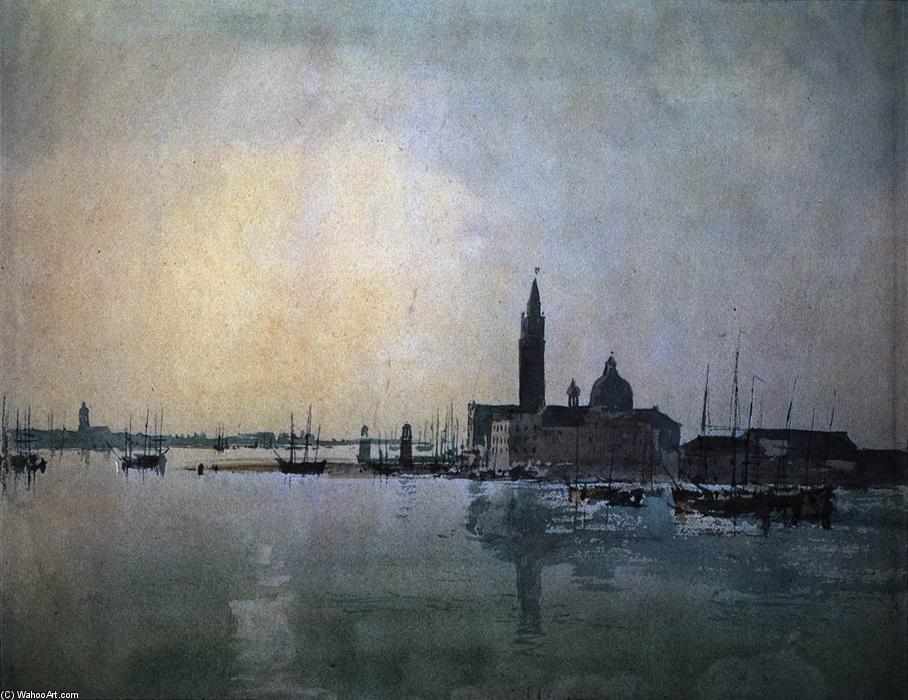
San Giorgio Maggiore at Dawn
 Acryl auf Leinwand
- Wandkunst
- Romanticism
 1819
1819- 19. Jahrhundert
 224.0 x 287.0 cm
 Tate Britain
 Weiterlesen
Handgefertigte Ölreproduktion
Handgemaltes Ölgemälde auf Leinwand in Ihrer Wunschgröße und mit Rahmen, auf Bestellung von unseren Künstlern angefertigt. ( Druck bestellen Bild kaufen)




P118B $10

P118H $10

P118W $10

P438Z $10

P508JH $12

P508YH $12

P805H $10

P805Z $10

P919BZ $10

P919G $10

P919XJ $10

P959ZH $10

P968JZ $12

W106C $8

W218G $10

W218JH $8

W218Y $10

W307PJ $10

W316G $10

W316PJ $8

W316Y $10

W398PJ $8

W4111J $10

W500HY $15

W500JH $15

W692G $12

W849H $8

W940BG $15

W953PJ $8




Wählen Sie aus unseren vordefinierten Formaten, die den ursprünglichen Proportionen des Kunstwerks entsprechen.

Sie können Ihre eigenen Maße eingeben, um einen bestimmten Rahmen oder Platz auszufüllen. Wenn die gewählte Größe nicht den Proportionen des Originalbildes entspricht, werden wir das Kunstwerk entweder beschneiden oder das Gemälde durch zusätzliche, handgemalte Elemente erweitern. Ein digitales Mockup wird Ihnen zur Genehmigung zugesandt, bevor die Produktion beginnt.
Bitte beachten Sie, dass die Bildschirmvorschau nicht die tatsächliche Beschneidung oder Erweiterung widerspiegelt. Nur das Mockup zeigt die endgültige Komposition exakt an.
Obwohl Sondermaße verfügbar sind, empfehlen wir, eine Größe aus der vordefinierten Liste zu wählen, um die ursprünglichen Proportionen beizubehalten.
Nach der Bestellung wird das ArtsDot.com-Team dem Kunden Anweisungen per E-Mail zusenden und eine Mockup-Vorschau bereitstellen.
Weltweiter Versand () in nur 3 bis 4 Wochen statt der üblichen 5 Wochen. (23 August). Keine Kompromisse bei der Qualität.

Kostenloser weltweiter Expressversand

Hochwertige Leinenleinwand

Umfassender Versicherungsschutz beim Versand

Zollgebühren-Rückerstattungsgarantie

Garantie für exakte Farbtreue

60 Tage Rückgaberecht (nur bei Mängeln)

100% Geld-zurück-Garantie

Mengenrabatt verfügbar
 Die Glasoption ist nur für Größen unter 110 cm verfügbar.

San Giorgio Maggiore at Dawn
Art der Reproduktion
Format der Reproduktion
-


Gesamtpreis
$ 263
Beschreibung des Kunstwerks
A Visionary Capture of Venetian Dusk
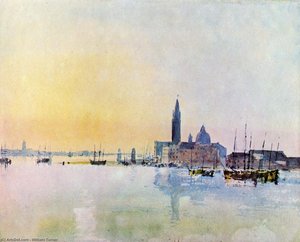
Joseph Mallord William Turner’s “San Giorgio Maggiore at Dawn,” completed in 1819, stands as a cornerstone of Romantic landscape painting—a testament to the artist's unwavering belief that art should strive to convey not merely what is seen but what is felt. This watercolor on paper transcends mere representation; it plunges viewers into an immersive experience of twilight’s embrace and the nascent promise of sunrise over Venice’s tranquil lagoon.
- Subject Matter: The painting depicts San Giorgio Maggiore, a Benedictine monastery island situated in the Venetian Lagoon. Turner meticulously captures the serene stillness of the early morning hours as the first rays of light pierce through the darkening sky.
- Style & Technique: Characteristic of Turner’s Romantic style, “San Giorgio Maggiore at Dawn” abandons precise detail in favor of atmospheric perspective—a technique pioneered by Turner himself—that prioritizes conveying mood and emotion above all else. The artist employs loose brushstrokes and washes of color to create a luminous haze that dominates the composition, blurring distinctions between land and water.
Historical Context: Romanticism’s Embrace of Sublime Beauty
Painted during the height of the Romantic movement, “San Giorgio Maggiore at Dawn” reflects the era's fascination with untamed nature and its profound contemplation of human insignificance in the face of overwhelming grandeur. Turner was deeply influenced by Edmund Burke’s philosophical treatise on sublime terror—the idea that confronting beauty can simultaneously inspire awe and provoke fear—and he sought to emulate this emotional response in his artwork.
- Influence: Turner's approach directly challenged the academic conventions of his time, which favored idealized depictions of classical subjects. He championed a new aesthetic rooted in observation and emotion, rejecting artificiality for spontaneity.
- Reaction to Industrial Revolution: The painting can be interpreted as a reaction against the burgeoning industrial revolution—a celebration of unspoiled landscapes untouched by human intervention—and an affirmation of the enduring power of natural beauty.
Symbolism and Emotional Resonance
Beyond its technical brilliance, “San Giorgio Maggiore at Dawn” is laden with symbolic significance. The monastery itself represents spiritual contemplation and resilience amidst adversity, while the dawn symbolizes rebirth and renewal—themes central to Romantic thought. Turner’s masterful use of color—particularly warm hues of orange and yellow—evokes feelings of tranquility, optimism, and divine illumination.
- Color Palette: The artist skillfully employs a palette dominated by oranges and yellows, mirroring the radiant glow of sunrise and conveying an atmosphere of serenity.
- Emotional Impact: Viewing “San Giorgio Maggiore at Dawn” is akin to stepping into Turner’s vision—a moment of profound contemplation punctuated by the breathtaking spectacle of nature's majesty. It invites viewers to consider their place within the cosmos and to appreciate the sublime beauty that surrounds us.
A Legacy Enduring Through Reproduction
Today, a high-quality reproduction of “San Giorgio Maggiore at Dawn” allows admirers worldwide to experience Turner’s artistic genius—a masterpiece that continues to inspire awe and wonder. Its ethereal luminescence and evocative atmosphere encapsulate the Romantic spirit's quest for emotional truth and its reverence for the sublime power of the natural world.
Ähnliche Kunstwerke
Über den Künstler
Frühe Jahre und Ausbildung
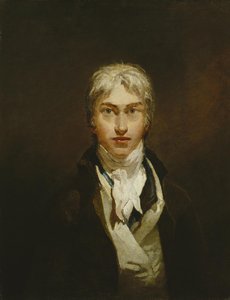
Joseph Mallord William Turner, eine bedeutende Figur der britischen Kunst, wurde am 23. April 1775 in Maiden Lane, Covent Garden, London geboren. Sein Vater, William Turner, war Barbier und Perückenmacher, während seine Mutter, Mary Marshall, aus einer Familie von Metzgern stammte. Im Alter von 14 Jahren trat Turner 1789 in die Royal Academy of Art ein, was den Beginn seiner illustren Karriere markierte.Künstlerischer Stil und Einflüsse
Turners Werk zeichnet sich durch seine expressive Farbgebung, fantasievolle Landschaftsbilder und turbulente Meeresansichten aus. Er war ein zutiefst experimenteller und progressiver Künstler, der Maler wie Claude Monet und Mark Rothko beeinflusste. Sein Einfluss ist in den Werken vieler nachfolgender Künstler sichtbar.Bedeutende Werke und Sammlungen
- Das Morgenrot nach der Sintflut (1843): Ein bemerkenswertes Öl auf Leinwand Gemälde, das sich in der Tate Collection, London befindet und Turners stilistische Form zur Darstellung der Naturgewalten zeigt.
- Chichester Kanal (1828): In Auftrag gegeben von George Wyndham, 3rd Earl of Egremont, stellt dieses Gemälde den Chichester Kanal dar und befindet sich derzeit in der Tate Collection.
- Ruinen von Tintern Abbey: Ein Aquarellstück, das sich nun im Calouste Gulbenkian Museum (Lissabon, Portugal) befindet und Turners Meisterschaft bei der Erfassung von Licht und Atmosphäre demonstriert.
Lebenslauf und Entwicklung
Turner entwickelte seinen Stil im Laufe seines Lebens weiter. Seine frühen Werke waren eher realistisch, doch er begann zunehmend mit dem Experimentieren mit Farbe und Licht. Er wurde stark von der Natur beeinflusst und versuchte, die Emotionen und das Drama, die er in ihr sah, auf Leinwand festzuhalten. Er war ein Pionier bei der Darstellung atmosphärischer Effekte wie Nebel, Rauch und Sturm, was seine Werke einzigartig machte.Vermächtnis und Bedeutung
Turner hinterließ über 2.000 Gemälde und 19.000 Zeichnungen und Skizzen. Er gilt weithin als einer der größten Meister der britischen Aquarelllandschafts- und Meeresmalerei, oft als „der Maler des Lichts“ bezeichnet. Sein Einfluss auf nachfolgende Künstler ist unbestreitbar, was ihn zu einer entscheidenden Figur in der Kunstgeschichte macht.- Erleben Sie Turners 'Zeige Sturm'! Ein dramatisches romantisches Seelandschaftsgemälde, das die Wut der Natur einfängt. Entdecken Sie dieses Meisterwerks aus Impasto und Licht – ein fesselnder Blickfang.
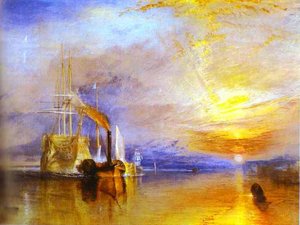
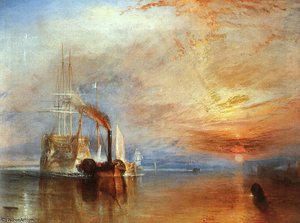
- Entdecken Sie Turners 'Fighting Téméraire'! Ein romantisches Meisterwerk, das den Untergang eines historischen Kriegsschiffs darstellt und Verwandlung & zeitlose Schönheit symbolisiert. Perfekt für Kunstliebhaber und Sammler.
- Erleben Sie Turners 'Fighting Temeraire'! Ein romantisches Meisterwerk, das ein herzzerreißendes maritimes Abschiedsgeschenk darstellt. Erkunden Sie sein dramatisches Licht, seine Symbolik und seine historische Bedeutung.
Joseph Mallord William Turner
1775 - 1851 , Vereinigtes Königreich
Kurzinfos
- Beeinflusste Künstler:
- Claude Monet
- Mark Rothko
- Bemerkenswerte Werke:
- The Morning After the Deluge
- Chichester Canal
- Ruins of Tintern Abbey
- Geburtsdatum: 23. April 1775
- Geburtsort: Covent Garden, Vereinigtes Königreich
- Künstlerische Richtung: Romantik, Landschaftsmalerei
- Nationalität: Britisch
- Sterbedatum: 19. Dezember 1851
- Vollständiger Name: Joseph Mallord William Turner
Ähnliche Artikel

Die 10 legendärsten Aquarellwerke der Kunstgeschichte – Meisterwerke für Ihr Zuhause
Entdecken Sie die 10 legendärsten Aquarellwerke der Kunstgeschichte! Von Turner bis Monet – erleben Sie die Geschichten, Techniken & Farben dieser Meisterwerke. Finden Sie hochwertige Kunstdrucke auf ArtsDot.com und gestalten Sie Ihr Zuhause mit zeitloser Eleganz.

Romantische Landschaften: Die 10 Meisterwerke, die eine Epoche prägten | ArtsDot
Entdecken Sie die 10 Meisterwerke der Romantischen Landschaftsmalerei! Von Caspar David Friedrich bis Turner – erleben Sie die Kunst, Emotion & Natur. Hochwertige Reproduktionen auf ArtsDot.com

Ephemeral Visions: Exploring the Artistic Legacy & Contemporary Practice of Watercolor Painting
Explore the captivating world of watercolor painting! Discover its rich history, essential techniques, influential artists & collecting tips. A comprehensive guide for art enthusiasts from ArtsDot.

Flüchtige Visionen: Die Geschichte und emotionale Resonanz der Aquarellmalerei
Entdecken Sie die faszinierende Welt der Aquarellmalerei! Von historischen Ursprüngen bis zu modernen Techniken – wir bieten Expertenwissen, Inspiration und Tipps für Anfänger & Fortgeschrittene.

Ephemeral Visions: Exploring the Artistic Legacy & Nuances of Watercolor Painting
Explore the captivating world of watercolor painting! Discover its rich history, essential techniques, influential artists & collecting tips from art experts. A comprehensive guide for enthusiasts.