 Vorschau anzeigen
 Versenden
 Teilen
 Details anzeigen

 Herunterladen
 Ähnliche Objekte
 Röntgenaufnahme
 Diashow
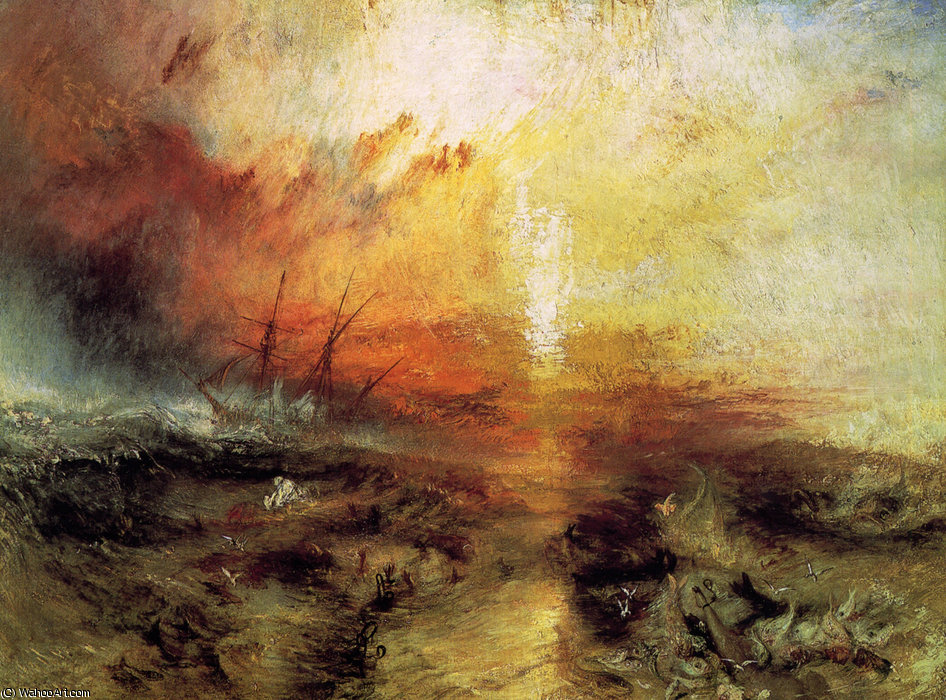
Slavers throwing overboard the death and dying

 Weiterlesen
Giclée / Kunstdruck
Giclée- oder Leinwanddruck in Museumsqualität mit schneller Produktion und flexiblen Veredelungsoptionen. ( Handgemalte Reproduktion bestellen Bild kaufen)




P118B $10

P118H $10

P118W $10

P438Z $10

P508JH $12

P508YH $12

P805H $10

P805Z $10

P919BZ $10

P919G $10

P919XJ $10

P959ZH $10

P968JZ $12

W106C $8

W218G $10

W218JH $8

W218Y $10

W307PJ $10

W316G $10

W316PJ $8

W316Y $10

W398PJ $8

W4111J $10

W500HY $15

W500JH $15

W692G $12

W849H $8

W940BG $15

W953PJ $8




Wählen Sie aus unseren vordefinierten Formaten, die den ursprünglichen Proportionen des Kunstwerks entsprechen.

Sie können Ihre eigenen Maße eingeben, um ein bestimmtes Format oder einen speziellen Platz einzupassen. Wenn das von Ihnen gewählte Format nicht den Proportionen des Originalbildes entspricht, werden wir das Kunstwerk entweder beschneiden oder das Bild mit einem gespiegelten oder einfarbigen Rand erweitern. Ein digitaler Entwurf wird Ihnen zur Genehmigung zugesandt, bevor die Produktion beginnt.
Bitte beachten Sie, dass die Vorschau auf dem Bildschirm nicht den tatsächlichen Zuschnitt oder die Erweiterung widerspiegelt. Nur der Entwurf zeigt die endgültige Komposition präzise an.
Obwohl Sondermaße verfügbar sind, empfehlen wir die Auswahl eines Maßes aus der vordefinierten Liste, um die ursprünglichen Proportionen zu bewahren.
Weltweiter Versand () innerhalb von 2 Wochen statt der üblichen 4/5 Wochen. (23 August)

Kostenloser weltweiter Expressversand

Hochwertige Leinenleinwand

Umfassender Versicherungsschutz beim Versand

Zollgebühren-Rückerstattungsgarantie

Garantie für exakte Farbtreue

60 Tage Rückgaberecht (nur bei Mängeln)

100% Geld-zurück-Garantie

Mengenrabatt verfügbar
 Die Glasoption ist nur für Größen unter 110 cm verfügbar.

Slavers throwing overboard the death and dying
Giclée / Kunstdruck
Format der Reproduktion
-


Gesamtpreis
$ 62
Sammlerstück-Beschreibung
A Descent Into Darkness: Turner’s ‘Slavers Throwing Overboard the Death and Dying’
William Turner's “Slavers Throwing Overboard the Death and Dying” isn’t merely a depiction of a maritime tragedy; it’s an unflinching confrontation with moral responsibility and a testament to the artist’s unparalleled ability to translate emotion into visual form. Painted in 1840, this monumental canvas—measuring 90.8 x 122.6 cm—holds its place within the Museum of Fine Arts, Boston, as a cornerstone of Romantic art and a chilling reminder of humanity's capacity for cruelty.Historical Echoes: The Zong Scandal
The genesis of this haunting image lies in the infamous Zong shipwreck incident of 1781. Faced with imminent financial ruin due to insurance claims regarding sickened enslaved passengers, Captain William Thompson made the horrific decision to jettison dozens of individuals overboard into the icy Atlantic waters—a calculated act designed to maximize profit at the expense of human life. This appalling event galvanized abolitionist sentiment and served as a catalyst for legislative reform, cementing Turner’s artistic impulse to expose injustice. The painting directly responds to this historical reality, capturing not just an event but its profound moral implications.The Sublime Landscape: Turner's Artistic Vision
Turner’s stylistic approach is fundamentally rooted in the Romantic movement’s obsession with the sublime—that awe-inspiring experience of confronting overwhelming natural forces. He abandons meticulous realism in favor of expressive brushstrokes and a masterful manipulation of light and color, prioritizing feeling over factual accuracy. The turbulent sea dominates the composition, rendered in swirling shades of indigo, grey, and ochre, conveying an atmosphere of palpable dread and instability. These colors aren’t chosen arbitrarily; they mirror the psychological turmoil experienced by those involved—the desperation of the crew and the terror of the victims.Symbolism Beneath the Surface
Beyond its dramatic visual impact, “Slavers Throwing Overboard” is laden with symbolic significance. The ship itself represents the institution of slavery – a symbol of oppression and exploitation. The figures thrown overboard embody suffering and vulnerability, highlighting the devastating consequences of inhumanity. Furthermore, the sunset—a recurring motif in Turner’s oeuvre—suggests impending doom and underscores the inescapable fate of those involved. It's a visual representation of mortality itself, forcing viewers to contemplate the fragility of human existence against the backdrop of nature’s indifference.Emotional Resonance: A Masterpiece of Atmospheric Drama
Ultimately, “Slavers Throwing Overboard” succeeds in eliciting an emotional response that transcends mere observation. Turner achieves this through his masterful use of chiaroscuro—the dramatic interplay between light and shadow—creating a palpable sense of depth and immediacy. The viewer is drawn into the scene, experiencing alongside the figures on board the chilling terror of the moment. It’s a painting that lingers in the memory long after viewing, prompting reflection on ethical dilemmas and reminding us of the enduring power of art to confront uncomfortable truths. Its impact continues to resonate today as an unforgettable portrayal of human cruelty and the sublime beauty of nature's fury.Ähnliche Kunstwerke
Über den Künstler
Frühe Jahre und Ausbildung
Joseph Mallord William Turner, eine bedeutende Figur der britischen Kunst, wurde am 23. April 1775 in Maiden Lane, Covent Garden, London geboren. Sein Vater, William Turner, war Barbier und Perückenmacher, während seine Mutter, Mary Marshall, aus einer Familie von Metzgern stammte. Im Alter von 14 Jahren trat Turner 1789 in die Royal Academy of Art ein, was den Beginn seiner illustren Karriere markierte.Künstlerischer Stil und Einflüsse
Turners Werk zeichnet sich durch seine expressive Farbgebung, fantasievolle Landschaftsbilder und turbulente Meeresansichten aus. Er war ein zutiefst experimenteller und progressiver Künstler, der Maler wie Claude Monet und Mark Rothko beeinflusste. Sein Einfluss ist in den Werken vieler nachfolgender Künstler sichtbar.Bedeutende Werke und Sammlungen
- Das Morgenrot nach der Sintflut (1843): Ein bemerkenswertes Öl auf Leinwand Gemälde, das sich in der Tate Collection, London befindet und Turners stilistische Form zur Darstellung der Naturgewalten zeigt.
- Chichester Kanal (1828): In Auftrag gegeben von George Wyndham, 3rd Earl of Egremont, stellt dieses Gemälde den Chichester Kanal dar und befindet sich derzeit in der Tate Collection.
- Ruinen von Tintern Abbey: Ein Aquarellstück, das sich nun im Calouste Gulbenkian Museum (Lissabon, Portugal) befindet und Turners Meisterschaft bei der Erfassung von Licht und Atmosphäre demonstriert.
Lebenslauf und Entwicklung
Turner entwickelte seinen Stil im Laufe seines Lebens weiter. Seine frühen Werke waren eher realistisch, doch er begann zunehmend mit dem Experimentieren mit Farbe und Licht. Er wurde stark von der Natur beeinflusst und versuchte, die Emotionen und das Drama, die er in ihr sah, auf Leinwand festzuhalten. Er war ein Pionier bei der Darstellung atmosphärischer Effekte wie Nebel, Rauch und Sturm, was seine Werke einzigartig machte.Vermächtnis und Bedeutung
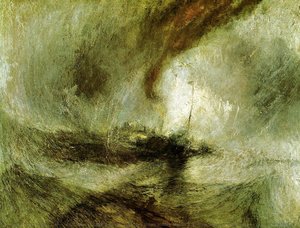
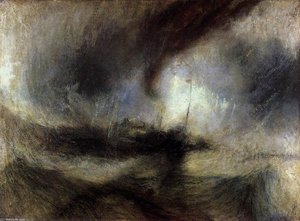
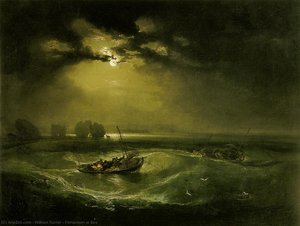
Turner hinterließ über 2.000 Gemälde und 19.000 Zeichnungen und Skizzen. Er gilt weithin als einer der größten Meister der britischen Aquarelllandschafts- und Meeresmalerei, oft als „der Maler des Lichts“ bezeichnet. Sein Einfluss auf nachfolgende Künstler ist unbestreitbar, was ihn zu einer entscheidenden Figur in der Kunstgeschichte macht.- Erleben Sie Turners 'Zeige Sturm'! Ein dramatisches romantisches Seelandschaftsgemälde, das die Wut der Natur einfängt. Entdecken Sie dieses Meisterwerks aus Impasto und Licht – ein fesselnder Blickfang.
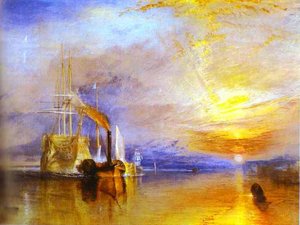
- Entdecken Sie Turners 'Fighting Téméraire'! Ein romantisches Meisterwerk, das den Untergang eines historischen Kriegsschiffs darstellt und Verwandlung & zeitlose Schönheit symbolisiert. Perfekt für Kunstliebhaber und Sammler.
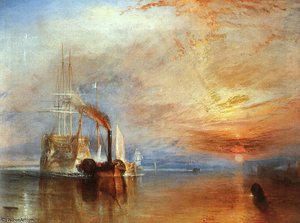
- Erleben Sie Turners 'Fighting Temeraire'! Ein romantisches Meisterwerk, das ein herzzerreißendes maritimes Abschiedsgeschenk darstellt. Erkunden Sie sein dramatisches Licht, seine Symbolik und seine historische Bedeutung.
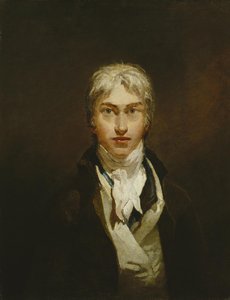
Joseph Mallord William Turner
1775 - 1851 , Vereinigtes Königreich
Kurzinfos
- Beeinflusste Künstler:
- Claude Monet
- Mark Rothko
- Bemerkenswerte Werke:
- The Morning After the Deluge
- Chichester Canal
- Ruins of Tintern Abbey
- Geburtsdatum: 23. April 1775
- Geburtsort: Covent Garden, Vereinigtes Königreich
- Künstlerische Richtung: Romantik, Landschaftsmalerei
- Nationalität: Britisch
- Sterbedatum: 19. Dezember 1851
- Vollständiger Name: Joseph Mallord William Turner
Ähnliche Artikel
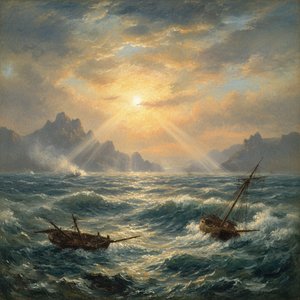
J.M.W. Turner: Licht, Atmosphäre und das Romantische Erhabene – Eine Studie zu seinem künstlerischen Vermächtnis
Entdecken Sie J.M.W. Turner und seine revolutionäre Landschaftsmalerei! Analysieren Sie Licht, Atmosphäre und das Romantische Erhabene in seinem Werk. Expertenwissen & tiefe Einblicke.

The Enduring Legacy of Oil on Canvas: Technique, History & Aesthetic Impact
Explore the rich history & techniques of oil painting – from Renaissance masters to Impressionism. Discover pigments, layering methods, and why this timeless medium endures. Expert insights for artists & art enthusiasts.

Öl auf Leinwand: Eine historische und technische Erkundung eines zeitlosen künstlerischen Mediums
Entdecken Sie die faszinierende Welt der Ölmalerei! Von historischen Techniken bis zur modernen Anwendung – wir bieten Expertenwissen, Restaurierungstipps und hochwertige Reproduktionen. Jetzt informieren!

Romantic Realism's Finest: 10 Masterpieces for Your Home | ArtsDot
Explore 10 defining masterpieces of Romantic Realism! Discover Courbet, Millet & Daumier's powerful paintings—capturing emotion and social realities. Find museum-quality reproductions for your home at ArtsDot.com.

The Enduring Power of Painting: A Historical & Contemporary Exploration of Form and Emotion
Explore the rich history & enduring techniques of oil painting with ArtsDot. Discover masterpieces, learn about art collecting, and find authentic handmade reproductions crafted by skilled artists.