

 Vorschau anzeigen
 Versenden
 Teilen
 Details anzeigen

 Herunterladen
 Ähnliche Objekte
 Röntgenaufnahme
 Diashow
 Statistiken
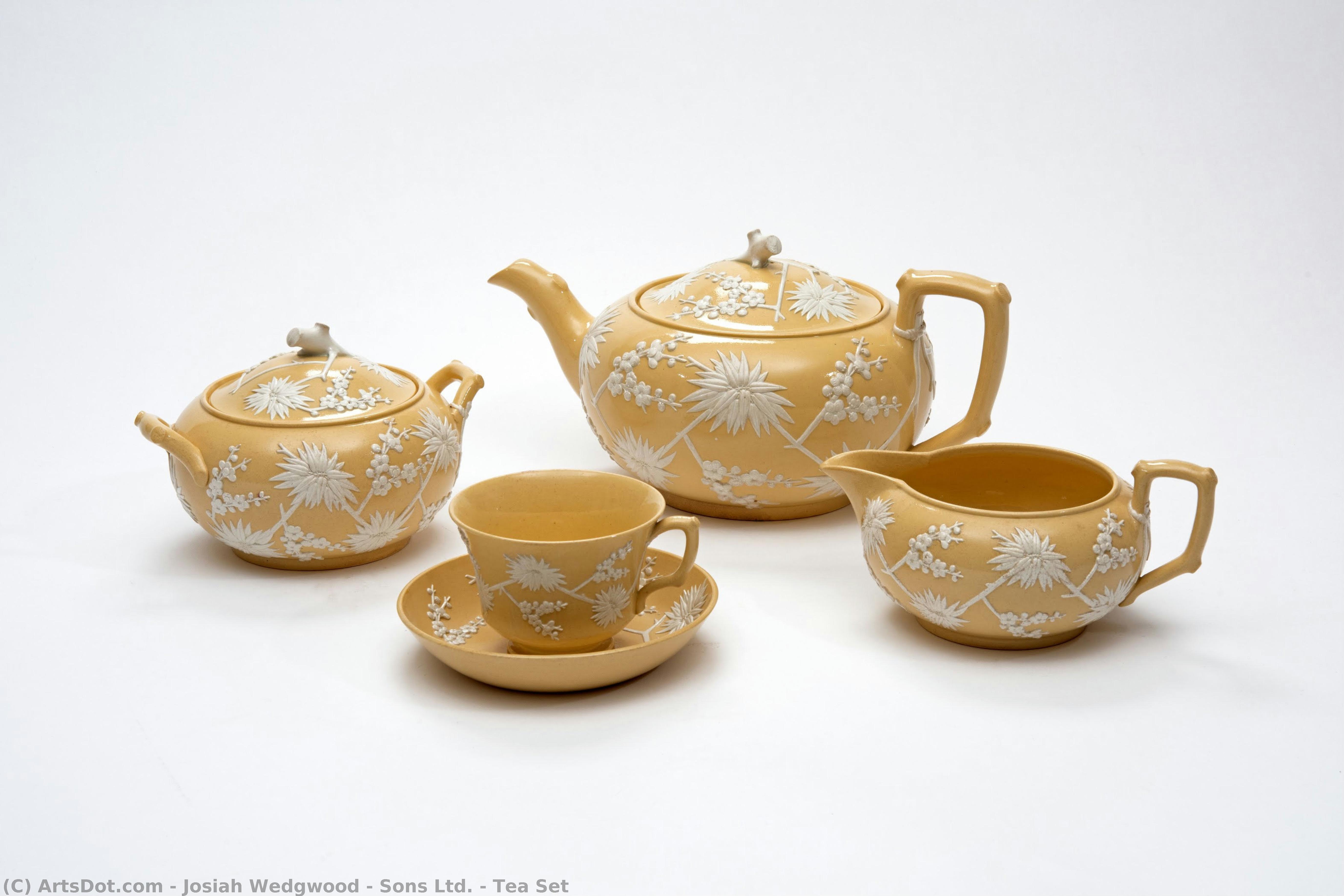
Tea Set


 Weiterlesen
Erwerben Sie ein hochauflösendes, optimiertes digitales Bild, das der Online-Vorschau weit überlegen ist.
Jede Datei wird von unseren hauseigenen Spezialisten mit modernsten Werkzeugen und fachmännischer manueller Retusche sorgfältig vorbereitet. Wir stellen sicher, dass jedes Bild eine außergewöhnliche Klarheit, präzise Farbgenauigkeit und feinste Details aufweist.
Die endgültige Datei wird innerhalb von 72 Stunden per E-Mail zugestellt und ist für den sofortigen Einsatz in professionellen, redaktionellen und Druckumgebungen optimiert. Es handelt sich um dieselbe Qualität, der führende Designstudios, Verlage und Galerien vertrauen.
Digitales Bild
Laden Sie eine hochauflösende Datei für die persönliche Präsentation, den Druck und kreative Projekte herunter. ( Zu Druck wechseln Handgemalte Reproduktion bestellen)
In jeder Bestellung digitaler Bilder enthalten
Professionelle digitale Bereitstellung, garantiert
Wenn Sie sich für ArtsDot.com entscheiden, erhalten Sie nicht nur ein Bild – Sie erhalten ein professionell aufbereitetes digitales Kunstwerk, das mit höchster Präzision erstellt und durch eine Zufriedenheitsgarantie abgesichert wird. Hier ist alles, was automatisch mit Ihrer Bestellung geliefert wird:

Schnelle E-Mail-Zustellung
Ihre hochauflösende digitale Bilddatei wird Ihnen innerhalb von 72 Stunden nach der Bestellung per E-Mail zugestellt – bereit zur sofortigen Verwendung.

KI-optimierte digitale Datei
Ihre Kunstwerke werden professionell mithilfe fortschrittlicher KI-Tools und manueller Bearbeitung optimiert, um maximale Detailtreue, Klarheit und Farbgenauigkeit zu gewährleisten.

Lebenslanger kostenloser Neudruckservice
Datei versehentlich gelöscht oder verloren? Keine Sorge – wir senden sie Ihnen jederzeit kostenlos erneut zu.

Keine Einfuhrgebühren – jemals
Genießen Sie Ihr Kunstwerk sofort ohne Zollgebühren, Einfuhrabgaben oder Versandkosten – digitale Downloads sind immer steuerfrei.

Garantierte Farbtreue
Wir garantieren, dass Ihr digitales Bild mithilfe professioneller Werkzeuge und Farbmanagement die Originalfarben so präzise wie möglich wiedergibt.

100-Tage-Zufriedenheitsgarantie
Wenn Sie mit Ihrem digitalen Bild nicht zufrieden sind, werden wir es überarbeiten oder 100% innerhalb von 100 Tagen erstatten – ohne Wenn und Aber.

100% Geld-zurück-Garantie
Nicht zufrieden? Erhalten Sie innerhalb von 100 Tagen nach Erhalt Ihrer digitalen Datei eine vollständige Rückerstattung – ohne Wenn und Aber.

Rabatte bei Großbestellungen
3 Bilder kaufen, 10% sparen – 5 Bilder kaufen, 15% sparen – Ab 10 Bildern 20% sparen. Ideal für kreative Projekte, Galerien und Agenturen.
Ähnliche Kunstwerke







Biografie des Künstlers
The Industrial Revolution in Ceramic Form: Josiah Wedgwood & Sons Ltd.
Josiah Wedgwood & Sons Ltd., more than simply a pottery firm, represents a pivotal moment in the history of art and industry. Founded by the visionary Josiah Wedgwood in 1759, the company didn’t just *make* ceramics; it transformed them from luxury goods accessible only to the elite into objects of beauty within reach of a burgeoning middle class. Wedgwood's story is inextricably linked with the broader narrative of the English Industrial Revolution, embodying its spirit of innovation, scientific inquiry, and entrepreneurial zeal. Born in Burslem, Staffordshire – the heartland of the English pottery industry – Wedgwood inherited a family tradition of potters but possessed an ambition that far surpassed his predecessors. He wasn’t content to simply follow established methods; he dedicated himself to understanding the very *science* of clay, meticulously experimenting with different materials and firing techniques. This relentless pursuit of knowledge led to breakthroughs in glaze composition, body strength, and ultimately, the creation of entirely new ceramic forms.A Potter-Scientist: Early Experiments & Innovations
Wedgwood’s early career was marked by a dedication to perfecting existing pottery types. He wasn't immediately focused on grand stylistic departures but rather on achieving unparalleled quality in established wares like salt-glazed stoneware. However, his true genius lay in his systematic approach. He kept detailed notebooks documenting every experiment – the precise composition of clays, the temperature and duration of firings, the effects of different additives. This scientific rigor was revolutionary for the time; pottery had traditionally been a craft passed down through generations based on intuition and experience. Wedgwood brought to it the precision of a chemist and the analytical mind of an engineer. His early successes included improvements in black basalt ware – a dense, stone-like ceramic he developed as an imitation of Egyptian porphyry – and creamware, a smooth, ivory-colored earthenware that quickly became immensely popular. But it was his development of Jasperware, around 1774, that truly cemented his legacy. This fine-grained, unglazed stoneware allowed for incredibly detailed relief modeling, often inspired by classical antiquity, and opened up new possibilities for artistic expression in ceramics.Neoclassicism & the Expansion of Taste
The aesthetic direction of Wedgwood’s work was profoundly influenced by the Neoclassical movement sweeping Europe. Wedgwood actively cultivated relationships with leading artists and designers, commissioning designs from figures like John Flaxman Jr., a sculptor who became synonymous with the company's style. Flaxman’s delicate cameos and relief scenes, depicting mythological subjects and historical narratives, were perfectly suited to the refined surface of Jasperware. Wedgwood wasn’t simply copying classical forms; he was adapting them for a wider audience, democratizing access to high art. He understood that beauty could – and should – be enjoyed by all, not just the aristocracy. This philosophy extended beyond aesthetics. Wedgwood actively promoted his wares through showrooms in London and abroad, creating carefully curated displays that appealed to discerning tastes. He even developed a catalogue raisonné, meticulously documenting his designs and providing detailed descriptions, further elevating the status of ceramics as an art form. The company’s success wasn't limited to Jasperware; they also produced a wide range of other wares, including tea sets, vases, tableware, and decorative objects, all characterized by Wedgwood’s commitment to quality and elegant design.Factory Production & Social Impact
Wedgwood was not only an innovator in ceramic techniques but also in factory organization. He established the Etruria Works in 1769 – a purpose-built factory designed to maximize efficiency and control every aspect of production. This marked a significant departure from the traditional cottage industry model, where potters worked independently in small workshops. Wedgwood implemented division of labor, specialized machinery, and rigorous quality control measures. While this system undoubtedly had its drawbacks – concerns about worker conditions were present even at the time – it allowed for mass production without sacrificing artistic integrity. The Etruria Works became a symbol of industrial progress, attracting visitors from across Europe eager to witness the marvels of modern manufacturing. Furthermore, Wedgwood was a staunch abolitionist and used his pottery as a platform to advocate against slavery. He created medallions depicting scenes of suffering and injustice, bearing the slogan “Am I Not A Man And A Brother?”, becoming one of the first manufacturers to publicly support the anti-slavery movement.A Lasting Legacy: Wedgwood’s Enduring Influence
Josiah Wedgwood died in 1795, leaving behind a company that had fundamentally reshaped the landscape of ceramics and manufacturing. His innovations – from Jasperware to factory organization – continued to influence pottery production for generations. The name “Wedgwood” became synonymous with quality, elegance, and good taste. The company’s wares were highly sought after by royalty, aristocrats, and increasingly, the middle class, solidifying its position as a leading manufacturer of fine ceramics. Even today, Wedgwood remains a respected brand, continuing to produce high-quality pottery based on many of the original designs developed during Josiah Wedgwood's lifetime. His impact extends beyond the realm of art and design; he demonstrated the power of combining scientific inquiry with artistic vision, paving the way for the modern industrial age and proving that beauty could be both accessible and enduring. The story of Josiah Wedgwood & Sons Ltd. is a testament to the transformative potential of innovation, entrepreneurship, and a unwavering commitment to quality – a legacy that continues to resonate in the world of ceramics and beyond.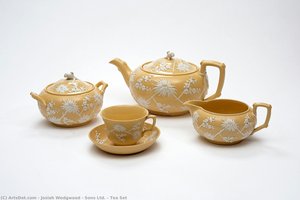
Kurzinfos
- Artistic Movement Or Style: Pottery, Ceramics
- Date Of Death: Living
- Full Name: Josiah Wedgwood & Sons Ltd.