 Vorschau anzeigen
 Versenden
 Teilen
 Details anzeigen

 Herunterladen
 Ähnliche Objekte
 Röntgenaufnahme
 Diashow
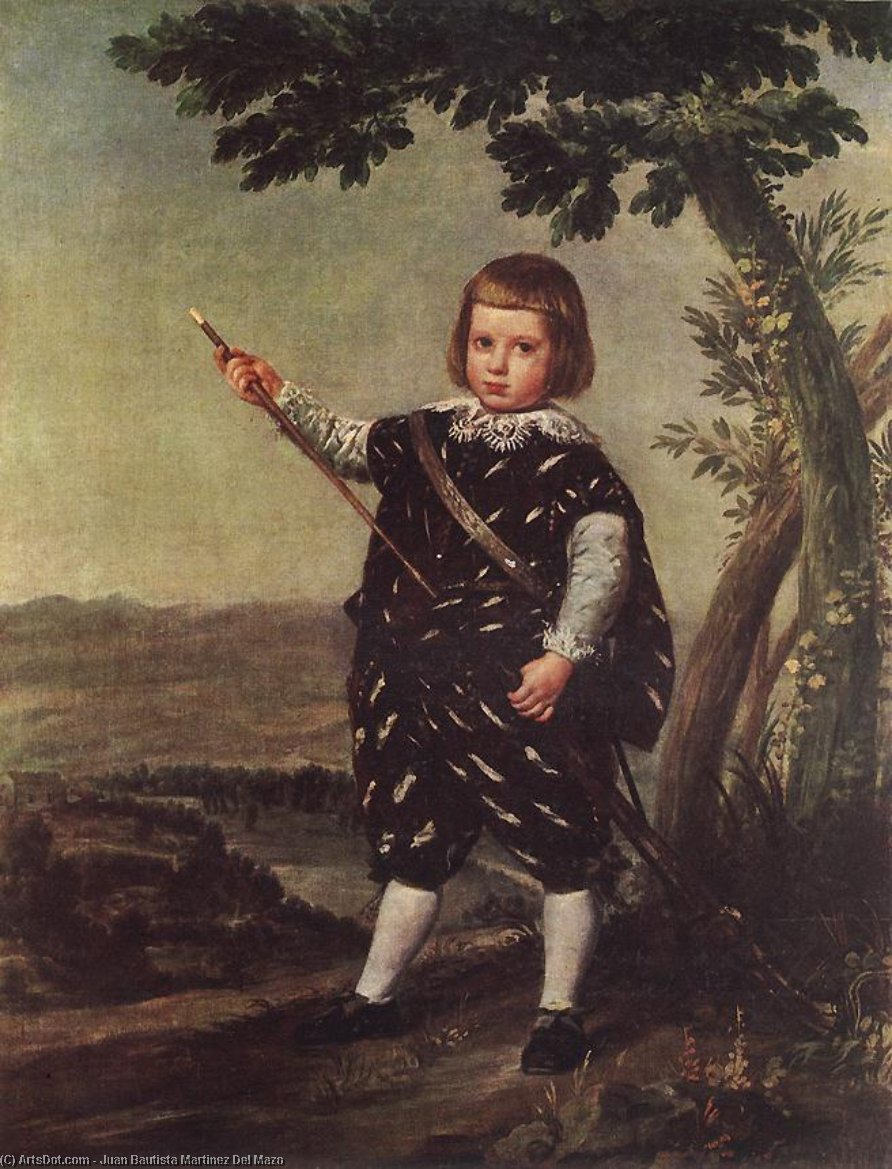
Infante Don Baltazar Carlos
 Oil On Canvas
- WallArt
- Baroque Painting
 1635
1635 144.0 x 109.0 cm
 Szépművészeti Múzeum
 Weiterlesen
Handgefertigte Ölreproduktion
Handgemaltes Ölgemälde auf Leinwand in Ihrer Wunschgröße und mit Rahmen, auf Bestellung von unseren Künstlern angefertigt. ( Druck bestellen Bild kaufen)




P118B $10

P118H $10

P118W $10

P438Z $10

P508JH $12

P508YH $12

P805H $10

P805Z $10

P919BZ $10

P919G $10

P919XJ $10

P959ZH $10

P968JZ $12

W106C $8

W218G $10

W218JH $8

W218Y $10

W307PJ $10

W316G $10

W316PJ $8

W316Y $10

W398PJ $8

W4111J $10

W500HY $15

W500JH $15

W692G $12

W849H $8

W940BG $15

W953PJ $8




Wählen Sie aus unseren vordefinierten Formaten, die den ursprünglichen Proportionen des Kunstwerks entsprechen.

Sie können Ihre eigenen Maße eingeben, um einen bestimmten Rahmen oder Platz auszufüllen. Wenn die gewählte Größe nicht den Proportionen des Originalbildes entspricht, werden wir das Kunstwerk entweder beschneiden oder das Gemälde durch zusätzliche, handgemalte Elemente erweitern. Ein digitales Mockup wird Ihnen zur Genehmigung zugesandt, bevor die Produktion beginnt.
Bitte beachten Sie, dass die Bildschirmvorschau nicht die tatsächliche Beschneidung oder Erweiterung widerspiegelt. Nur das Mockup zeigt die endgültige Komposition exakt an.
Obwohl Sondermaße verfügbar sind, empfehlen wir, eine Größe aus der vordefinierten Liste zu wählen, um die ursprünglichen Proportionen beizubehalten.
Nach der Bestellung wird das ArtsDot.com-Team dem Kunden Anweisungen per E-Mail zusenden und eine Mockup-Vorschau bereitstellen.
Weltweiter Versand () in nur 3 bis 4 Wochen statt der üblichen 5 Wochen. (4 September). Keine Kompromisse bei der Qualität.

Kostenloser weltweiter Expressversand

Hochwertige Leinenleinwand

Umfassender Versicherungsschutz beim Versand

Zollgebühren-Rückerstattungsgarantie

Garantie für exakte Farbtreue

60 Tage Rückgaberecht (nur bei Mängeln)

100% Geld-zurück-Garantie

Mengenrabatt verfügbar
 Die Glasoption ist nur für Größen unter 110 cm verfügbar.

Infante Don Baltazar Carlos
Art der Reproduktion
Format der Reproduktion
-


Gesamtpreis
$ 263
A Portrait of Young Royalty: Juan Bautista Martínez del Mazo’s *Infante Don Baltazar Carlos*
Juan Bautista Martínez del Mazo's 1635 portrait, *Infante Don Baltazar Carlos*, is more than just a depiction of a young boy; it’s a carefully constructed tableau of youthful privilege and nascent contemplation. Painted during the height of the Spanish Baroque era, this work offers a rare glimpse into the world of the Spanish court through the discerning eye of an artist deeply influenced by his mentor, Diego Velázquez. The painting immediately draws the viewer in with its vibrant palette – rich reds and blues dominate, contrasted against the muted greens and browns of the distant landscape – creating a sense of both warmth and quiet solemnity.
The subject himself, Infante Don Baltazar Carlos, is presented as a figure of considerable poise despite his youth. Dressed in a sumptuous ruffled shirt, embroidered with intricate detail, he holds a miniature sword—a symbol not just of military prowess but also of nascent authority and the burdens of royal lineage. His gaze, directed towards an unseen horizon, suggests a thoughtful introspection, hinting at the weighty responsibilities that lie ahead. The artist masterfully captures the subtle nuances of youth: the slightly furrowed brow, the delicate features, and the inherent vulnerability within his expression.
Velázquez’s Shadow and Martínez del Mazo's Distinct Voice
Martínez del Mazo’s relationship with Velázquez is pivotal to understanding this painting. He served as a court painter for years, working closely alongside his father-in-law, absorbing the techniques of observation, light, and color that defined Velázquez’s style. However, *Infante Don Baltazar Carlos* reveals a distinct artistic voice emerging from within this influential apprenticeship. While echoes of Velázquez's meticulous detail and atmospheric perspective are undeniably present, Martínez del Mazo introduces a greater emphasis on emotional resonance and a more expressive use of color. The landscape background, for instance, is not merely a decorative element but actively contributes to the painting’s mood—a subtly melancholic vista that mirrors the boy’s contemplative gaze.
The choice of subject matter itself speaks volumes about the era. Portraits of young royals were frequently commissioned during this period, serving as powerful symbols of dynastic stability and reinforcing the legitimacy of the Habsburg monarchy. Yet, Martínez del Mazo elevates this genre beyond mere propaganda, imbuing the portrait with a profound sense of humanity. He doesn’t simply present a royal heir; he presents a boy on the cusp of adulthood, grappling with his future role within the complex tapestry of Spanish society.
Technique and Composition: A Masterclass in Baroque Realism
The painting's technical brilliance lies in Martínez del Mazo’s masterful command of chiaroscuro – the dramatic interplay of light and shadow. Velázquez’s influence is particularly evident here, with carefully placed highlights illuminating the Infante’s face and clothing while leaving the background softly shrouded in darkness. This technique not only adds depth and volume to the portrait but also directs the viewer's attention to the central figure, emphasizing his importance.
The composition is equally deliberate. The pyramidal arrangement of the figures—the boy at its apex—creates a sense of stability and formality, while the slightly off-center placement of the sword subtly introduces an element of dynamism and intrigue. The artist’s attention to detail is remarkable; from the intricate folds of the fabric to the texture of the boy's hair, every element contributes to the overall realism and immediacy of the portrait.
Symbolism and Emotional Resonance
*Infante Don Baltazar Carlos* resonates with a quiet dignity and an undercurrent of melancholy. The toy sword, a symbol of power and potential, is held delicately in his hand, suggesting a hesitant embrace of responsibility. The distant landscape, bathed in the soft light of twilight, evokes a sense of longing and introspection—a reflection perhaps of the boy’s awareness of his future role within the vast and often turbulent world of European politics.
This painting is more than just a portrait; it's a window into the soul of a young prince and a testament to the enduring legacy of Spanish Baroque art. Reproductions offer an accessible way to appreciate the artistry and historical significance of this captivating work, bringing its quiet beauty and profound emotional depth into any space.
Ähnliche Kunstwerke



Über den Künstler
Juan Bautista Martínez del Mazo: Ein Leben im Schatten Velázquez's
- Geboren: Cuenca, Spanien (ca. 1605)
- Gestorben: 1667
Juan Bautista Martínez del Mazo nimmt eine bedeutende Stellung in der spanischen Barockkunst ein und wird vor allem für seine enge Verbindung zu und Nachahmung von Diego Velázquez anerkannt. Obwohl er oft im Schatten des herausragenden Rufs seines Schwiegervaters steht, entwickelte sich Mazo zu einem geübten Porträt- und Landschaftsmaler und hinterließ ein Erbe, das sowohl seine Abhängigkeit von Velázquez als auch seine eigene künstlerische Persönlichkeit offenbart.
Frühes Leben und Ausbildung
Details über Martínez del Mazos frühes Leben sind etwas verschwommen. Sein Geburtsort wird zwischen Cuenca und Madrid diskutiert, wobei Schätzungen sein Geburtsjahr auf 1605-1612 basierend auf dem Geburtsdatum seiner Mutter und Heiratsunterlagen legen. Auch die Einzelheiten zu seiner künstlerischen Ausbildung sind unklar; es wird jedoch allgemein angenommen, dass er vor seiner Heirat Zeit in Velázquez's Werkstatt verbrachte. Diese Lehrzeit vermittelte ihm wahrscheinlich wertvolle Einblicke in die führenden künstlerischen Praktiken des spanischen Hofes.
Heirat und königliche Förderung
Ein entscheidender Moment in Martínez del Mazos Karriere kam mit seiner Heirat mit Francisca de Silva Velázquez y Pacheco, der einzigen überlebenden Tochter von Velázquez, im Jahr 1633. Diese Verbindung sicherte ihm eine Position innerhalb des Königlichen Kreises. Kurz darauf ernannte Velázquez 1634 Martínez del Mazo zum Kammerherrn des Königs, einer angesehenen Rolle, die königliche Gunst signalisierte und Zugang zu Hofpatronage bot. Während seiner gesamten Karriere setzte sich Velázquez aktiv für Martínez del Mazo ein und sicherte ihm und seiner Familie weitere Ämter und Aufträge.
Künstlerischer Stil und Entwicklung
Martínez del Mazos künstlerischer Stil wurde stark von Velázquez beeinflusst, zunächst durch eine enge Nachahmung der Techniken seines Mentors gekennzeichnet. Er zeichnete sich im Porträtfach aus und bewies ein scharfes Gespür für das Festhalten von Gesichtszügen unter Einbeziehung barocker Dramatik. Martínez del Mazo unterschied sich jedoch auch durch seine Landschaften und Jagdszenen, die eine sich entwickelnde persönliche Stilrichtung zeigten, die Detailtreue und Beobachtung betonte. Sein gefeiertes View of Saragossa (1646) veranschaulicht diesen Wandel und offenbart eine lebendigere Farbpalette und einen größeren Schwerpunkt auf die Darstellung der geschäftigen Aktivitäten innerhalb einer Landschaft.
- Einflüsse: Diego Velázquez, venezianische Meister (Tintoretto, Tizian, Paul Veronese), flämische Maler (Paul de Vos, Rubens, Jordaens)
- Schlüsselmerkmale: Naturalismus, akribische Detailgenauigkeit, lebendige Farbpalette, dynamische Kompositionen, Betonung kleiner Figuren.
Wichtige Werke und historische Bedeutung
Obwohl Martínez del Mazo seine Werke selten signierte, was zu historischer Verwirrung mit Velázquez's Œuvre beitrug, werden mehrere Gemälde heute mit einiger Wahrscheinlichkeit ihm zugeschrieben:
- View of Saragossa (Prado)
- Portrait of Queen Mariana in Mourning Dress (National Gallery, London)
- The Family of the Painter (Kunsthistorisches Museum, Wien)
Martínez del Mazos historische Bedeutung liegt nicht nur in seinen künstlerischen Leistungen, sondern auch in seiner Rolle als Vermittler von Velázquez's Erbe. Er bewahrte und vermittelte viele von Velázquez's Techniken und stilistischen Innovationen an nachfolgende Generationen spanischer Künstler. Die moderne Kunstkritik hat dazu beigetragen, ihre Werke zu entwirren, was eine differenziertere Wertschätzung der individuellen Beiträge Martínez del Mazos zum reichen Gefüge der spanischen Barockmalerei ermöglicht.
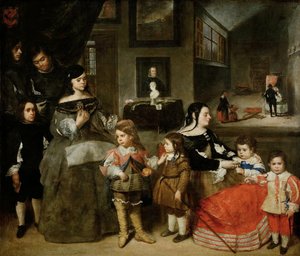
Juan Bautista Martínez del Mazo
1605 - 1667 , Spanien
Kurzinfos
- Beeinflusste Künstler:
- Diego Velázquez
- Tintoretto
- Titian
- Rubens
- Bemerkenswerte Werke:
- Ansicht von Saragossa
- Porträt Königin Mariana
- Der Malerfamilie
- Geburtsdatum: ca. 1605
- Geburtsort: Cuenca, Spanien
- Künstlerische Bewegung: Spanischer Barock
- Nationalität: Spanisch
- Sterbedatum: 1667
- Vollständiger Name: Juan Bautista Martínez del Mazo
Ähnliche Artikel
The Golden Age Reforged: Dramatic Realism & Religious Zeal in Spanish Baroque Art
Explore the dramatic world of Spanish Baroque art! Discover masters like Zurbarán & the powerful influence of religious zeal on painting techniques – a guide for collectors and enthusiasts.
Museo del Prado: Die 25 Meisterwerke – Kunst für Ihr Zuhause | ArtsDot
Entdecken Sie die 25 Meisterwerke des Museo del Prado! Von Velázquez bis Goya – Kunstgeschichte, Techniken & Geschichten berühmter Gemälde. Finden Sie hochwertige Reproduktionen für Ihr Zuhause auf ArtsDot.com.

The Dramatic Flourish: Exploring the Baroque Movement's Enduring Legacy in Art History
Explore the dramatic world of Baroque art! Discover iconic artists like Caravaggio & Rubens, defining techniques, and its lasting impact on art history. Expert insights for collectors & enthusiasts at ArtsDot.

Barock Meisterwerke: Die 10 prägendsten Kunstwerke für Ihr Zuhause |
Entdecken Sie die 10 prägendsten Meisterwerke des Barock! Caravaggio, Rembrandt & Co. – Erfahren Sie die Geschichten hinter ikonischen Gemälde und finden Sie hochwertige Kunst Reproduktionen für Ihr Zuhause auf .

Barocke Pracht: Wie Sie Opulenz und Emotionen in zeitgenössische Innenräume bringen
Entdecken Sie die Pracht des Barock! Expertenratgeber für luxuriöse Innenräume mit barocken Elementen. Inspiration, Tipps & hochwertige Kunst bei .