 Vorschau anzeigen
 Versenden
 Teilen
 Details anzeigen

 Herunterladen
 Ähnliche Objekte
 Röntgenaufnahme
 Diashow
 Statistiken
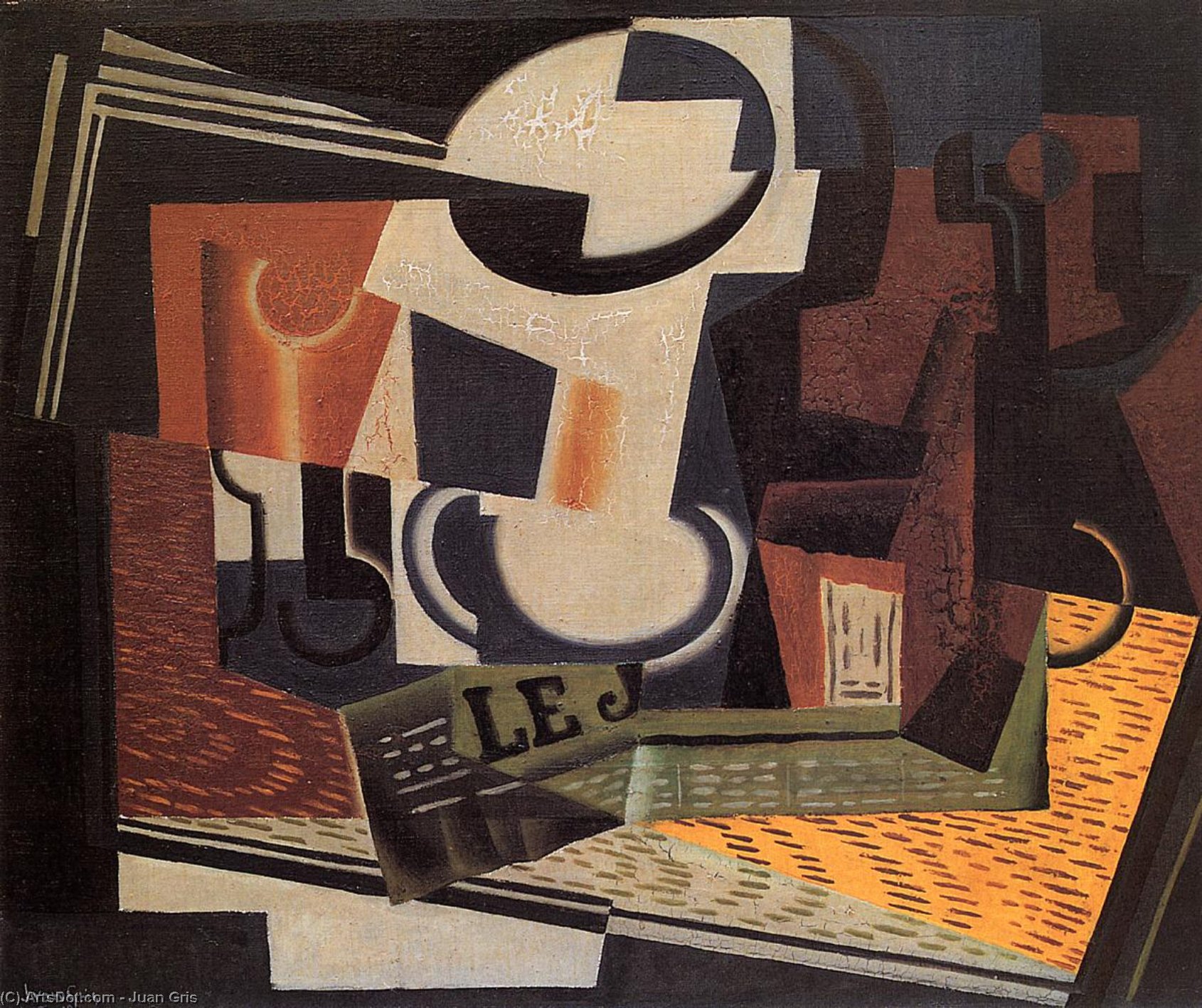
Still Life with Fruit Bowl
 Oil On Canvas
- WallArt
- Synthetic Cubism
 1918
1918- Early Modern
 54.0 x 65.0 cm
 Weiterlesen
Handgefertigte Ölreproduktion
Handgemaltes Ölgemälde auf Leinwand in Ihrer Wunschgröße und mit Rahmen, auf Bestellung von unseren Künstlern angefertigt. ( Zu Druck wechseln Zum digitalen Bild wechseln)




P118B $10

P118H $10

P118W $10

P438Z $10

P508JH $12

P508YH $12

P805H $10

P805Z $10

P919BZ $10

P919G $10

P919XJ $10

P959ZH $10

P968JZ $12

W106C $8

W218G $10

W218JH $8

W218Y $10

W307PJ $10

W316G $10

W316PJ $8

W316Y $10

W398PJ $8

W4111J $10

W500HY $15

W500JH $15

W692G $12

W849H $8

W940BG $15

W953PJ $8




Wählen Sie aus unseren vordefinierten Formaten, die den ursprünglichen Proportionen des Kunstwerks entsprechen.

Sie können Ihre eigenen Maße eingeben, um einen bestimmten Rahmen oder Platz auszufüllen. Wenn die gewählte Größe nicht den Proportionen des Originalbildes entspricht, werden wir das Kunstwerk entweder beschneiden oder das Gemälde durch zusätzliche, handgemalte Elemente erweitern. Ein digitales Mockup wird Ihnen zur Genehmigung zugesandt, bevor die Produktion beginnt.
Bitte beachten Sie, dass die Bildschirmvorschau nicht die tatsächliche Beschneidung oder Erweiterung widerspiegelt. Nur das Mockup zeigt die endgültige Komposition exakt an.
Obwohl Sondermaße verfügbar sind, empfehlen wir, eine Größe aus der vordefinierten Liste zu wählen, um die ursprünglichen Proportionen beizubehalten.
Nach der Bestellung wird das ArtsDot.com-Team dem Kunden Anweisungen per E-Mail zusenden und eine Mockup-Vorschau bereitstellen.
Weltweiter Versand () in nur 3 bis 4 Wochen statt der üblichen 5 Wochen. (10 September). Keine Kompromisse bei der Qualität.

Kostenloser weltweiter Expressversand

Hochwertige Leinenleinwand

Umfassender Versicherungsschutz beim Versand

Zollgebühren-Rückerstattungsgarantie

Garantie für exakte Farbtreue

100-Tage-Rückgaberecht (nur bei Mängeln)

100% Geld-zurück-Garantie

Mengenrabatt verfügbar
 Die Glasoption ist nur für Größen unter 110 cm verfügbar.

Still Life with Fruit Bowl
Art der Reproduktion
Format der Reproduktion
-


Gesamtpreis
$ 263
Still Life with Fruit Bowl: A Window into Synthetic Cubism
Juan Gris’s “Still Life with Fruit Bowl,” painted in 1918, is more than just a depiction of everyday objects; it's a meticulously constructed exploration of form and space that embodies the radical spirit of Synthetic Cubism. Created during a pivotal moment in art history, this work offers a rare glimpse into the mind of a visionary artist – José Victoriano González-Pérez, who would become renowned as Juan Gris – and his groundbreaking approach to representing reality.
- The Artist’s Vision: Gris, born in Madrid in 1887, initially pursued engineering before dedicating himself fully to art. His background instilled a rigorous analytical mind, which he channeled into his artistic practice, seeking to deconstruct and rebuild the world around him with geometric precision.
- Synthetic Cubism’s Revolution: This painting exemplifies Synthetic Cubism, a style that moved beyond the fragmented forms of Analytical Cubism (developed alongside Georges Braque and Pablo Picasso) towards a more deliberate and structured approach. Instead of simply breaking down objects into smaller parts, Gris carefully assembled them from geometric shapes – planes, lines, and angles – creating a new visual language.
Composition and Technique: A Symphony of Geometric Forms
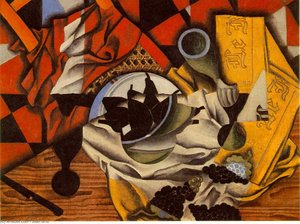
Measuring 54 x 65 cm, the canvas is dominated by a central fruit bowl, meticulously arranged with a cup, vase, wine glass, and two books. Gris’s masterful use of oil on canvas allows for rich color saturation and subtle gradations in tone, enhancing the illusion of depth and volume within the fragmented forms. The composition isn't accidental; it’s a carefully orchestrated balance between solidity and dissolution. Notice how the objects aren’t realistically rendered but rather presented as interlocking planes, each viewed from multiple perspectives simultaneously. This technique, central to Synthetic Cubism, challenges the viewer’s perception of space and invites a more active engagement with the artwork.
The color palette is restrained yet impactful – primarily muted browns, ochres, and blues – allowing the focus to remain on the interplay of shapes and textures. The subtle variations in brushwork add to the painting's tactile quality, further emphasizing the three-dimensional nature of the objects despite their fragmented representation.
Symbolism and Historical Context
"Still Life with Fruit Bowl" was created during a period of immense artistic ferment. Gris’s work reflects the broader intellectual currents of the time – the rise of industrialization, advancements in science, and a growing fascination with modern technology. The inclusion of everyday objects—a bowl, books, and glassware—suggests an interest in exploring the relationship between art and daily life. These items are not merely decorative; they become subjects for rigorous analysis and reconstruction within the framework of Cubist principles.
The painting’s creation in 1918, just before World War I, adds another layer of significance. The instability and upheaval of the era likely influenced Gris's desire to create a stable, ordered visual language – one that could offer a sense of control and clarity amidst chaos.
A Legacy of Innovation
Juan Gris’s “Still Life with Fruit Bowl” stands as a testament to his innovative spirit and his profound impact on the development of modern art. It's a captivating example of Synthetic Cubism, inviting viewers to reconsider their understanding of space, form, and representation. This piece, alongside other works in Gris’s oeuvre, continues to inspire artists and collectors alike, solidifying his place as one of the most important figures in 20th-century art.
Ähnliche Kunstwerke

Über den Künstler
Juan Gris: Ein Pionier des Kubismus
- Geboren: 23. März 1887, Madrid, Spanien
- Gestorben: 11. Mai 1927
Frühes Leben und künstlerische Entwicklung
José Victoriano González-Pérez, besser bekannt als Juan Gris, wurde in Madrid, Spanien, geboren. Sein frühes Leben umfasste ein Studium der Ingenieurwissenschaften an der School of Arts and Sciences von 1902 bis 1904. Während dieser Zeit trug er Zeichnungen zu lokalen Periodika bei und demonstrierte so eine frühe Begabung für die visuelle Darstellung. Von 1904 bis 1905 studierte Gris Malerei bei José Moreno Carbonero und entwickelte seine künstlerischen Fähigkeiten weiter. Im Jahr 1905 nahm er den Pseudonym Juan Gris an, einen Namen, der mit seinem unverwechselbaren Stil in Verbindung gebracht werden sollte.
Pariser Einflüsse und die Entstehung des Kubismus
Ein entscheidender Moment in Gris’ Karriere kam im Jahr 1906, als er nach Paris zog. Diese Umsiedlung führte ihn in eine lebendige Kunstgemeinschaft, wo er Freundschaften mit einflussreichen Persönlichkeiten wie Henri Matisse, Georges Braque und Fernand Léger schloss. Er wurde tiefgreifend von Pablo Picasso beeinflusst und reichte zunächst humorvolle Illustrationen an Zeitschriften wie *L'Assiette au Beurre*, *Le Rire*, *Le Charivari* und *Le Cri de Paris* ein. Um 1910 begann Gris ernsthaft zu malen und widmete sich der Entwicklung eines persönlichen kubistischen Stils. Er löste sich von der satirischen Illustration hin zu abstrakteren Kompositionen.
Wichtige Werke und künstlerischer Stil
Juan Gris’ künstlerisches Schaffen ist durch mehrere Schlüsselfeatures gekennzeichnet:
- Klarheit und Ordnung: Seine Arbeit betonte Klarheit und Ordnung, was den Puristenstil beeinflusste, der von Amédée Ozenfant und Charles Edouard Jeanneret (Le Corbusier) vertreten wurde.
- Geometrische Struktur: Gris’ „Kristallperiode“, wie sie in Werken wie *Stillleben vor einem offenen Fenster* und *Place Ravignan* (1915) gezeigt wird, präsentierte eine starke geometrische Struktur.
- Synthetischer Kubismus: Nach 1913 nahm Gris den synthetischen Kubismus an und verwendete Techniken wie Papier collé oder Collage ausgiebig. Dies beinhaltete die Einbeziehung von Materialien aus der realen Welt in seine Gemälde, wodurch Textur und Tiefe hinzugefügt wurden.
Bemerkenswerte Werke sind:
- Gitarre vor dem Meer (1925): Demonstriert seine Einfachheit und sein Festhalten an kubistischen Prinzipien.
- Hommage à Pablo Picasso (1912): Seine erste Ausstellung im Salon des Indépendants, ein Beweis für seine wachsende Anerkennung in der Kunstwelt.
Vermächtnis und historische Bedeutung
Juan Gris’ Beitrag zum Kubismus ist von großer Bedeutung. Er ging über die frühere analytische Phase der Bewegung hinaus zu einem strukturierteren und synthetischeren Ansatz. Sein Fokus auf Klarheit, geometrische Formen und die Einbeziehung alltäglicher Objekte in seine Kompositionen etablierten ihn als eine führende Figur in der Kunst des 20. Jahrhunderts. Seine Arbeit wird weiterhin für ihre intellektuelle Strenge und ästhetische Schönheit gefeiert und beeinflusst nachfolgende Generationen von Künstlern.
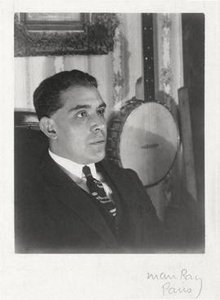
Juan Gris
1887 - 1927 , Spanien
Kurzinfos
- Beeinflusste Künstler/Bewegungen:
- Amédée Ozenfant
- Charles Edouard Jeanneret
- Bemerkenswerte Werke:
- Gitarre vor dem Meer
- Hommage à Pablo Picasso
- Stillleben vor Fenster
- Place Ravignan
- Fruchtkorb mit Zeitung
- Geburtsdatum: 23. März 1887
- Geburtsort: Madrid, Spanien
- Künstlerische Bewegung: Kubismus, Synthetischer Kubismus
- Künstlerische Einflüsse:
- Pablo Picasso
- Georges Braque
- Henri Matisse
- Nationalität: Spanisch
- Sterbedatum: 11. Mai 1927
- Vollständiger Name: Juan Gris
Ähnliche Artikel
Deconstructing Reality: A Comprehensive Exploration of Synthetic Cubism's Evolution & Impact
Explore the revolutionary world of Synthetic Cubism! Discover its origins, key artists like Picasso & Braque, techniques, and lasting impact on modern art. A comprehensive guide for enthusiasts.
Deconstructing Identity: A Comprehensive Exploration of Cubist Portraiture
Explore the revolutionary world of Cubist portraiture with our comprehensive guide. Discover Picasso, Braque, Gris & the movement's impact on modern art. Expert analysis for collectors and enthusiasts.
Juan Gris: Dekonstruktion und Synthese im Kubismus – Eine umfassende Erkundung
Entdecken Sie die faszinierende Welt von Juan Gris und dem Kubismus! Unsere umfassende Analyse beleuchtet seine künstlerische Entwicklung, Techniken und seinen bleibenden Einfluss auf die moderne Kunst. Für Kenner und Sammler.
Deconstructing Reality: Cubism's Revolutionary Impact on 20th-Century Art
Explore the revolutionary world of Cubism with ArtsDot. Discover Picasso & Braque's groundbreaking techniques, its philosophical roots, and lasting impact on modern art. Expert insights for collectors.
Deconstructing Reality: A Comprehensive Exploration of Cubist Still Life
Explore the revolutionary world of Cubist Still Life with ArtsDot. Discover Picasso & Braque's groundbreaking techniques, its philosophical roots, and lasting impact on modern art. Expert insights for collectors.