 Vorschau anzeigen
 Versenden
 Teilen
 Details anzeigen

 Herunterladen
 Ähnliche Objekte
 Röntgenaufnahme
 Diashow
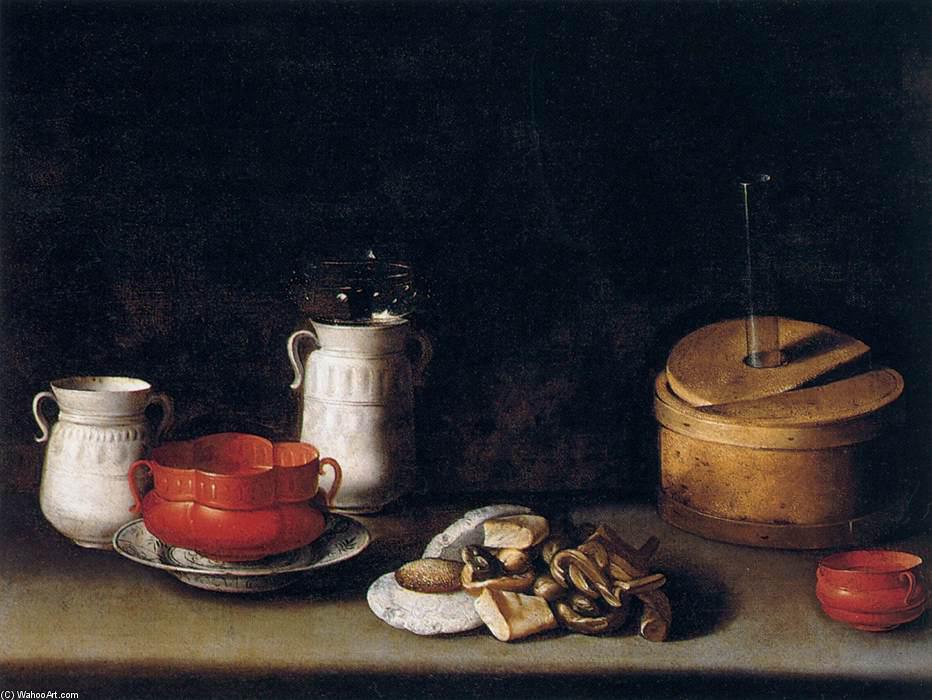
Still-Life with Crockery and Cakes
 Acrylic On Canvas
- WallArt
- Baroque Spanish Painting
 1627
1627 77.0 x 100.0 cm
 Museo Thyssen-Bornemisza
 Weiterlesen
Handgefertigte Ölreproduktion
Handgemaltes Ölgemälde auf Leinwand in Ihrer Wunschgröße und mit Rahmen, auf Bestellung von unseren Künstlern angefertigt. ( Druck bestellen Bild kaufen)




P118B $10

P118H $10

P118W $10

P438Z $10

P508JH $12

P508YH $12

P805H $10

P805Z $10

P919BZ $10

P919G $10

P919XJ $10

P959ZH $10

P968JZ $12

W106C $8

W218G $10

W218JH $8

W218Y $10

W307PJ $10

W316G $10

W316PJ $8

W316Y $10

W398PJ $8

W4111J $10

W500HY $15

W500JH $15

W692G $12

W849H $8

W940BG $15

W953PJ $8




Wählen Sie aus unseren vordefinierten Formaten, die den ursprünglichen Proportionen des Kunstwerks entsprechen.

Sie können Ihre eigenen Maße eingeben, um einen bestimmten Rahmen oder Platz auszufüllen. Wenn die gewählte Größe nicht den Proportionen des Originalbildes entspricht, werden wir das Kunstwerk entweder beschneiden oder das Gemälde durch zusätzliche, handgemalte Elemente erweitern. Ein digitales Mockup wird Ihnen zur Genehmigung zugesandt, bevor die Produktion beginnt.
Bitte beachten Sie, dass die Bildschirmvorschau nicht die tatsächliche Beschneidung oder Erweiterung widerspiegelt. Nur das Mockup zeigt die endgültige Komposition exakt an.
Obwohl Sondermaße verfügbar sind, empfehlen wir, eine Größe aus der vordefinierten Liste zu wählen, um die ursprünglichen Proportionen beizubehalten.
Nach der Bestellung wird das ArtsDot.com-Team dem Kunden Anweisungen per E-Mail zusenden und eine Mockup-Vorschau bereitstellen.
Weltweiter Versand () in nur 3 bis 4 Wochen statt der üblichen 5 Wochen. (22 August). Keine Kompromisse bei der Qualität.

Kostenloser weltweiter Expressversand

Hochwertige Leinenleinwand

Umfassender Versicherungsschutz beim Versand

Zollgebühren-Rückerstattungsgarantie

Garantie für exakte Farbtreue

60 Tage Rückgaberecht (nur bei Mängeln)

100% Geld-zurück-Garantie

Mengenrabatt verfügbar
 Die Glasoption ist nur für Größen unter 110 cm verfügbar.

Still-Life with Crockery and Cakes
Art der Reproduktion
Format der Reproduktion
-


Gesamtpreis
$ 263
Beschreibung des Kunstwerks
A Still Life Bathed in Light – Juan van der Hamen’s ‘Still-Life with Crockery and Cakes’
Juan van der Hamen y León's “Still-Life with Crockery and Cakes,” painted in 1627, is more than a simple arrangement of food; it’s a meticulously crafted meditation on abundance, mortality, and the fleeting beauty of earthly pleasures. Born into a unique heritage – his father, a Flemish courtier who had settled in Spain, and his mother descended from Toledan nobility – van der Hamen inherited a blend of Northern European precision and Spanish artistic sensibility, a combination that profoundly shaped his distinctive style. This painting exemplifies this fusion, showcasing the artist’s mastery of light, shadow, and detail within the burgeoning Baroque tradition.
The scene unfolds on a dark wooden table, its surface subtly illuminated by an unseen source, creating a dramatic chiaroscuro effect characteristic of the period. Van der Hamen doesn't merely depict objects; he renders them with astonishing realism – the delicate folds of the linen cloth beneath the dishes, the glistening sheen of the fruit, and the textured surfaces of the cakes. The artist’s attention to detail is relentless, capturing not just the appearance but also the implied weight and volume of each item. Notice particularly how he uses subtle variations in tone to suggest the dampness of the bread or the ripeness of the peaches.
The Language of Still Life
Still life painting, or ‘bodegón’ as it was known in Spain, held a complex and layered significance during the 17th century. It wasn't simply about recording objects; it served as a vehicle for exploring philosophical and religious themes. Van der Hamen masterfully employs this tradition here. The abundance of food – the cakes, fruits, and earthenware – can be interpreted as a symbol of earthly prosperity and the pleasures of life, but also as a poignant reminder of their transient nature. The presence of decaying fruit and wilted flowers hints at mortality and the inevitability of decay, a common motif in Baroque art reflecting the Counter-Reformation’s emphasis on human vulnerability.
Furthermore, the arrangement itself is carefully considered. The placement of each object – the central cake, slightly off-center; the bottles flanking the scene; the varied heights and textures – creates a dynamic composition that draws the eye through the painting. The artist utilizes perspective to create depth and spatial relationships, inviting the viewer into this intimate tableau.
A Master’s Technique
Van der Hamen's technique is characterized by his painstaking layering of glazes—thin, translucent layers of paint applied over each other to build up color and luminosity. This method allowed him to achieve a remarkable level of detail and richness in his palette. Observe how he uses subtle shifts in hue – the warm browns of the earthenware contrasting with the cool greens of the foliage – to create visual harmony. The artist’s brushwork is remarkably controlled, demonstrating a deep understanding of color theory and light.
He was particularly adept at capturing the reflective qualities of surfaces—the sheen on the polished pewter, the gleam of the fruit, and the subtle highlights on the fabrics. This mastery of light and reflection elevates the painting beyond a simple depiction of objects, transforming it into a luminous and captivating experience for the viewer.
A Window to 17th-Century Spain
“Still-Life with Crockery and Cakes” offers a valuable glimpse into the artistic and cultural landscape of 17th-century Madrid. It reflects the growing interest in realism and naturalism that characterized the Baroque period, while also retaining elements of Northern European influence. Van der Hamen’s work is considered a cornerstone of Spanish still life painting, influencing generations of artists who followed. Today, reproductions of this exquisite piece continue to captivate art lovers with its beauty, detail, and profound symbolism.
Consider how the painting's rich colors and intricate details would enhance any interior space – bringing warmth, elegance, and a touch of historical sophistication. A high-quality reproduction offers a remarkable opportunity to experience the artistry of Juan van der Hamen in your own home.
Ähnliche Kunstwerke
Über den Künstler
Juan van der Hamen y León: Ein Meister des spanischen Stilllebens
- Geboren: Madrid, Spanien (1596)
- Gestorben: 1631
Frühes Leben und Hintergrund
- Juan van der Hamen y León wurde am 8. April 1596 in Madrid getauft. Er war der Sohn von Jan van der Hamen, einem flämischen Hofbeamten, der vor 1586 von Brüssel nach Madrid gezogen war, und Dorotea Witman Gómez de León, einer halbflämischen Mutter mit adeliger Herkunft aus Toledo.
- Sein Vater diente als Bogenschütze am Hofe Philipps II und bekleidete später Ehrenämter am Hof. Es gibt Spekulationen darüber, ob Jan van der Hamen selbst ein Maler war, aber es fehlen konkrete Beweise dafür.
- Juan und seine Brüder Pedro und Lorenzo (Schriftsteller) betonten ihren spanischen Hintergrund, indem sie "Gómez de León" in ihre Namen aufnahmen.
- Die Verbindung der Familie zum Hof war bedeutend, wobei Juan die Positionen seines Vaters erbte und als unbezahlter Maler für den König diente.
Künstlerische Karriere und Entwicklung
- Seine künstlerische Karriere begann 1619, als er eine Bezahlung für ein Stillleben erhielt, das für den Landpalast von El Pardo in Auftrag gegeben wurde.
- Van der Hamen zeigte bemerkenswerte Vielseitigkeit und schuf religiöse Historiengemälde, Allegorien, Landschaftsbilder, Darstellungen des einfachen Volkes, Porträts und vor allem Stillleben.
- Er diente an den Höfen von Philipp III. und Philipp IV. und etablierte die Popularität der Stillmalerei in Madrid während der 1620er Jahre.
- Seine umfangreiche Produktion konzentrierte sich auf das erste Jahrzehnt der Herrschaft Philipps IV., wobei insbesondere 1622 eine hohe Anzahl an Stillleben entstanden ist.
- Anfangs vom flämischen Kunst beeinflusst, zeigten seine frühen Stillleben präzise Technik und geräumige Kompositionen. Später übernahm er asymmetrische Anordnungen, inspiriert von Sánchez Cotán, und schuf komplexere räumliche Konstruktionen.
Wichtige Leistungen und bemerkenswerte Werke
- Stilllebenmalerei: Van der Hamen wird vor allem dafür in Erinnerung behalten, dass er die Stilllebenmalerei in Madrid populär machte. Seine realistische Darstellung von Alltagsgegenständen erhöhte den Stellenwert dieser zuvor weniger geschätzten Kunstform.
- Porträtmalerei: Er erzielte beträchtlichen persönlichen Erfolg als Porträtist und porträtierte bedeutende Intellektuelle und Schriftsteller seiner Zeit, darunter Lope de Vega, Francisco de Quevedo und Luis de Góngora. Eine Reihe dieser Porträts wurde hoch geschätzt und war Gegenstand philosophischer Diskussionen über die Kunst des Porträts.
- "Offering to Flora" (1627): Dieses großformatige allegorische Gemälde demonstriert sein Können, Porträt- und Stilllebenmalerei zu kombinieren und zeigt die Göttin der Blumen umgeben von einer Fülle von Frühlingsblüten. Es spiegelt flämische Kompositionstechniken und ein Interesse am Einfluss des Lichts auf Stoffe wider.
- Porträt eines Zwerges (ca. 1623): Diese naturalistische Darstellung leitete spätere Werke von Velázquez vorweg und demonstrierte seine Fähigkeit, den individuellen Charakter einzufangen.
- Porträt von Kardinal Francesco Barberini (1626): Nachdem ein erstes Porträt von Velázquez den Kardinal nicht zufriedenstellte, wurde Van der Hamen beauftragt, was zu einem Werk führte, das so bewundert wurde, dass Barberini drei weitere Werke von ihm erwarb.
Historische Bedeutung und Vermächtnis
- Juan van der Hamen spielte eine entscheidende Rolle bei der Etablierung der Stilllebenmalerei als angesehene Gattung innerhalb der spanischen Kunst.
- Sein realistischer Stil, die akribische Detailgenauigkeit und die innovativen Kompositionen beeinflussten nachfolgende Generationen spanischer Künstler.
- Er schloss die Brücke zwischen flämischen künstlerischen Traditionen und dem aufkommenden spanischen Barockstil.
- Trotz seiner relativ kurzen Karriere (er starb im Alter von 35 Jahren) hinterließ Van der Hamen ein bedeutendes Œuvre, das bis heute für seine technische Fertigkeit und seinen künstlerischen Wert bewundert wird. Seine Gemälde werden nun in führenden europäischen und amerikanischen Museen ausgestellt, was seine Position als eine wichtige Figur in der spanischen Kunstgeschichte festigt.

Juan van der Hamen
1596 - 1631 , Spanien
Kurzinfos
- Beeinflusste Künstler:
- Jan Brueghel der Ältere
- Sánchez Cotán
- Juan Bautista Maino
- Bemerkenswerte Werke:
- Offering to Flora
- Stillleben mit Blumen
- Stillleben mit Welpen
- Geburtsdatum: 1596
- Geburtsort: Madrid, Spanien
- Künstlerische Richtung: Barock, Stilllebenmalerei
- Nationalität: Spanisch
- Sterbedatum: 1631
- Vollständiger Name: Juan van der Hamen y León
- Von Künstlern Beeinflusst: ['Diego Velázquez']
Ähnliche Artikel
Frühniederländische Renaissance: 10 Meisterwerke für Ihr Zuhause | ArtsDot
Entdecken Sie die 10 prägendsten Meisterwerke der Frühniederländischen Renaissance! Erfahren Sie mehr über Jan van Eyck, Rogier van der Weyden & Co. und ihre ikonischen Gemälde. Hochwertige Reproduktionen für Ihr Zuhause – jetzt auf ArtsDot.com!

Rembrandts Meisterwerke: Die Top 25 Kunstwerke für Ihr Zuhause | ArtsDot
Entdecken Sie Rembrandts 25 berühmteste Kunstwerke! Tauchen Sie ein in die Welt des Barock, Licht und Schatten & historischer Porträts. Hochwertige Reproduktionen für Ihr Zuhause – jetzt auf ArtsDot.com!
Hugo van der Goes: Andacht, Innovation und die psychologische Tiefe der frühen niederländischen Malerei
Entdecken Sie die revolutionäre Kunst von Hugo van der Goes! Tiefgründige Analyse seiner Werke, bahnbrechende Technik und bleibender Einfluss auf die frühe niederländische Malerei. Für Kunstexperten & Sammler.
Museo del Prado: Die 25 Meisterwerke – Kunst für Ihr Zuhause | ArtsDot
Entdecken Sie die 25 Meisterwerke des Museo del Prado! Von Velázquez bis Goya – Kunstgeschichte, Techniken & Geschichten berühmter Gemälde. Finden Sie hochwertige Reproduktionen für Ihr Zuhause auf ArtsDot.com.
Abraham Hendricksz van Beyeren: Pioneering Dutch Still Life & the Banquet Tradition
Explore the captivating world of Dutch Golden Age still life with Abraham van Beyeren. Discover his innovative techniques, symbolic banquet scenes & lasting influence on art history. Learn about collecting these masterpieces.