

 Vorschau anzeigen
 Versenden
 Teilen
 Details anzeigen

 Herunterladen
 Ähnliche Objekte
 Röntgenaufnahme
 Diashow
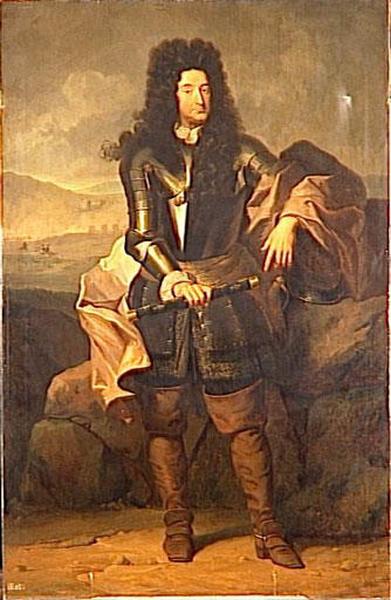
NICOLAS CATINAT, SEIGNEUR DE SAINT GRATIEN, MARECHAL DE FRANCE (1637 1712)
 Weiterlesen
Giclée / Kunstdruck
Giclée- oder Leinwanddruck in Museumsqualität mit schneller Produktion und flexiblen Veredelungsoptionen. ( Handgemalte Reproduktion bestellen Bild kaufen)




































Wählen Sie aus unseren vordefinierten Formaten, die den ursprünglichen Proportionen des Kunstwerks entsprechen.

Sie können Ihre eigenen Maße eingeben, um ein bestimmtes Format oder einen speziellen Platz einzupassen. Wenn das von Ihnen gewählte Format nicht den Proportionen des Originalbildes entspricht, werden wir das Kunstwerk entweder beschneiden oder das Bild mit einem gespiegelten oder einfarbigen Rand erweitern. Ein digitaler Entwurf wird Ihnen zur Genehmigung zugesandt, bevor die Produktion beginnt.
Bitte beachten Sie, dass die Vorschau auf dem Bildschirm nicht den tatsächlichen Zuschnitt oder die Erweiterung widerspiegelt. Nur der Entwurf zeigt die endgültige Komposition präzise an.
Obwohl Sondermaße verfügbar sind, empfehlen wir die Auswahl eines Maßes aus der vordefinierten Liste, um die ursprünglichen Proportionen zu bewahren.
Weltweiter Versand () innerhalb von 2 Wochen statt der üblichen 4/5 Wochen. (25 August)

Kostenloser weltweiter Expressversand

Hochwertige Leinenleinwand

Umfassender Versicherungsschutz beim Versand

Zollgebühren-Rückerstattungsgarantie

Garantie für exakte Farbtreue

60 Tage Rückgaberecht (nur bei Mängeln)

100% Geld-zurück-Garantie

Mengenrabatt verfügbar
 Die Glasoption ist nur für Größen unter 110 cm verfügbar.

NICOLAS CATINAT, SEIGNEUR DE SAINT GRATIEN, MARECHAL DE FRANCE (1637 1712)
Giclée / Kunstdruck
Format der Reproduktion
-


Gesamtpreis
$ 62
Ähnliche Kunstwerke




Über den Künstler
The Soul of the Romantic Canvas: The Life and Legacy of Jules Jollivet
In the vibrant, often turbulent landscape of nineteenth-century French art, few names evoke the dramatic tension between classical precision and Romantic passion quite like Jules Jollivet. Born in Paris in 1794, Jollivet emerged from a lineage deeply rooted in the tactile beauty of sculpture, being the son of the renowned Jean-Baptiste Jollivet. This early exposure to the physical weight and structural integrity of form would later become a cornerstone of his painterly style. While his path initially meandered through the disciplined study of architecture under masters like Jacques-Marie Huvé, it was his eventual pivot to the canvas that allowed him to capture the fleeting, emotive essence of history and human drama. His work serves as a bridge between the rigid moralism of Neoclassicism and the sweeping, atmospheric storytelling of the Romantic era.
Jollivet’s artistic evolution was shaped by the prestigious halls of the École des Beaux-Arts de Paris, where he refined his technique under the guidance of influential instructors such as François-Louis Dejuinne and Antoine-Jean Gros. These mentors, masters of historical and genre scenes, instilled in him a profound respect for anatomical accuracy and the power of narrative composition. However, Jollivet was not merely a student of tradition; he was an explorer of light and culture. His journey took him to Spain in 1826, a transformative period where he worked on documenting the royal collections of King Ferdinand VII. This encounter with the Spanish masters, particularly the legendary Diego Velázquez, breathed new life into his palette, infusing his work with a richer, more somber depth and an interest in the gritty realism of genre scenes.
A Tapestry of History and Human Emotion
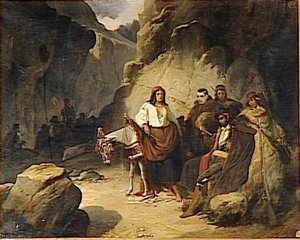
The true brilliance of Jollivet lies in his ability to breathe life into the past, transforming historical chronicles into visceral, lived experiences. He became particularly celebrated for his depictions of military subjects and aristocratic portraits, where he balanced the grandeur of nobility with a keen psychological insight. His oeuvre is marked by an extraordinary versatility, ranging from the intense, localized drama of "Une Guerilla"—a work that captures the raw spirit of resistance—to large-scale historical panels commissioned for the Musée de l’Histoire de France. In these monumental works, such as his depictions of the Battle of Hooglede, Jollivet utilized a meticulous approach to detail to convey the chaos and heroism of conflict, ensuring that every uniform, weapon, and facial expression contributed to the overarching historical narrative.
Beyond the battlefield, Jollivet’s fascination with lithography allowed him to expand his reach, bringing fine art to a broader audience through detailed illustrations. His talent for capturing the essence of a moment was equally evident in his more intimate genre paintings and religious works, such as the haunting "Massacre of the Innocents." In these pieces, the artist moved away from the purely epic to explore themes of tragedy, innocence, and the human condition. Through a masterful use of light and shadow, he could guide the viewer's eye through complex compositions, creating a sense of movement and emotional resonance that remains captivating over a century later.
The Enduring Impression of a Master
Though history occasionally places him in the shadow of more radical contemporaries like Gustave Courbet, Jules Jollivet’s significance remains undeniable. He was a painter who refused to abandon the foundational principles of disegno and anatomical truth, even as he embraced the emotive freedom of the Romantic movement. His legacy is found in the meticulous way he documented the spirit of his age—the nobility, the military triumphs, and the cultural textures of both France and Spain. To look upon a Jollivet painting is to witness a master at work, balancing the weight of history with the lightness of artistic inspiration, leaving behind a visual record that continues to resonate with anyone moved by the beauty of classical realism.
jules jollivet
1794 - 1871
Kurzinfos
- Artistic Movement Or Style: Realism
- Artists Who Influenced This Artist:
- Jean-Auguste Dominique Ingres
- Gustave Courbet
- Date Of Birth: 1794
- Date Of Death: 1871
- Full Name: Jules Jollivet
- Nationality: French
- Notable Artworks:
- The Battle of Magenta
- Portrait of Madame Louise Bourgeois
- Place Of Birth: Paris, France

