

 Vorschau anzeigen
 Versenden
 Teilen
 Details anzeigen

 Herunterladen
 Ähnliche Objekte
 Röntgenaufnahme
 Diashow
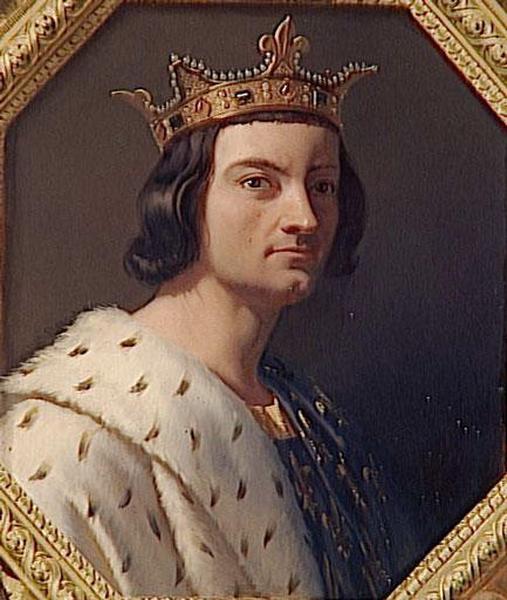
PHILIPPE III, DIT LE HARDI, ROI DE FRANCE (1245 1285)
 Weiterlesen
Erwerben Sie ein hochauflösendes, optimiertes digitales Bild, das der Online-Vorschau weit überlegen ist.
Jede Datei wird von unseren hauseigenen Spezialisten mit modernsten Werkzeugen und fachmännischer manueller Retusche sorgfältig vorbereitet. Wir stellen sicher, dass jedes Bild eine außergewöhnliche Klarheit, präzise Farbgenauigkeit und feinste Details aufweist.
Die endgültige Datei wird innerhalb von 72 Stunden per E-Mail zugestellt und ist für den sofortigen Einsatz in professionellen, redaktionellen und Druckumgebungen optimiert. Es handelt sich um dieselbe Qualität, der führende Designstudios, Verlage und Galerien vertrauen.
Digitales Bild
Laden Sie eine hochauflösende Datei für die persönliche Präsentation, den Druck und kreative Projekte herunter. ( Druck bestellen Handgemalte Reproduktion bestellen)
In jeder Bestellung digitaler Bilder enthalten
Professionelle digitale Bereitstellung, garantiert
Wenn Sie sich für ArtsDot.com entscheiden, erhalten Sie nicht nur ein Bild – Sie erhalten ein professionell aufbereitetes digitales Kunstwerk, das mit höchster Präzision erstellt und durch eine Zufriedenheitsgarantie abgesichert wird. Hier ist alles, was automatisch mit Ihrer Bestellung geliefert wird:

Schnelle E-Mail-Zustellung
Ihre hochauflösende digitale Bilddatei wird Ihnen innerhalb von 72 Stunden nach der Bestellung per E-Mail zugestellt – bereit zur sofortigen Verwendung.

KI-optimierte digitale Datei
Ihre Kunstwerke werden professionell mithilfe fortschrittlicher KI-Tools und manueller Bearbeitung optimiert, um maximale Detailtreue, Klarheit und Farbgenauigkeit zu gewährleisten.

Lebenslanger kostenloser Neudruckservice
Datei versehentlich gelöscht oder verloren? Keine Sorge – wir senden sie Ihnen jederzeit kostenlos erneut zu.

Keine Einfuhrgebühren – jemals
Genießen Sie Ihr Kunstwerk sofort ohne Zollgebühren, Einfuhrabgaben oder Versandkosten – digitale Downloads sind immer steuerfrei.

Garantierte Farbtreue
Wir garantieren, dass Ihr digitales Bild mithilfe professioneller Werkzeuge und Farbmanagement die Originalfarben so präzise wie möglich wiedergibt.

60-Tage-Zufriedenheitsgarantie
Sollten Sie mit Ihrem digitalen Bild nicht zufrieden sein, werden wir es überarbeiten oder Ihnen innerhalb von 60 Tagen 100% erstatten – ohne Wenn und Aber.

100% Geld-zurück-Garantie
Nicht zufrieden? Erhalten Sie innerhalb von 60 Tagen nach Erhalt Ihrer digitalen Datei eine vollständige Rückerstattung – ohne Angabe von Gründen.

Rabatte bei Großbestellungen
3 Bilder kaufen, 10% sparen – 5 Bilder kaufen, 15% sparen – Ab 10 Bildern 20% sparen. Ideal für kreative Projekte, Galerien und Agenturen.
Ähnliche Kunstwerke










Biografie des Künstlers
The Soul of the Romantic Canvas: The Life and Legacy of Jules Jollivet
In the vibrant, often turbulent landscape of nineteenth-century French art, few names evoke the dramatic tension between classical precision and Romantic passion quite like Jules Jollivet. Born in Paris in 1794, Jollivet emerged from a lineage deeply rooted in the tactile beauty of sculpture, being the son of the renowned Jean-Baptiste Jollivet. This early exposure to the physical weight and structural integrity of form would later become a cornerstone of his painterly style. While his path initially meandered through the disciplined study of architecture under masters like Jacques-Marie Huvé, it was his eventual pivot to the canvas that allowed him to capture the fleeting, emotive essence of history and human drama. His work serves as a bridge between the rigid moralism of Neoclassicism and the sweeping, atmospheric storytelling of the Romantic era.
Jollivet’s artistic evolution was shaped by the prestigious halls of the École des Beaux-Arts de Paris, where he refined his technique under the guidance of influential instructors such as François-Louis Dejuinne and Antoine-Jean Gros. These mentors, masters of historical and genre scenes, instilled in him a profound respect for anatomical accuracy and the power of narrative composition. However, Jollivet was not merely a student of tradition; he was an explorer of light and culture. His journey took him to Spain in 1826, a transformative period where he worked on documenting the royal collections of King Ferdinand VII. This encounter with the Spanish masters, particularly the legendary Diego Velázquez, breathed new life into his palette, infusing his work with a richer, more somber depth and an interest in the gritty realism of genre scenes.
A Tapestry of History and Human Emotion
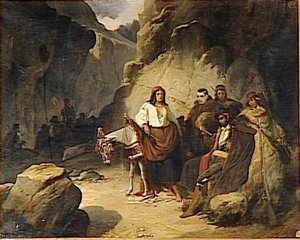
The true brilliance of Jollivet lies in his ability to breathe life into the past, transforming historical chronicles into visceral, lived experiences. He became particularly celebrated for his depictions of military subjects and aristocratic portraits, where he balanced the grandeur of nobility with a keen psychological insight. His oeuvre is marked by an extraordinary versatility, ranging from the intense, localized drama of "Une Guerilla"—a work that captures the raw spirit of resistance—to large-scale historical panels commissioned for the Musée de l’Histoire de France. In these monumental works, such as his depictions of the Battle of Hooglede, Jollivet utilized a meticulous approach to detail to convey the chaos and heroism of conflict, ensuring that every uniform, weapon, and facial expression contributed to the overarching historical narrative.
Beyond the battlefield, Jollivet’s fascination with lithography allowed him to expand his reach, bringing fine art to a broader audience through detailed illustrations. His talent for capturing the essence of a moment was equally evident in his more intimate genre paintings and religious works, such as the haunting "Massacre of the Innocents." In these pieces, the artist moved away from the purely epic to explore themes of tragedy, innocence, and the human condition. Through a masterful use of light and shadow, he could guide the viewer's eye through complex compositions, creating a sense of movement and emotional resonance that remains captivating over a century later.
The Enduring Impression of a Master
Though history occasionally places him in the shadow of more radical contemporaries like Gustave Courbet, Jules Jollivet’s significance remains undeniable. He was a painter who refused to abandon the foundational principles of disegno and anatomical truth, even as he embraced the emotive freedom of the Romantic movement. His legacy is found in the meticulous way he documented the spirit of his age—the nobility, the military triumphs, and the cultural textures of both France and Spain. To look upon a Jollivet painting is to witness a master at work, balancing the weight of history with the lightness of artistic inspiration, leaving behind a visual record that continues to resonate with anyone moved by the beauty of classical realism.
jules jollivet
1794 - 1871
Kurzinfos
- Artistic Movement Or Style: Realism
- Artists Who Influenced This Artist:
- Jean-Auguste Dominique Ingres
- Gustave Courbet
- Date Of Birth: 1794
- Date Of Death: 1871
- Full Name: Jules Jollivet
- Nationality: French
- Notable Artworks:
- The Battle of Magenta
- Portrait of Madame Louise Bourgeois
- Place Of Birth: Paris, France

