

 Vorschau anzeigen
 Versenden
 Teilen
 Details anzeigen

 Herunterladen
 Ähnliche Objekte
 Röntgenaufnahme
 Diashow
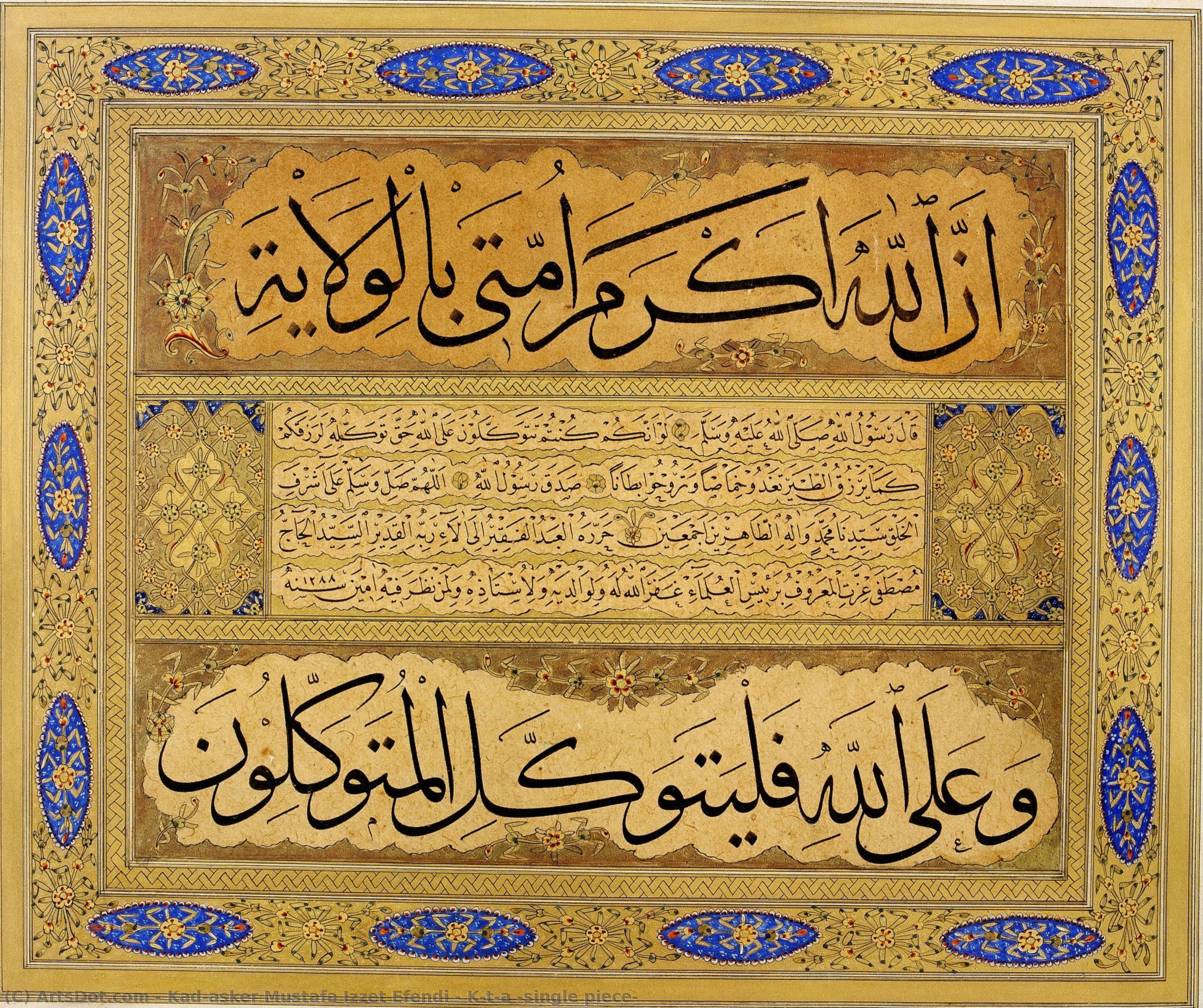
Kıt’a (single piece)
 Ink
Ink- WallArt
- Islamic Calligraphy
 1871
1871- 19th Century
 26.0 x 21.0 cm
 Sakıp Sabancı Müzesi
 Weiterlesen
Handgefertigte Ölreproduktion
Handgemaltes Ölgemälde auf Leinwand in Ihrer Wunschgröße und mit Rahmen, auf Bestellung von unseren Künstlern angefertigt. ( Druck bestellen Bild kaufen)




P118B $10

P118H $10

P118W $10

P438Z $10

P508JH $12

P508YH $12

P805H $10

P805Z $10

P919BZ $10

P919G $10

P919XJ $10

P959ZH $10

P968JZ $12

W106C $8

W218G $10

W218JH $8

W218Y $10

W307PJ $10

W316G $10

W316PJ $8

W316Y $10

W398PJ $8

W4111J $10

W500HY $15

W500JH $15

W692G $12

W849H $8

W940BG $15

W953PJ $8




Wählen Sie aus unseren vordefinierten Formaten, die den ursprünglichen Proportionen des Kunstwerks entsprechen.

Sie können Ihre eigenen Maße eingeben, um einen bestimmten Rahmen oder Platz auszufüllen. Wenn die gewählte Größe nicht den Proportionen des Originalbildes entspricht, werden wir das Kunstwerk entweder beschneiden oder das Gemälde durch zusätzliche, handgemalte Elemente erweitern. Ein digitales Mockup wird Ihnen zur Genehmigung zugesandt, bevor die Produktion beginnt.
Bitte beachten Sie, dass die Bildschirmvorschau nicht die tatsächliche Beschneidung oder Erweiterung widerspiegelt. Nur das Mockup zeigt die endgültige Komposition exakt an.
Obwohl Sondermaße verfügbar sind, empfehlen wir, eine Größe aus der vordefinierten Liste zu wählen, um die ursprünglichen Proportionen beizubehalten.
Nach der Bestellung wird das ArtsDot.com-Team dem Kunden Anweisungen per E-Mail zusenden und eine Mockup-Vorschau bereitstellen.
Weltweiter Versand () in nur 3 bis 4 Wochen statt der üblichen 5 Wochen. (25 August). Keine Kompromisse bei der Qualität.

Kostenloser weltweiter Expressversand

Hochwertige Leinenleinwand

Umfassender Versicherungsschutz beim Versand

Zollgebühren-Rückerstattungsgarantie

Garantie für exakte Farbtreue

60 Tage Rückgaberecht (nur bei Mängeln)

100% Geld-zurück-Garantie

Mengenrabatt verfügbar
 Die Glasoption ist nur für Größen unter 110 cm verfügbar.

Kıt’a (single piece)
Art der Reproduktion
Format der Reproduktion
-


Gesamtpreis
$ 263
Beschreibung des Kunstwerks
A Symphony of Script and Gold
In the delicate dance of 19th-century Ottoman artistry, few works capture the spiritual and aesthetic harmony of the era as intimately as Kıt’a. Created in 1871 by the master Kadıasker Mustafa İzzet Efendi, this single-piece masterpiece serves as a profound testament to the power of calligraphy. The artwork presents a mesmerizing field of luminous yellow, acting as a celestial stage for the fluid, rhythmic movement of Arabic script. Blue accents are scattered across the composition like fragments of a twilight sky, providing a cool, structural contrast to the warmth of the background. This interplay of color and line does more than merely present text; it creates a visual melody that resonates with the soul of the viewer.
The technique employed by Mustafa İzzet Efendi reflects his unparalleled mastery of the sülüs and naskh scripts. As a renowned composer and ney player, the artist approached the pen with the same precision and breath control required for musical performance. Every stroke of the cursive lettering possesses a lyrical quality, where the weight of the ink varies with an intentional, rhythmic grace. The way the blue accents dance around the golden expanse suggests a sense of cosmic order, transforming a piece of written word into a meditative experience. For the collector, this work offers a rare glimpse into the refined elegance of the Ottoman imperial court, where calligraphy was considered the highest form of visual devotion.
Historical Resonance and Interior Elegance
To possess a reproduction of Kıt’a is to invite a piece of history into the modern living space. Mustafa İzzet Efendi was not merely an artist but a statesman and scholar whose calligraphic legacy can be found in the world's most iconic monuments, from the Hagia Sophia to the Washington Monument. This specific work, dating from 1871, carries the weight of a vanishing era—a time when art, theology, and music were inextricably linked. The piece embodies the "Rûmi" spirit, blending intellectual depth with aesthetic splendor, making it an ideal focal point for those who appreciate art with a profound historical narrative.
- Visual Impact: The vibrant yellow and deep blue palette provides a sophisticated pop of color that complements both contemporary minimalist interiors and classic, opulent decor.
- Emotional Depth: The flowing, organic nature of the script evokes feelings of tranquility, mindfulness, and spiritual connection.
- Design Versatility: Due to its intimate size of 26 x 21 cm, this piece serves as a perfect accent for curated gallery walls, study alcoves, or as a standalone statement in a reading nook.
For interior designers and art enthusiasts alike, Kıt’a represents more than just decoration; it is an invitation to contemplation. It bridges the gap between the ancient traditions of the East and the sophisticated tastes of the modern collector. Whether placed in a sunlit foyer or a quiet library, this reproduction brings with it the enduring prestige of the Ottoman masters, offering a timeless elegance that transcends borders and centuries.
Ähnliche Kunstwerke
Über den Künstler
Frühes Leben und Ausbildung
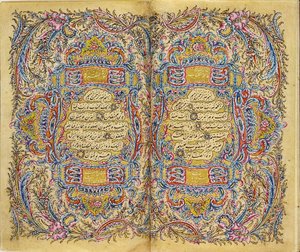
Kadıasker Mustafa İzzet Efendi, auch bekannt als Seyyid Mustafa, war ein renommierter osmanischer Komponist, Ney-Spieler, Dichter und Staatsmann, der 1801 in Tosya im Osmanischen Reich geboren wurde. Nach dem Tod seines Vaters sandte ihn seine Mutter, die dem Rûmiyya-Zweig des Qadiriyya-Ordens angehörte, zur Ausbildung nach Istanbul, um den Grundstein für eine außergewöhnliche intellektliche Reise zu legen.Karriere und Beiträge
Die Karriere von Mustafa İzzet Efendi erstreckte sich über zahlreiche Disziplinen, doch seine größte Berühmtheit erlangte er durch die Kunst der Kalligrafie. Er studierte islamische Theologie, Wissenschaft und Musik und entwickelte sich zu einem meisterhaften Ney-Spieler und Sänger. Seine Zeit am kaiserlichen Hof, in der er die Sülüs- und Naskh-Schriften unter der Zertifizierung von Moustafa Wâsif erlernte, bildete das Fundament für sein späteres Schaffen.- Er entwickelte verfeinerte Versionen der Sülüs- und Naskh-Schriften, indem er auf dem Werk von Hâfiz Osman, Celaleddin und Râkim aufbaute.
- Seine kalligrafischen Inschriften finden sich in bedeutenden öffentlichen Gebäuden und Moscheen, darunter die Hagia Sophia und das Washington Monument.
- Zu seinen bedeutendsten Schülern gehörten Mehmet Şefik, Şefik Bey, Abdullah Zuhdi Effendi, Muhsinzade Abdullah Bey und Hasan Rıza Effendi.
Künstlerisches Erbe
Das künstlerische Vermächtnis von Mustafa İzzet Efendi reicht weit über seine Kalligrafie hinaus. Er komponierte zahlreiche Lieder, sowohl religiöser als auch weltlicher Natur, und war ein leidenschaftlicher Sammler von Manuskripten. Sein Sohn, Ata Bey, setzte die Tradition der Manuskriptsammlung nach seinem Ableben fort.- Murakka (kalligrafisches Album) (Ansehen auf ArtsDot.com)
- Kıt'a (Einzelstück) (Ansehen auf ArtsDot.com)
Museen und Sammlungen
Die Werke von Mustafa İzzet Efendi sind in verschiedenen Museen zu finden, darunter das Sakıp Sabancı Museum (Istanbul, Türkei), welches mehrere seiner kalligrafischen Meisterwerke beherbergt. Entdecken Sie die Kunstwerke von Kadıasker Mustafa İzzet Efendi auf ArtsDot.comReferenzen
Kadıasker Mustafa İzzet Efendi
1801 - 1876 , Türkei
Kurzinfos
- Artistic Movement Or Style: Hudson River School
- Artists Or Movements Influenced By This Artist: ['Hudson River School']
- Artists Who Influenced This Artist: ['Francis Wheatley']
- Date Of Birth: 1. Februar 1801
- Date Of Death: 11. Februar 1848
- Full Name: Thomas Cole
- Nationality: Amerikanisch
- Notable Artworks:
- The Titan's Goblet
- The Course of Empire
- The Oxbow
- The Voyage of Life
- Place Of Birth: Bolton-le-Moors, England
Ähnliche Artikel

Die Top 10 Gemälde in Schattierungen von 'Slate Blue': Kunst für Ihr Zuhause
Entdecken Sie die Top 10 Gemälde in faszinierenden 'Slate Blue' Tönen! Von Monet bis Manet – erleben Sie Kunstgeschichte und lassen Sie sich von Meisterwerken inspirieren. Hochwertige Kunstdrucke auf
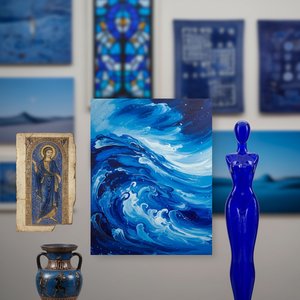
The Allure of Azure: Exploring the Symbolic & Aesthetic Depths of Blue in Art History
Explore the rich history of blue in art! Discover its symbolism, from ancient pigments to modern masterpieces by Kandinsky & Seurat. Uncover the psychological impact and cultural meanings behind this captivating hue.

Chromgelb in der Kunstgeschichte: Die 10 berühmtesten Gemälde & ihre Meister
Entdecken Sie die 10 berühmtesten Gemälde, dominiert von der leuchtenden Farbe Chromgelb! Von Van Gogh bis Monet – erfahren Sie Geschichten hinter Meisterwerken & finden Sie Ihre perfekte Kunst-Reproduktion auf ArtsDot.com.

The Golden Hue: Exploring Symbolism & Emotion in Yellow Art
Explore the rich symbolism & emotional power of yellow in art history! From Van Gogh to Kandinsky, discover how artists used this vibrant hue. Expert analysis & high-quality reproductions at ArtsDot.
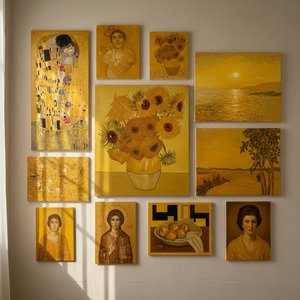
Die Top 10 berühmter Gemälde im Gelbocherton – Kunst für Ihr Zuhause |
Entdecken Sie die Top 10 berühmter Gemälde, dominiert von warmen Gelbochtönen! Von Van Gogh bis Monet – erfahren Sie die Geschichten hinter den Meisterwerken und lassen Sie sich für Ihre Wohnraumgestaltung inspirieren. Hochwertige Kunstdrucke auf

