

 Vorschau anzeigen
 Versenden
 Teilen
 Details anzeigen

 Herunterladen
 Ähnliche Objekte
 Röntgenaufnahme
 Diashow
 Statistiken
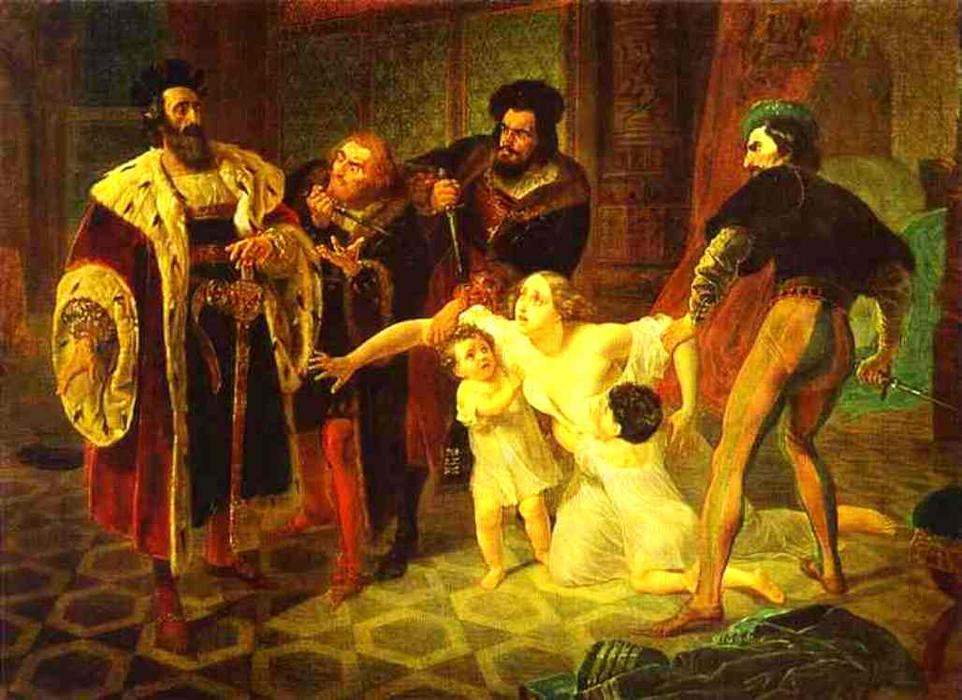
Death of Inessa de Castro, Morganatic Wife of Portuguese Infant Don Pedro


 Weiterlesen
Erwerben Sie ein hochauflösendes, optimiertes digitales Bild, das der Online-Vorschau weit überlegen ist.
Jede Datei wird von unseren hauseigenen Spezialisten mit modernsten Werkzeugen und fachmännischer manueller Retusche sorgfältig vorbereitet. Wir stellen sicher, dass jedes Bild eine außergewöhnliche Klarheit, präzise Farbgenauigkeit und feinste Details aufweist.
Die endgültige Datei wird innerhalb von 72 Stunden per E-Mail zugestellt und ist für den sofortigen Einsatz in professionellen, redaktionellen und Druckumgebungen optimiert. Es handelt sich um dieselbe Qualität, der führende Designstudios, Verlage und Galerien vertrauen.
Digitales Bild
Laden Sie eine hochauflösende Datei für die persönliche Präsentation, den Druck und kreative Projekte herunter. ( Zu Druck wechseln Handgemalte Reproduktion bestellen)
In jeder Bestellung digitaler Bilder enthalten
Professionelle digitale Bereitstellung, garantiert
Wenn Sie sich für ArtsDot.com entscheiden, erhalten Sie nicht nur ein Bild – Sie erhalten ein professionell aufbereitetes digitales Kunstwerk, das mit höchster Präzision erstellt und durch eine Zufriedenheitsgarantie abgesichert wird. Hier ist alles, was automatisch mit Ihrer Bestellung geliefert wird:

Schnelle E-Mail-Zustellung
Ihre hochauflösende digitale Bilddatei wird Ihnen innerhalb von 72 Stunden nach der Bestellung per E-Mail zugestellt – bereit zur sofortigen Verwendung.

KI-optimierte digitale Datei
Ihre Kunstwerke werden professionell mithilfe fortschrittlicher KI-Tools und manueller Bearbeitung optimiert, um maximale Detailtreue, Klarheit und Farbgenauigkeit zu gewährleisten.

Lebenslanger kostenloser Neudruckservice
Datei versehentlich gelöscht oder verloren? Keine Sorge – wir senden sie Ihnen jederzeit kostenlos erneut zu.

Keine Einfuhrgebühren – jemals
Genießen Sie Ihr Kunstwerk sofort ohne Zollgebühren, Einfuhrabgaben oder Versandkosten – digitale Downloads sind immer steuerfrei.

Garantierte Farbtreue
Wir garantieren, dass Ihr digitales Bild mithilfe professioneller Werkzeuge und Farbmanagement die Originalfarben so präzise wie möglich wiedergibt.

100-Tage-Zufriedenheitsgarantie
Wenn Sie mit Ihrem digitalen Bild nicht zufrieden sind, werden wir es überarbeiten oder 100% innerhalb von 100 Tagen erstatten – ohne Wenn und Aber.

100% Geld-zurück-Garantie
Nicht zufrieden? Erhalten Sie innerhalb von 100 Tagen nach Erhalt Ihrer digitalen Datei eine vollständige Rückerstattung – ohne Wenn und Aber.

Rabatte bei Großbestellungen
3 Bilder kaufen, 10% sparen – 5 Bilder kaufen, 15% sparen – Ab 10 Bildern 20% sparen. Ideal für kreative Projekte, Galerien und Agenturen.
A Tragedy in Oil: The Heartbreaking Legacy of Inessa de Castro
In the grand tapestry of Romanticism, few works capture the raw, visceral intersection of personal tragedy and political upheaval as profoundly as Karl Pavlovich Bryullov’s 1834 masterpiece, Death of Inessa de Castro, Morganatic Wife of Portuguese Infant Don Pedro. This oil on canvas is not merely a depiction of a historical event; it is an immersive descent into a moment of profound sorrow. The painting transports the viewer to a scene of high drama, where the air feels heavy with the weight of lost love and the cold steel of political vengeance. As we gaze upon the central figure, the dying Inessa de Serão Pessanha, we are drawn into a narrative that transcends time, making it an irresistible centerpiece for any collection dedicated to the power of historical storytelling.
The composition is a masterclass in emotional orchestration. Bryullov expertly arranges his figures to guide the eye through a landscape of grief. At the heart of the canvas lies Inessa, her pale, lifeless form resting against the lap of a mourner, creating a focal point of stillness amidst a surrounding storm of movement. The presence of men clad in armor, some clutching swords that glint with a menacing light, serves as a stark reminder of the violence that precipitated this tragedy. A figure wearing a crown stands amongst the throng, embodying the cold, unyielding nature of authority and the political machinations that often crush individual happiness. This tension between the intimate agony of death and the rigid structures of power is what gives the work its enduring, haunting resonance.
Mastery of Light and Shadow: The Technique of Bryullov
To behold this painting is to witness the brilliance of chiaroscuro executed at its most evocative. Bryullov, deeply influenced by the dramatic lighting of Caravaggio and the anatomical precision of the Italian masters, utilizes extreme contrasts between light and dark to sculpt the figures within the frame. The shadows are not merely absences of light but are deep, velvety voids that swallow the periphery, forcing the viewer’s attention onto the illuminated tragedy in the foreground. This technique lends a sculptural volume to the bodies, making the limp limbs and the folds of heavy fabrics feel tangibly real.
The artist's brushwork further enhances the emotional temperature of the piece. There is a meticulous attention to detail—from the subtle, sorrowful expressions etched into the faces of the onlookers to the way light catches the edge of a blade or the sheen of a royal garment. For the discerning collector or interior designer, these technical nuances offer a rich visual texture that changes with the lighting of a room. A high-quality reproduction of this work allows one to appreciate these subtle gradations of tone, bringing a sense of classical depth and academic rigor to a modern living space or a curated gallery wall.
A Timeless Addition to the Sophisticated Interior
Beyond its historical significance, The Death of Inessa de Castro serves as a profound statement piece for those who appreciate art that provokes thought and conversation. It is a work that demands attention, offering a window into the Romantic era's obsession with the sublime—the beauty found within terror and sadness. For an interior designer, this painting provides a dramatic anchor for a room, pairing exquisitely with classical furniture, rich velvets, and dark wood tones to create an atmosphere of old-world elegance and intellectual depth.
Owning a reproduction of such a monumental work is an opportunity to invite the spirit of the 19th-century Russian Academy into one's home. It is more than decoration; it is an engagement with history, a tribute to the skill of Karl Pavlovich Bryullov, and a permanent reminder of the enduring human capacity for passion and loss. Whether placed in a study, a formal dining room, or a grand hallway, this painting continues to breathe life into its surroundings, offering a timeless elegance that remains as captivating today as it was in 1834.
Ähnliche Kunstwerke


Biografie des Künstlers
Karl Pavlovich Bryullov: Ein Leben im Romantik
Frühes Leben und Ausbildung
Karl Pavlovich Bryullov (geboren Karl Briullo) wurde am 23. Dezember 1799 in St. Petersburg, Russland, geboren. Sein Vater, Pavel Ivanovich Briullo, war ein Akademiker, Holzschnitzer und Graveur hugenottischer Abstammung, der seinem Sohn schon früh eine Liebe für die Künste vermittelte. Bryullovs künstlerische Reise begann unter der Anleitung seines Vaters, bevor er 1809 an die kaiserliche Kunstschule in St. Petersburg eingeschult wurde.
Künstlerische Entwicklung und Einflüsse
Obwohl er innerhalb eines klassischen Rahmens ausgebildet wurde, hat Bryullov die starren Grenzen dieser Tradition nie vollständig angenommen. Er spürte schon früh eine starke Sehnsucht nach Italien, und seine künstlerische Entwicklung wurde maßgeblich von italienischen Renaissance-Meistern geprägt. Seine Werke zeugen von Einflüssen von Künstlern wie Raffael, Michelangelo und Caravaggio, insbesondere in ihrer dramatischen Verwendung von Licht und Schatten sowie ihrer Meisterschaft im anatomischen Detail.
- Er zeichnete sich als vielversprechender Student aus und zeigte während seiner Ausbildung seine fantasievolle Begabung.
- Nach Abschluss seines Studiums zog er 1821 nach Rom, wo er über ein Jahrzehnt lang seine Fähigkeiten verfeinerte.
Wichtige Leistungen und bemerkenswerte Werke
Bryullovs Durchbruch kam mit “Der letzte Tag von Pompeji” (1830-1833), einem monumentalen historischen Gemälde, das ihn international berühmt machte. Das Werk, das den chaotischen Ausbruch des Vesuvs darstellt, wurde für seine dramatische Komposition, emotionale Intensität und technische Brillanz gelobt. Es erhielt großen Lob von Zeitgenossen wie Puschkin und Gogol.
- “Die Hinrichtung eines Zaren” (1827) – Ein frühes Werk, das seine Fähigkeiten in der historischen Erzählung demonstriert.
- “Die Verteidigung des Grabes” (1846) - Zeigt Bryullovs Fähigkeit, Emotionen und historische Genauigkeit auszugleichen.
- "Prinzessin Julija Pawlowna Samoilowa verlässt einen Ball mit ihrer Adoptivtochter Amacilia Pacini" (1832) – Ein beeindruckendes Beispiel für seine Porträtfähigkeiten.
- “Genserichs Invasion Roms” (1835) - Eine weitere dramatische historische Szene, die barocke Einflüsse zeigt.
Karriere und spätere Jahre
Nach dem Erfolg von “Der letzte Tag von Pompeji” kehrte Bryullov nach Russland triumphierend zurück und sicherten sich eine prestigeträchtige Position an der kaiserlichen Kunstakademie 1836. Er lehrte dort bis 1848 und beeinflusste eine Generation russischer Künstler.
- Er entwickelte einen unverwechselbaren Porträtstil, der neoclassizistische Einfachheit mit romantischen Sensibilitäten verband.
- Seine Gesundheit verschlechterte sich während der Arbeit an der Kuppel des Sankt-Isaks-Domes.
- Im Jahr 1849 verließ er Russland auf der Suche nach verbesserter Gesundheit nach Madeira und ließ sich schließlich in der Nähe Roms, Italien, nieder.
Historische Bedeutung und Vermächtnis
Karl Pavlovich Bryullov gilt als eine zentrale Figur des russischen Romantikers. Seine Werke markierten einen Übergang zu größerer emotionaler Ausdrucksweise und dramatischer Erzählung in der russischen Kunst. Er schloss die Lücke zwischen neoklassischer Formalität und dem aufkommenden Romantik-Bewegung, was nachfolgende Generationen von Künstlern beeinflusste, darunter Gavriil Gorelov.
Bryullovs Vermächtnis reicht über seine Gemälde hinaus; er war ein angesehener Lehrer und ein Verfechter künstlerischer Innovation. Seine Beiträge festigten seinen Platz als einer der größten visuellen Künstler Russlands und hinterließen einen bleibenden Eindruck am kulturellen Erbe des Landes. Er starb am 23. Juni 1852 in der Nähe von Rom und wurde im Cimitero Acattolico beigesetzt.
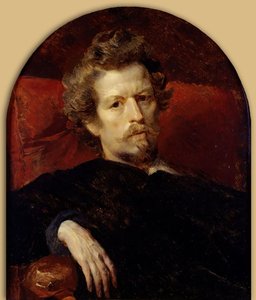
karl pavlovich bryullov
1799 - 1852 , Russland
Kurzinfos
- Artistic Movement Or Style: Romantik
- Artists Who Influenced This Artist:
- Raphael
- Michelangelo
- Caravaggio
- Date Of Birth: 12 Dezember 1799
- Full Name: Karl Pavlovich Bryullov
- Nationality: Russisch
- Notable Artworks:
- Der letzte Tag von Pompeji
- Die Hinrichtung eines Zaren
- Die Verteidigung des Grabes
- Place Of Birth: Saint Petersburg, Russland