


 Vorschau anzeigen
 Versenden
 Teilen
 Details anzeigen

 Herunterladen
 Ähnliche Objekte
 Röntgenaufnahme
 Diashow
 Statistiken
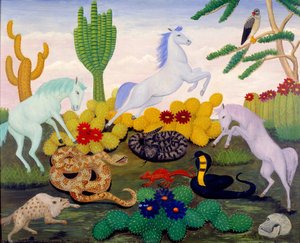
The Prospector
 1960
1960 41.0 x 51.0 cm
 Weiterlesen
Erwerben Sie ein hochauflösendes, optimiertes digitales Bild, das der Online-Vorschau weit überlegen ist.
Jede Datei wird von unseren hauseigenen Spezialisten mit modernsten Werkzeugen und fachmännischer manueller Retusche sorgfältig vorbereitet. Wir stellen sicher, dass jedes Bild eine außergewöhnliche Klarheit, präzise Farbgenauigkeit und feinste Details aufweist.
Die endgültige Datei wird innerhalb von 72 Stunden per E-Mail zugestellt und ist für den sofortigen Einsatz in professionellen, redaktionellen und Druckumgebungen optimiert. Es handelt sich um dieselbe Qualität, der führende Designstudios, Verlage und Galerien vertrauen.
Digitales Bild
Laden Sie eine hochauflösende Datei für die persönliche Präsentation, den Druck und kreative Projekte herunter. ( Zu Druck wechseln Handgemalte Reproduktion bestellen)
In jeder Bestellung digitaler Bilder enthalten
Professionelle digitale Bereitstellung, garantiert
Wenn Sie sich für ArtsDot.com entscheiden, erhalten Sie nicht nur ein Bild – Sie erhalten ein professionell aufbereitetes digitales Kunstwerk, das mit höchster Präzision erstellt und durch eine Zufriedenheitsgarantie abgesichert wird. Hier ist alles, was automatisch mit Ihrer Bestellung geliefert wird:

Schnelle E-Mail-Zustellung
Ihre hochauflösende digitale Bilddatei wird Ihnen innerhalb von 72 Stunden nach der Bestellung per E-Mail zugestellt – bereit zur sofortigen Verwendung.

KI-optimierte digitale Datei
Ihre Kunstwerke werden professionell mithilfe fortschrittlicher KI-Tools und manueller Bearbeitung optimiert, um maximale Detailtreue, Klarheit und Farbgenauigkeit zu gewährleisten.

Lebenslanger kostenloser Neudruckservice
Datei versehentlich gelöscht oder verloren? Keine Sorge – wir senden sie Ihnen jederzeit kostenlos erneut zu.

Keine Einfuhrgebühren – jemals
Genießen Sie Ihr Kunstwerk sofort ohne Zollgebühren, Einfuhrabgaben oder Versandkosten – digitale Downloads sind immer steuerfrei.

Garantierte Farbtreue
Wir garantieren, dass Ihr digitales Bild mithilfe professioneller Werkzeuge und Farbmanagement die Originalfarben so präzise wie möglich wiedergibt.

100-Tage-Zufriedenheitsgarantie
Wenn Sie mit Ihrem digitalen Bild nicht zufrieden sind, werden wir es überarbeiten oder 100% innerhalb von 100 Tagen erstatten – ohne Wenn und Aber.

100% Geld-zurück-Garantie
Nicht zufrieden? Erhalten Sie innerhalb von 100 Tagen nach Erhalt Ihrer digitalen Datei eine vollständige Rückerstattung – ohne Wenn und Aber.

Rabatte bei Großbestellungen
3 Bilder kaufen, 10% sparen – 5 Bilder kaufen, 15% sparen – Ab 10 Bildern 20% sparen. Ideal für kreative Projekte, Galerien und Agenturen.
Artistic Style and Inspiration
Lebduska's work is characterized by his use of bold colors and unique compositions. The Prospector is no exception, featuring a man on horseback in a snowy mountain landscape. The painting's vibrant colors and sense of movement make it a captivating piece. Lebduska's inspiration for this painting is unclear, but it is likely that he drew from his own experiences and interests. Key Features of the Painting Some notable features of the Prospector include:- The use of bold, vibrant colors to create a sense of energy and movement
- The unique composition, which features a man on horseback in a snowy mountain landscape
- The sense of depth and dimensionality created by Lebduska's use of perspective and shading
Artist Background
Lawrence H. Lebduska was an American artist born in 1894. He is known for his unique and innovative style, which blends elements of modernism and folk art. Lebduska's work has been exhibited at numerous museums and galleries, including the Smithsonian American Art Museum. You can find more information about Lebduska and his artwork on ArtsDot.com. Conclusion The Prospector is a remarkable painting that showcases Lebduska's skill and artistic vision. Its unique composition, bold colors, and sense of movement make it a captivating piece. If you're interested in learning more about Lebduska or purchasing a handmade oil painting reproduction of the Prospector, visit ArtsDot.com. You can also find more information about the Hirshhorn Museum and Sculpture Garden on Wikipedia.You can explore more of Lebduska's artwork, including The Prospector, on ArtsDot.com.
Ähnliche Kunstwerke






Biografie des Künstlers
The Vibrant Soul of Primitive Muralism
Lawrence Lebduska, a name that resonates with the raw, unadorned beauty of American folk art, was an artist whose life journey mirrored the eclectic textures of his canvases. Born on September 1, 1894, in Baltimore, Maryland, his early years were shaped by a unique cultural duality. The son of a German craftsman working for the prestigious stained-glass firm Flieder & Schneider, Lebduska’s childhood was steeped in the meticulous traditions of glasswork. When his family relocated to Leipzig, Germany, at the age of five, he began formal training in stained glass production under the guidance of Josef Svoboda. This foundational period, characterized by an intimate understanding of light, color, and structural composition, would later serve as the silent architect behind his bold, flattened planes of pigment.
Returning to the United States in 1912, Lebduska eventually found his way to the bustling artistic epicenter of New York City. It was here that his technical training met a burgeoning modern sensibility. During the Great Depression, he emerged as a significant figure within the Works Progress Administration (WPA) programs. This era of monumental public art allowed him to translate his decorative instincts into large-scale narratives, earning him commissions for murals that captured the social and human spirit of the age. His work during this period was not merely decorative; it was an exploration of existence through a lens that rejected the suffocating constraints of academic realism.
A Rejection of Realism in Favor of Emotion
Lebduska’s artistic evolution was marked by a deliberate departure from illusionistic depth. Influenced by the revolutionary aesthetics of Picasso and Matisse, he embraced what he termed a "primitive" technique. This approach sought to strip away the unnecessary, focusing instead on the emotional resonance of form and color. His canvases often feature stylized figures and animals set against dramatic, simplified landscapes, creating a sense of timelessness that feels both ancient and modern. By utilizing flattened planes and vibrant, pulsating hues, he achieved a rhythmic energy that draws the viewer into a dreamlike state.
His mastery of composition is perhaps most evident in his celebrated works involving the natural world. In pieces such as "Horse and Tiger" and "The Prospector," one can observe how he uses bold outlines and stark color contrasts to evoke movement and tension. The latter, painted in 1960, showcases a man on horseback navigating a snowy mountain landscape, demonstrating his ability to use light and shadow to create atmosphere without relying on traditional perspective. This stylistic choice—prioritizing the visceral impact of an image over its literal accuracy—cemented his reputation as a pioneer of a new, expressive visual language.
Legacy and Historical Significance
Though his work was sometimes underappreciated during his lifetime, Lebduska’s influence on the American art landscape is undeniable. His first one-man show in 1936 was a landmark event, famously noted for inspiring Abby Aldrich Rockefeller to begin her monumental collection of folk art. This connection highlights his role as a bridge between traditional craftsmanship and the modern art movement.
Today, the historical significance of Lawrence Lebduska is preserved within the permanent collections of some of the world's most prestigious institutions, including:
- The Smithsonian American Art Museum
- The Museum of Modern Art (MoMA)
- The Hirshhorn Museum and Sculpture Garden
- The Wadsworth Atheneum
His legacy remains a testament to the power of simplicity. Through his unique blend of muralist scale and folk-art intimacy, Lebduska proved that art does not need to mimic life to capture its essence; rather, it can distill life into its most potent, colorful, and unforgettable forms.
Kurzinfos
- Artistic Movement Or Style: Primitive Style
- Artists Or Movements Influenced By This Artist: ['WPA Murals']
- Artists Who Influenced This Artist: ['Stained Glass Artists']
- Date Of Death: 1966
- Full Name: Lawrence H. Lebduska
- Nationality: American
- Notable Artworks: ['Horse and Tiger']
- Place Of Birth: Baltimore, Maryland