

 Vorschau anzeigen
 Versenden
 Teilen
 Details anzeigen

 Herunterladen
 Ähnliche Objekte
 Röntgenaufnahme
 Diashow
 Statistiken
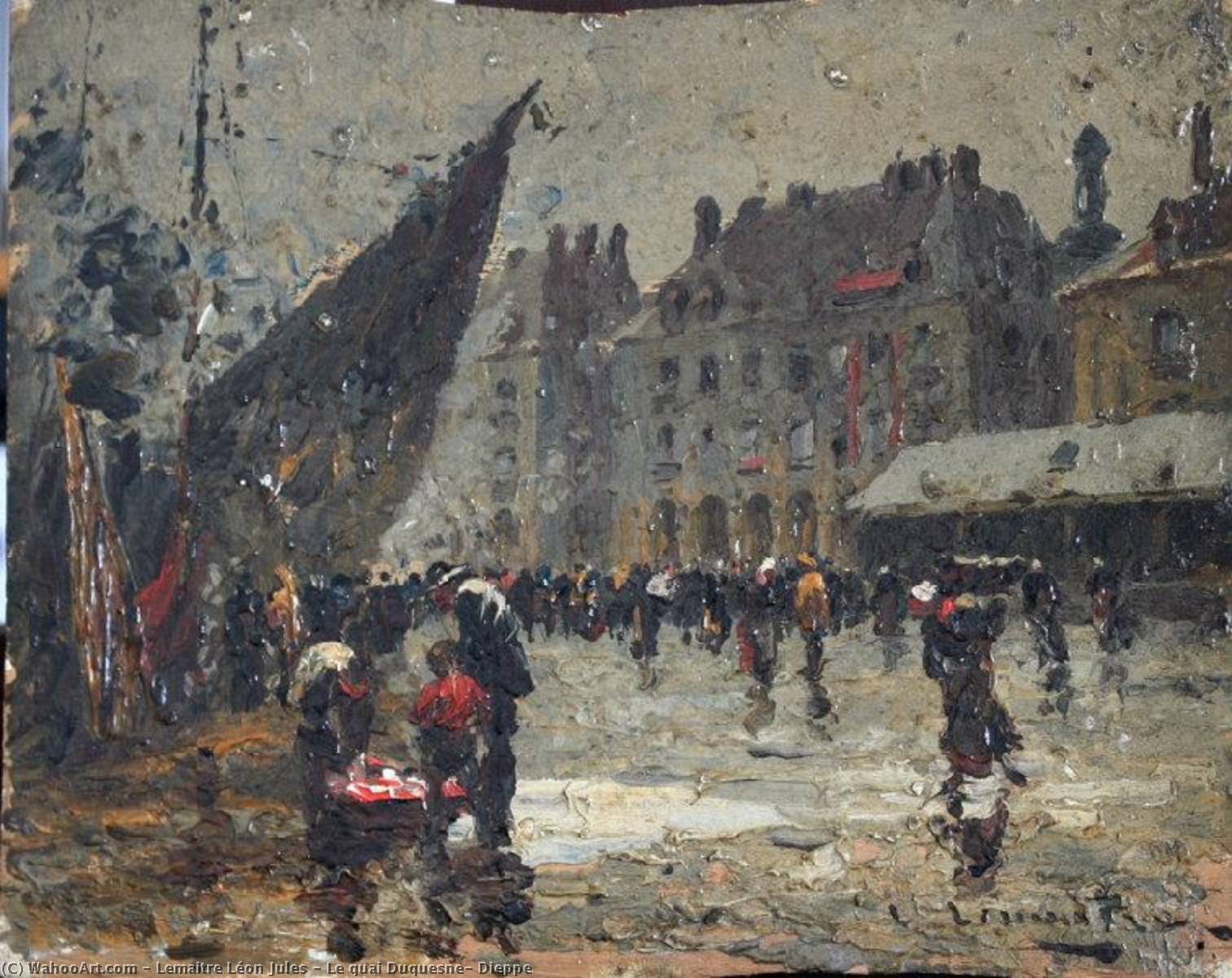
Le quai Duquesne, Dieppe
 Weiterlesen
Erwerben Sie ein hochauflösendes, optimiertes digitales Bild, das der Online-Vorschau weit überlegen ist.
Jede Datei wird von unseren hauseigenen Spezialisten mit modernsten Werkzeugen und fachmännischer manueller Retusche sorgfältig vorbereitet. Wir stellen sicher, dass jedes Bild eine außergewöhnliche Klarheit, präzise Farbgenauigkeit und feinste Details aufweist.
Die endgültige Datei wird innerhalb von 72 Stunden per E-Mail zugestellt und ist für den sofortigen Einsatz in professionellen, redaktionellen und Druckumgebungen optimiert. Es handelt sich um dieselbe Qualität, der führende Designstudios, Verlage und Galerien vertrauen.
Digitales Bild
Laden Sie eine hochauflösende Datei für die persönliche Präsentation, den Druck und kreative Projekte herunter. ( Zu Druck wechseln Handgemalte Reproduktion bestellen)
In jeder Bestellung digitaler Bilder enthalten
Professionelle digitale Bereitstellung, garantiert
Wenn Sie sich für ArtsDot.com entscheiden, erhalten Sie nicht nur ein Bild – Sie erhalten ein professionell aufbereitetes digitales Kunstwerk, das mit höchster Präzision erstellt und durch eine Zufriedenheitsgarantie abgesichert wird. Hier ist alles, was automatisch mit Ihrer Bestellung geliefert wird:

Schnelle E-Mail-Zustellung
Ihre hochauflösende digitale Bilddatei wird Ihnen innerhalb von 72 Stunden nach der Bestellung per E-Mail zugestellt – bereit zur sofortigen Verwendung.

KI-optimierte digitale Datei
Ihre Kunstwerke werden professionell mithilfe fortschrittlicher KI-Tools und manueller Bearbeitung optimiert, um maximale Detailtreue, Klarheit und Farbgenauigkeit zu gewährleisten.

Lebenslanger kostenloser Neudruckservice
Datei versehentlich gelöscht oder verloren? Keine Sorge – wir senden sie Ihnen jederzeit kostenlos erneut zu.

Keine Einfuhrgebühren – jemals
Genießen Sie Ihr Kunstwerk sofort ohne Zollgebühren, Einfuhrabgaben oder Versandkosten – digitale Downloads sind immer steuerfrei.

Garantierte Farbtreue
Wir garantieren, dass Ihr digitales Bild mithilfe professioneller Werkzeuge und Farbmanagement die Originalfarben so präzise wie möglich wiedergibt.

100-Tage-Zufriedenheitsgarantie
Wenn Sie mit Ihrem digitalen Bild nicht zufrieden sind, werden wir es überarbeiten oder 100% innerhalb von 100 Tagen erstatten – ohne Wenn und Aber.

100% Geld-zurück-Garantie
Nicht zufrieden? Erhalten Sie innerhalb von 100 Tagen nach Erhalt Ihrer digitalen Datei eine vollständige Rückerstattung – ohne Wenn und Aber.

Rabatte bei Großbestellungen
3 Bilder kaufen, 10% sparen – 5 Bilder kaufen, 15% sparen – Ab 10 Bildern 20% sparen. Ideal für kreative Projekte, Galerien und Agenturen.
Ähnliche Kunstwerke








Biografie des Künstlers
Léon Jules Lemaitre: Bridging Renaissance Ideals and Impressionistic Vision
Léon Jules Lemaitre (1850 – 1905) stands as a singular figure in the artistic landscape of late nineteenth-century Italy, embodying a fascinating confluence of classical architectural principles and the burgeoning expressive currents of Impressionism. Born in Rouen, France, Lemaitre’s formative years instilled within him an appreciation for meticulous craftsmanship and geometric harmony—influences that would profoundly shape his architectural endeavors and permeate his paintings. While often overshadowed by contemporaries like Giuseppe Verdi and Giovanni Battista Crespi, Lemaitre nonetheless achieved considerable renown as a designer of churches and public buildings, leaving behind a legacy of elegant structures reflecting both humanist ideals and the burgeoning aesthetic sensibilities of his time.- Early Life & Education: Lemaitre’s artistic inclinations began to blossom during his studies at École Supérieure des Beaux-Arts in Paris, where he honed his skills under the tutelage of Jean-Léon Gérôme and Alexandre Cabanel—artists deeply rooted in academic tradition. This grounding provided him with a foundational understanding of disegno anatomico and perspectiva, disciplines crucial for mastering architectural representation.
- Architectural Achievements: Lemaitre’s architectural career ascended rapidly upon his return to Italy. He swiftly gained prominence as a designer of churches throughout Lombardy and Emilia-Romagna, notably undertaking the ambitious Sant'Andrea Mantua project—a monumental basilica commissioned by Saint Anselmo Cathedral in Mantua. His design prioritized symmetry, proportion, and classical ornamentation, reflecting Alberti’s humanist vision of architecture as a tool for elevating the human spirit. The Palazzo Ruccelai in Lucca exemplifies his mastery of Tuscan Renaissance style, showcasing refined facades adorned with sculptures and intricate detailing.
The Impressionistic Touch: Exploring Color & Atmosphere
Despite his unwavering commitment to architectural rigor, Lemaitre’s artistic output extended beyond monumental structures. He embraced Impressionism, experimenting with vibrant color palettes and capturing fleeting moments of light and atmosphere—a stylistic departure that nonetheless remained consistent with his underlying aesthetic sensibilities. His paintings often depict landscapes bathed in dappled sunlight, conveying a sense of immediacy and emotional resonance. Consider “Bords de la Seine (effet du matin),” where Lemaitre skillfully employs muted tones to evoke the tranquil beauty of a riverside dawn. The painting’s delicate brushstrokes capture the subtle nuances of light filtering through foliage—a testament to his ability to synthesize classical precision with Impressionistic spontaneity.- Notable Paintings: Among Lemaitre's most celebrated works are “Sortie de messe à l’église Saint Jean” and “La rue du Gros Horloge,” both executed in 1905. “Sortie de messe à l’église Saint Jean” portrays a rainy cathedral interior with remarkable sensitivity, utilizing atmospheric perspective to convey the solemn grandeur of the space. Similarly, “La rue du Gros Horloge” captures the vibrancy of Rouen’s cityscape—a bustling street scene rendered in Impressionistic brushstrokes that imbue it with palpable energy.
Influences & Legacy
Lemaitre's artistic trajectory was undeniably shaped by the intellectual currents of his era. He absorbed the humanist principles championed by Alberti and Michelangelo Buonarroti—artists who advocated for architecture as a reflection of human dignity and virtue. Furthermore, he engaged with the burgeoning Impressionist movement spearheaded by Monet, Renoir, and Sisley, recognizing its potential to transcend mere representation and communicate profound emotional experiences. Lemaitre’s enduring contribution lies in his ability to synthesize these disparate influences into a distinctive artistic idiom—a testament to his intellectual curiosity and creative vision.Concluding Remarks
Léon Jules Lemaitre remains an artist whose work deserves renewed appreciation. His architectural designs stand as beacons of Renaissance elegance, while his paintings exemplify the expressive power of Impressionism. By bridging the gap between classical idealism and modern sensibility, Lemaitre cemented his place in art history—a figure who reminds us that true artistic innovation arises from a harmonious dialogue between tradition and experimentation.
léon jules lemaître
1850 - 1905
Kurzinfos
- Artistic Movement Or Style: Impressionism
- Artists Or Movements Influenced By This Artist: ['Impressionism']
- Artists Who Influenced This Artist: ['Gustave Moreau']
- Date Of Death: 1905
- Full Name: Léon Jules Lemaitre
- Nationality: French
- Notable Artworks:
- Bords de la Seine (effet du matin)
- Sortie de messe à l'église Saint Jean
- La rue du Gros Horloge, Rouen
- Place Of Birth: Rouen, France