

 Vorschau anzeigen
 Versenden
 Teilen
 Details anzeigen

 Herunterladen
 Ähnliche Objekte
 Röntgenaufnahme
 Diashow
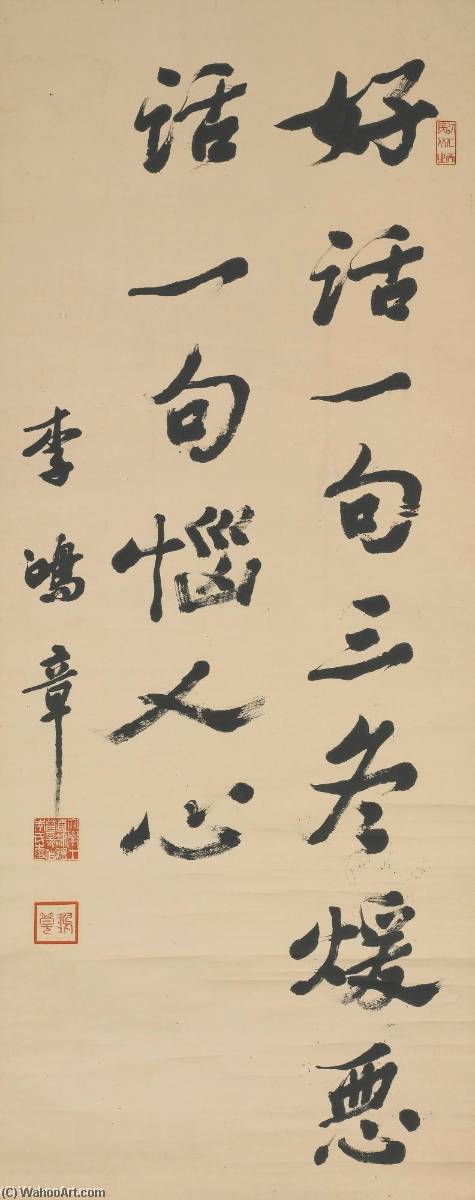
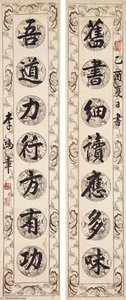
CALLIGRAPHY IN RUNNING SCRIPT
 134.0 x 31.0 cm
 Weiterlesen
Handgefertigte Ölreproduktion
Handgemaltes Ölgemälde auf Leinwand in Ihrer Wunschgröße und mit Rahmen, auf Bestellung von unseren Künstlern angefertigt. ( Druck bestellen Bild kaufen)




































Wählen Sie aus unseren vordefinierten Formaten, die den ursprünglichen Proportionen des Kunstwerks entsprechen.

Sie können Ihre eigenen Maße eingeben, um einen bestimmten Rahmen oder Platz auszufüllen. Wenn die gewählte Größe nicht den Proportionen des Originalbildes entspricht, werden wir das Kunstwerk entweder beschneiden oder das Gemälde durch zusätzliche, handgemalte Elemente erweitern. Ein digitales Mockup wird Ihnen zur Genehmigung zugesandt, bevor die Produktion beginnt.
Bitte beachten Sie, dass die Bildschirmvorschau nicht die tatsächliche Beschneidung oder Erweiterung widerspiegelt. Nur das Mockup zeigt die endgültige Komposition exakt an.
Obwohl Sondermaße verfügbar sind, empfehlen wir, eine Größe aus der vordefinierten Liste zu wählen, um die ursprünglichen Proportionen beizubehalten.
Nach der Bestellung wird das ArtsDot.com-Team dem Kunden Anweisungen per E-Mail zusenden und eine Mockup-Vorschau bereitstellen.
Weltweiter Versand () in nur 3 bis 4 Wochen statt der üblichen 5 Wochen. (6 September). Keine Kompromisse bei der Qualität.

Kostenloser weltweiter Expressversand

Hochwertige Leinenleinwand

Umfassender Versicherungsschutz beim Versand

Zollgebühren-Rückerstattungsgarantie

Garantie für exakte Farbtreue

100 Tage Rückgaberecht (nur bei Mängeln)

100% Geld-zurück-Garantie

Mengenrabatt verfügbar
 Die Glasoption ist nur für Größen unter 110 cm verfügbar.

CALLIGRAPHY IN RUNNING SCRIPT
Art der Reproduktion
Format der Reproduktion
-


Gesamtpreis
$ 263
Ähnliche Kunstwerke



Über den Künstler
A Legacy of Ink and Iron: The Dual Life of Li Hongzhang
In the twilight of the Qing Dynasty, a period defined by the collision of ancient imperial traditions and the relentless tide of Western modernization, few figures loomed as large or as complex as Li Hongzhang. To the international community of the late 19th century, he was often whispered of as the "Oriental Bismarck," a formidable diplomat and statesman who navigated the treacherous waters of global geopolitics with calculated precision. Yet, beneath the heavy mantle of the Viceroy and the strategist lay the soul of a classical scholar, a man whose brushstrokes captured the enduring elegance of Chinese heritage even as his political life was dedicated to its radical transformation.
Born in 1823 in Hefei, Anhui Province, Li Hongzhang was raised in an environment saturated with the profound ethics of Confucianism. His lineage was one of intellectual rigor; his father, Li Xianzuo, was a distinguished scholar whose mastery of classical texts provided the foundation for Li’s own lifelong devotion to the humanities. This early immersion in the Hanlin Academy—the very heart of imperial intellectual life—did more than just prepare him for bureaucracy; it instilled in him a deep-seated reverence for the rhythmic beauty of the Chinese language and the spiritual weight of calligraphic expression. His education was not merely a tool for governance but a sanctuary of culture that would remain his constant companion through decades of military conflict and diplomatic strife.
The Brush Amidst the Storm of Reform
Li Hongzhang’s life was characterized by an extraordinary tension between the preservation of the old world and the necessity of the new. As a commander during the Taiping Rebellion, he demonstrated a tactical brilliance that propelled him to the highest eltes of the Qing government. He became a primary architect of the Self-Strengthening Movement, a monumental effort to integrate Western technology, industry, and military science into the Chinese state. While his political maneuvers involved the creation of the Beiyang Fleet and the management of complex foreign relations, his artistic pursuits remained anchored in the timeless traditions of running script and regular script calligraphy.
His artistic output serves as a poignant counterpoint to his tumultuous political career. In an era where China was being reshaped by steamships and modern artillery, Li’s calligraphic works—ranging from poetic compositions to elegant couplets—offered a sense of continuity and stability. His hand moved with the confidence of a man trained in the classical masters, utilizing the fluid, energetic motions of the running script to convey emotion and strength. These works were not merely decorative; they were an assertion of cultural identity, a way to maintain the "inner" Chinese spirit even as the "outer" structures of the empire underwent unprecedented upheaval.
Historical Significance and Artistic Resonance
The historical significance of Li Hongzhang lies in his role as a bridge between two eras. He was a man who understood that for China to survive, it had to embrace the tools of its challengers, yet he never abandoned the aesthetic and moral compass provided by his Confucian upbringing. This duality is etched into every stroke of his calligraphy. To study his art is to witness the struggle of a statesman attempting to hold onto the grace of a fading dynasty while steering a nation through the birth pangs of modernity.
Today, the works attributed to Li Hongzhang are cherished not only as historical artifacts but as profound expressions of classical Chinese artistry. His legacy remains multifaceted:
- Diplomatic Mastery: As the face of the Qing court in foreign affairs, he navigated the complexities of international relations during one of China's most vulnerable periods.
- Modernization Efforts: His leadership in the Self-Strengthening Movement laid the groundwork for China's industrial and military evolution.
- Calligraphic Excellence: His mastery of various scripts, particularly the running script, continues to inspire appreciation for the rhythmic and spiritual depth of traditional Chinese brushwork.
- Cultural Preservation: Through his poetry and calligraphy, he ensured that the intellectual and aesthetic values of the Hanlin tradition remained vibrant amidst political decay.
Ultimately, Li Hongzhang remains a figure of immense intrigue—a man of iron will and delicate ink, whose life story is inseparable from the transformation of China itself.
li hongzhang
1823 - 1901
Kurzinfos
- Artistic Movement Or Style: Late Qing Dynasty
- Artists Or Movements Influenced By This Artist: ['Westernization movement']
- Artists Who Influenced This Artist: ['Zeng Guofan']
- Date Of Birth: February 15, 1823
- Date Of Death: November 7, 1901
- Full Name: Li Hongzhang
- Nationality: Chinese
- Notable Artworks:
- Très grand portrait du vice-roi du Petcheli
- Su Shi's Poem in Running Script
- Place Of Birth: Hefei, Anhui Province