

 Vorschau anzeigen
 Versenden
 Teilen
 Details anzeigen

 Herunterladen
 Ähnliche Objekte
 Röntgenaufnahme
 Diashow
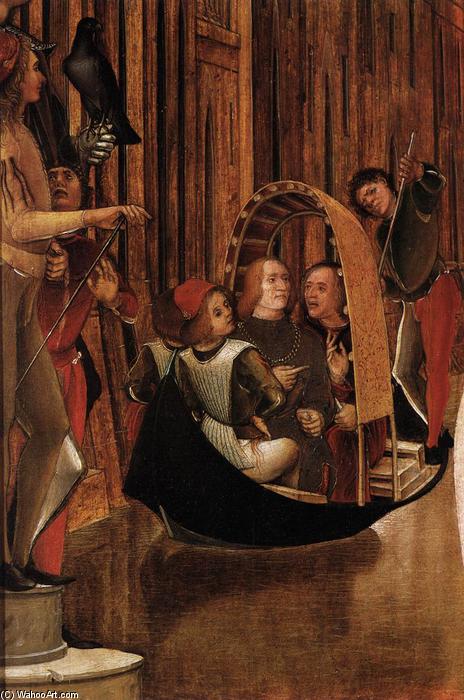
St Sebastian (detail)


 Weiterlesen
Handgefertigte Ölreproduktion
Handgemaltes Ölgemälde auf Leinwand in Ihrer Wunschgröße und mit Rahmen, auf Bestellung von unseren Künstlern angefertigt. ( Druck bestellen Bild kaufen)




P118B $10

P118H $10

P118W $10

P438Z $10

P508JH $12

P508YH $12

P805H $10

P805Z $10

P919BZ $10

P919G $10

P919XJ $10

P959ZH $10

P968JZ $12

W106C $8

W218G $10

W218JH $8

W218Y $10

W307PJ $10

W316G $10

W316PJ $8

W316Y $10

W398PJ $8

W4111J $10

W500HY $15

W500JH $15

W692G $12

W849H $8

W940BG $15

W953PJ $8




Wählen Sie aus unseren vordefinierten Formaten, die den ursprünglichen Proportionen des Kunstwerks entsprechen.

Sie können Ihre eigenen Maße eingeben, um einen bestimmten Rahmen oder Platz auszufüllen. Wenn die gewählte Größe nicht den Proportionen des Originalbildes entspricht, werden wir das Kunstwerk entweder beschneiden oder das Gemälde durch zusätzliche, handgemalte Elemente erweitern. Ein digitales Mockup wird Ihnen zur Genehmigung zugesandt, bevor die Produktion beginnt.
Bitte beachten Sie, dass die Bildschirmvorschau nicht die tatsächliche Beschneidung oder Erweiterung widerspiegelt. Nur das Mockup zeigt die endgültige Komposition exakt an.
Obwohl Sondermaße verfügbar sind, empfehlen wir, eine Größe aus der vordefinierten Liste zu wählen, um die ursprünglichen Proportionen beizubehalten.
Nach der Bestellung wird das ArtsDot.com-Team dem Kunden Anweisungen per E-Mail zusenden und eine Mockup-Vorschau bereitstellen.
Weltweiter Versand () in nur 3 bis 4 Wochen statt der üblichen 5 Wochen. (28 August). Keine Kompromisse bei der Qualität.

Kostenloser weltweiter Expressversand

Hochwertige Leinenleinwand

Umfassender Versicherungsschutz beim Versand

Zollgebühren-Rückerstattungsgarantie

Garantie für exakte Farbtreue

60 Tage Rückgaberecht (nur bei Mängeln)

100% Geld-zurück-Garantie

Mengenrabatt verfügbar
 Die Glasoption ist nur für Größen unter 110 cm verfügbar.

St Sebastian (detail)
Art der Reproduktion
Format der Reproduktion
-


Gesamtpreis
$ 263
Liberale da Verona’s St Sebastian: A Testament to Renaissance Faith
Liberale da Verona’s “St Sebastian,” housed in the Pinacoteca di Brera, Milan, stands as a poignant emblem of the High Renaissance’s preoccupation with religious iconography and humanist ideals. Painted circa 1470-72, this oil on poplar panel exemplifies Veronese's mastery of perspective and meticulous detail—characteristics deeply rooted in the artistic traditions championed by Andrea Mantegna and Jacopo Bellini.
- Subject Matter: The painting depicts St. Sebastian, martyred for his unwavering Christian faith during Diocletian’s persecution. His body is pierced with arrows – a symbol of suffering endured for righteousness—a motif prevalent in Renaissance art reflecting the era's spiritual fervor.
- Style & Technique: Veronese employed a technique characterized by smooth glazing and subtle tonal gradations, achieving remarkable realism while maintaining an idealized aesthetic. The artist’s careful attention to anatomical accuracy underscores the humanist influence of his time, mirroring advancements in scientific observation.
- Composition & Setting: The scene unfolds within an arched structure reminiscent of Romanesque churches—a deliberate choice that evokes grandeur and solemnity. Figures flanking St. Sebastian contribute to a narrative framework emphasizing piety and devotion. Notably, on the left, individuals engage in conversation or contemplation, while those on the right interact with palpable emotion.
- Color Palette: Dominated by earthy hues – ochre, umber, and Sienna—the painting’s palette conveys warmth and melancholy, mirroring the contemplative mood of Renaissance spirituality. The absence of explicit textual annotations reinforces the artwork's visual impact as a conduit for spiritual contemplation.
Giorgio Vasari’s *Lives of the Most Excellent Painters* acknowledges Veronese’s significance within the artistic canon, cementing his reputation as a master of illusionistic painting and humanist representation. His stylistic evolution—incorporating Mantegna's rigor and Bellini’s luminosity—reflects the broader intellectual currents shaping Renaissance Italy.
Beyond its formal qualities, “St Sebastian” resonates with profound symbolic meaning. The arrows piercing St. Sebastian’s body symbolize martyrdom and purification – themes central to Christian theology. Furthermore, Veronese's depiction of St. Sebastian as a youthful figure embodies the humanist ideal of beauty and virtue—a testament to the Renaissance fascination with classical antiquity and human potential.
The painting’s enduring appeal lies in its ability to convey spiritual contemplation and evoke empathy for suffering endured in defense of faith. It serves as an exemplar of Renaissance artistic achievement, demonstrating Veronese's unparalleled skill in capturing both physical realism and emotional depth—a legacy that continues to inspire artists and collectors alike.
Further research into Liberale da Verona reveals his involvement in significant projects beyond “St Sebastian,” including the altar of San Vincenzo Ferrer in Siena Cathedral and monumental frescoes adorning the Palazzo Piccolomini. These commissions underscore Veronese’s prolific output and solidify his position as one of the foremost painters of his era.
The Museo del Petit Palais houses a remarkable collection of Renaissance art, offering visitors an opportunity to immerse themselves in the artistic splendor of this transformative period. Examining “St Sebastian” alongside other masterpieces—such as Federico Barocci’s preparatory drawing for the Crucifixion altarpiece—provides invaluable insight into the stylistic innovations and intellectual preoccupations that defined the High Renaissance.
The Pinacoteca di Brera's meticulous preservation of Veronese’s “St Sebastian” ensures its accessibility to scholars and enthusiasts alike. Its luminous colors and masterful composition continue to captivate audiences, reaffirming the painting’s enduring artistic merit and its significance as a symbol of Renaissance faith.
Ähnliche Kunstwerke
Über den Künstler
Liberale da Verona: Ein Meister der Renaissance
Leben und Ursprünge
- Um 1441 in Verona, Italien, geboren, war Liberale da Verona ein herausragender Maler der italienischen Renaissance.
- Er verstarb im Jahr 1529 und hinterließ ein bleibendes Erbe aus exquisiten Fresken, Tafelgemälden und illuminierten Manuskripten.
- Frühe Ausbildung: Liberale begann seine künstlerische Reise als Schüler von Vincenzo di Stefano, was das Fundament für seinen späteren Stil legte.
Einflüsse und künstlerische Entwicklung
- Obwohl er von di Stefano ausgebildet wurde, war Liberale zutiefst von den Werken von Andrea Mantegna und < Jacopo Bellini beeinflusst. Dieser Einfluss zeigt sich deutlich in seiner Liebe zum Detail, der Perspektive und seinen dramatischen Kompositionen.
- Giorgio Vasaris Bericht: Er wird bemerkenswerterweise in Giorgio Vasaris „Leben der bedeutendsten Maler, Bildhauer und Architekten“ erwähnt, was seinen Platz im Kanon der Renaissance-Künstler festigte.
- Sein Stil entwickelte sich so, dass er Elemente von Mantegnas strenger Zeichnungstechnik mit Bellinis verfeinerter Farbpalette vereinte.
Hauptwerke und Errungenschaften
- Veroneser Aufträge: In Verona vollendete Liberale bedeutende Aufträge, wie die Anbetung der Könige im Dom sowie eine weitere Version für eine Kapelle innerhalb des Bistums.
- Er dekorierte zudem die Kapelle der Bruderschaft der Maddalena in der Kirche San Bernardino mit Gemälden, die die Geburt und Aufnahme Mariens in den Himmel darstellen.
- Brera-Galerie: Ein bemerkenswertes Werk, der Heilige Stephanus, befindet sich in der Brera-Galerie und zeigt sein Geschick bei der Darstellung religiöser Figuren.
- Illuminierte Manuskripte: Liberales Talent erstreckte sich auch auf die Buchmalerei, wobei Beispiele im Dom von Chiusi zu finden sind.
- Der (zugeschriebene) Heilige Sebastian im Princeton University Art Museum demonstriert seine Meisterschaft in anatomischer Detailtreue und emotionalem Ausdruck.
- Abtei Monte Oliveto: Er reiste nach Siena, um in der Abtei Monte Olivierte zu arbeiten, wo er zahlreiche Manuskripte illuminierte.
Schüler und Vermächtnis
- Liberale da Verona spielte eine entscheidende Rolle bei der Ausbildung der nächsten Generation veronesischer Maler.
- Bemerkenswerte Schüler: Zu seinen Schülern gehörten Giovanni und Giovanni Francesco Caroto, Francesco Torbido (auch bekannt als Il Moro) sowie Paolo Cavazzola. Diese Künstler setzten es fort, seine künstlerischen Prinzipien weiterzuentwickeln und zu verbreiten.
Historische Bedeutung
- Beitrag zur Renaissance: Liberale da Verona trug maßgeblich zum Aufblühen der Renaissance-Kunst in Verona bei und schlug die Brücke zwischen früheren Stilen und dem aufkommenden Manierismus.
- Kulturelle Wirkung: Seine Werke werden bis heute für ihr technisches Können, ihre Ausdruckskraft und ihre historische Bedeutung studiert und bewundert. Er fand sogar als Thema einer Fälschung Eingang in die Popkultur – konkret in einer Episode der britischen Fernsehserie Inspector Morse mit dem Titel „The Death of the Self“.
- Seine Kunst bietet wertvolle Einblicke in das religiöse, kulturelle und künstlerische Klima des Italiens des 15. und 16. Jahrhunderts.
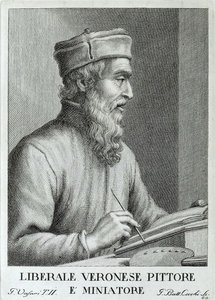
Liberale Da Verona
1441 - 1529 , Italien
Kurzinfos
- Artistic Movement Or Style: Renaissance
- Artists Or Movements Influenced By This Artist:
- Giovanni Caroto
- Giovanni Francesco Caroto
- Artists Who Influenced This Artist:
- Andrea Mantegna
- Jacopo Bellini
- Vincenzo di Stefano
- Date Of Birth: ca. 1445
- Date Of Death: ca. 1526/1529
- Full Name: Liberale da Verona
- Nationality: Italienisch
- Notable Artworks:
- Adoration of the Magi
- St. Sebastian
- Die Geburt und Aufnahme Mariens
- Place Of Birth: Verona, Italien
Ähnliche Artikel

Leonardo da Vinci: Die 25 Meisterwerke für Ihr Zuhause | ArtsDot
Entdecken Sie die 25 Meisterwerke von Leonardo da Vinci! Erfahren Sie faszinierende Geschichten hinter Gemälden wie der Mona Lisa & Das letzte Abendmahl. Hochwertige Reproduktionen für Ihr Zuhause – jetzt bei ArtsDot entdecken!

Leonardo da Vinci: Synthese von Kunst, Wissenschaft und menschlicher Beobachtung – Eine Renaissance-Meisterleistung für den Kenner
Entdecken Sie Leonardo da Vincis revolutionäre Kunst und Wissenschaft! Expertenanalyse seiner Meisterwerke, Techniken wie Sfumato & Chiaroscuro. Für Kenner und Sammler.
Discover the Divine: Inspiring Saint Anthony Artworks to Elevate Your Home Decor
Transform your home with the profound beauty of Saint Anthony artworks. Explore exquisite Baroque reproductions by Murillo and Zurbarán, hand-painted on 100% cotton canvas to bring divine serenity and timeless elegance to your interior design.
Renaissance Humanismus: Die 10 Meisterwerke, die eine Epoche prägten – Kunst für Ihr Zuhause
Entdecken Sie die 10 Meisterwerke der Renaissance Humanismus! Von Leonardo da Vinci bis Michelangelo – erfahren Sie die Geschichten hinter ikonischen Gemälden & Skulpturen. Finden Sie Ihre perfekte Reproduktion auf ArtsDot.com.
Antonello da Messina: Innovation, Devotion & the Sicilian Renaissance Master's Enduring Legacy
Explore the groundbreaking art of Antonello da Messina, a pivotal figure of the Renaissance. Discover his innovative oil painting techniques, captivating portraits, and lasting influence on Italian masters. Learn more at ArtsDot.

