

 Vorschau anzeigen
 Versenden
 Teilen
 Details anzeigen

 Herunterladen
 Ähnliche Objekte
 Röntgenaufnahme
 Diashow
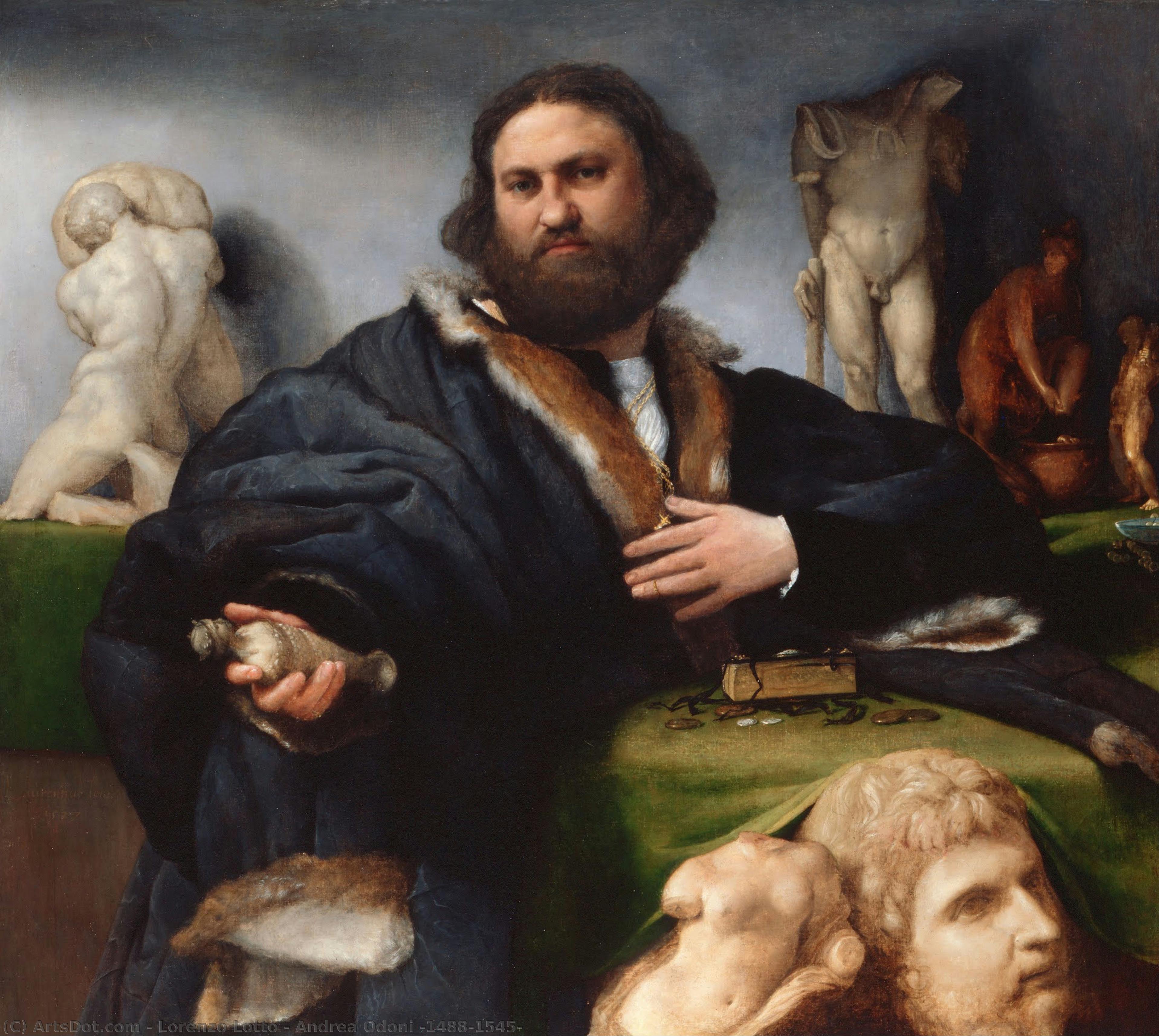
Andrea Odoni (1488-1545)


 Weiterlesen
Erwerben Sie ein hochauflösendes, optimiertes digitales Bild, das der Online-Vorschau weit überlegen ist.
Jede Datei wird von unseren hauseigenen Spezialisten mit modernsten Werkzeugen und fachmännischer manueller Retusche sorgfältig vorbereitet. Wir stellen sicher, dass jedes Bild eine außergewöhnliche Klarheit, präzise Farbgenauigkeit und feinste Details aufweist.
Die endgültige Datei wird innerhalb von 72 Stunden per E-Mail zugestellt und ist für den sofortigen Einsatz in professionellen, redaktionellen und Druckumgebungen optimiert. Es handelt sich um dieselbe Qualität, der führende Designstudios, Verlage und Galerien vertrauen.
Digitales Bild
Laden Sie eine hochauflösende Datei für die persönliche Präsentation, den Druck und kreative Projekte herunter. ( Druck bestellen Handgemalte Reproduktion bestellen)
In jeder Bestellung digitaler Bilder enthalten
Professionelle digitale Bereitstellung, garantiert
Wenn Sie sich für ArtsDot.com entscheiden, erhalten Sie nicht nur ein Bild – Sie erhalten ein professionell aufbereitetes digitales Kunstwerk, das mit höchster Präzision erstellt und durch eine Zufriedenheitsgarantie abgesichert wird. Hier ist alles, was automatisch mit Ihrer Bestellung geliefert wird:

Schnelle E-Mail-Zustellung
Ihre hochauflösende digitale Bilddatei wird Ihnen innerhalb von 72 Stunden nach der Bestellung per E-Mail zugestellt – bereit zur sofortigen Verwendung.

KI-optimierte digitale Datei
Ihre Kunstwerke werden professionell mithilfe fortschrittlicher KI-Tools und manueller Bearbeitung optimiert, um maximale Detailtreue, Klarheit und Farbgenauigkeit zu gewährleisten.

Lebenslanger kostenloser Neudruckservice
Datei versehentlich gelöscht oder verloren? Keine Sorge – wir senden sie Ihnen jederzeit kostenlos erneut zu.

Keine Einfuhrgebühren – jemals
Genießen Sie Ihr Kunstwerk sofort ohne Zollgebühren, Einfuhrabgaben oder Versandkosten – digitale Downloads sind immer steuerfrei.

Garantierte Farbtreue
Wir garantieren, dass Ihr digitales Bild mithilfe professioneller Werkzeuge und Farbmanagement die Originalfarben so präzise wie möglich wiedergibt.

100-Tage-Zufriedenheitsgarantie
Wenn Sie mit Ihrem digitalen Bild nicht zufrieden sind, werden wir es überarbeiten oder 100% innerhalb von 100 Tagen erstatten – ohne Wenn und Aber.

100% Geld-zurück-Garantie
Nicht zufrieden? Erhalten Sie innerhalb von 100 Tagen nach Erhalt Ihrer digitalen Datei eine vollständige Rückerstattung – ohne Wenn und Aber.

Rabatte bei Großbestellungen
3 Bilder kaufen, 10% sparen – 5 Bilder kaufen, 15% sparen – Ab 10 Bildern 20% sparen. Ideal für kreative Projekte, Galerien und Agenturen.
Lorenzo Lotto’s Enigmatic Portrait of Andrea Odoni – A Renaissance Dialogue
Lorenzo Lotto's 1527 portrait of Andrea Odoni isn’t merely a likeness; it’s a carefully constructed dialogue between the earthly and the divine, a testament to the Venetian collector’s wealth, intellect, and perhaps, his own complex worldview. This painting, now residing within the Royal Collection at Buckingham Palace, immediately captivates with its dense layering of symbolism and its masterful execution – a hallmark of Lotto's distinctive style that blended High Renaissance grace with nascent Mannerist sensibilities. It’s a work that invites prolonged contemplation, revealing new layers of meaning with each viewing.
Lotto, a restless spirit who spent much of his career wandering Italy rather than settling in one place, possessed an uncanny ability to imbue his subjects with psychological depth. In Odoni's portrait, this is particularly evident. The merchant himself—a man of considerable means and influence within Venice—is depicted not as a static figure, but as actively engaged in a private world. His gaze is direct, almost challenging, while the subtle tension in his posture suggests an internal debate. He’s not simply presenting himself; he's inviting us to understand his motivations, his beliefs, and perhaps even his anxieties.
A Symphony of Antiquity: Objects as Symbols
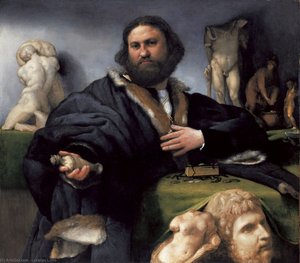
The composition is a carefully orchestrated arrangement of objects, each laden with symbolic weight. Dominating the foreground are fragments of classical sculpture – pieces of Hadrian’s bust, Hercules in various poses, and Venus figures—a deliberate homage to antiquity and a reflection of Odoni's own passion for collecting. These aren’t simply decorative elements; they represent a tangible connection to the glories of Rome and Greece, embodying ideals of beauty, strength, and intellectual pursuit. The inclusion of these fragments speaks volumes about Odoni’s status as a learned man and his desire to associate himself with the legacy of classical civilization.
Notably, Lotto doesn't simply place these sculptures around the figure; he integrates them into the scene, suggesting a dynamic relationship between the past and the present. The placement of the Diana of Ephesus statuette in Odoni’s hand is particularly intriguing. This small figurine, representing the goddess of the hunt and nature, stands in stark contrast to the classical figures, hinting at a tension between paganism and Christianity – a theme that runs throughout the painting. Lotto seems to be suggesting that while the allure of the ancient world remains strong, faith holds ultimate sway.
Technique and Atmosphere: Lotto’s Venetian Vision
Lotto's technique is characterized by its rich, dark tones and atmospheric effects—a hallmark of his Venetian period. He employs a dense layering of paint, creating a sense of depth and solidity that draws the viewer into the scene. The use of *sfumato*, a subtle blurring of edges, softens the forms and contributes to the painting’s overall mood of contemplative solemnity. The lighting is carefully controlled, casting dramatic shadows that emphasize Odoni's features and highlighting the textures of the fabrics and sculptures.
It’s important to note that Lotto was a master of illusionism, creating the impression of three-dimensionality through his skillful use of perspective and detail. The background, filled with statues and animals, feels remarkably real—almost as if it were an extension of Odoni's own private world. This masterful rendering of space contributes significantly to the painting’s overall impact, drawing the viewer into a realm of intellectual and spiritual contemplation.
A Portrait of Ambition and Contemplation
Ultimately, Lorenzo Lotto’s portrait of Andrea Odoni is more than just a representation of a wealthy merchant; it's a profound meditation on human ambition, faith, and the enduring power of the past. The painting speaks to the complexities of Renaissance thought—the tension between classical ideals and Christian beliefs, the pursuit of knowledge and the desire for earthly pleasures. It’s a work that rewards careful study, revealing new layers of meaning with each viewing, and offering a glimpse into the mind of a man who sought to shape his own legacy through art and erudition.
Ähnliche Kunstwerke
Biografie des Künstlers
Frühes Leben und Ausbildung
Lorenzo Lotto, ein bedeutender italienischer Maler, Zeichner und Illustrator, wurde um 1480 in Venedig geboren. Sein frühes Leben und seine Ausbildung sind nicht gut dokumentiert, aber es wird angenommen, dass er von Giovanni Bellini beeinflusst war, einer führenden Figur der venezianischen Schule.Künstlerischer Stil und Einflüsse
Lottos Werk zeichnet sich durch eine einzigartige Mischung aus Hochrenaissance und Mannerismus aus. Seine Gemälde zeigen oft Altäre, religiöse Themen und Porträts, die seine technische Fertigkeit und emotionale Tiefe demonstrieren. Der Einfluss von Giorgio Vasaris Freund, Palma der Ältere, ist in Lottos frühen Werken erkennbar.Bemerkenswerte Werke und Standorte
- Jungfrau mit Kind und St. Hieronymus (1506) (National Gallery of Scotland, Edinburgh)
- Allegorie der Tugend und Laster (1505) (National Gallery of Art, Washington)
- St. Hieronymus in der Wüste (1500 oder 1506) (Louvre, Paris)
Karriere und Vermächtnis
Lottos Karriere erstreckte sich über mehrere Standorte, darunter Treviso, Rom und Bergamo. Er war ein respektierter Maler in Norditalien, aber seine Arbeit wurde in Venedig weitgehend übersehen. Lottos einzigartiger Stil, der giorgioneske Klassizismus mit Correggios dramatischen Setpieces vermischt, wurde in den letzten Jahren wiederentdeckt.Wichtige Kunstbewegungen und Einflüsse
Schlussfolgerung
Lorenzo Lottos bemerkenswerte Karriere, die durch seinen einzigartigen künstlerischen Stil und einflussreiche Werke gekennzeichnet ist, hat ihre bleibende Spur in der Welt der italienischen Renaissancekunst hinterlassen. Sein Vermächtnis inspiriert weiterhin Künstler und Kunstliebhaber gleichermaßen, wobei viele seiner Werke auf ArtsDot.com zu sehen sind.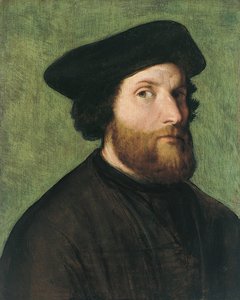
Lorenzo Lotto
1480 - 1556 , Italien
Kurzinfos
- Bemerkenswerte Kunstwerke:
- Jungfrau mit Kind und St. Hieronymus
- Allegorie von Tugend und Laster
- St. Hieronymus in der Wüste
- Geburtsdatum: 1480
- Geburtsort: Venedig, Italien
- Künstler, Die Diesen Künstler Beeinflussten:
- Giovanni Bellini
- Palma der Ältere
- Künstlerische Bewegung Oder Stil:
- Hochrenaissance
- Manierismus
- Nationalität: Italienisch
- Todatum: 1556
- Vollständiger Name: Lorenzo Lotto
- Von Diesem Künstler Beeinflusste Künstler Oder Bewegungen:
- Giorgionesque-Klassizismus
- Correggios dramatische Setzstücke