 Vorschau anzeigen
 Versenden
 Teilen
 Details anzeigen

 Herunterladen
 Ähnliche Objekte
 Röntgenaufnahme
 Diashow
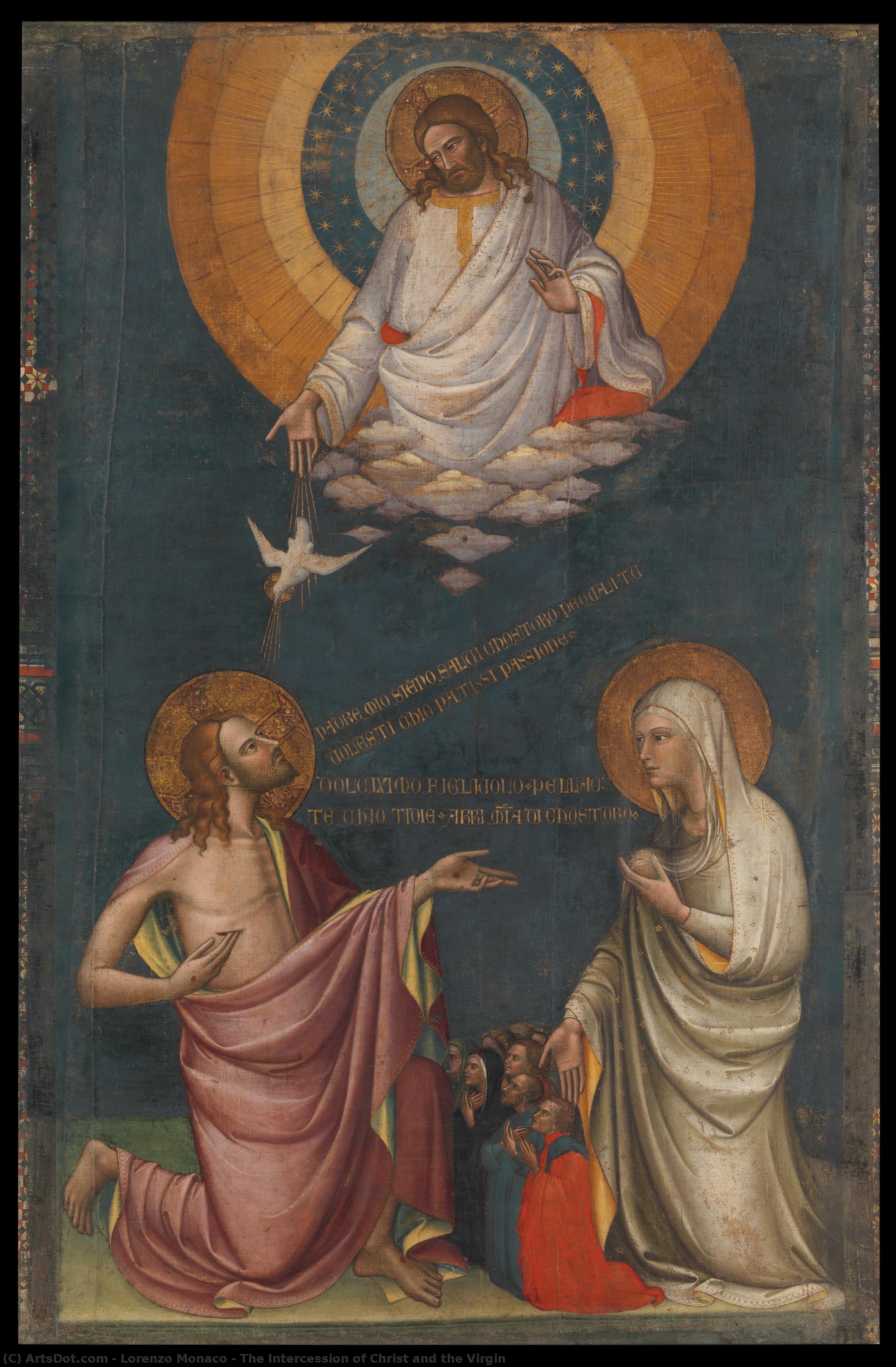
The Intercession of Christ and the Virgin
 Oil On Canvas
- WallArt
- Early Renaissance
 1402
1402- Late Medieval
 239.0 x 153.0 cm
 Metropolitan Museum of Art
 Weiterlesen
Handgefertigte Ölreproduktion
Handgemaltes Ölgemälde auf Leinwand in Ihrer Wunschgröße und mit Rahmen, auf Bestellung von unseren Künstlern angefertigt. ( Druck bestellen Bild kaufen)




P118B $10

P118H $10

P118W $10

P438Z $10

P508JH $12

P508YH $12

P805H $10

P805Z $10

P919BZ $10

P919G $10

P919XJ $10

P959ZH $10

P968JZ $12

W106C $8

W218G $10

W218JH $8

W218Y $10

W307PJ $10

W316G $10

W316PJ $8

W316Y $10

W398PJ $8

W4111J $10

W500HY $15

W500JH $15

W692G $12

W849H $8

W940BG $15

W953PJ $8




Wählen Sie aus unseren vordefinierten Formaten, die den ursprünglichen Proportionen des Kunstwerks entsprechen.

Sie können Ihre eigenen Maße eingeben, um einen bestimmten Rahmen oder Platz auszufüllen. Wenn die gewählte Größe nicht den Proportionen des Originalbildes entspricht, werden wir das Kunstwerk entweder beschneiden oder das Gemälde durch zusätzliche, handgemalte Elemente erweitern. Ein digitales Mockup wird Ihnen zur Genehmigung zugesandt, bevor die Produktion beginnt.
Bitte beachten Sie, dass die Bildschirmvorschau nicht die tatsächliche Beschneidung oder Erweiterung widerspiegelt. Nur das Mockup zeigt die endgültige Komposition exakt an.
Obwohl Sondermaße verfügbar sind, empfehlen wir, eine Größe aus der vordefinierten Liste zu wählen, um die ursprünglichen Proportionen beizubehalten.
Nach der Bestellung wird das ArtsDot.com-Team dem Kunden Anweisungen per E-Mail zusenden und eine Mockup-Vorschau bereitstellen.
Weltweiter Versand () in nur 3 bis 4 Wochen statt der üblichen 5 Wochen. (20 August). Keine Kompromisse bei der Qualität.

Kostenloser weltweiter Expressversand

Hochwertige Leinenleinwand

Umfassender Versicherungsschutz beim Versand

Zollgebühren-Rückerstattungsgarantie

Garantie für exakte Farbtreue

60 Tage Rückgaberecht (nur bei Mängeln)

100% Geld-zurück-Garantie

Mengenrabatt verfügbar
 Die Glasoption ist nur für Größen unter 110 cm verfügbar.

The Intercession of Christ and the Virgin
Art der Reproduktion
Format der Reproduktion
-


Gesamtpreis
$ 263
Beschreibung des Kunstwerks
A Moment of Profound Devotion: The Intercession of Christ and the Virgin by Lorenzo Monaco
Lorenzo Monaco’s “The Intercession of Christ and the Virgin,” painted in 1402, is more than just a religious depiction; it's a visceral embodiment of faith, sorrow, and hope. Executed during a pivotal moment in Florentine art history – bridging the Gothic sensibilities of the Trecento with the burgeoning Renaissance – this masterpiece offers a rare glimpse into the deeply spiritual world of a monk-artist. Measuring 239 x 153 cm, the painting’s scale immediately commands attention, drawing the viewer into its intensely emotional core. Originally intended for placement within the entrance of a cathedral, its dramatic composition and powerful symbolism were designed to inspire awe and devotion in all who beheld it.
A Hieratic Narrative: Composition and Symbolism
- Hieratic Scale: The painting’s most striking feature is the deliberate distortion of scale, a technique known as hieratic scale. Christ and the Virgin are rendered significantly larger than the kneeling figures – likely members of a prominent Florentine family – emphasizing their divine status and highlighting the act of intercession. This wasn't merely an artistic choice; it was a deeply ingrained theological concept reflecting the belief in the power of saints to influence God’s will.
- The Trinity Embodied: The composition itself is meticulously structured, representing the Holy Trinity. Christ, with his outstretched hand pointing to the wound in his side, pleads for mercy. The Virgin Mary, holding her breast – a potent symbol of nourishment and divine grace – echoes this plea. The dove of the Holy Spirit, hovering above them, completes the sacred triad.
- Geometric Precision: Despite its emotional intensity, the painting showcases a geometric composition typical of Florentine art of the late fourteenth century, demonstrating Monaco’s mastery of perspective and form. This careful arrangement adds to the overall sense of order and reverence.
Lorenzo Monaco: Monk and Master
Lorenzo Monaco's artistic journey is inextricably linked to his monastic life. Joining the Camaldolese order in 1390, he transformed from a promising young artist apprenticed to masters like Giotto into “Lawrence the Monk.” This commitment profoundly shaped his work, imbuing it with an introspective quality and a focus on spiritual themes. His style evolved from the more overtly narrative works of his early career towards a greater emphasis on psychological depth and emotional resonance – characteristics that would become hallmarks of Renaissance art. Monaco’s ability to convey profound emotion through subtle gestures and expressions is particularly evident in the faces of Christ and Mary, inviting viewers into their moment of desperate prayer.
Technique and Materials: A Window into the Workshop
The painting was executed in tempera on wood panel, a technique favored by Florentine artists at this time. Monaco’s masterful use of color – primarily blues, reds, and golds – creates a luminous effect, enhancing the sense of divine light. The application of paint is remarkably detailed, particularly evident in the drapery and facial features, showcasing his meticulous attention to detail. The painting's vibrant colors and smooth surfaces reflect the advanced techniques developed during this period, demonstrating Monaco’s skill as a painter and his understanding of artistic principles.
Emotional Resonance and Lasting Impact
"The Intercession of Christ and the Virgin" remains a profoundly moving work of art. It captures a moment of intense spiritual yearning – the desperate plea for mercy in the face of suffering. The painting’s dramatic composition, coupled with Monaco's masterful use of color and symbolism, creates an experience that transcends time. It is a testament to the enduring power of faith and the profound connection between art and spirituality. This reproduction offers a unique opportunity to own a piece of this significant artwork, bringing its beauty and emotional depth into your home or office.
Ähnliche Kunstwerke
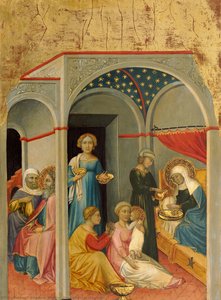
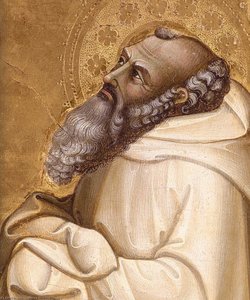
Über den Künstler
Frühes Leben und Ausbildung
- Geboren: Siena, Italien (ca. 1370)
- Gestorben: ca. 1425
- Über Lorenzo Monacos frühes Leben ist wenig bekannt, außer dass er in Florenz eine Lehre absolvierte.
- Er wurde von den Werken Giottos und seinen Anhängern Spinello Aretino und Agnolo Gaddi beeinflusst. Diese Erfahrungen prägten seine künstlerische Entwicklung.
Künstlerisches Schaffen und Stil
- Im Jahr 1390 trat Lorenzo dem Camaldenserkloster Santa Maria degli Angeli bei und wurde als "Laurentius der Mönch" bekannt.
- Seine frühen Werke (1390er Jahre) zeigen einen starken Einfluss des Internationalen Gotischen Stils, zusammen mit Einflüssen von Lorenzo Ghiberti und Gherardo Starnina.
- Monacos Stil ist gekennzeichnet durch:
- Spannte Linearität
- Anfänglich eine kalte Farbpalette
- Später die Übernahme von Elementen des Internationalen Gotischen Stils
- Lange Figuren mit geschwungenen Gewändern
- Scharfe Kanten und leuchtende Farben (Gold und Lapislazuli)
- Angedeutete Gesten und ein minimiertes Raumgefühl
- Er stellte konsequent Bilder mit starkem spirituellen Wert dar, oft losgelöst vom Realismus.
Hauptwerke
- Pietà: Im Galleria dell'Accademia in Florenz ausgestellt – Zeigt nervöse Linien und emotionale Spannung.
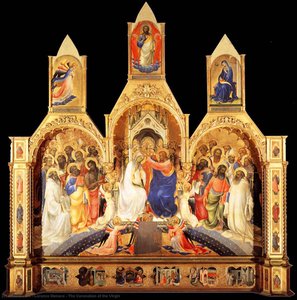
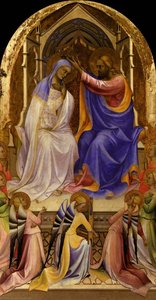
- Krönung der Jungfrau: Jetzt im Uffizien – Enthält eine große Anzahl von Heiligen mit geschwungenen Formen und leuchtenden Farben.
- Monteoliveto-Altarbild: In der Galleria dell'Accademia – Zeigt eine Spiritualität, die an Fra Angelico erinnert.
- Anbetung der Könige (1420–1422): Die Vereinfachungen wirken surreal aufgrund des Fehlens geometrischer Perspektive, behalten aber eine hohe bildliche Qualität bei.
- Geschichten der Jungfrau in der Bartolini Salimbeni Kapelle: Eines seiner wenigen Fresken.
Einflüsse und Vermächtnis
- Monacos Werk wurde von Giotto, Spinello Aretino, Agnolo Gaddi, Lorenzo Ghiberti und Gherardo Starnina beeinflusst.
- Er blieb weitgehend unbeeinflusst von den Innovationen Masacios und Filippos Brunelleschis und behielt seinen unverwechselbaren Stil bei.
- Giorgio Vasari nahm eine Biographie Monacos in seine "Leben" auf und erwähnte seinen Tod an einer nicht identifizierten Infektion.
- Trotz begrenzter biographischer Informationen sind Lorenzo Monacos Beiträge zur spätgotischen-frühen Renaissancekunst bedeutend. Seine einzigartige Mischung aus Stilen und sein spiritueller Fokus hinterließen einen bleibenden Eindruck auf nachfolgende Künstler.
Historische Bedeutung
- Gilt als der letzte wichtige Vertreter des Giotto-Stils vor der Renaissance-Revolution.
- Überbrückte die Kluft zwischen den spätgotischen Traditionen und den aufkommenden künstlerischen Prinzipien der Renaissance.
- Sein Schwerpunkt auf Spiritualität und stilisierte Formen stellen eine besondere Ästhetik innerhalb der florentinischen Malerei dar.
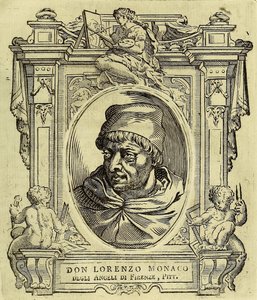
Lorenzo Monaco
1370 - 1425 , Italien
Kurzinfos
- Beeinflusste Künstler:
- Giotto
- Spinello Aretino
- Bemerkenswerte Werke:
- Pietà
- Verkündigung Mariä
- Anbetung der Könige
- Geburtsdatum: ca. 1370
- Geburtsort: Siena, Italien
- Künstlerischer Stil: Spätgotik-Frührenaissance
- Nationalität: Italiener
- Sterbedatum: ca. 1425
- Vollständiger Name: Lorenzo Monaco
- Von Künstlern Beeinflusst:
- Masaccio
- Brunelleschi
Ähnliche Artikel

Fra Angelico: Die 25 Meisterwerke des italienischen Frührenaissance-Malers | ArtsDot
Entdecken Sie die 25 schönsten Meisterwerke von Fra Angelico! Erleben Sie religiöse Kunst der italienischen Renaissance, himmlische Fresken & Panelgemälde. Finden Sie hochwertige Kunstdrucke und Reproduktionen für Ihr Zuhause auf ArtsDot.com.
Jacob Henricus Maris: Meister des niederländischen Stimmungsrealismus und der intimen Landschaft
Entdecken Sie das Werk von Jacob Henricus Maris, einem Meister des niederländischen Stimmungsrealismus! Erfahren Sie mehr über seine Landschaftsmalerei, Einflüsse und berühmte Gemälde. Jetzt lesen & inspirieren lassen!

Giotto di Bondone: Die 25 Meisterwerke des Frührenaissance – Kunst für Ihr Zuhause
Entdecken Sie die 25 Meisterwerke von Giotto di Bondone! Erleben Sie die Frührenaissance, religiöse Kunst & ikonische Fresken wie in der Scrovegni Kapelle. Hochwertige Kunstdrucke online bei ArtsDot.com – für zeitlose Eleganz in Ihrem Zuhause.

Mary Vaux Walcott: Botanische Präzision und künstlerische Vision im amerikanischen Naturschutz
Entdecken Sie das faszinierende Leben und Werk von Mary Vaux Walcott – einer Pionierin der botanischen Illustration und des amerikanischen Naturschutzes. Erfahren Sie mehr über ihre präzisen Gemälde, wissenschaftlichen Beiträge und ihr Vermächtnis.

El Greco: Die 25 Meisterwerke – Kunst für Ihr Zuhause | ArtsDot
Entdecken Sie die 25 bedeutendsten Meisterwerke von El Greco! Erleben Sie die spirituelle Tiefe und den dramatischen Stil des griechischen Malers. Hochwertige Kunstdrucke & Inspiration für Ihr Zuhause auf ArtsDot.com.