

 Vorschau anzeigen
 Versenden
 Teilen
 Details anzeigen

 Herunterladen
 Ähnliche Objekte
 Röntgenaufnahme
 Diashow
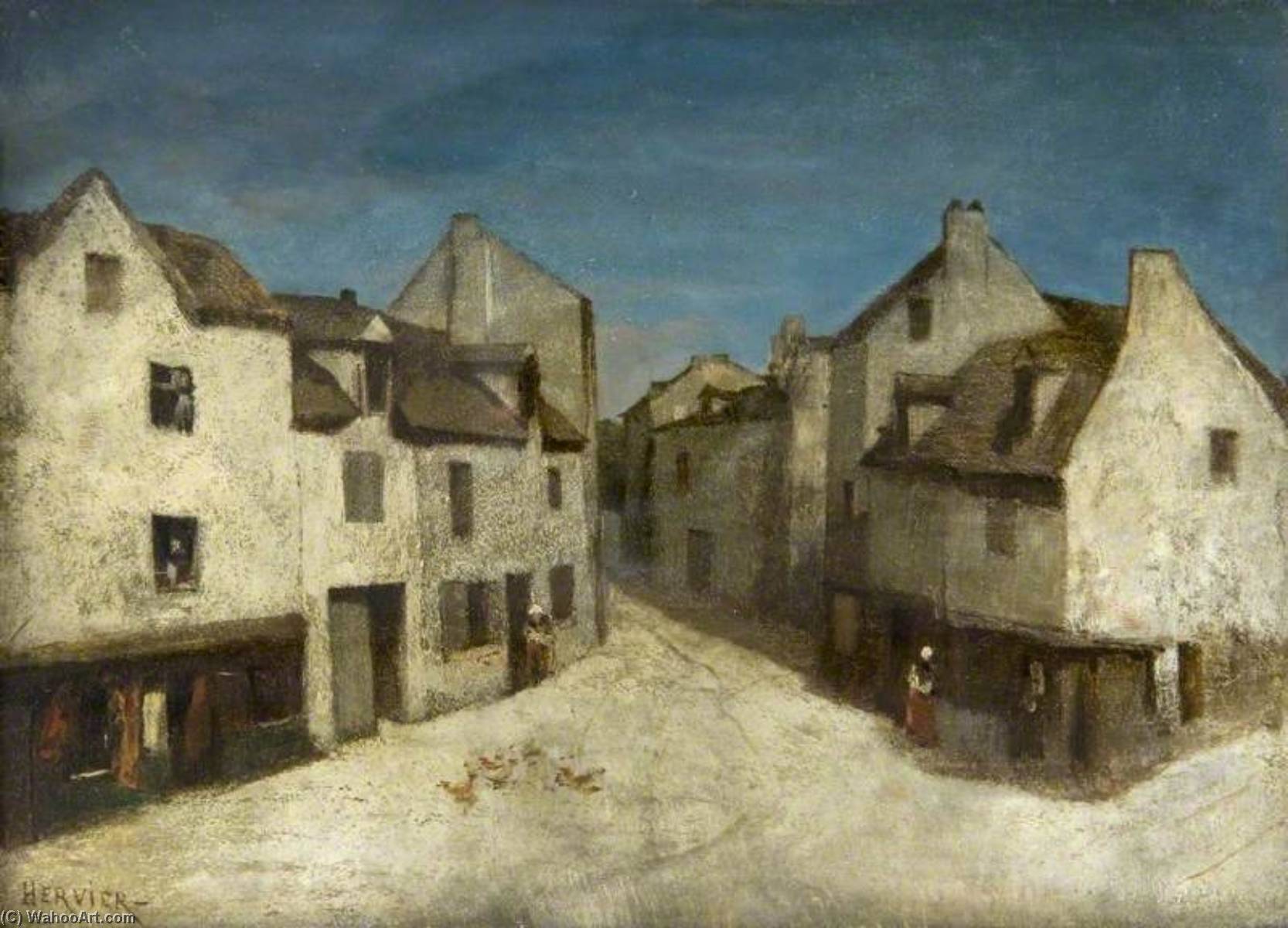
Village Street with Poultry
 22.0 x 31.0 cm
 Weiterlesen
Erwerben Sie ein hochauflösendes, optimiertes digitales Bild, das der Online-Vorschau weit überlegen ist.
Jede Datei wird von unseren hauseigenen Spezialisten mit modernsten Werkzeugen und fachmännischer manueller Retusche sorgfältig vorbereitet. Wir stellen sicher, dass jedes Bild eine außergewöhnliche Klarheit, präzise Farbgenauigkeit und feinste Details aufweist.
Die endgültige Datei wird innerhalb von 72 Stunden per E-Mail zugestellt und ist für den sofortigen Einsatz in professionellen, redaktionellen und Druckumgebungen optimiert. Es handelt sich um dieselbe Qualität, der führende Designstudios, Verlage und Galerien vertrauen.
Digitales Bild
Laden Sie eine hochauflösende Datei für die persönliche Präsentation, den Druck und kreative Projekte herunter. ( Druck bestellen Handgemalte Reproduktion bestellen)
In jeder Bestellung digitaler Bilder enthalten
Professionelle digitale Bereitstellung, garantiert
Wenn Sie sich für ArtsDot.com entscheiden, erhalten Sie nicht nur ein Bild – Sie erhalten ein professionell aufbereitetes digitales Kunstwerk, das mit höchster Präzision erstellt und durch eine Zufriedenheitsgarantie abgesichert wird. Hier ist alles, was automatisch mit Ihrer Bestellung geliefert wird:

Schnelle E-Mail-Zustellung
Ihre hochauflösende digitale Bilddatei wird Ihnen innerhalb von 72 Stunden nach der Bestellung per E-Mail zugestellt – bereit zur sofortigen Verwendung.

KI-optimierte digitale Datei
Ihre Kunstwerke werden professionell mithilfe fortschrittlicher KI-Tools und manueller Bearbeitung optimiert, um maximale Detailtreue, Klarheit und Farbgenauigkeit zu gewährleisten.

Lebenslanger kostenloser Neudruckservice
Datei versehentlich gelöscht oder verloren? Keine Sorge – wir senden sie Ihnen jederzeit kostenlos erneut zu.

Keine Einfuhrgebühren – jemals
Genießen Sie Ihr Kunstwerk sofort ohne Zollgebühren, Einfuhrabgaben oder Versandkosten – digitale Downloads sind immer steuerfrei.

Garantierte Farbtreue
Wir garantieren, dass Ihr digitales Bild mithilfe professioneller Werkzeuge und Farbmanagement die Originalfarben so präzise wie möglich wiedergibt.

100-Tage-Zufriedenheitsgarantie
Sollten Sie mit Ihrem digitalen Bild nicht zufrieden sein, werden wir es überarbeiten oder Ihnen innerhalb von 100 Tagen 100% erstatten – ohne Wenn und Aber.

100% Geld-zurück-Garantie
Nicht zufrieden? Erhalten Sie innerhalb von 100 Tagen nach Erhalt Ihrer digitalen Datei eine vollständige Rückerstattung – ohne Angabe von Gründen.

Rabatte bei Großbestellungen
3 Bilder kaufen, 10% sparen – 5 Bilder kaufen, 15% sparen – Ab 10 Bildern 20% sparen. Ideal für kreative Projekte, Galerien und Agenturen.
Ähnliche Kunstwerke









Biografie des Künstlers
A Quiet Observer of Rural Life: The World of Louis-Adolphe Hervier
Louis-Adolphe Hervier, born in 1818 and passing away in 1879, occupies a fascinating, often overlooked position within the landscape of 19th-century French painting. While not achieving the widespread renown of his contemporaries like Courbet or Millet, Hervier carved out a distinctive niche for himself with his sensitive depictions of rural Normandy life and an evolving style that hinted at the burgeoning Impressionist movement. His work offers a poignant glimpse into a world on the cusp of change, capturing the beauty and dignity of peasant existence before it was irrevocably altered by industrialization and modernization. Hervier’s artistic journey wasn't one of radical breaks or flamboyant pronouncements; rather, it was a gradual refinement of observation, technique, and an increasingly nuanced understanding of light and atmosphere.Early Training and the Salon Years
Details regarding Hervier’s early life and formal training remain somewhat scarce. He likely received instruction in Paris, the artistic heart of France, but specific mentors are not definitively known. What is clear is his early ambition to succeed within the established art world. He began exhibiting at the prestigious Salon de Paris in 1843, a crucial proving ground for aspiring artists. His initial submissions were typical of the academic style prevalent at the time – carefully rendered genre scenes featuring peasant figures engaged in everyday activities. These early works demonstrate a solid technical proficiency and an eye for realistic detail, but lack the distinctive personal voice that would later characterize his mature paintings. He focused on portraying the rhythms of agricultural life: harvesting, tending livestock, and moments of domestic tranquility. The palette was generally subdued, reflecting the traditional tones favored by Salon audiences. However, even in these early pieces, a certain empathy for his subjects is evident, setting him apart from artists who merely used peasants as picturesque props.Normandy as Muse: A Developing Style
The turning point in Hervier’s career came with his sustained focus on the Normandy countryside. He settled in this region, drawn to its rolling hills, expansive skies, and the authenticity of rural life. Here, he moved beyond simply *depicting* peasant life to *experiencing* it, immersing himself in the environment and developing a deeper connection with his subjects. This immersion is reflected in his evolving style. His palette began to brighten, influenced by the changing light conditions of the Normandy coast. He started experimenting with looser brushwork, capturing the fleeting effects of sunlight on fields and water. The influence of Barbizon School painters like Corot and Rousseau is discernible in his landscapes, particularly in their emphasis on atmospheric perspective and a sense of quiet contemplation. However, Hervier’s work differs from that of the Barbizons in its greater focus on figures within the landscape, integrating them seamlessly into the natural world rather than presenting nature as an independent entity. He wasn't merely painting *about* Normandy; he was attempting to capture its very essence – its light, air, and spirit.Engravings and Broader Recognition
While primarily known as a painter, Hervier also produced a significant body of engravings. This foray into printmaking proved crucial for expanding his reach and establishing his reputation beyond the confines of the Salon. Engravings allowed him to reproduce his images more widely, bringing his vision of rural life to a broader audience. The process of engraving also influenced his painting style, encouraging him to simplify forms and focus on essential details. His engravings often served as studies for larger paintings, demonstrating a thoughtful approach to composition and technique. By the 1860s, Hervier had gained recognition as a skilled interpreter of rural life, attracting collectors and critical attention. He continued to exhibit regularly at the Salon, receiving positive reviews for his increasingly sophisticated landscapes and genre scenes. Although he never fully embraced the radical tenets of Impressionism, his work foreshadowed many of its key concerns – the importance of light, atmosphere, and subjective perception.Legacy and Historical Significance
Louis-Adolphe Hervier’s legacy lies in his ability to capture a specific moment in time – the waning years of traditional rural life in France. His paintings are not grand historical narratives or dramatic allegories; they are quiet, intimate observations of everyday existence. He offered a dignified portrayal of peasant life, devoid of sentimentality or romanticization. His landscapes, with their subtle gradations of light and atmosphere, anticipate the Impressionist movement, demonstrating a sensitivity to visual effects that was ahead of its time. While he may not be a household name, Hervier’s work continues to resonate with viewers today, offering a poignant reminder of a world lost – a world of close connection to nature, hard labor, and simple beauty. His paintings serve as valuable historical documents, providing insights into the social and economic realities of 19th-century France, while simultaneously captivating us with their artistic merit and enduring emotional power.- Key Characteristics: Sensitive depictions of rural Normandy life, evolving style hinting at Impressionism, emphasis on light and atmosphere.
- Influences: Barbizon School painters (Corot, Rousseau), academic tradition.
- Major Themes: Peasant life, agricultural labor, Normandy landscapes, the changing seasons.
- Techniques: Oil painting, engraving; loose brushwork, atmospheric perspective, realistic detail.
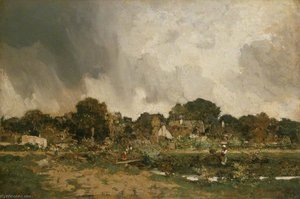
louis adolphe hervier
1818 - 1879
Kurzinfos
- Artistic Movement Or Style: Impressionism
- Artists Or Movements Influenced By This Artist: ['Romanticism']
- Artists Who Influenced This Artist: ['Romanticism']
- Date Of Birth: 1818
- Date Of Death: 1879
- Full Name: Louis Adolphe Hervier
- Nationality: French
- Notable Artworks:
- The Outskirts of a Village
- Interior of a Church
- Village in Picardy
- Place Of Birth: Paris, France