 Vorschau anzeigen
 Versenden
 Teilen
 Details anzeigen

 Herunterladen
 Ähnliche Objekte
 Röntgenaufnahme
 Diashow
Duane Street, New York


 Weiterlesen
Giclée / Kunstdruck
Giclée- oder Leinwanddruck in Museumsqualität mit schneller Produktion und flexiblen Veredelungsoptionen. ( Handgemalte Reproduktion bestellen Bild kaufen)




P118B $10

P118H $10

P118W $10

P438Z $10

P508JH $12

P508YH $12

P805H $10

P805Z $10

P919BZ $10

P919G $10

P919XJ $10

P959ZH $10

P968JZ $12

W106C $8

W218G $10

W218JH $8

W218Y $10

W307PJ $10

W316G $10

W316PJ $8

W316Y $10

W398PJ $8

W4111J $10

W500HY $15

W500JH $15

W692G $12

W849H $8

W940BG $15

W953PJ $8




Wählen Sie aus unseren vordefinierten Formaten, die den ursprünglichen Proportionen des Kunstwerks entsprechen.

Sie können Ihre eigenen Maße eingeben, um ein bestimmtes Format oder einen speziellen Platz einzupassen. Wenn das von Ihnen gewählte Format nicht den Proportionen des Originalbildes entspricht, werden wir das Kunstwerk entweder beschneiden oder das Bild mit einem gespiegelten oder einfarbigen Rand erweitern. Ein digitaler Entwurf wird Ihnen zur Genehmigung zugesandt, bevor die Produktion beginnt.
Bitte beachten Sie, dass die Vorschau auf dem Bildschirm nicht den tatsächlichen Zuschnitt oder die Erweiterung widerspiegelt. Nur der Entwurf zeigt die endgültige Komposition präzise an.
Obwohl Sondermaße verfügbar sind, empfehlen wir die Auswahl eines Maßes aus der vordefinierten Liste, um die ursprünglichen Proportionen zu bewahren.
Weltweiter Versand () innerhalb von 2 Wochen statt der üblichen 4/5 Wochen. (24 August)

Kostenloser weltweiter Expressversand

Hochwertige Leinenleinwand

Umfassender Versicherungsschutz beim Versand

Zollgebühren-Rückerstattungsgarantie

Garantie für exakte Farbtreue

60 Tage Rückgaberecht (nur bei Mängeln)

100% Geld-zurück-Garantie

Mengenrabatt verfügbar
 Die Glasoption ist nur für Größen unter 110 cm verfügbar.

Duane Street, New York
Giclée / Kunstdruck
Format der Reproduktion
-


Gesamtpreis
$ 62
Sammlerstück-Beschreibung
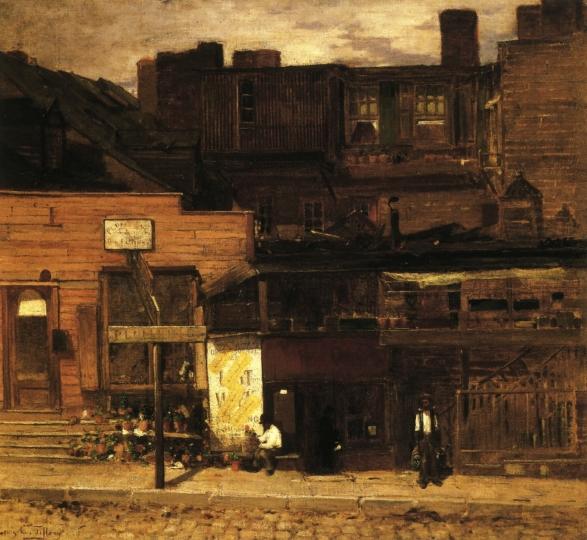
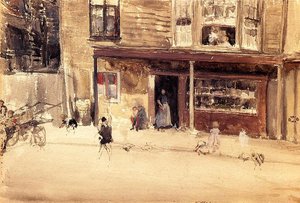
A Snapshot of Urban Life: Louis Comfort Tiffany’s “Duane Street, New York”
Louis Comfort Tiffany's "Duane Street, New York," painted in 1877, isn’t merely a depiction of a city street; it’s a meticulously crafted window into the burgeoning spirit of late 19th-century American urbanism. More than just a record of a specific location – Duane Street in Lower Manhattan – the painting embodies a fascination with modernity and the everyday experiences of its inhabitants, reflecting Tiffany's broader artistic ambitions within the context of the Aesthetic Movement. The piece offers a poignant glimpse into a world on the cusp of rapid transformation, capturing both the grit and the charm of a city striving to define itself.
Tiffany’s approach is distinctly Impressionistic, yet imbued with a uniquely American sensibility. He eschews romanticized notions of urban life, presenting instead a somewhat weathered, almost documentary-style view. The palette is dominated by earthy tones – browns, ochres, and muted greens – creating a sense of subdued light and shadow that lends the scene an air of quiet contemplation. This deliberate restraint contrasts with the vibrant colors often associated with Tiffany’s later work in stained glass, suggesting a shift towards capturing the subtle nuances of reality rather than imposing idealized beauty. The brushwork is loose and expressive, prioritizing atmosphere and suggestion over precise detail, mirroring the fleeting moments captured by Impressionist painters.
The Artist and His Context
Born into privilege as the son of Charles Lewis Tiffany, founder of the renowned Tiffany & Co., Louis Comfort Tiffany initially pursued a career in painting under the tutelage of George Inness and Samuel Colman. However, he soon gravitated towards the burgeoning field of decorative arts, ultimately establishing his own glassmaking firm, Tiffany Studios, in 1893. This move allowed him to fully realize his artistic vision, moving beyond simply supplying materials for others and becoming a central figure in shaping American design. “Duane Street, New York” exemplifies this shift – it’s not just a painting; it's a carefully considered statement about the artist’s evolving aesthetic sensibilities.
The late 1870s were a period of immense social and economic change in America. Rapid industrialization was transforming cities like New York, leading to overcrowding, poverty, and a sense of alienation. Tiffany’s painting captures this dynamic tension – the bustling street scene is populated by ordinary people going about their daily lives, yet there's an underlying feeling of weariness and resilience. The presence of a fire escape ladder, a common sight in rapidly expanding urban areas, speaks to the challenges faced by residents while also hinting at the ingenuity and adaptability of the city’s inhabitants.
Decoding the Details: Symbolism and Observation
Beyond its straightforward depiction of a street scene, “Duane Street, New York” is rich with subtle symbolism. The worn cobblestones beneath the feet of passersby suggest the relentless pace of urban life, while the simple wooden buildings evoke a sense of history and permanence amidst the constant flux. The inclusion of a man seated on a chair – seemingly lost in thought – invites viewers to contemplate their own place within the larger narrative of the city. Even the potted plants offer a touch of nature, providing a momentary respite from the urban landscape.
The painting’s composition is carefully balanced, drawing the eye through the scene and creating a sense of depth and perspective. The figures are rendered with a degree of realism, yet they're also treated as elements within a larger decorative whole. Tiffany was deeply influenced by Japanese art and design, which emphasized asymmetry and flattened perspectives – these principles can be observed in the way he arranges the figures and buildings within the frame. The painting’s connection to the Brooklyn Museum, where it remains on display today, underscores its significance as a landmark of American art history.
A Legacy of Innovation
“Duane Street, New York” stands as a testament to Louis Comfort Tiffany's artistic vision and his pivotal role in shaping the Aesthetic Movement. It’s a captivating portrayal of urban life that transcends mere documentation, offering viewers a profound meditation on the complexities of modernity. Reproductions of this iconic painting continue to resonate with audiences today, serving as a reminder of Tiffany’s enduring legacy as one of America's most celebrated artists and designers.
Ähnliche Kunstwerke

Über den Künstler
Louis Comfort Tiffany: Ein Leben im Jugendstil
- Geboren: 18. Februar 1848, New York City, Vereinigte Staaten
- Gestorben: 17. Januar 1933
- Nationalität: Amerikaner
- Bekannt für: Glasmalerei, dekorative Kunst, Jugendstil und Ästhetikbewegung
Frühes Leben und künstlerische Ausbildung
- Tiffany wurde in eine bedeutende Familie geboren; sein Vater war Charles Lewis Tiffany, der Gründer von Tiffany & Co.
- Er erhielt seine frühe Schulbildung an der Pennsylvania Military Academy und der Eagleswood Military Academy.
- Seine anfänglichen künstlerischen Bestrebungen konzentrierten sich auf die Malerei, wobei er unter George Inness und Samuel Colman studierte. Er studierte auch an der National Academy of Design und bei Leon-Adolphe-Auguste Belly.
- Frühe Einflüsse waren der Romantik und exotische Themen, was in seinen Gemälden wie "Schlangenbeschwörer in Tanger, Afrika" deutlich wird.
Der Aufstieg eines Glasinnovators
- Um 1875 verlagerte Tiffany seinen Schwerpunkt auf die Glasherstellung und experimentierte mit verschiedenen Techniken.
- Er arbeitete kurzzeitig mit Candace Wheeler, Samuel Colman und Lockwood de Forest in "Louis Comfort Tiffany and Associated American Artists" (1879-1884) zusammen.
- Mit der Gründung seiner eigenen Glasfabrik in Corona, New York, zielte er darauf ab, die Qualität zeitgenössischen Glases zu verbessern.
- Ein entscheidender Moment war seine Innenarchitekturarbeit für das Mark Twain House in Hartford, Connecticut (1881), die frühe dekorative Kunstfertigkeiten demonstrierte.
Wichtige Beiträge und Innovationen
- Die Kupferfolientechnik: Tiffany revolutionierte die Glasmalerei durch die Entwicklung der "Kupferfolientechnik", die komplizierte Designs und mehr Details als herkömmliche Blei-Techniken ermöglichte.
- Favrile-Glas: Er schuf Favrile-Glas, ein einzigartiges irisierendes Kunstglas, das für seine handgefertigte Qualität und lebendigen Farben bekannt ist.
- Opaleszierendes Glas: Tiffanys innovative Verwendung von opalisierendem Glas erzeugte ätherische Effekte und eine unverwechselbare Ästhetik.
- Jugendstil: Seine Designs verkörperten den Jugendstil, der sich durch fließende Linien, organische Motive und einen Schwerpunkt auf dekorativer Schönheit auszeichnete.
Vermächtnis und historische Bedeutung
- Louis Comfort Tiffany gilt als die bedeutendste amerikanische Figur in den Jugendstil- und Ästhetikbewegungen.
- Seine Arbeit hatte einen erheblichen Einfluss auf die Glasmalerei, Innenarchitektur und dekorative Kunst.
- Museen auf der ganzen Welt, darunter das New Orleans Museum of Art und das Bergstrom-Mahler Museum of Glass, zeigen seine Kreationen.
- Tiffanys Vermächtnis inspiriert weiterhin Künstler und Designer, wobei Reproduktionen und Drucke über Plattformen wie ArtsDot.com erhältlich sind.
- Er erhob die dekorative Kunst zu einer Feinart, beeinflusste Generationen von Künstlern und prägte die Ästhetik des späten 19. und frühen 20. Jahrhunderts.

Louis Comfort Tiffany
1848 - 1933 , Vereinigte Staaten von Amerika
Kurzinfos
- Bemerkenswerte Werke:
- Vordertür des Havemeyer Hauses
- Gold Favrile Schale
- Lampen Wisteria
- Design für Fenster
- Geburtsdatum: 18. Februar 1848
- Geburtsort: New York, USA
- Künstlerische Bewegung:
- Art Nouveau
- Ästhetik
- Künstlerische Einflüsse:
- George Inness
- Samuel Colman
- Nationalität: Amerikanisch
- Sterbedatum: 17. Januar 1933
- Vollständiger Name: Louis Comfort Tiffany
Ähnliche Artikel
Concrete Narratives: Exploring Urban Life in Modern & Contemporary Art
Explore the evolution of cityscape painting with ArtsDot. Discover key artists from Realism to contemporary movements & invest in timeless urban visions. Expert guidance, museum-quality reproductions.
Jenseits der Galeriewände: Der Aufstieg der zeitgenössischen Straßenkunst
Entdecken Sie die faszinierende Welt der zeitgenössischen Straßenkunst! Von den Anfängen bis zu aktuellen Trends – wir bieten Expertise, hochwertige Reproduktionen & Kunstberatung von .
Beyond Graffiti: Exploring the Evolution & Cultural Impact of Street Art for Collectors
Explore the evolution of street art from rebellious origins to a respected fine art form. Discover key artists like Banksy & learn how to collect urban art with confidence. Expert insights for discerning investors.
Concrete Visions: Exploring the Urban Landscape in Painting – From Realism to Contemporary Art
Explore the evolution of cityscape painting from Realism to contemporary art with ArtsDot. Discover key artists & invest in timeless urban visions. Expert guidance, museum-quality reproductions.

Concrete Visions: Exploring Representations of Urban Life in Modern & Contemporary Art
Explore the evolution of cityscape painting from Realism to contemporary art. Discover key artists & invest in timeless urban visions with ArtsDot's expert guidance and museum-quality reproductions.