 Vorschau anzeigen
 Versenden
 Teilen
 Details anzeigen

 Herunterladen
 Ähnliche Objekte
 Röntgenaufnahme
 Diashow
 Stats
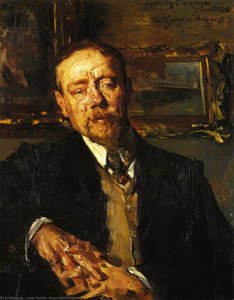
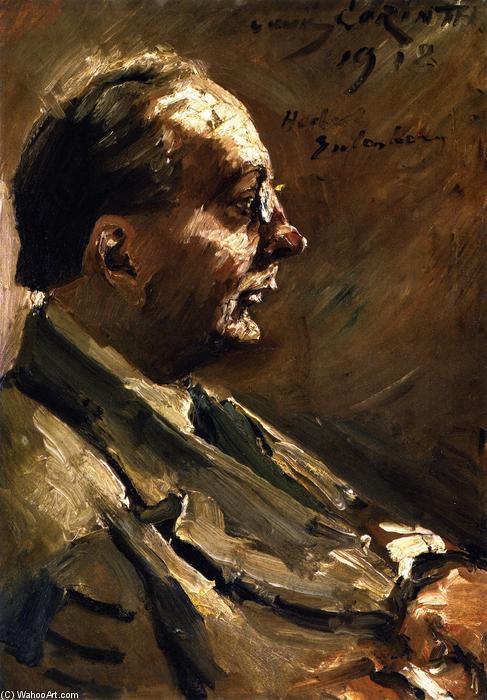
StatsPortrait of Herbert Eulenberg
 Oil On Canvas
- WallArt
- German Expressionism
 1918
1918 71.0 x 50.0 cm
 Museum Kunstpalast
 Weiterlesen
Giclée / Kunstdruck
Giclée- oder Leinwanddruck in Museumsqualität mit schneller Produktion und flexiblen Veredelungsoptionen. ( Handgemalte Reproduktion bestellen Switch to Digital Image)




P118B $10

P118H $10

P118W $10

P438Z $10

P508JH $12

P508YH $12

P805H $10

P805Z $10

P919BZ $10

P919G $10

P919XJ $10

P959ZH $10

P968JZ $12

W106C $8

W218G $10

W218JH $8

W218Y $10

W307PJ $10

W316G $10

W316PJ $8

W316Y $10

W398PJ $8

W4111J $10

W500HY $15

W500JH $15

W692G $12

W849H $8

W940BG $15

W953PJ $8




Wählen Sie aus unseren vordefinierten Formaten, die den ursprünglichen Proportionen des Kunstwerks entsprechen.

Sie können Ihre eigenen Maße eingeben, um ein bestimmtes Format oder einen speziellen Platz einzupassen. Wenn das von Ihnen gewählte Format nicht den Proportionen des Originalbildes entspricht, werden wir das Kunstwerk entweder beschneiden oder das Bild mit einem gespiegelten oder einfarbigen Rand erweitern. Ein digitaler Entwurf wird Ihnen zur Genehmigung zugesandt, bevor die Produktion beginnt.
Bitte beachten Sie, dass die Vorschau auf dem Bildschirm nicht den tatsächlichen Zuschnitt oder die Erweiterung widerspiegelt. Nur der Entwurf zeigt die endgültige Komposition präzise an.
Obwohl Sondermaße verfügbar sind, empfehlen wir die Auswahl eines Maßes aus der vordefinierten Liste, um die ursprünglichen Proportionen zu bewahren.
Weltweiter Versand () innerhalb von 2 Wochen statt der üblichen 4/5 Wochen. (8 September)

Kostenloser weltweiter Expressversand

Hochwertige Leinenleinwand

Umfassender Versicherungsschutz beim Versand

Zollgebühren-Rückerstattungsgarantie

Garantie für exakte Farbtreue

100-Tage-Rückgaberecht (nur bei Mängeln)

100% Geld-zurück-Garantie

Mengenrabatt verfügbar
 Die Glasoption ist nur für Größen unter 110 cm verfügbar.

Portrait of Herbert Eulenberg
Giclée / Kunstdruck
Format der Reproduktion
-


Gesamtpreis
$ 62
A Portrait Steeped in Expressionism: Lovis Corinth’s Herbert Eulenberg
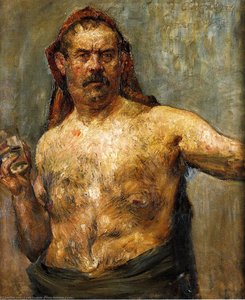
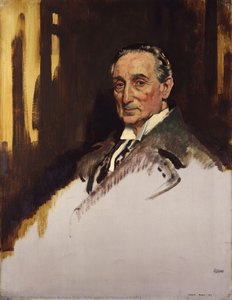
Lovis Corinth's "Portrait of Herbert Eulenberg," completed in 1918, stands as a poignant testament to the artist’s mastery and the spirit of Expressionist painting. Currently residing within the Museum Kunstpalast in Düsseldorf, Germany, this canvas—measuring 71 x 50 cm—captures not merely an individual likeness but also a profound emotional resonance that speaks volumes about its era. Corinth's distinctive style is immediately recognizable: bold brushstrokes wrestle with muted tones, creating a textured surface that vibrates with energy beneath the calm facade of the depicted subject.The Artist’s Vision and Technique
Franz Heinrich Louis Corinth (1858-1925), born in Tauwade, Netherlands, embarked on an artistic journey marked by unwavering dedication to observation and experimentation. Initially drawn to landscapes—influenced by the rugged beauty of East Prussia—Corinth swiftly moved beyond mere representation, embracing a stylistic approach that prioritized conveying inner feeling over meticulous detail. The Portrait exemplifies this ethos perfectly; Corinth eschews idealized proportions or polished surfaces, opting instead for a deliberate distortion that amplifies the psychological depth of Eulenberg’s gaze downwards. He skillfully employs oil paint on canvas—a medium favored by Expressionists—allowing for layering and blending techniques that imbue the painting with luminosity and textural complexity. The artist's meticulous attention to capturing subtle nuances of light and shadow contributes significantly to the overall impression of melancholy contemplation.Historical Context: Weimar Germany’s Turbulent Soul
Painted during the waning years of Weimar Republic, “Portrait of Herbert Eulenberg” reflects the anxieties and uncertainties prevalent in German society at the time. The Expressionist movement arose as a reaction against the perceived superficiality of academic art and bourgeois values, seeking to confront viewers with uncomfortable truths about human experience. Corinth’s work aligns squarely within this artistic impulse, mirroring the broader cultural preoccupation with themes of disillusionment, isolation, and spiritual crisis—issues powerfully articulated in literature and philosophy during the period. The inclusion of Eulenberg's writing on the wall serves as a subtle visual cue to these intellectual currents, hinting at the complexities of thought and emotion that underpinned the era’s artistic endeavors.Symbolism Within the Frame
Beyond its formal qualities, “Portrait of Herbert Eulenberg” is laden with symbolic significance. The downward gaze of Eulenberg—a gesture often interpreted as conveying introspection or sorrow—suggests a preoccupation with internal reflection amidst external pressures. Corinth's muted palette—dominated by browns and greys—further reinforces this mood of quiet contemplation, mirroring the somber atmosphere characteristic of Expressionist art. The artist’s deliberate use of texture—created through vigorous brushwork—adds to the painting’s emotional impact, conveying a sense of vulnerability and immediacy that transcends mere visual representation.A Legacy Enduring Through Reproduction
Today, reproductions of Corinth's masterpiece are available at https://ArtsDot.com/, offering art enthusiasts worldwide the opportunity to experience the profound beauty and psychological depth of this iconic artwork. For those seeking deeper insight into Corinth’s life and oeuvre, a visit to Wikipedia provides invaluable resources. The Museum Kunstpalast continues to champion Corinth’s legacy, showcasing his paintings alongside other masterpieces of European art—a testament to the enduring power of artistic vision.Ähnliche Kunstwerke

Über den Künstler
Frühes Leben und Ausbildung
Lovis Corinth, geboren Franz Heinrich Louis am 21. Juli 1858 in Tapiau, Preußen, war ein deutscher Künstler und Schriftsteller, dessen reifes Werk als Maler und Grafiker eine Synthese aus Impressionismus und Expressionismus realisierte. Corinthians frühes Leben war geprägt von seinem Talent zum Zeichnen, das ihn dazu veranlasste, ab 1876 an der Akademie Königsbergs Malerei zu studieren.Künstlerische Entwicklung
Corinthians künstlerische Entwicklung wurde von mehreren Schlüsselfiguren und Bewegungen beeinflusst:- Lovis Corinth's frühe Arbeit war naturalistisch geprägt, was durch seinen Lehrer Otto Günther gefördert wurde.
- Er studierte unter Ludwig von Löfftz an der Akademie der Bildenden Künste München, die eine sorgfältige Beobachtung von Farben und Werten betonte.
- Corinth wurde auch von Courbet und der Barbizon-Schule sowie von den Werken Rubes während seiner Zeit in Antwerpen beeinflusst.
Wichtige Werke und Stil
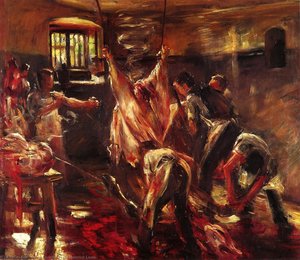
Zu Corinthians bemerkenswertesten Werken gehören:- In der Schlachthof-Szene (78 x 89 cm, Staatsgalerie Stuttgart, Deutschland), das seine Verwendung von Öl auf Leinwand zeigt.
- Selbstbildnis (47 x 53 cm, Kunsthalle Bremen, Deutschland), das sein Können im Zeichnen demonstriert.
- weibliche Halbnackte mit Hut (283 x 383 cm, Kunstpalast Düsseldorf, Deutschland), das seine Verwendung von Bleistift hervorhebt.
Späteres Leben und Vermächtnis
Corinthians späteres Leben war geprägt von seiner Präsidentschaft der Berliner Sezession von 1915 bis 1925. Er veröffentlichte auch zahlreiche Essays über Kunstgeschichte, darunter "Das Erlernen der Malerei" im Jahr 1908. Corinth starb am 17. Juli 1925 nach einem Schlaganfall im Jahr 1911, der ihn teilweise gelähmt hatte. Wichtige Links:- Besuchen Sie die Künstlerseite von Lovis Corinth auf ArtsDot
- Lesen Sie mehr über Lovis Corinth auf Wikipedia
- Sehen Sie "In der Schlachthof-Szene" von Lovis Corinth auf ArtsDot
Bedeutung und Einfluss
Corinth gilt als einer der wichtigsten Künstler des deutschen Modernismus. Seine Werke verbinden impressionistische Elemente mit expressionistischen Tendenzen, was ihm eine einzigartige Position in der Kunstgeschichte einbrachte. Er beeinflusste nachfolgende Generationen von Künstlern und trug maßgeblich zur Entwicklung der modernen Kunst in Deutschland bei. Sein Einfluss ist bis heute spürbar.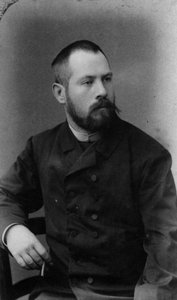
Lovis Corinth
1858 - 1925 , Niederlande
Kurzinfos
- Beeinflusste Künstler:
- Kirchner
- Beckmann
- Baselitz
- Bemerkenswerte Werke:
- In der Schlachthof-Szene
- Selbstbildnis
- Female Semi-Nude with Hat
- Einflüsse:
- Courbet
- Barbizon Schule
- Rubens
- Geburtsdatum: 21. Juli 1858
- Geburtsort: Tauwade, Niederlande
- Künstlerische Richtung: Impressionismus & Expressionismus
- Nationalität: Deutsch
- Sterbedatum: 17. Juli 1925
- Vollständiger Name: Lovis Corinth (Franz Heinrich Louis)
Ähnliche Artikel
Lovis Corinth: Brückenbauer zwischen Impressionismus und Expressionismus – Eine künstlerische Entwicklung
Entdecken Sie Lovis Corinths faszinierende künstlerische Entwicklung! Von Realismus über Impressionismus bis Expressionismus – eine detaillierte Analyse seiner Werke, seines Einflusses und der Berliner Secession. Jetzt lesen!

Öl auf Leinwand: Eine historische und technische Erkundung eines zeitlosen künstlerischen Mediums
Entdecken Sie die faszinierende Welt der Ölmalerei! Von historischen Techniken bis zur modernen Anwendung – wir bieten Expertenwissen, Restaurierungstipps und hochwertige Reproduktionen. Jetzt informieren!
Figurative Expressionism: Emotional Intensity & Subjective Reality in 20th-Century Art
Explore the powerful world of Figurative Expressionism with ArtsDot. Discover key artists like Kirchner & Beckmann, understand its emotional depth, and learn how to collect this influential 20th-century art movement.

The Enduring Legacy of Oil on Canvas: Technique, History & Aesthetic Impact
Explore the rich history & techniques of oil painting – from Renaissance masters to Impressionism. Discover pigments, layering methods, and why this timeless medium endures. Expert insights for artists & art enthusiasts.

The Enduring Power of Painting: A Historical & Contemporary Exploration of Form and Emotion
Explore the rich history & enduring techniques of oil painting with ArtsDot. Discover masterpieces, learn about art collecting, and find authentic handmade reproductions crafted by skilled artists.