 Vorschau anzeigen
 Versenden
 Teilen
 Details anzeigen

 Herunterladen
 Ähnliche Objekte
 Röntgenaufnahme
 Diashow
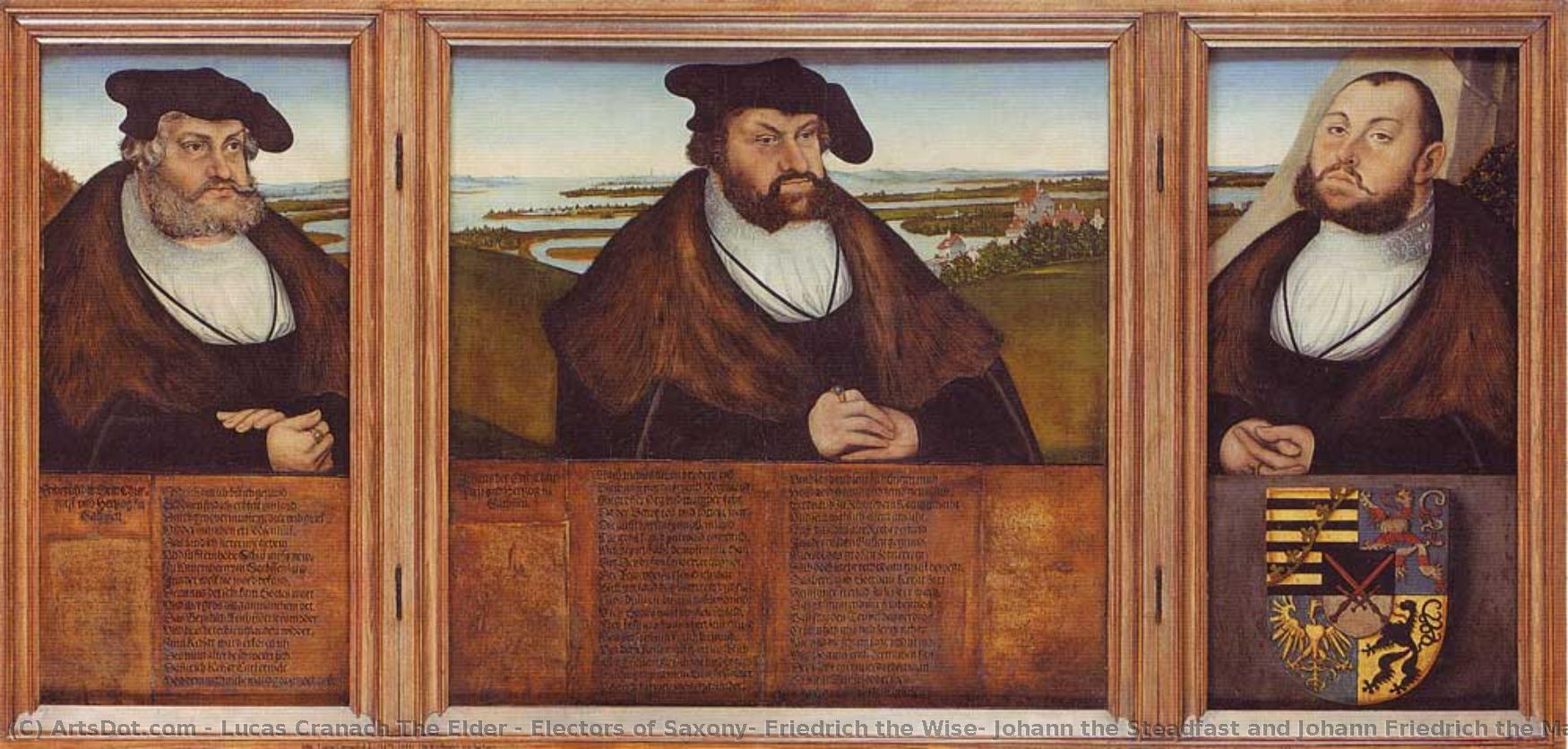
Electors of Saxony: Friedrich the Wise, Johann the Steadfast and Johann Friedrich the Magnanimous
 Oil On Canvas
- WallArt
- Northern Renaissance
 1532
1532 69.0 x 132.0 cm
 Hamburger Kunsthalle
 Weiterlesen
Handgefertigte Ölreproduktion
Handgemaltes Ölgemälde auf Leinwand in Ihrer Wunschgröße und mit Rahmen, auf Bestellung von unseren Künstlern angefertigt. ( Druck bestellen Bild kaufen)




P118B $10

P118H $10

P118W $10

P438Z $10

P508JH $12

P508YH $12

P805H $10

P805Z $10

P919BZ $10

P919G $10

P919XJ $10

P959ZH $10

P968JZ $12

W106C $8

W218G $10

W218JH $8

W218Y $10

W307PJ $10

W316G $10

W316PJ $8

W316Y $10

W398PJ $8

W4111J $10

W500HY $15

W500JH $15

W692G $12

W849H $8

W940BG $15

W953PJ $8




Wählen Sie aus unseren vordefinierten Formaten, die den ursprünglichen Proportionen des Kunstwerks entsprechen.

Sie können Ihre eigenen Maße eingeben, um einen bestimmten Rahmen oder Platz auszufüllen. Wenn die gewählte Größe nicht den Proportionen des Originalbildes entspricht, werden wir das Kunstwerk entweder beschneiden oder das Gemälde durch zusätzliche, handgemalte Elemente erweitern. Ein digitales Mockup wird Ihnen zur Genehmigung zugesandt, bevor die Produktion beginnt.
Bitte beachten Sie, dass die Bildschirmvorschau nicht die tatsächliche Beschneidung oder Erweiterung widerspiegelt. Nur das Mockup zeigt die endgültige Komposition exakt an.
Obwohl Sondermaße verfügbar sind, empfehlen wir, eine Größe aus der vordefinierten Liste zu wählen, um die ursprünglichen Proportionen beizubehalten.
Nach der Bestellung wird das ArtsDot.com-Team dem Kunden Anweisungen per E-Mail zusenden und eine Mockup-Vorschau bereitstellen.
Weltweiter Versand () in nur 3 bis 4 Wochen statt der üblichen 5 Wochen. (25 August). Keine Kompromisse bei der Qualität.

Kostenloser weltweiter Expressversand

Hochwertige Leinenleinwand

Umfassender Versicherungsschutz beim Versand

Zollgebühren-Rückerstattungsgarantie

Garantie für exakte Farbtreue

60 Tage Rückgaberecht (nur bei Mängeln)

100% Geld-zurück-Garantie

Mengenrabatt verfügbar
 Die Glasoption ist nur für Größen unter 110 cm verfügbar.

Electors of Saxony: Friedrich the Wise, Johann the Steadfast and Johann Friedrich the Magnanimous
Art der Reproduktion
Format der Reproduktion
-


Gesamtpreis
$ 263
Beschreibung des Kunstwerks
A Portrait of Power and Reformation
Lucas Cranach the Elder’s “Electors of Saxony: Friedrich the Wise, Johann the Steadfast and Johann Friedrich the Magnanimous,” painted in 1532, is more than just a depiction of three men; it's a meticulously crafted tableau of dynastic ambition, religious transition, and the burgeoning power of the Protestant Reformation. The painting, rendered in oil on beechwood with elegant letterpress labels, captures a pivotal moment in Saxon history – a time when the Electorate navigated the turbulent waters of political maneuvering and spiritual upheaval. Cranach’s masterful use of color, light, and detail elevates this portrait beyond a simple likeness, transforming it into a potent symbol of authority and a testament to his artistic skill.
The subjects themselves – Friedrich III, Johann the Steadfast, and Johann Friedrich the Magnanimous – represent three generations of Saxon rulers. Each man is presented with an almost regal composure, clad in richly embroidered velvet robes and adorned with elaborate fur trim, indicative of their elevated status. The careful attention to detail—the intricate folds of their garments, the glint of gold on their jewelry, even the subtle expressions on their faces – speaks volumes about Cranach’s dedication to realism and his ability to capture the essence of his subjects. The inclusion of the coats of arms on the wings of the painting further reinforces their identities and underscores their roles as leaders within the Saxon realm.
Renaissance Portraiture and the Rise of Protestantism
Cranach’s work falls squarely within the Northern Renaissance style, a period characterized by a shift away from the stylized elegance of the Italian Renaissance towards a more naturalistic approach. However, this painting is deeply intertwined with the religious currents of the time. The Reformation was gaining momentum, challenging the established authority of the Catholic Church, and Cranach, while initially a devout Catholic, found himself increasingly sympathetic to the reformers’ cause. This shift is subtly reflected in the portrait – not through overt displays of Protestant symbolism, but rather through a heightened sense of realism and an emphasis on individual character.
The painting was commissioned during a period of significant political and religious change. Frederick III, the “Wise” Elector, was a shrewd diplomat who skillfully navigated the complex relationships between the Holy Roman Empire, the Catholic Church, and the emerging Protestant factions. His patronage of Cranach provided him with a powerful tool for propaganda – portraits that celebrated his lineage, reinforced his authority, and subtly promoted the values he championed. The painting’s creation coincided with the rise of Martin Luther, whose theological challenges were shaking the foundations of Christendom. While not explicitly depicting Luther, the portrait reflects the broader atmosphere of questioning and reform that permeated the era.
Symbolism and Artistic Technique
Cranach's technique is remarkable for its precision and attention to detail. He employs a sophisticated use of chiaroscuro – the contrast between light and shadow – to create a sense of depth and volume, bringing the figures to life on the panel. The rich colors—deep reds, blues, and greens—are carefully balanced to create a harmonious composition. The background landscape, rendered in a muted palette, provides a subtle yet effective backdrop for the central figures, anchoring them within their historical context.
Beyond its technical brilliance, the painting is laden with symbolism. The elaborate clothing and jewelry represent wealth, power, and status. The careful positioning of the three men—Friedrich in the center, followed by Johann the Steadfast, and then Johann Friedrich—reflects the established order of succession within the Electorate. The inclusion of the letterpress labels, a relatively new practice at the time, served to authenticate the portraits and reinforce their importance as official representations of the ruling family. The painting is a testament to Cranach’s ability to seamlessly blend artistic skill with historical narrative.
A Legacy of Power and Art
“Electors of Saxony: Friedrich the Wise, Johann the Steadfast and Johann Friedrich the Magnanimous” remains a captivating work of art, offering a glimpse into the complex world of 16th-century Saxon politics and religion. It’s a powerful reminder of the enduring legacy of Lucas Cranach the Elder – a master painter who not only captured the likenesses of his patrons but also skillfully embedded them within a rich tapestry of historical significance. Reproductions of this iconic portrait continue to resonate with art lovers and collectors alike, serving as a window into a pivotal moment in European history.
Ähnliche Kunstwerke
Über den Künstler
Frühes Leben und Ausbildung
Lucas Cranach der Ältere, ein bedeutender deutscher Renaissance-Maler und Grafiker, wurde vermutlich um den 4. Oktober 1472 in Kronach, Oberfranken, geboren. Sein genauer Geburtstag ist unbekannt. Er erlernte das Zeichnen von seinem Vater, Hans Maler, und vervollkommnete seine Fähigkeiten später unter der Anleitung lokaler süddeutscher Meister.Karrierehöhepunkte
Lucas Cranach der Ältere fiel Herzog Friedrich III., dem Kurfürsten von Sachsen, auch bekannt als Friedrich der Weise, durch sein Talent auf. 1504 wurde er Hofmaler der sächsischen Kurfürsten in Wittenberg, eine Position, die er den Großteil seiner Karriere innehatte.- Er war bekannt für seine Porträts deutscher Fürsten und führender Persönlichkeiten der Reformation, darunter Martin Luther.
- Cranach malte auch religiöse Themen, zunächst im katholischen Stil, erkundete später aber neue Wege, um lutherische Anliegen in der Kunst auszudrücken.
- Seine Werkstatt produzierte zahlreiche Werke, darunter Versionen, die von seinem Sohn Lucas Cranach dem Jüngeren und anderen fortgesetzt wurden, auch nach seinem Tod.
Bedeutende Werke und Kooperationen
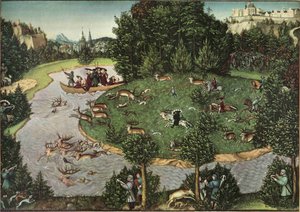
Zu den bedeutendsten Werken Lucas Cranachs des Älteren gehören:- Die Wildschutze des Kurfürsten Friedrich III. der Weisen (1529), ein Meisterwerk, das seine Fähigkeit zeigt, die Essenz des nordeuropäischen Renaissancestils einzufangen.
- Selbstbildnis, eine eindrucksvolle Darstellung des Künstlers, die sein Geschick im Einfangen von Licht und Schatten demonstriert.
- Die Verkündigung an Joachim (1516-18), eine Szene voller fröhlicher Stimmung, heute im Szépművészeti Múzeum in Budapest zu sehen.
Entwicklung und Einfluss
Cranachs Stil entwickelte sich im Laufe seiner Karriere weiter. Anfänglich beeinflusst von der Donauschule, entwickelte er einen eigenen, unverwechselbaren Stil, der durch klare Linien, leuchtende Farben und eine gewisse Monumentalität gekennzeichnet ist. Sein Werk spiegelt den Wandel von der spätgotischen Kunst zur Renaissance wider und zeigt gleichzeitig die Auswirkungen der Reformation auf die Kunstwelt. Er war eng mit Martin Luther verbunden und trug dazu bei, dessen Ideen durch seine Grafiken und Gemälde zu verbreiten. Cranachs Werkstatt war eine der bedeutendsten ihrer Zeit und trug maßgeblich zur Verbreitung des Renaissancestils in Deutschland bei.Vermächtnis und Bedeutung
Lucas Cranach des Älteren hinterließ ein umfangreiches Œuvre, das als eines der wichtigsten Zeugnisse der deutschen Renaissance gilt. Seine Porträts sind nicht nur herausragende künstlerische Leistungen, sondern auch wertvolle historische Dokumente. Er trug maßgeblich zur Etablierung einer eigenständigen deutschen Kunst des 16. Jahrhunderts bei und beeinflusste zahlreiche nachfolgende Künstler. Sein Werk wird bis heute geschätzt und studiert.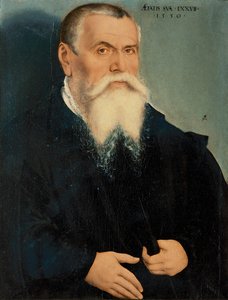
Lucas Cranach der Ältere
1472 - 1553 , Deutschland
Kurzinfos
- Bemerkenswerte Werke:
- Hirschjagd Elector Friedrichs III.
- Selbstbildnis
- Verkündigung an Joachim
- Geburtsdatum: um 4. Oktober 1472
- Geburtsort: Kronach, Deutschland
- Künstlerische Bewegung: Deutsche Renaissance
- Nationalität: Deutsch
- Sterbedatum: 16. Oktober 1553
- Vollständiger Name: Lucas Cranach der Ältere
Ähnliche Artikel
Deutsche Expressionismus Meisterwerke: Die 10 wichtigsten Kunstwerke für Ihr Zuhause
Entdecken Sie die 10 bedeutendsten Werke des Deutschen Expressionismus! Kirchner, Nolde & Co. – ihre Geschichten, Techniken und zeitlose Schönheit. Hochwertige Kunstdrucke auf ArtsDot.com kaufen und Ihr Zuhause mit emotionaler Kunst bereichern. Jetzt entdecken!
Anton von Werner: Imperial Painter, Historical Witness & Shifting German Identity
Explore the life & work of Anton von Werner, Imperial Germany's leading painter. Discover his dramatic depictions of war, unification, and court life – a fascinating insight into 19th-century German history & art.
The Northern Awakening: Artistic Innovation & Cultural Transformation in the German Renaissance
Explore the artistic innovation of the German Renaissance! Discover Dürer, the Danube School & Reformation art. Learn about techniques, materials & lasting influence. Find museum-quality reproductions at ArtsDot.
Fritz von Uhde: Bridging Realism & Symbolism in Late 19th-Century German Painting
Explore the captivating world of Fritz von Uhde, a pivotal German painter bridging Realism & Symbolism. Discover his plein-air techniques, religious themes, and influence on modern art. Learn about this fascinating artist at ArtsDot.
The Visceral Cry of a Nation: Exploring Emotion & Distortion in German Expressionism
Explore the powerful world of German Expressionism with ArtsDot. Discover Kirchner, Nolde & Die Brücke's emotive masterpieces. Learn about this pivotal art movement and its lasting impact on modern art.