 Vorschau anzeigen
 Versenden
 Teilen
 Details anzeigen

 Herunterladen
 Ähnliche Objekte
 Röntgenaufnahme
 Diashow
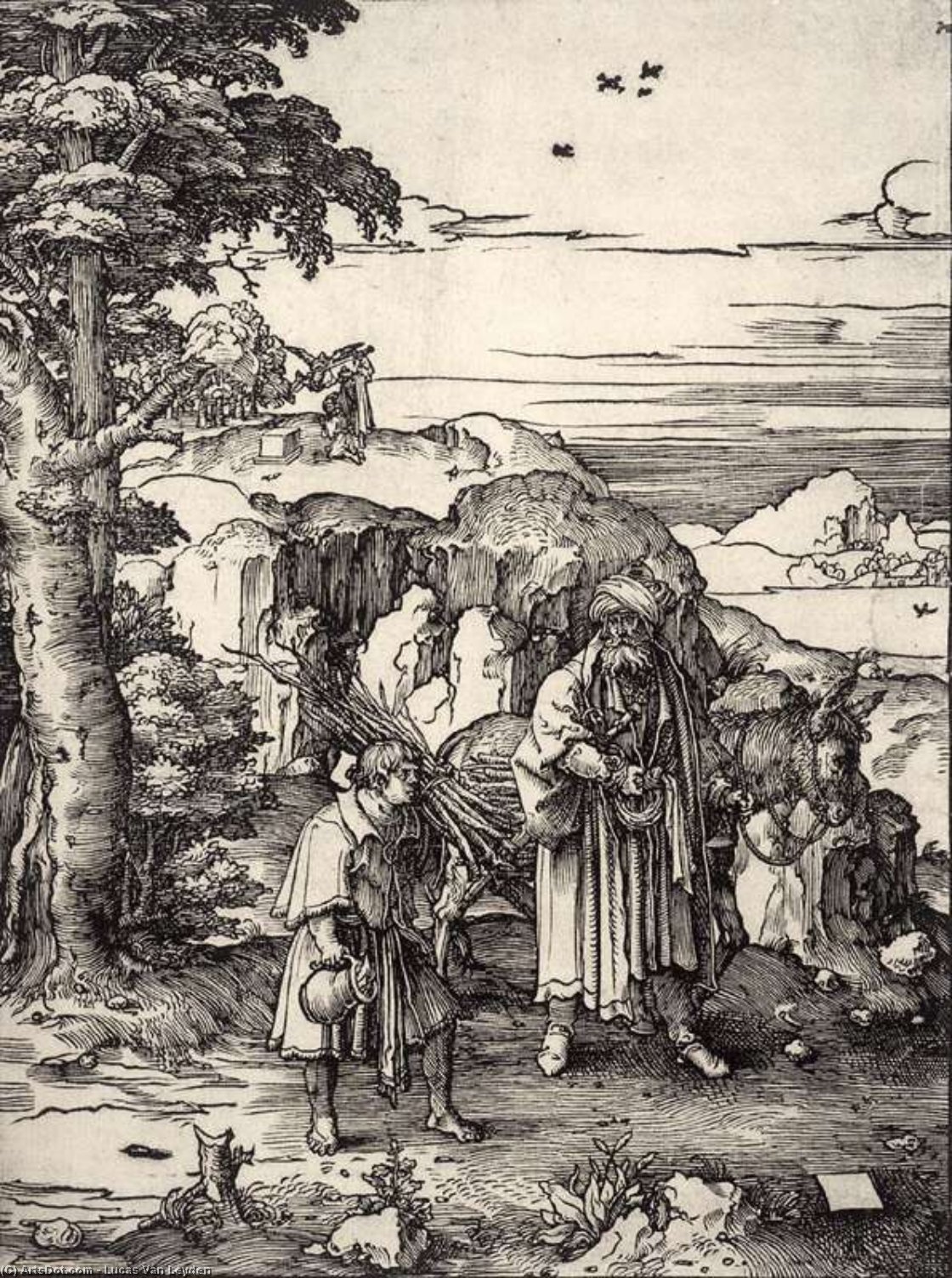
Abraham and Isaac on Their Way to the Place of Sacrifice
 Acrylic On Canvas
- WallArt
- Northern Renaissance
 1517
1517 285.0 x 211.0 cm
 Rijksmuseum
 Weiterlesen
Handgefertigte Ölreproduktion
Handgemaltes Ölgemälde auf Leinwand in Ihrer Wunschgröße und mit Rahmen, auf Bestellung von unseren Künstlern angefertigt. ( Druck bestellen Bild kaufen)




P118B $10

P118H $10

P118W $10

P438Z $10

P508JH $12

P508YH $12

P805H $10

P805Z $10

P919BZ $10

P919G $10

P919XJ $10

P959ZH $10

P968JZ $12

W106C $8

W218G $10

W218JH $8

W218Y $10

W307PJ $10

W316G $10

W316PJ $8

W316Y $10

W398PJ $8

W4111J $10

W500HY $15

W500JH $15

W692G $12

W849H $8

W940BG $15

W953PJ $8




Wählen Sie aus unseren vordefinierten Formaten, die den ursprünglichen Proportionen des Kunstwerks entsprechen.

Sie können Ihre eigenen Maße eingeben, um einen bestimmten Rahmen oder Platz auszufüllen. Wenn die gewählte Größe nicht den Proportionen des Originalbildes entspricht, werden wir das Kunstwerk entweder beschneiden oder das Gemälde durch zusätzliche, handgemalte Elemente erweitern. Ein digitales Mockup wird Ihnen zur Genehmigung zugesandt, bevor die Produktion beginnt.
Bitte beachten Sie, dass die Bildschirmvorschau nicht die tatsächliche Beschneidung oder Erweiterung widerspiegelt. Nur das Mockup zeigt die endgültige Komposition exakt an.
Obwohl Sondermaße verfügbar sind, empfehlen wir, eine Größe aus der vordefinierten Liste zu wählen, um die ursprünglichen Proportionen beizubehalten.
Nach der Bestellung wird das ArtsDot.com-Team dem Kunden Anweisungen per E-Mail zusenden und eine Mockup-Vorschau bereitstellen.
Weltweiter Versand () in nur 3 bis 4 Wochen statt der üblichen 5 Wochen. (1 September). Keine Kompromisse bei der Qualität.

Kostenloser weltweiter Expressversand

Hochwertige Leinenleinwand

Umfassender Versicherungsschutz beim Versand

Zollgebühren-Rückerstattungsgarantie

Garantie für exakte Farbtreue

60 Tage Rückgaberecht (nur bei Mängeln)

100% Geld-zurück-Garantie

Mengenrabatt verfügbar
 Die Glasoption ist nur für Größen unter 110 cm verfügbar.

Abraham and Isaac on Their Way to the Place of Sacrifice
Art der Reproduktion
Format der Reproduktion
-


Gesamtpreis
$ 263
The Weight of Faith: Lucas van Leyden’s Dramatic Narrative
Lucas van Leyden's “Abraham and Isaac on Their Way to the Place of Sacrifice” (1517) isn’t merely a depiction of a biblical scene; it’s a profound meditation on faith, obedience, and the agonizing burden of divine command. Painted during a pivotal moment in the burgeoning Renaissance, this work transcends simple storytelling, offering viewers an intimate glimpse into the psychological drama unfolding within Abraham's heart as he prepares to fulfill God’s unsettling decree. The painting immediately commands attention with its carefully constructed composition – a rugged landscape dominated by a looming rock formation, providing a stark and unforgiving backdrop for the figures’ arduous journey. The muted palette of browns, grays, and ochres lends an air of solemnity and foreboding, mirroring the gravity of the impending sacrifice.

Woodcut Technique: Precision and Emotional Depth
Created as a woodcut, a technique favored by van Leyden for its remarkable detail and tonal range, this image showcases his mastery. The artist skillfully employs hatching – parallel lines of varying density – to build up areas of shadow and texture, imbuing the scene with a palpable sense of depth and atmosphere. Notice how the rough, uneven surface of the wood itself subtly contributes to the painting’s ruggedness and authenticity. Van Leyden's meticulous attention to detail is particularly evident in the rendering of Abraham’s face – etched with worry, determination, and a heartbreaking resignation. The figures are rendered with a remarkable degree of realism, yet retain an emotional intensity that transcends mere representation. This technique was revolutionary for its time, allowing for nuanced shading and a sense of volume rarely achieved in oil painting at this scale.
- Hatching: Van Leyden’s signature use of hatching creates depth and texture.
- Limited Palette: The earthy tones evoke the harshness of the landscape and the solemnity of the event.
- Woodcut Medium: The inherent quality of woodcuts adds a unique visual character to the work.
Symbolism and Interpretation
Beyond its narrative content, “Abraham and Isaac” is rich in symbolic meaning. The rocky terrain represents the trials and tribulations of faith, while the journey itself symbolizes the arduous path of obedience to God’s will. The presence of other figures – a scattering of individuals along the road – suggests the universality of this struggle with faith and morality. Some art historians have interpreted the scene as an allegory for the relationship between humanity and divine authority, highlighting the tension between free will and submission. The bird soaring above, often seen as a symbol of hope or divine intervention, adds a layer of complexity to the composition, perhaps suggesting that even in the darkest moments, redemption remains possible. The story itself, rooted in Genesis, has resonated throughout Western art history, serving as a powerful metaphor for sacrifice, faith, and the enduring human condition.
A ArtsDot Reproduction: Bringing History to Life
ArtsDot is proud to offer meticulously crafted hand-painted reproductions of Lucas van Leyden’s “Abraham and Isaac on Their Way to the Place of Sacrifice.” Our skilled artists replicate the original's intricate details, tonal nuances, and emotional depth with unparalleled precision. Each reproduction is created using archival-quality materials, ensuring its longevity and vibrancy for generations to come. Whether you are a seasoned art collector, an interior designer seeking a statement piece, or simply someone captivated by this iconic image, our reproductions provide a beautiful and authentic way to experience the power of van Leyden’s masterpiece. Explore our range of sizes and canvas options to find the perfect addition to your collection or home – a timeless testament to faith, obedience, and the enduring legacy of Renaissance art.
Ähnliche Kunstwerke
Über den Künstler
early life and training
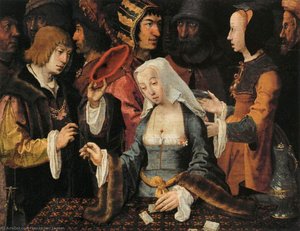
Lucas van Leyden (real name Lucas Hugensz or Jacobsz.), Netherlandish engraver and painter, born and mainly active in Leiden, who was among the first Dutch exponents of genre painting and is generally regarded as one of the finest engravers in the history of art. He was the pupil of his father, Huygh Jacobszoon; later, he entered the workshop of Cornelis Engelbrechtsz(oon), a painter of Leiden. His paintings, as well as his prints, reveal his unique approach to subject matter and style, though Lucas is more highly regarded today as a printmaker than as a painter. He was extraordinarily precocious. Even such early prints as *Muhammed and the Murdered Monk* (1508) are compositionally clear and direct and show great technical skill. Such engravings as *Susanna and the Elders* (1508), *St. George Liberating the Princess* (*c.* 1508–09), and his famous series *The Circular Passion* (1510) are notable for their accurate rendering of space and subtly composed landscapes. In 1514 he became a member of the Leiden painters' guild. He seems to have travelled a certain amount, and on a visit to Antwerp in 1521 he met Dürer, who drew his portrait (Mus.\n\nB.-A., Lille). An unbroken series of dated engravings makes it possible to follow his career as a printmaker and to date many of his paintings, but no clear pattern of stylistic development emerges. Dürer was the single greatest influence on him, but Lucas was less intellectual in his approach, tending to concentrate on the anecdotal features of the subject and to take delight in caricatures and genre motifs. Van Mander characterizes him as a pleasure-loving dilettante, who sometimes worked in bed, but he left a large œuvre, in spite of his fairly short life, and must have been a prodigious worker. Lucas had a great reputation in his day (Vasari even rated him above Dürer in certain respects) and he is universally regarded as one of the greatest figures in the history of graphic art (he made etchings and woodcuts as well as engravings and was a superb draughtsman). His status as a painter is less elevated, but he was nevertheless one of the outstanding Netherlandish painters of his period. He was a pioneer of the Netherlandish genre tradition, as witness his *Chess Players* (c.1508, Gemäldegalerie, Berlin)—which actually represents a variant game called ‘courier’—and his *Card Players* (c.1517, Wilton House, Wiltshire), while his celebrated *Last Judgement triptych* (1526–7, Lakenhal Mus., Leiden) shows the heights to which he could rise as a religious painter. It eloquently displays his vivid imaginative powers, his superb skill as a colourist, and his deft and fluid brushwork. Lucas left no pupils or direct followers, but his work was a stimulus to an even greater Leiden-born artist, Rembrandt.artistic development
Lucas van Leyden was among the first Dutch exponents of genre painting and a highly accomplished engraver. His early work, characterized by half-length figures (c. 1506-1512), showcases his precocious originality. As he matured, his landscapes developed, and he became skilled in engraving at a remarkably young age. The earliest known print by him, *Mohammed and the Murdered Monk* (1508), demonstrates his mastery of the medium. It reveals no trace of immaturity in inspiration or technique. Dürer was the single greatest influence on him, but Lucas was less intellectual in his approach, tending to concentrate on the anecdotal features of the subject and to take delight in caricatures and genre motifs.notable works and style
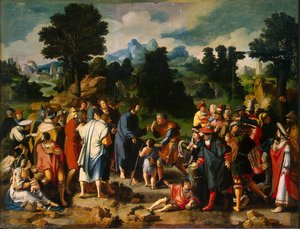
Seventeen paintings surely attributed to lucas van leyden survive, including:- The Healing of the Blind Man of Jericho, a masterpiece showcasing multiple figures against wooded landscapes.
- Saint Paul, attr. leyden, exemplifying his engraving prowess.
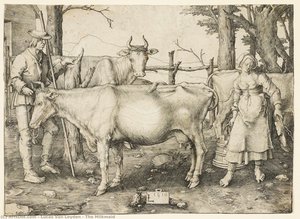
- The Milkmaid (engraving, 1510), highlighting his early skill in the medium.
museum collections and online presence
Lucas van Leyden's works can be found in various museums, including the Van Gogh Museum (Netherlands), which houses an extensive collection of his engravings and paintings. Online platforms like ArtsDot.com offer a comprehensive selection of his works, allowing art enthusiasts to explore his oeuvre in detail.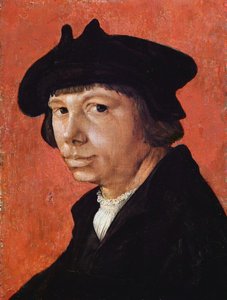
Lucas van Leyden
1494 - 1533 , Niederlande
Kurzinfos
- Artistic Movement Or Style: Frühniederländische Renaissance
- Artists Or Movements Influenced By This Artist: ['Deutsche Renaissance']
- Artists Who Influenced This Artist: ['Albrecht Dürer']
- Date Of Birth: Leiden, Niederlande (1494)
- Date Of Death: Vor August 8, 1533
- Full Name: Lucas Hugensz van Leyden
- Nationality: Niederländisch
- Notable Artworks:
- Die Heilung des blinden Mannes von Jericho
- St. Paulus
- Place Of Birth: Leiden
Ähnliche Artikel
Lucas van Leyden: Innovation & Intimacy in Early Netherlandish Printmaking
Explore the groundbreaking prints of Lucas van Leyden, a Dutch master bridging Gothic detail & Renaissance innovation. Discover his rare works, investment potential, and legacy for discerning collectors.

Rembrandts Meisterwerke: Die Top 25 Kunstwerke für Ihr Zuhause | ArtsDot
Entdecken Sie Rembrandts 25 berühmteste Kunstwerke! Tauchen Sie ein in die Welt des Barock, Licht und Schatten & historischer Porträts. Hochwertige Reproduktionen für Ihr Zuhause – jetzt auf ArtsDot.com!

Frühniederländische Meisterwerke: 10 Gemälde, die eine Epoche prägten | ArtsDot
Entdecken Sie die 10 prägendsten Meisterwerke der Frühniederländischen Malerei! Von Jan van Eyck bis Rogier van der Weyden – erleben Sie Kunstgeschichte hautnah. Hochwertige Reproduktionen & Inspiration für Ihr Interieur auf ArtsDot.com.
Frühniederländische Renaissance: 10 Meisterwerke für Ihr Zuhause | ArtsDot
Entdecken Sie die 10 prägendsten Meisterwerke der Frühniederländischen Renaissance! Erfahren Sie mehr über Jan van Eyck, Rogier van der Weyden & Co. und ihre ikonischen Gemälde. Hochwertige Reproduktionen für Ihr Zuhause – jetzt auf ArtsDot.com!
Charles-André van Loo: A Study in Rococo Portraiture & the French Court's Artistic Dynamics
Explore the elegant world of Charles-André van Loo, a master of Rococo portraiture at the French court. Discover his life, techniques, and enduring influence on 18th-century art. Hand-painted reproductions available.