 Vorschau anzeigen
 Versenden
 Teilen
 Details anzeigen

 Herunterladen
 Ähnliche Objekte
 Röntgenaufnahme
 Diashow
Sphere


 Weiterlesen
Giclée / Kunstdruck
Giclée- oder Leinwanddruck in Museumsqualität mit schneller Produktion und flexiblen Veredelungsoptionen. ( Handgemalte Reproduktion bestellen Bild kaufen)




P118B $10

P118H $10

P118W $10

P438Z $10

P508JH $12

P508YH $12

P805H $10

P805Z $10

P919BZ $10

P919G $10

P919XJ $10

P959ZH $10

P968JZ $12

W106C $8

W218G $10

W218JH $8

W218Y $10

W307PJ $10

W316G $10

W316PJ $8

W316Y $10

W398PJ $8

W4111J $10

W500HY $15

W500JH $15

W692G $12

W849H $8

W940BG $15

W953PJ $8




Wählen Sie aus unseren vordefinierten Formaten, die den ursprünglichen Proportionen des Kunstwerks entsprechen.

Sie können Ihre eigenen Maße eingeben, um ein bestimmtes Format oder einen speziellen Platz einzupassen. Wenn das von Ihnen gewählte Format nicht den Proportionen des Originalbildes entspricht, werden wir das Kunstwerk entweder beschneiden oder das Bild mit einem gespiegelten oder einfarbigen Rand erweitern. Ein digitaler Entwurf wird Ihnen zur Genehmigung zugesandt, bevor die Produktion beginnt.
Bitte beachten Sie, dass die Vorschau auf dem Bildschirm nicht den tatsächlichen Zuschnitt oder die Erweiterung widerspiegelt. Nur der Entwurf zeigt die endgültige Komposition präzise an.
Obwohl Sondermaße verfügbar sind, empfehlen wir die Auswahl eines Maßes aus der vordefinierten Liste, um die ursprünglichen Proportionen zu bewahren.
Weltweiter Versand () innerhalb von 2 Wochen statt der üblichen 4/5 Wochen. (21 August)

Kostenloser weltweiter Expressversand

Hochwertige Leinenleinwand

Umfassender Versicherungsschutz beim Versand

Zollgebühren-Rückerstattungsgarantie

Garantie für exakte Farbtreue

60 Tage Rückgaberecht (nur bei Mängeln)

100% Geld-zurück-Garantie

Mengenrabatt verfügbar
 Die Glasoption ist nur für Größen unter 110 cm verfügbar.

Sphere
Giclée / Kunstdruck
Format der Reproduktion
-


Gesamtpreis
$ 62
Sammlerstück-Beschreibung
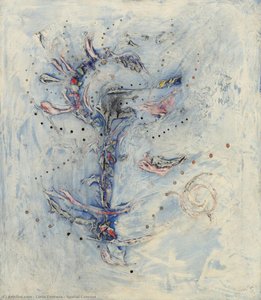
Lucio Fontana’s ‘Sphere’: A Dialogue with Space
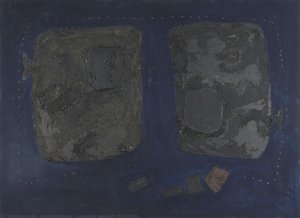
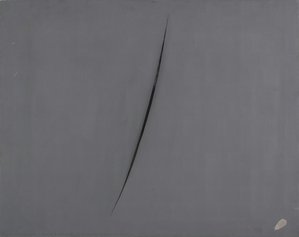
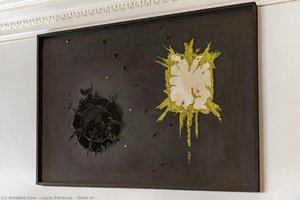
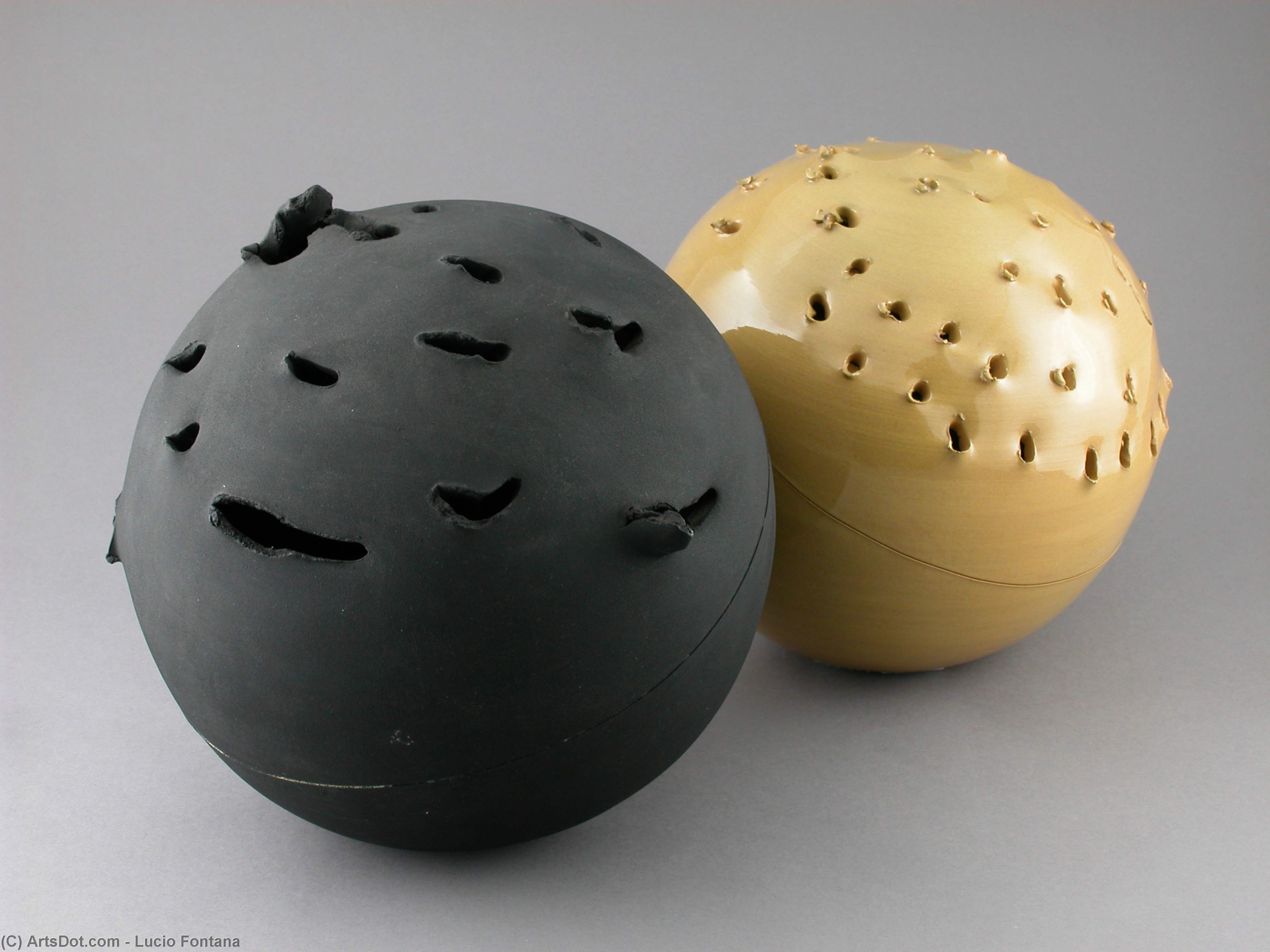
Lucio Fontana's 1957 work, simply titled 'Sphere,' is not merely a depiction of two balls; it’s an intensely felt exploration of space, materiality, and the very act of artistic creation. This seemingly simple composition, executed in black and yellow against a stark white backdrop, embodies the core tenets of Fontana's Spatialism – a movement he pioneered that sought to liberate art from traditional representational constraints by engaging directly with the fourth dimension: space itself. The photograph captures two spheres, one textured and dark, the other smooth and luminous, resting on a plane that feels both solid and infinitely receding. Scattered around them are smaller circles, echoing and amplifying the central theme of expansion and fragmentation.
The Genesis of Spatialism
Born in Rosario, Argentina, in 1899, Lucio Fontana’s artistic trajectory was shaped by a unique duality – his Argentinian heritage and his immersion in European avant-garde movements. Initially trained as a sculptor, influenced by his father's work, Fontana’s early explorations were rooted in traditional form. However, the post-war period witnessed a profound shift in artistic thinking, fueled by developments in physics (Einstein’s theory of relativity) and a growing fascination with the subconscious. This context directly informed Spatialism, which sought to visualize the idea that artists could cut into, puncture, or otherwise transform painted surfaces to reveal the underlying space behind them – a concept profoundly influenced by the notion of infinite space.
Technique and Materiality
Fontana’s technique in ‘Sphere’ is deceptively straightforward. The bold use of contrasting colors—the deep black and vibrant yellow—immediately draws the eye, yet it's the subtle variations in texture that truly elevate the work. The rougher surface of the black sphere suggests a physicality, an engagement with the material itself, while the smoother yellow sphere evokes a sense of luminosity and ethereal quality. This deliberate juxtaposition highlights Fontana’s interest in exploring the relationship between tactile experience and visual perception. The inclusion of smaller circles isn't merely decorative; they function as echoes, reinforcing the idea of expanding space and disrupting any sense of static representation.
Symbolism and Emotional Impact
'Sphere' resonates with a profound sense of mystery and possibility. It’s a work that invites contemplation about the nature of reality, the limits of perception, and the potential for artistic transformation. The act of presenting these spheres – seemingly simple objects – within this context elevates them to symbols of boundless space and infinite potential. Fontana wasn’t simply painting; he was creating a visual metaphor for a radical shift in how we understand our relationship with the world around us. This piece speaks to a desire for liberation, a yearning to break free from conventional boundaries, and an embrace of the unknown – emotions that continue to resonate powerfully with viewers today.
Ähnliche Kunstwerke
Über den Künstler
frühes Leben und Ausbildung
Lucio Fontana, ein renommierter argentinischer Künstler, wurde 1899 in Buenos Aires, Argentinien, geboren. Sein frühes Leben war von einer tiefen Leidenschaft für die Kunst geprägt, die ihn dazu veranlasste, eine Karriere als Maler zu verfolgen. Fontanas Ausbildung in der Kunst begann an der Escuela de Bellas Artes in Buenos Aires, wo er seine Fähigkeiten in der Ölmalerei und im Zeichnen verfeinerte.Künstlerischer Stil und Einflüsse
Fontanas Werk ist durch **kräftige Pinselstriche**, **lebendige Farben** und eine einzigartige Mischung aus europäischen und argentinischen Einflüssen gekennzeichnet. Sein künstlerischer Stil, der oft als eine Fusion von Impressionismus und Expressionismus beschrieben wird, spiegelt die kulturelle Vielfalt Argentiniens wider.- Fontanas Verwendung von Licht und Farbe wurde von den Werken Jan Grzegorz Stanisławski, eines polnischen Künstlers, der für seine Mohnblumenreihen bekannt ist, beeinflusst.
- Sein kraftvoller, expressiver Stil erinnert an die Werke von Vincent van Goghs postimpressionistischer Kunst, wie z.B. Blühende Äste.
Bekannte Werke und Ausstellungen
Einige der bekanntesten Werke Fontanas sind:- Die argentinische Landschaft, eine Reihe von Ölgemälden, die die vielfältige Geographie des Landes zeigen.
- Porträts von Buenos Aires, eine Sammlung von Porträts, die die Bewohner der Stadt zeigen, und die im Museo de Arte Moderno de Buenos Aires ausgestellt werden.
- Der Einfluss von Pieter Brueghel der Ältere ist in Fontanas Das Land der Kokusag zu sehen, einem satirischen Werk, das die spirituelle Leere von Gier und Faulheit widerspiegelt.
Vermächtnis und Museumsammlungen
Fontanas Werk ist heute Teil verschiedener Museumssammlungen, darunter:- Das Metropolitan Museum of Art, das mehrere seiner Ölgemälde besitzt.
- Die Ballarat Fine Art Gallery in Australien, die Fontanas Werke neben anderen bedeutenden Künstlern ausstellt.
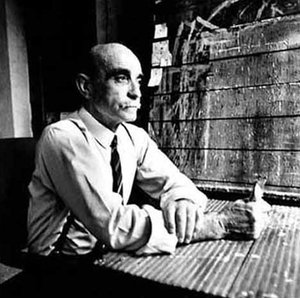
Lucio Fontana
1899 - 1968 , Argentinien
Kurzinfos
- Beeinflusste Künstler:
- Jan Grzegorz Stanisławski
- Vincent van Gogh
- Pieter Bruegel der Ältere
- Bemerkenswerte Werke:
- Die argentinische Landschaft
- Porträts von Buenos Aires
- Concetto Spaziale
- Soffitto spaziale
- Geburtsdatum: 19. Februar 1899
- Geburtsort: Rosario, Argentinien
- Künstlerische Bewegung: Spatialismus
- Nationalität: Argentinier, Italiener
- Todatum: 7. September 1968
- Vollständiger Name: Lucio Fontana
- Von Ihm Beeinflusste Künstler:
- Zero-Bewegung
- Nouveau Réalisme
- Minimalismus
Ähnliche Artikel

Die Top 10 berühmter Gemälde im Reich der dunklen Töne |
Entdecken Sie die Top 10 berühmter Gemälde, beherrscht von dunklen Tönen! Von Caravaggio bis Manet – erfahren Sie die Geschichten hinter Meisterwerken der Kunstgeschichte. Finden Sie Ihre perfekte Reproduktion auf .
Chromgelb in der Kunstgeschichte: Die 10 berühmtesten Gemälde & ihre Meister
Entdecken Sie die 10 berühmtesten Gemälde, dominiert von der leuchtenden Farbe Chromgelb! Von Van Gogh bis Monet – erfahren Sie Geschichten hinter Meisterwerken & finden Sie Ihre perfekte Kunst-Reproduktion auf ArtsDot.com.

Giclée Prints: Archival Quality & Aesthetic Nuances for the Discerning Collector
Explore the world of giclée prints with ArtsDot. Learn about archival quality, aesthetic nuances & investment potential. Expert guidance for discerning art collectors seeking museum-quality reproductions and lasting value.
Die Top 10 berühmter Gemälde im Gelbocherton – Kunst für Ihr Zuhause |
Entdecken Sie die Top 10 berühmter Gemälde, dominiert von warmen Gelbochtönen! Von Van Gogh bis Monet – erfahren Sie die Geschichten hinter den Meisterwerken und lassen Sie sich für Ihre Wohnraumgestaltung inspirieren. Hochwertige Kunstdrucke auf
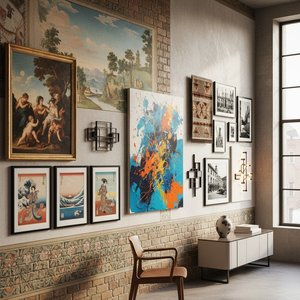
Transforming Spaces: A Comprehensive Exploration of Wall Decor Through Art History & Contemporary Practice
Explore the art of transforming spaces with our comprehensive guide to wall decor. From historical movements to contemporary trends, discover how to curate impactful interiors and commission bespoke artwork for a truly personalized aesthetic.