

 Vorschau anzeigen
 Versenden
 Teilen
 Details anzeigen

 Herunterladen
 Ähnliche Objekte
 Röntgenaufnahme
 Diashow
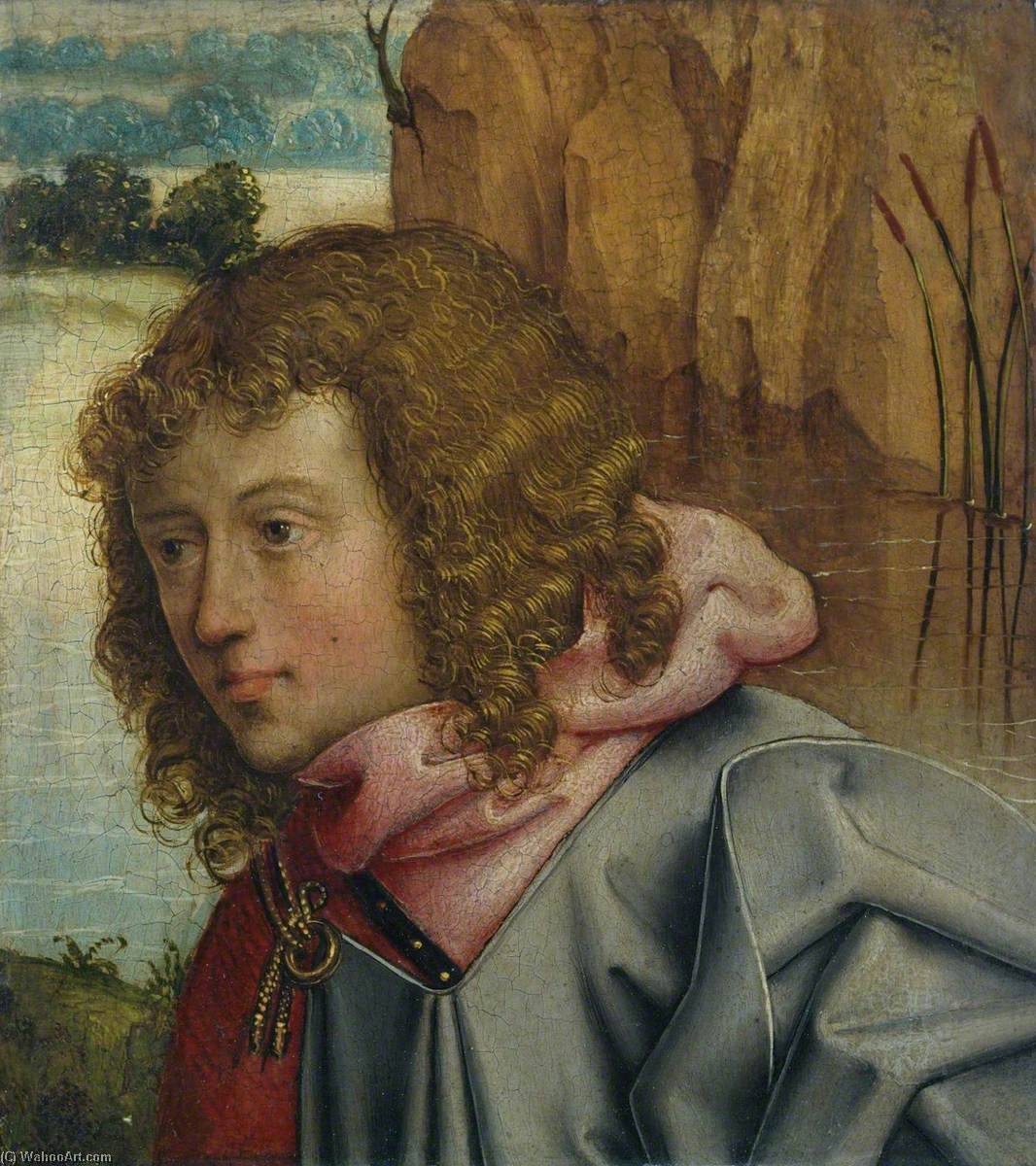
Head of a Saint against a Landscape (fragment)
 Oil On Panel
- Early Netherlandish Painting
 1500
1500- Renaissance
 15.0 x 13.0 cm
 Courtauld-Galerie
 Weiterlesen
Erwerben Sie ein hochauflösendes, optimiertes digitales Bild, das der Online-Vorschau weit überlegen ist.
Jede Datei wird von unseren hauseigenen Spezialisten mit modernsten Werkzeugen und fachmännischer manueller Retusche sorgfältig vorbereitet. Wir stellen sicher, dass jedes Bild eine außergewöhnliche Klarheit, präzise Farbgenauigkeit und feinste Details aufweist.
Die endgültige Datei wird innerhalb von 72 Stunden per E-Mail zugestellt und ist für den sofortigen Einsatz in professionellen, redaktionellen und Druckumgebungen optimiert. Es handelt sich um dieselbe Qualität, der führende Designstudios, Verlage und Galerien vertrauen.
Digitales Bild
Laden Sie eine hochauflösende Datei für die persönliche Präsentation, den Druck und kreative Projekte herunter. ( Druck bestellen Handgemalte Reproduktion bestellen)
In jeder Bestellung digitaler Bilder enthalten
Professionelle digitale Bereitstellung, garantiert
Wenn Sie sich für ArtsDot.com entscheiden, erhalten Sie nicht nur ein Bild – Sie erhalten ein professionell aufbereitetes digitales Kunstwerk, das mit höchster Präzision erstellt und durch eine Zufriedenheitsgarantie abgesichert wird. Hier ist alles, was automatisch mit Ihrer Bestellung geliefert wird:

Schnelle E-Mail-Zustellung
Ihre hochauflösende digitale Bilddatei wird Ihnen innerhalb von 72 Stunden nach der Bestellung per E-Mail zugestellt – bereit zur sofortigen Verwendung.

KI-optimierte digitale Datei
Ihre Kunstwerke werden professionell mithilfe fortschrittlicher KI-Tools und manueller Bearbeitung optimiert, um maximale Detailtreue, Klarheit und Farbgenauigkeit zu gewährleisten.

Lebenslanger kostenloser Neudruckservice
Datei versehentlich gelöscht oder verloren? Keine Sorge – wir senden sie Ihnen jederzeit kostenlos erneut zu.

Keine Einfuhrgebühren – jemals
Genießen Sie Ihr Kunstwerk sofort ohne Zollgebühren, Einfuhrabgaben oder Versandkosten – digitale Downloads sind immer steuerfrei.

Garantierte Farbtreue
Wir garantieren, dass Ihr digitales Bild mithilfe professioneller Werkzeuge und Farbmanagement die Originalfarben so präzise wie möglich wiedergibt.

60-Tage-Zufriedenheitsgarantie
Sollten Sie mit Ihrem digitalen Bild nicht zufrieden sein, werden wir es überarbeiten oder Ihnen innerhalb von 60 Tagen 100% erstatten – ohne Wenn und Aber.

100% Geld-zurück-Garantie
Nicht zufrieden? Erhalten Sie innerhalb von 60 Tagen nach Erhalt Ihrer digitalen Datei eine vollständige Rückerstattung – ohne Angabe von Gründen.

Rabatte bei Großbestellungen
3 Bilder kaufen, 10% sparen – 5 Bilder kaufen, 15% sparen – Ab 10 Bildern 20% sparen. Ideal für kreative Projekte, Galerien und Agenturen.
A Vision of Devotion: The Ethereal Presence of the Saint
In the quiet intimacy of this fragment, titled Head of a Saint against a Landscape, we encounter a moment of profound stillness captured at the dawn of the sixteenth century. The portrait presents a young man, his features illuminated by a soft, diffused light that seems to emanate from within the very grain of the wood. His flowing red hair, rendered with an almost tactile precision, cascades around a face marked by a contemplative and serene expression. This is not merely a depiction of a person, but an invitation into a state of spiritual introspection. The subject’s gaze, though fixed, suggests a soul turned inward, caught in a delicate balance between the earthly realm and the divine.
The composition masterfully utilizes the Early Netherlandish tradition to create a sense of depth within a remarkably small scale. While the focus remains intimately locked upon the saint's face and upper torso, the background unfolds into a miniature universe of natural splendor. A winding waterway, flanked by lush vegetation and distant, hazy hills, provides a breathtaking backdrop that employs atmospheric perspective to draw the eye toward the horizon. The interplay between the sharp, linear contours of the figure and the organic, undulating forms of the landscape creates a rhythmic harmony, making the fragment feel like a window into a lost, tranquil era.
Mastery of Technique and the Renaissance Spirit
The technical virtuosity displayed in this work is a testament to the Maitre de Saint Barthelemy’s command over the medium of oil on panel. Every brushstroke serves a purpose, contributing to a rich tapestry of textures that demand close inspection. One can almost feel the weight of the fabric folds and the delicate moisture of the water's surface. The artist employs a meticulous layering technique, characteristic of the Northern Renaissance, to achieve a luminous quality where colors—deep reds, earthy browns, and tranquil blues—blend with seamless grace. This precision allows for a hyper-realistic rendering of hair and skin that breathes life into the painted subject.
Beyond its aesthetic beauty, the artwork carries a weight of historical and symbolic significance. Created around 1500, it stands at the crossroads of the late Gothic tradition and the burgeoning humanism of the Renaissance. The choice of setting—water and reeds—is far from accidental; in the iconographic language of the time, such elements often symbolized transition, purification, or the reflective nature of a life dedicated to faith. For the discerning collector or interior designer, this piece offers more than mere decoration; it provides a focal point of historical gravity and emotional depth. A high-quality reproduction of this fragment brings a sense of timelessness and scholarly elegance to any space, serving as a poignant reminder of the enduring power of human devotion and artistic mastery.
Ähnliche Kunstwerke
Biografie des Künstlers
The Enigmatic Figure: Maitre de Saint Barthelemy and the Dawn of French Devotional Art
Maitre de Saint Barthelemy, a name whispered in the halls of art history, remains an intriguing figure—a 15th-century French painter whose work offers a poignant glimpse into the burgeoning devotional practices of his time. While details about his life are frustratingly sparse, piecing together fragments of evidence and analyzing his surviving panels reveals a master craftsman deeply influenced by both Northern European realism and the emerging Italian Renaissance, yet firmly rooted in the traditions of French Gothic art. Born likely around 1450, possibly in the region surrounding Rouen – as suggested by the “Forêt de Rouvray” association (a vast forest that once stretched west from Paris), his career unfolded during a period of significant artistic transition, marking a crucial bridge between the stylized formality of the late Gothic and the more naturalistic tendencies of the early Renaissance. His work is characterized by an intense focus on religious subjects – primarily scenes from the life of Christ and depictions of saints – rendered with remarkable detail and emotional depth.A Life Shrouded in Mystery: Tracing the Artist’s Footsteps
The biographical details surrounding Maitre de Saint Barthelemy are remarkably elusive. He appears to have operated largely outside the orbit of major artistic centers, such as Florence or Venice, which were at the forefront of Renaissance innovation during his lifetime. He was not a court painter, nor did he seem to hold a prominent position within any established guild. This suggests that he likely worked independently, perhaps commissioned by wealthy patrons in smaller towns and religious institutions throughout Northern France. The scarcity of documentation makes it difficult to pinpoint his precise origins or the exact chronology of his output, but art historical analysis points towards a consistent style developed over roughly two decades – from around 1480 until his death in 1510. His workshop produced a significant body of work, primarily devotional panels and altarpieces, often featuring multiple scenes within a single composition—a technique common in Northern European art but increasingly adopted by French artists during this period.The Language of Faith: Style and Technique
Maitre de Saint Barthelemy’s style is a compelling synthesis of influences. He demonstrates a clear debt to the meticulous realism of Flemish masters, particularly in his rendering of fabrics, textures, and facial expressions. His figures possess an almost sculptural quality, imbued with a sense of volume and weight. However, he avoids the cold, detached aesthetic sometimes associated with Northern European art, imbuing his subjects with a palpable humanity and emotional intensity. This is evident in works like “Head of a Saint against a Landscape,” where the saint’s serene countenance conveys both piety and vulnerability. Furthermore, there's a subtle but noticeable influence from the early Italian Renaissance – particularly in the use of pyramidal compositions, atmospheric perspective, and a heightened sense of drama. The careful attention to detail—the folds of drapery, the individual strands of hair, the delicate rendering of jewels—is testament to his exceptional technical skill. His palette is generally restrained, favoring earthy tones and muted blues and greens, creating a solemn and contemplative atmosphere.Key Works and Notable Achievements
Among his most celebrated works are “La Descente de Croix” (The Descent of the Cross), a powerful depiction of Christ’s agonizing fall from the cross, and several panels featuring Saint Bartholomew – hence his name. “La Descente de Croix” is particularly noteworthy for its dramatic composition, its emotional intensity, and its skillful use of light and shadow to convey the weight of suffering. The panel showcases a masterful understanding of human anatomy and an ability to evoke profound empathy in the viewer. Other significant works include panels depicting Saint Sebastian, Saint Catherine, and various scenes from the Passion narrative. These pieces demonstrate his versatility as an artist and his capacity to capture the essence of religious devotion with both technical brilliance and artistic sensitivity. The consistent quality and emotional resonance of these panels firmly establish him as a leading figure in French devotional art during the late 15th century.Legacy and Historical Significance
Maitre de Saint Barthelemy’s contribution to French art lies not in groundbreaking innovation, but rather in his skillful synthesis of diverse artistic influences and his ability to translate complex religious ideas into emotionally engaging visual narratives. He played a crucial role in shaping the development of devotional painting in France, bridging the gap between the Gothic tradition and the emerging Renaissance style. His work served as an important model for subsequent generations of French artists, influencing the style and subject matter of countless panels and altarpieces. Although largely forgotten for centuries, Maitre de Saint Barthelemy’s art has recently been rediscovered by scholars and is now recognized as a significant example of 15th-century French painting—a testament to the enduring power of faith and the artistry of an enigmatic master. His panels continue to offer viewers a poignant glimpse into the spiritual landscape of his time, reminding us of the profound emotional impact that art can have on the human soul.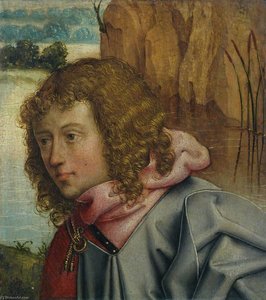
maitre de saint barthelemy
1450 - 1510
Kurzinfos
- Artistic Movement Or Style: Devotional panels
- Date Of Death: 1510
- Full Name: Maitre de Saint Barthelemy
- Nationality: French
- Notable Artworks:
- La Descente de Croix
- Head of a Saint
- Place Of Birth: France

