Menü
Kostenlose Kunstberatung
Vorschau anzeigenVorschau anzeigen In AR erlebenIn AR erleben Druck bestellen Druck bestellenHandgemalte Reproduktion bestellen Handgemalte Reproduktion bestellen VersendenVersenden
Details anzeigenDetails anzeigen Zu Favoriten hinzufügen Zu Favoriten hinzufügen HerunterladenHerunterladen Ähnliche ObjekteÄhnliche Objekte RöntgenaufnahmeRöntgenaufnahme DiashowDiashow

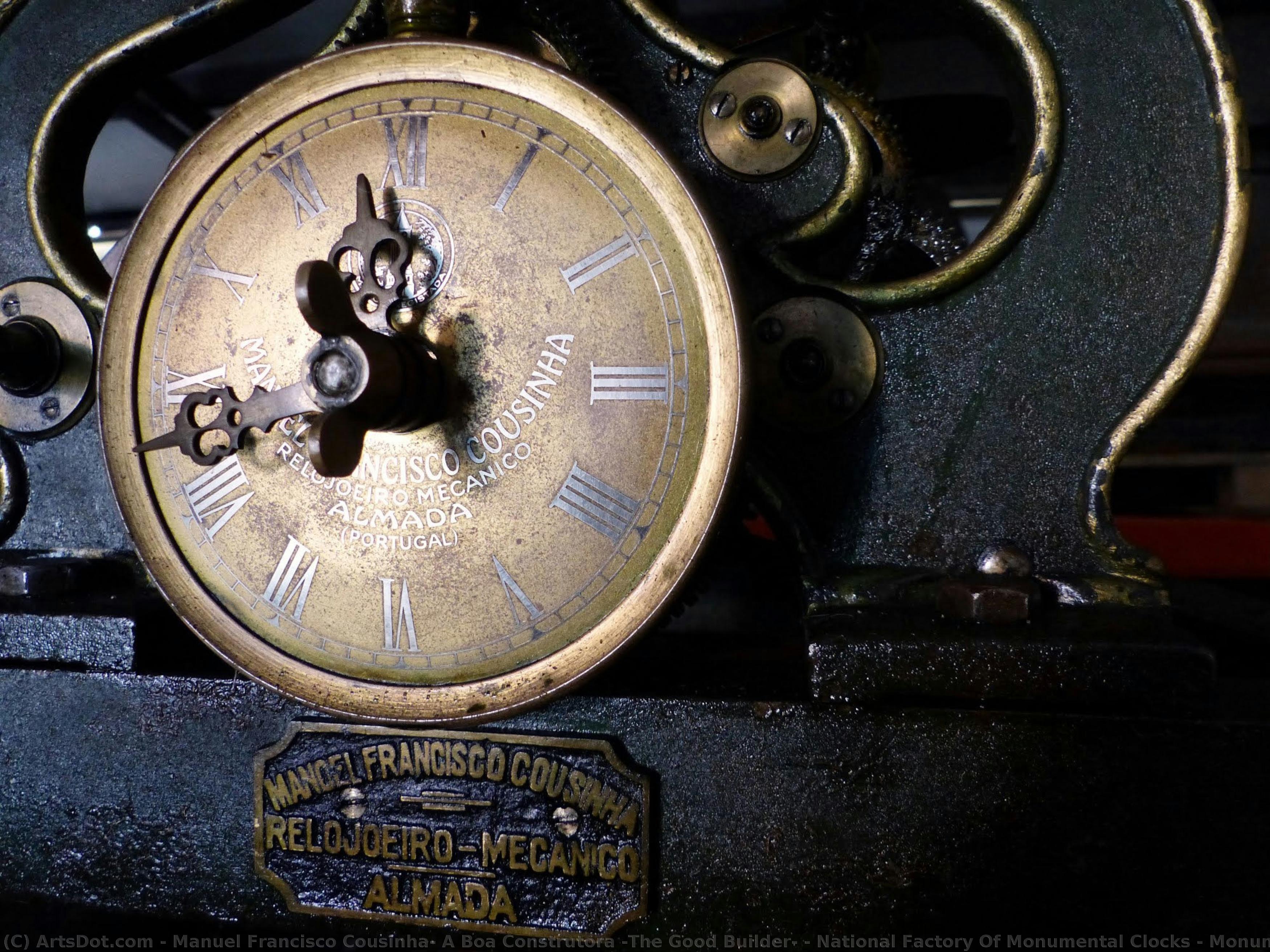
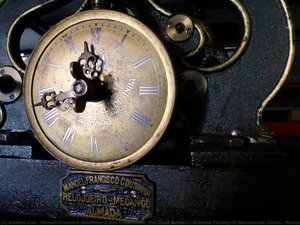
Monumental Station Clock Mechanism

Exquisite photographic detail of a monumental clock mechanism by Cousinha (1928). Admire the intricate brass & iron design – a timeless piece of Portuguese craftsmanship.

Manuel Francisco Cousinha, A Boa Construtora (The Good Builder) was a master of monumental clock mechanisms, renowned for his intricate brass and iron designs like the 1928 Station Clock; discover timeless Portuguese craftsmanship and explore his captivating artistry.

Erwerben Sie ein hochauflösendes, optimiertes digitales Bild, das der Online-Vorschau weit überlegen ist.

Jede Datei wird von unseren hauseigenen Spezialisten mit modernsten Werkzeugen und fachmännischer manueller Retusche sorgfältig vorbereitet. Wir stellen sicher, dass jedes Bild eine außergewöhnliche Klarheit, präzise Farbgenauigkeit und feinste Details aufweist.

Die endgültige Datei wird innerhalb von 72 Stunden per E-Mail zugestellt und ist für den sofortigen Einsatz in professionellen, redaktionellen und Druckumgebungen optimiert. Es handelt sich um dieselbe Qualität, der führende Designstudios, Verlage und Galerien vertrauen.

Digitales Bild

Laden Sie eine hochauflösende Datei für die persönliche Präsentation, den Druck und kreative Projekte herunter. (Druck bestellen Druck bestellenHandgemalte Reproduktion bestellen Handgemalte Reproduktion bestellen)

Endpreis

$ 24,00

In jeder Bestellung digitaler Bilder enthalten

Professionelle digitale Bereitstellung, garantiert

Wenn Sie sich für ArtsDot.com entscheiden, erhalten Sie nicht nur ein Bild – Sie erhalten ein professionell aufbereitetes digitales Kunstwerk, das mit höchster Präzision erstellt und durch eine Zufriedenheitsgarantie abgesichert wird. Hier ist alles, was automatisch mit Ihrer Bestellung geliefert wird:

shipping_icon
Schnelle E-Mail-Zustellung

Ihre hochauflösende digitale Bilddatei wird Ihnen innerhalb von 72 Stunden nach der Bestellung per E-Mail zugestellt – bereit zur sofortigen Verwendung.

canvas_icon
KI-optimierte digitale Datei

Ihre Kunstwerke werden professionell mithilfe fortschrittlicher KI-Tools und manueller Bearbeitung optimiert, um maximale Detailtreue, Klarheit und Farbgenauigkeit zu gewährleisten.

insurance_icon
Lebenslanger kostenloser Neudruckservice

Datei versehentlich gelöscht oder verloren? Keine Sorge – wir senden sie Ihnen jederzeit kostenlos erneut zu.

tax_icon
Keine Einfuhrgebühren – jemals

Genießen Sie Ihr Kunstwerk sofort ohne Zollgebühren, Einfuhrabgaben oder Versandkosten – digitale Downloads sind immer steuerfrei.

color_icon
Garantierte Farbtreue

Wir garantieren, dass Ihr digitales Bild mithilfe professioneller Werkzeuge und Farbmanagement die Originalfarben so präzise wie möglich wiedergibt.

return_icon
60-Tage-Zufriedenheitsgarantie

Sollten Sie mit Ihrem digitalen Bild nicht zufrieden sein, werden wir es überarbeiten oder Ihnen innerhalb von 60 Tagen 100% erstatten – ohne Wenn und Aber.

guarantee_icon
100% Geld-zurück-Garantie

Nicht zufrieden? Erhalten Sie innerhalb von 60 Tagen nach Erhalt Ihrer digitalen Datei eine vollständige Rückerstattung – ohne Angabe von Gründen.

discount_icon
Rabatte bei Großbestellungen

3 Bilder kaufen, 10% sparen – 5 Bilder kaufen, 15% sparen – Ab 10 Bildern 20% sparen. Ideal für kreative Projekte, Galerien und Agenturen.
Details zum Sammlerstück

It was this complete mechanism, together with its pendulum and weights, that operated the monumental clock at Tomar Railway Station, terminal of the Tomar branch, which opened for operation on September 24th 1928. Adapted to the architectural structure of the station building, it was the pendulum and weights which maintained the monumental clock in motion when mounted on the station facade. Made in Portugal, it was built by the mechanical watchmaker Manoel Francisco Cousinha, founder of

Biografie des Künstlers

The Timeless Craft of Manuel Francisco Cousinha: A Legacy in Monumental Clocks

Manuel Francisco Cousinha, known as “A Boa Construtora” (The Good Builder), represents a fascinating intersection of artistry and engineering within the landscape of Portuguese clockmaking. While biographical details surrounding Cousinha remain scarce – a testament to the often-unheralded artisans behind grand public works – his enduring legacy is etched in time itself, manifested in the monumental station clocks he meticulously crafted at the National Factory of Monumental Clocks. Founded in 1928, this factory became a crucible for precision mechanics and aesthetic design, and Cousinha quickly emerged as a pivotal figure within its walls. He wasn’t merely constructing timekeeping devices; he was building symbols of national progress and enduring civic pride.

A Master of Mechanics: The Art of the Monumental Clock

Cousinha's work is defined by the sheer scale and complexity of his creations. These were not clocks intended for domestic mantels or private collections, but rather imposing structures designed to dominate public spaces – railway stations, town squares, and other vital hubs of Portuguese life. His mastery lay in translating intricate mechanical principles into robust, reliable systems capable of withstanding the rigors of time and weather. The photographic detail captured in images of his 1928 monumental station clock mechanism reveals a breathtaking level of craftsmanship. Gleaming brass components interlock with precisely wrought ironwork, forming a delicate yet powerful network that governs the movement of large hands across expansive dials. This wasn’t simply about telling time; it was about demonstrating Portuguese ingenuity and technical prowess. The clocks were statements – visible embodiments of a nation embracing modernity while honoring traditional skills.

Influences and Development

Pinpointing specific artistic influences on Cousinha proves challenging given the limited documentation available. However, one can discern echoes of the *Art Deco* movement in his designs—a style characterized by streamlined forms, geometric patterns, and a celebration of industrial materials. The emphasis on functionality combined with elegant detailing aligns closely with Art Deco principles. Furthermore, the precision required for clockmaking undoubtedly drew upon centuries-old traditions of Portuguese metallurgy and instrument making. Cousinha likely benefited from the collective knowledge within the National Factory, collaborating with other skilled artisans and engineers to refine his techniques and push the boundaries of what was mechanically possible. The development of his style seems rooted in a pragmatic approach—a desire to create clocks that were not only beautiful but also exceptionally durable and accurate.

Enduring Symbols of Portuguese Time

Although Cousinha’s personal life remains largely unknown, his professional achievements speak volumes. He dedicated himself to the production of monumental clocks, becoming synonymous with quality and reliability in this specialized field. His work represents a significant contribution to Portugal's industrial heritage, providing tangible evidence of the nation’s commitment to technological advancement during the 20th century. The clocks he built continue to function today—silent witnesses to decades of Portuguese history, faithfully marking the passage of time for generations. They stand as enduring symbols of civic life and a testament to the skill and dedication of “A Boa Construtora,” Manuel Francisco Cousinha.

Historical Significance

Cousinha’s legacy extends beyond the purely mechanical realm. His clocks played a crucial role in standardizing timekeeping across Portugal, facilitating efficient transportation networks and fostering a sense of national unity. In an era before widespread personal timepieces, these monumental structures served as vital reference points for communities, coordinating daily life and shaping social rhythms. The National Factory itself was a product of its time—a response to the growing demands of a modernizing nation. Cousinha’s work, therefore, is inextricably linked to broader historical trends, reflecting Portugal's aspirations for progress and its embrace of industrial innovation. He represents a generation of artisans who quietly but profoundly shaped the fabric of Portuguese society through their dedication to craftsmanship and precision engineering.