 Vorschau anzeigen
 Versenden
 Teilen
 Details anzeigen

 Herunterladen
 Ähnliche Objekte
 Röntgenaufnahme
 Diashow
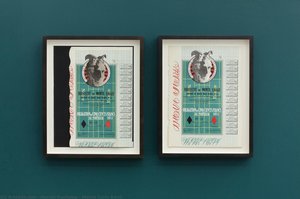
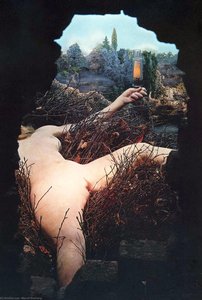
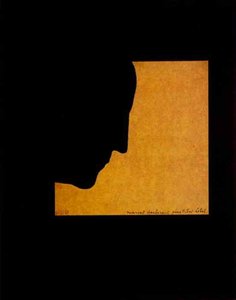
Dándose 1. La caida de agua, 2. El gas de alumbrado


 Weiterlesen
Giclée / Kunstdruck
Giclée- oder Leinwanddruck in Museumsqualität mit schneller Produktion und flexiblen Veredelungsoptionen. ( Handgemalte Reproduktion bestellen Bild kaufen)




P118B $10

P118H $10

P118W $10

P438Z $10

P508JH $12

P508YH $12

P805H $10

P805Z $10

P919BZ $10

P919G $10

P919XJ $10

P959ZH $10

P968JZ $12

W106C $8

W218G $10

W218JH $8

W218Y $10

W307PJ $10

W316G $10

W316PJ $8

W316Y $10

W398PJ $8

W4111J $10

W500HY $15

W500JH $15

W692G $12

W849H $8

W940BG $15

W953PJ $8




Wählen Sie aus unseren vordefinierten Formaten, die den ursprünglichen Proportionen des Kunstwerks entsprechen.

Sie können Ihre eigenen Maße eingeben, um ein bestimmtes Format oder einen speziellen Platz einzupassen. Wenn das von Ihnen gewählte Format nicht den Proportionen des Originalbildes entspricht, werden wir das Kunstwerk entweder beschneiden oder das Bild mit einem gespiegelten oder einfarbigen Rand erweitern. Ein digitaler Entwurf wird Ihnen zur Genehmigung zugesandt, bevor die Produktion beginnt.
Bitte beachten Sie, dass die Vorschau auf dem Bildschirm nicht den tatsächlichen Zuschnitt oder die Erweiterung widerspiegelt. Nur der Entwurf zeigt die endgültige Komposition präzise an.
Obwohl Sondermaße verfügbar sind, empfehlen wir die Auswahl eines Maßes aus der vordefinierten Liste, um die ursprünglichen Proportionen zu bewahren.
Weltweiter Versand () innerhalb von 2 Wochen statt der üblichen 4/5 Wochen. (22 August)

Kostenloser weltweiter Expressversand

Hochwertige Leinenleinwand

Umfassender Versicherungsschutz beim Versand

Zollgebühren-Rückerstattungsgarantie

Garantie für exakte Farbtreue

60 Tage Rückgaberecht (nur bei Mängeln)

100% Geld-zurück-Garantie

Mengenrabatt verfügbar
 Die Glasoption ist nur für Größen unter 110 cm verfügbar.

Dándose 1. La caida de agua, 2. El gas de alumbrado
Giclée / Kunstdruck
Format der Reproduktion
-


Gesamtpreis
$ 62
Sammlerstück-Beschreibung
A Revolutionary Spirit: Marcel Duchamp’s “Dándose 1. La caída de agua, 2. El gas de alumbrado”
Marcel Duchamp's "Dándose 1. La caída de agua, 2. El gas de alumbrado," or "Giving Up 1. The Fall of Water, 2. Gas Lighting," stands as a cornerstone of Dada and Surrealist thought, representing not merely an artistic endeavor but a profound interrogation of the very definition of art itself. Painted in 1946, shortly before his death, this deceptively simple sculpture—a glass case containing a chair, a bottle, a bowl, and a small lamp—became instantly iconic, cementing Duchamp’s legacy as one of the most influential figures in twentieth-century art history.The Dada Challenge: Rejecting Tradition
Duchamp arrived on the artistic scene armed with an uncompromising skepticism toward established conventions. Influenced by Nietzsche's proclamation that "God is dead," he embraced Dada—a nihilistic reaction to the horrors of World War I—as a means of dismantling accepted aesthetic values. Unlike Impressionists or Post-Impressionists who sought to capture fleeting moments of beauty, Dada artists deliberately undermined artistic illusionism. Duchamp famously declared that he wished to “destroy painting,” not by attacking it physically but by asserting its conceptual primacy. "Dándose" embodies this ethos perfectly; it’s not about skillful craftsmanship or visual appeal but about presenting a commonplace object—the gas lamp—within an enclosed space, thereby elevating it to the realm of art through sheer declaration.Formal Considerations: Glass Case and Minimal Composition
The sculpture's formal qualities contribute significantly to its impact. Constructed from clear glass, the case emphasizes transparency and exposes the contents within, mirroring Duchamp’s desire to strip away decorative embellishments. The minimalist arrangement—a single chair, bottle, bowl, and lamp—further underscores this principle of reduction. Each element is deliberately chosen for its familiarity and ordinariness, highlighting the absurdity of assigning artistic significance to everyday objects. This deliberate simplicity forces viewers to confront their preconceived notions about what constitutes art, prompting them to reconsider the role of intention and conceptual thought.Symbolic Layers: Beyond Surface Appearance
While seemingly devoid of overt symbolism, “Dándose” operates on multiple levels of interpretation. The glass case itself symbolizes containment—the enclosure of reality within an artificial frame—a concept central to Surrealist explorations of unconsciousness. The objects housed within represent the mundane realities of domestic life, juxtaposed against the elevated status conferred upon them by Duchamp’s gesture. Furthermore, the lamp evokes notions of illumination and enlightenment, albeit ironically presented in darkness. This juxtaposition underscores Duchamp's critique of traditional artistic representations as attempts to impose order onto a chaotic world.Emotional Resonance: Confronting Perception
Ultimately, “Dándose” compels viewers to engage in an emotional reckoning with their own perceptions of beauty and value. It’s not designed to elicit sentimental pleasure but rather to provoke contemplation—to unsettle complacency and challenge assumptions about artistic expression. Duchamp's intention wasn’t to create a visually pleasing object but to initiate a dialogue about the nature of art itself, inviting audiences to question what it means to see and to appreciate. The sculpture remains a powerful reminder that true artistry lies not in technical prowess but in conceptual daring—a legacy that continues to inspire artists and collectors alike.Ähnliche Kunstwerke

Über den Künstler
frühes Leben und künstlerische Anfänge
Marcel Duchamp, ein französischer-amerikanischer Maler, Bildhauer, Schachspieler und Schriftsteller, wurde am 28. Juli 1887 in Blainville-Crevon, Normandie, Frankreich, geboren. Seine Familie, die für ihre kulturellen Neigungen bekannt war, förderte sein frühes Interesse an der Kunst. Duchamps künstlerischer Weg begann mit postimpressionistischen Stilen und experimentierte er mit klassischen Techniken und Themen.Künstlerische Entwicklung und bedeutende Werke
- Duchamps Werk ist mit Kubismus, Konzeptkunst und Dada verbunden, obwohl er vorsichtig mit dem Begriff „Dada“ umging.
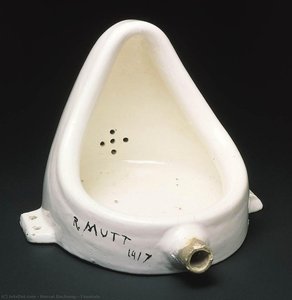
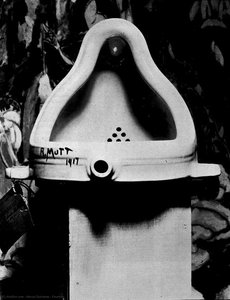
- Eines seiner bekanntesten Werke, Fountain (1917), ein Urinal mit der Unterschrift „r. mutt“, ist ein Beispiel für seine Readymades und stellt die Vorstellung in Frage, was Kunst ausmacht.
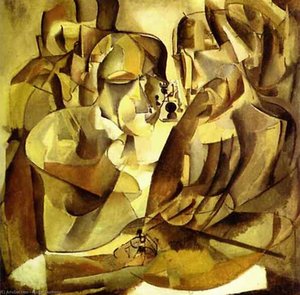
- Portrait of Chess Players (1911), ein kubistisches Werk, zeigt sein Interesse am Spiel und seinen strategischen Aspekten.
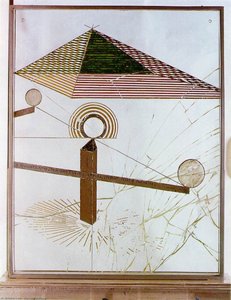
- To Be Looked At (From the Other Side of the Glass) With One Eye, Close To, For Almost an Hour (1945) ist ein weiteres bemerkenswertes Werk, das seine dadaistischen Neigungen widerspiegelt.
Einfluss und Vermächtnis
Duchamps Einfluss auf die Kunst des 20. Jahrhunderts ist immens. Zusammen mit Pablo Picasso und Henri Matisse definierten er die bildenden Künste im frühen 20. Jahrhundert. Sein konzeptueller Ansatz zur Kunst hat Generationen von Künstlern beeinflusst.- Entdecken Sie mehr von Duchamps Werken auf ArtsDot: Marcel Duchamp | Werke
- Besuchen Sie das Ohara Museum of Art in Japan, das westliche Kunstsammlungen umfasst, darunter einige, die vom Stil von Duchamp beeinflusst sind: Ohara Museum of Art, Japan
- Erfahren Sie mehr über Lettrismus, eine Bewegung, die von Dada und Surrealismus beeinflusst wurde, der Duchamp angehörte: Lettrismus Kunstbewegung
Fazit
Marcel Duchamps rätselhafter Ansatz zur Kunst, der konzeptuelle und dadaistische Elemente verbindet, hat einen unauslöschlichen Eindruck in der Kunstwelt hinterlassen. Sein Vermächtnis inspiriert weiterhin Künstler und beeinflusst die Entwicklung moderner und zeitgenössischer Kunst. Franck Scurti, ein französischer Künstler, der für seine Konzeptkunst bekannt ist, geht in den Fußstapfen von Duchamp und trägt so zum Vermächtnis dieses Pioniers weiter.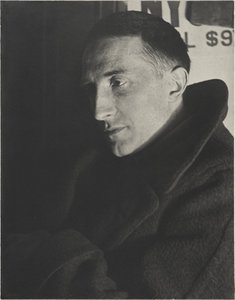
Marcel Duchamp
1887 - 1968 , Frankreich
Kurzinfos
- Bemerkenswerte Werke:
- Fountain
- Porträt der Schachspieler
- Das große Glas
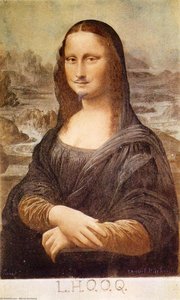
- L.H.O.O.Q.
- Boîte-en-valise
- Geburtsdatum: 28. Juli 1887
- Geburtsort: Blainville-sur-Mer, Frankreich
- Künstler Oder Bewegungen, Von Denen Dieser Künstler Beeinflusst Wurde: ['Franck Scurti']
- Künstlerische Bewegung:
- Kubismus
- Dadaismus
- Konzeptkunst
- Nationalität: Französisch-Amerikanisch
- Todatum: 1968
- Vollständiger Name: Marcel Duchamp
Ähnliche Artikel

Bronze-Meisterwerke: Die 10 Skulpturen, die Kunstgeschichte schrieben | ArtsDot
Entdecken Sie die 10 legendärsten Bronze Skulpturen der Kunstgeschichte! Von Michelangelo bis Rodin – erfahren Sie die Geschichten hinter den Meisterwerken und lassen Sie sich von Wanddeko-Ideen inspirieren. Hochwertige Kunstdrucke auf ArtsDot.com.

The Enduring Form: Exploring Themes & Techniques in Sculpture Across Historical Periods
Explore the rich history of sculpture from ancient masterpieces to contemporary innovations. Discover key techniques, influential artists & investment potential for discerning art collectors.

Die 10 legendärsten Bronzestatuen: Meisterwerke, die Kunstgeschichte schrieben | ArtsDot
Entdecken Sie die 10 legendärsten Bronzestatuen der Kunstgeschichte! Von Rodin bis Michelangelo – erfahren Sie die Geschichten hinter ikonischen Skulpturen und finden Sie hochwertige Reproduktionen für Ihr Zuhause. Jetzt bei ArtsDot entdecken!
The Enduring Form: Sculpture Across History, Technique & Emotional Resonance
Explore the rich history of sculpture with ArtsDot. Discover key techniques, influential artists & investment potential for discerning collectors. Expert insights into valuing and collecting timeless masterpieces.
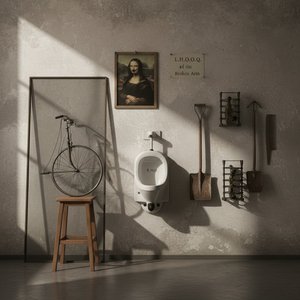
Marcel Duchamp: Konventionen herausfordern und die Kunst des 20. Jahrhunderts neu definieren
Entdecken Sie das revolutionäre Werk von Marcel Duchamp und seine Bedeutung für die moderne Kunst. Erfahren Sie mehr über Dadaismus, Readymades und den Einfluss auf die Konzeptkunst – fundiert analysiert & verständlich erklärt.