 Vorschau anzeigen
 Versenden
 Teilen
 Details anzeigen

 Herunterladen
 Ähnliche Objekte
 Röntgenaufnahme
 Diashow
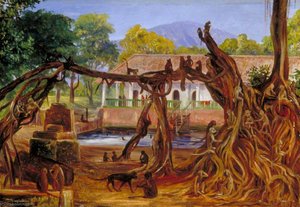
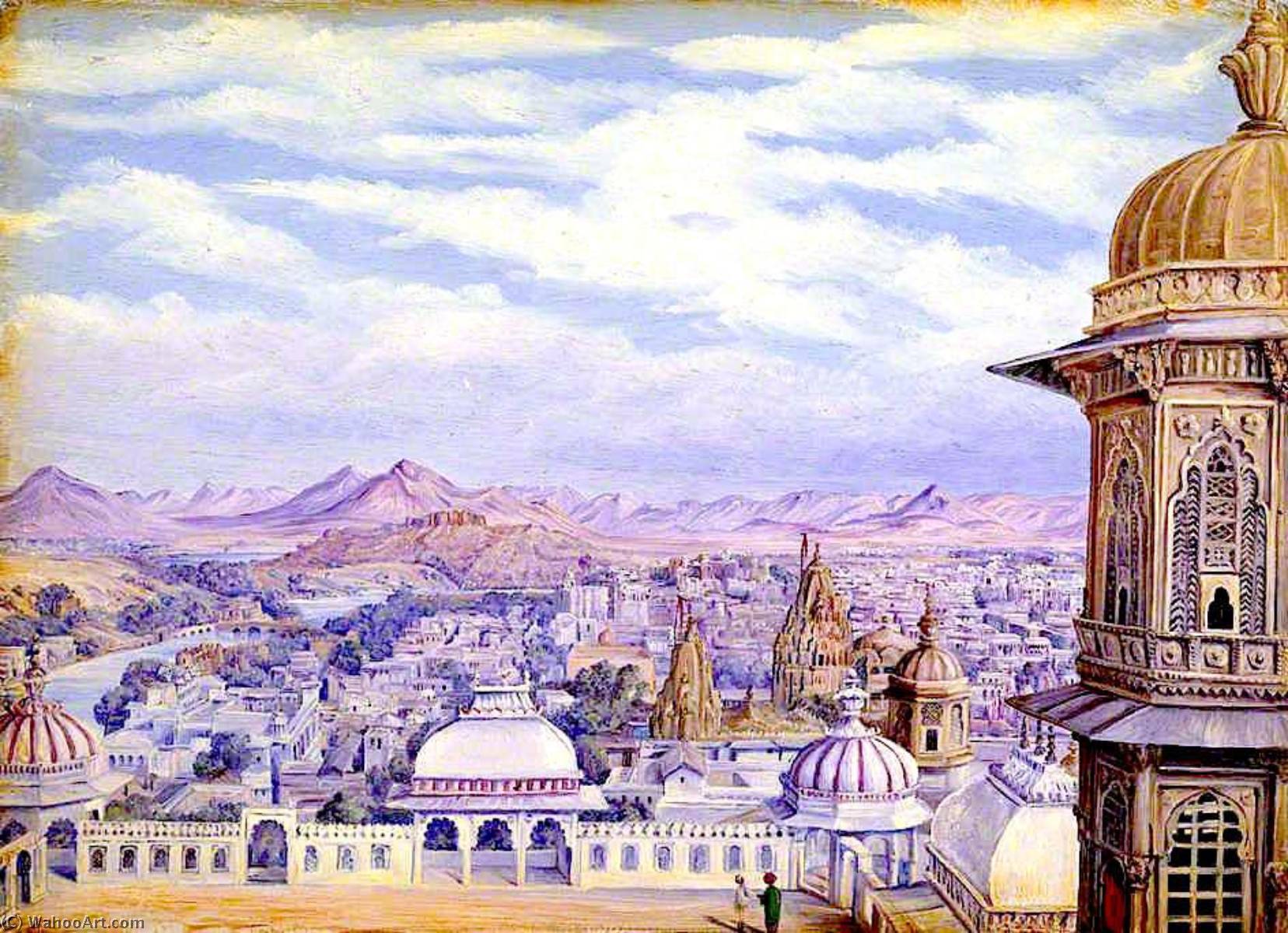
Aus dem Palast, Oodipore. Jan. 1879
 Aquarell
- Wandkunst
- Mughal Miniature Painting
 1879
1879 34.0 x 47.0 cm
 British Library
 Weiterlesen
Handgefertigte Ölreproduktion
Handgemaltes Ölgemälde auf Leinwand in Ihrer Wunschgröße und mit Rahmen, auf Bestellung von unseren Künstlern angefertigt. ( Druck bestellen Bild kaufen)




P118B $10

P118H $10

P118W $10

P438Z $10

P508JH $12

P508YH $12

P805H $10

P805Z $10

P919BZ $10

P919G $10

P919XJ $10

P959ZH $10

P968JZ $12

W106C $8

W218G $10

W218JH $8

W218Y $10

W307PJ $10

W316G $10

W316PJ $8

W316Y $10

W398PJ $8

W4111J $10

W500HY $15

W500JH $15

W692G $12

W849H $8

W940BG $15

W953PJ $8




Wählen Sie aus unseren vordefinierten Formaten, die den ursprünglichen Proportionen des Kunstwerks entsprechen.

Sie können Ihre eigenen Maße eingeben, um einen bestimmten Rahmen oder Platz auszufüllen. Wenn die gewählte Größe nicht den Proportionen des Originalbildes entspricht, werden wir das Kunstwerk entweder beschneiden oder das Gemälde durch zusätzliche, handgemalte Elemente erweitern. Ein digitales Mockup wird Ihnen zur Genehmigung zugesandt, bevor die Produktion beginnt.
Bitte beachten Sie, dass die Bildschirmvorschau nicht die tatsächliche Beschneidung oder Erweiterung widerspiegelt. Nur das Mockup zeigt die endgültige Komposition exakt an.
Obwohl Sondermaße verfügbar sind, empfehlen wir, eine Größe aus der vordefinierten Liste zu wählen, um die ursprünglichen Proportionen beizubehalten.
Nach der Bestellung wird das ArtsDot.com-Team dem Kunden Anweisungen per E-Mail zusenden und eine Mockup-Vorschau bereitstellen.
Weltweiter Versand () in nur 3 bis 4 Wochen statt der üblichen 5 Wochen. (21 August). Keine Kompromisse bei der Qualität.

Kostenloser weltweiter Expressversand

Hochwertige Leinenleinwand

Umfassender Versicherungsschutz beim Versand

Zollgebühren-Rückerstattungsgarantie

Garantie für exakte Farbtreue

60 Tage Rückgaberecht (nur bei Mängeln)

100% Geld-zurück-Garantie

Mengenrabatt verfügbar
 Die Glasoption ist nur für Größen unter 110 cm verfügbar.

Aus dem Palast, Oodipore. Jan. 1879
Art der Reproduktion
Format der Reproduktion
-


Gesamtpreis
$ 263
Beschreibung des Kunstwerks
Ein Panorama der Macht und Spiritualität: Marianne Norths “From the Palace, Oodipore”
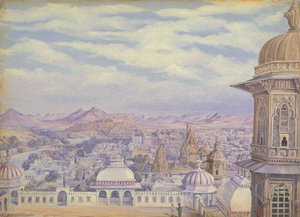
Marianne North’s “From the Palace, Oodipore, Janr. 1879” is more than just a depiction of an ancient Indian city; it's a window into the adventurous spirit and artistic vision of a Victorian woman who defied societal expectations to become a pioneering botanist and artist. This captivating watercolor on paper transports us to a realm of opulent palaces, towering temples, and a serene river landscape – all rendered with the meticulous detail characteristic of Mughal miniature painting, yet imbued with North’s distinctly personal observation.
The scene unfolds beneath an overcast sky, casting a soft, diffused light that lends the composition a sense of timelessness. The perspective is subtly compressed, creating a powerful illusion of depth without resorting to the stark realism favored in contemporary Western art. Instead, we are invited into a world where scale and grandeur are communicated through carefully arranged lines and geometric shapes – squares and rectangles defining the rigid architecture, spires reaching towards the heavens, and domes echoing the power of the ruling elite. The muted earth tones—ochres, browns, and pale blues—are masterfully blended, evoking the heat and dust of a distant land while maintaining an atmosphere of quiet majesty.
Die Wurzeln der Mughal-Malerei und Norths Einzigartigkeit
North’s work is deeply rooted in the traditions of Mughal miniature painting, a style that flourished in India during the 16th to 19th centuries. This technique, perfected by artists working for the Mughal emperors, emphasized intricate detail, flattened perspective, and a restrained color palette – all designed to convey wealth, power, and religious devotion. However, North doesn’t simply replicate this style; she adapts it with her own keen eye and artistic sensibility. The level of detail is extraordinary, meticulously capturing the textures of stone, the folds of fabric, and even the subtle reflections on the river's surface. Yet, there’s a noticeable softness to the brushstrokes, a gentle luminosity that distinguishes her work from the often-stark formality of its historical predecessors.
Crucially, North wasn’t merely an imitator. Her travels across Asia—spanning India, Persia, and Southeast Asia—provided her with unparalleled access to the subjects she painted. She spent years living in remote locations, meticulously documenting flora and fauna alongside her artistic pursuits. This firsthand experience is evident in the authenticity of the landscape and the subtle nuances of the architectural details. She wasn’t simply recording a scene; she was engaging with it, absorbing its essence and translating it onto paper.
Symbolik und die Bedeutung des Ortes
The city depicted in “From the Palace, Oodipore” is likely Oudh (Ayodhya), an ancient city of immense religious significance, traditionally believed to be the birthplace of Lord Rama. The towering temples, rendered with such reverence and detail, symbolize not only the power of the rulers but also the deep-seated faith that permeated Indian society. The river, a recurring motif in Mughal art, represents life, prosperity, and the flow of time – connecting the earthly realm to the divine.
Furthermore, the composition itself speaks volumes about North’s worldview. The layered perspective, with foreground structures receding into the distance, suggests a hierarchical society, mirroring the social order of the time. The careful arrangement of elements creates a sense of balance and harmony, reflecting the Victorian ideals of order and restraint that were prevalent in her era. It's a visual testament to both the grandeur of imperial power and the enduring spirit of faith.
Ein Meisterwerk für Sammler und Liebhaber – Eine hochwertige Reproduktion
“From the Palace, Oodipore” is a truly remarkable work—a synthesis of artistic skill, scientific observation, and personal adventure. ArtsDot offers exquisite hand-painted reproductions that faithfully capture the beauty and detail of this iconic piece. Whether you’re an art collector seeking to expand your collection or an interior designer searching for a captivating focal point, our reproduction provides an authentic representation of North's vision, bringing the spirit of the Mughal era into your home with unparalleled quality and artistry. The subtle nuances of color, texture, and light are meticulously recreated, ensuring that you experience the full emotional impact of this extraordinary artwork.
Ähnliche Kunstwerke
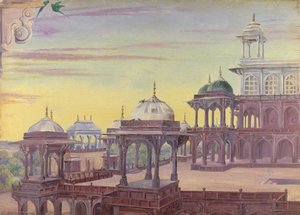
Über den Künstler
Marianne North: Ein Leben in Botanischer Kunst
Frühes Leben und Ausbildung
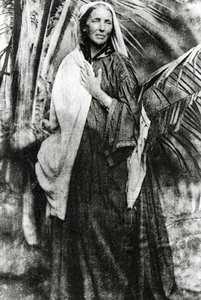
- Marianne North, geboren am 24. Oktober 1830 in Hastings, Vereinigtes Königreich, war die älteste Tochter einer wohlhabenden Landbesitzerfamilie.
- Ihr frühes Leben umfasste eine Gesangsausbildung bei Charlotte Helen Sainton-Dolby. Ihre Gesangsbeschäftigungen wurden jedoch durch Krankheit eingeschränkt.
- Nach diesem Rückschlag wandte sie sich der Malerei von Blumen zu, die dann zur bestimmenden Leidenschaft und dem Fokus ihres Lebenswerdegangs wurde.
Umfassende Reisen und botanische Entdeckungen
- Marianne North unternahm umfangreiche Reisen um die Welt, beginnend in ihren 40ern – ein bemerkenswert unabhängiges Unterfangen für eine Frau des viktorianischen Zeitalters.
- Ihre Reisen führten sie nach Syrien, dem Nil, Sizilien, Kanada, den Vereinigten Staaten, Jamaika, Brasilien, Teneriffa, Kalifornien, Japan, Borneo, Java, Ceylon (Sri Lanka), Indien, Australien und Neuseeland.
- Diese Reisen waren nicht nur Sightseeing; sie dokumentierten die Flora jeder Region detailliert durch botanische Gemälde.
- Sie entdeckte während ihrer Expeditionen zahlreiche Pflanzenarten und trug somit erheblich zum botanischen Wissen bei.
Künstlerischer Stil und Entwicklung
- Norths künstlerischer Stil ist durch seine detaillierte Realismus und lebendige Farbpalette gekennzeichnet.
- Sie arbeitete hauptsächlich in Ölfarben und schuf Gemälde, die den Wesenszug der exotischen Pflanzen und Landschaften mit bemerkenswerter Genauigkeit erfassten.
- Ihr Ansatz war größtenteils autodidaktisch; sie entwickelte ihre Fähigkeiten durch Beobachtung und Übung während ihrer Reisen.
- Obwohl sie nicht einer bestimmten Kunstrichtung angehören konnte, spiegeln ihre Werke Elemente des viktorianischen Naturalismus und der wissenschaftlichen Illustration wider.
Bekannte Werke und die Kew-Galerie
- Zu ihren bekanntesten Werken gehören Foliage, Flowers and Fruit of the Cashew, Tanjore, India, Elephants, Exotic Fish und Leaf Insect.
- Um die Bedeutung ihrer Sammlung zu würdigen, schenkte Marianne North rund 800 Gemälde an den Royal Botanic Gardens, Kew.
- Im Jahr 1882 wurde eine spezielle Galerie in Kew errichtet, um ihre Werke auszustellen – die Marianne North Gallery. Diese ist bis heute ein beliebtes Ausstellungsstück.
Vermächtnis und historische Bedeutung
- Marianne North stellte konventionelle viktorianische Erwartungen für Frauen in Frage, indem sie eine unabhängige Reise und eine professionelle künstlerische Karriere verfolgte.
- Ihre Gemälde liefern wertvolle Dokumentationen des Pflanzenleibs aus der ganzen Welt im 19. Jahrhundert und dienen sowohl als Kunstwerk als auch als wissenschaftliche Aufzeichnung.
- Die Restaurierung der Marianne North Gallery in Kew im Jahr 2008 unterstrich ihr bleibendes Vermächtnis und ihren Beitrag zur Botanik und Kunst.
- Sie wird als Pionierin der botanischen Kunst und eine abenteuerlustige Seele remembered, die gesellschaftliche Normen zu überwinden wagte, um ihren Leidenschaften nachzugehen.
Marianne North
1830 - 1890 , Vereinigtes Königreich
Kurzinfos
- Bemerkenswerte Werke:
- Foliage, Flowers and Fruit...
- Elephants
- Exotic Fish
- Leaf Insect
- Geburtsdatum: 24. Oktober 1830
- Geburtsort: Hastings, Vereinigtes Königreich
- Künstlerische Richtung: Botanische Kunst, Naturalismus
- Nationalität: Britisch
- Sterbedatum: 30. August 1890
- Vollständiger Name: Marianne North
Ähnliche Artikel
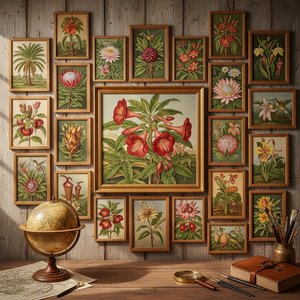
Marianne North: Die 25 schönsten Blumenmalereien der viktorianischen Reisenden | ArtsDot
Entdecken Sie die 25 schönsten Werke der viktorianischen Blumenmalerin Marianne North! Erleben Sie ihre exotischen Reisebilder & botanischen Illustrationen. Hochwertige Kunst Reproduktionen für Ihr Zuhause auf ArtsDot.com.
Die 10 legendärsten Aquarellwerke der Kunstgeschichte – Meisterwerke für Ihr Zuhause
Entdecken Sie die 10 legendärsten Aquarellwerke der Kunstgeschichte! Von Turner bis Monet – erleben Sie die Geschichten, Techniken & Farben dieser Meisterwerke. Finden Sie hochwertige Kunstdrucke auf ArtsDot.com und gestalten Sie Ihr Zuhause mit zeitloser Eleganz.
Ephemeral Visions: Exploring the Artistic Legacy & Contemporary Practice of Watercolor Painting
Explore the captivating world of watercolor painting! Discover its rich history, essential techniques, influential artists & collecting tips. A comprehensive guide for art enthusiasts from ArtsDot.
Flüchtige Visionen: Die Geschichte und emotionale Resonanz der Aquarellmalerei
Entdecken Sie die faszinierende Welt der Aquarellmalerei! Von historischen Ursprüngen bis zu modernen Techniken – wir bieten Expertenwissen, Inspiration und Tipps für Anfänger & Fortgeschrittene.
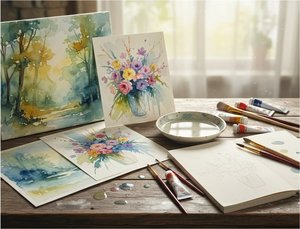
Ephemeral Visions: Exploring the Artistic Legacy & Nuances of Watercolor Painting
Explore the captivating world of watercolor painting! Discover its rich history, essential techniques, influential artists & collecting tips from art experts. A comprehensive guide for enthusiasts.