

 Vorschau anzeigen
 Versenden
 Teilen
 Details anzeigen

 Herunterladen
 Ähnliche Objekte
 Röntgenaufnahme
 Diashow
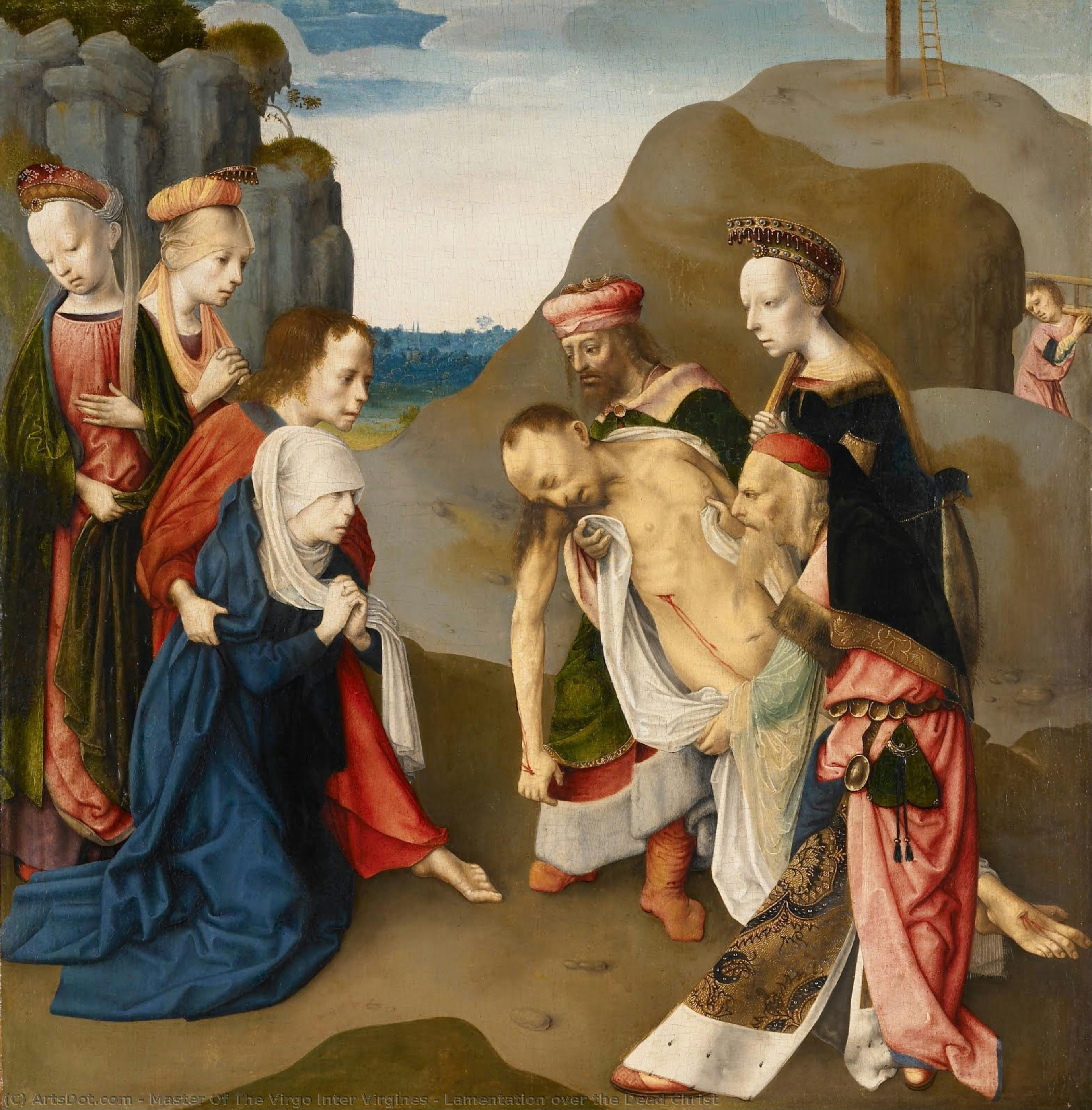
Lamentation over the Dead Christ
 Oil
Oil- WallArt
- Netherlandish realism
 1487
1487- Renaissance
 5630.0 x 5520.0 cm
 Walker Art Gallery
 Weiterlesen
Erwerben Sie ein hochauflösendes, optimiertes digitales Bild, das der Online-Vorschau weit überlegen ist.
Jede Datei wird von unseren hauseigenen Spezialisten mit modernsten Werkzeugen und fachmännischer manueller Retusche sorgfältig vorbereitet. Wir stellen sicher, dass jedes Bild eine außergewöhnliche Klarheit, präzise Farbgenauigkeit und feinste Details aufweist.
Die endgültige Datei wird innerhalb von 72 Stunden per E-Mail zugestellt und ist für den sofortigen Einsatz in professionellen, redaktionellen und Druckumgebungen optimiert. Es handelt sich um dieselbe Qualität, der führende Designstudios, Verlage und Galerien vertrauen.
Digitales Bild
Laden Sie eine hochauflösende Datei für die persönliche Präsentation, den Druck und kreative Projekte herunter. ( Druck bestellen Handgemalte Reproduktion bestellen)
In jeder Bestellung digitaler Bilder enthalten
Professionelle digitale Bereitstellung, garantiert
Wenn Sie sich für ArtsDot.com entscheiden, erhalten Sie nicht nur ein Bild – Sie erhalten ein professionell aufbereitetes digitales Kunstwerk, das mit höchster Präzision erstellt und durch eine Zufriedenheitsgarantie abgesichert wird. Hier ist alles, was automatisch mit Ihrer Bestellung geliefert wird:

Schnelle E-Mail-Zustellung
Ihre hochauflösende digitale Bilddatei wird Ihnen innerhalb von 72 Stunden nach der Bestellung per E-Mail zugestellt – bereit zur sofortigen Verwendung.

KI-optimierte digitale Datei
Ihre Kunstwerke werden professionell mithilfe fortschrittlicher KI-Tools und manueller Bearbeitung optimiert, um maximale Detailtreue, Klarheit und Farbgenauigkeit zu gewährleisten.

Lebenslanger kostenloser Neudruckservice
Datei versehentlich gelöscht oder verloren? Keine Sorge – wir senden sie Ihnen jederzeit kostenlos erneut zu.

Keine Einfuhrgebühren – jemals
Genießen Sie Ihr Kunstwerk sofort ohne Zollgebühren, Einfuhrabgaben oder Versandkosten – digitale Downloads sind immer steuerfrei.

Garantierte Farbtreue
Wir garantieren, dass Ihr digitales Bild mithilfe professioneller Werkzeuge und Farbmanagement die Originalfarben so präzise wie möglich wiedergibt.

60-Tage-Zufriedenheitsgarantie
Sollten Sie mit Ihrem digitalen Bild nicht zufrieden sein, werden wir es überarbeiten oder Ihnen innerhalb von 60 Tagen 100% erstatten – ohne Wenn und Aber.

100% Geld-zurück-Garantie
Nicht zufrieden? Erhalten Sie innerhalb von 60 Tagen nach Erhalt Ihrer digitalen Datei eine vollständige Rückerstattung – ohne Angabe von Gründen.

Rabatte bei Großbestellungen
3 Bilder kaufen, 10% sparen – 5 Bilder kaufen, 15% sparen – Ab 10 Bildern 20% sparen. Ideal für kreative Projekte, Galerien und Agenturen.
Details zum Sammlerstück
A Somber Symphony of Grief
In the quiet, heavy atmosphere of the late fifteenth century, a profound stillness settles over the canvas of Lamentation over the Dead Christ. This evocative masterpiece, attributed to the enigmatic Master of the Virgo inter Virgines, captures one of the most poignant moments in Christian iconography: the mourning of Christ following his descent from the cross. The scene is not merely a depiction of death, but a visceral exploration of human sorrow. As we gaze upon the figures gathered around the lifeless body, we are drawn into a tight-knit circle of grief, where every bowed head and tear-streaked face serves as a mirror to our own capacity for loss. The composition, anchored by the pale, limp form of Christ, creates a powerful focal point that commands the viewer's immediate emotional attention.
The artist’s technique reflects the burgeoning realism of the Netherlandish tradition, moving away from the stylized elegance of earlier eras toward a more grounded, tactile reality. Through meticulous brushwork, the Master brings to life the textures of heavy drapery, the ruggedness of the hillside, and the delicate, translucent quality of skin in the throes of mourning. The lighting plays a crucial role in this narrative; it does not merely illuminate the scene but seems to emanate from the tragedy itself, casting soft shadows that deepen the folds of cloth and the hollows of eyes. This mastery of light and shadow—a precursor to the dramatic chiaroscuro seen in later centuries—imbues the work with a sculptural weight, making the figures feel present, breathing, and profoundly human.
Symbolism and the Weight of Devotion
Beyond its surface-level tragedy, the painting is rich with the symbolic language characteristic of the Dutch School. The arrangement of the nine visible figures is far from accidental; it creates a rhythmic movement of sorrow that guides the eye through the landscape of death. Each individual, from those kneeling in fervent prayer to those standing in silent contemplation, represents a different facet of devotion and communal mourning. The hillside setting, while providing a sense of place, also serves as a symbolic boundary between the earthly realm of suffering and the divine promise of resurrection. The starkness of the landscape emphasizes the isolation of death, yet the closeness of the group suggests that even in the deepest darkness, humanity finds solace in shared experience.
For the discerning collector or interior designer, this piece offers more than just historical significance; it provides a profound emotional anchor for any space. A high-quality reproduction of this work brings a sense of timelessness and contemplative depth to a room. Whether placed in a quiet study, a grand gallery, or a sophisticated living area, the Lamentation over the Dead Christ acts as a window into the soul of the Renaissance. It invites conversation, prompts reflection, and adds a layer of intellectual and spiritual gravity to an environment. To possess such a work is to hold a piece of history that continues to resonate with the universal themes of love, loss, and the enduring strength of the human spirit.
Ähnliche Kunstwerke
Biografie des Künstlers
The Enigmatic Master of the Virgo Inter Virgines
The Master of the Virgo inter Virgines remains one of the most elusive figures in fifteenth-century Netherlandish art, a painter whose identity has stubbornly resisted definitive attribution despite decades of scholarly investigation. His name derives from an iconic altarpiece housed in Amsterdam’s Rijksmuseum – *The Virgin and Child with Four Holy Virgins*, completed around 1490 – a work that immediately established him as a pioneer of realism within the burgeoning Dutch School, marking a decisive break from the prevailing Mannerist tendencies prevalent across Europe. Despite numerous attempts to pinpoint his origins and trace his artistic lineage, his true identity continues to elude researchers, cementing his place as a shadowy presence in art history.- Early Life & Artistic Training: Precise biographical details concerning the Master’s formative years are scarce. Evidence suggests he was born sometime around 1460/65, likely in Delft, though definitive documentation is lacking. His artistic training remains shrouded in mystery, with speculation centering on influences from Ghent – specifically Hugo van der Goes and Dirk Bouts – whose expressive figures profoundly impacted his stylistic approach.
- The Virgo Inter Virgines Altarpiece: This monumental panel constitutes the cornerstone of our understanding of the Master’s oeuvre. Executed circa 1490, it exemplifies his uncompromising commitment to naturalism, eschewing decorative embellishments in favor of stark realism and conveying profound emotional depth through masterful use of color and composition. The altarpiece's dramatic depiction of Christ’s Passion – featuring a crucified figure surrounded by grieving Mary and saints – showcases the Master’s unparalleled skill in capturing human emotion and anatomical accuracy.
- A Corpus of Diverse Works: Beyond *The Virgin and Child*, the Master produced approximately twenty paintings, demonstrating remarkable versatility across genres and subjects. These include depictions of biblical scenes—such as *The Crucifixion* (Bowes Museum) and *The Entombment* (Walker Art Gallery)—as well as portraits and landscapes. Notably, he collaborated extensively with engravers, producing numerous woodcuts for publications that circulated throughout Europe during his lifetime.
- Delft & The Dutch School: The Master’s workshop was centered in Delft, a city undergoing rapid urbanization and artistic transformation during the late fifteenth century. He stands as one of the foremost representatives of the nascent Dutch School, which distinguished itself from its continental counterparts by prioritizing naturalistic observation and rejecting Mannerist conventions—such as stylized drapery and artificial perspective—in favor of clarity and emotional sincerity.
- Legacy & Influence: The Master’s stylistic innovations profoundly shaped the trajectory of Netherlandish painting in subsequent decades. His unwavering dedication to realism served as a catalyst for artistic experimentation and established him as a precursor to generations of artists who would champion naturalism as the highest form of artistic expression. Though his identity remains elusive, his enduring legacy continues to inspire admiration and scholarly debate—a testament to the power of art to transcend time and captivate audiences across centuries.
- Kren, Rudolf & Marx, Norbert. “Fifteenth-century Netherlandish painting at the Museo Nacional del Prado.” Museo del Prado, 2024, p. 284.
Kurzinfos
- Artistic Movement Or Style: Realism
- Artists Or Movements Influenced By This Artist: ['Dutch School']
- Artists Who Influenced This Artist:
- Hugo van der Goes
- Geertgen tot Sint Jans
- Full Name: Master of the Virgo inter Virgines
- Nationality: Dutch
- Notable Artworks:
- Virgin and Child with Sts Catherine, Cecilia, Barbara, and Ursula
- Crucifixion
- Place Of Birth: Delft

