

 Vorschau anzeigen
 Versenden
 Teilen
 Details anzeigen

 Herunterladen
 Ähnliche Objekte
 Röntgenaufnahme
 Diashow
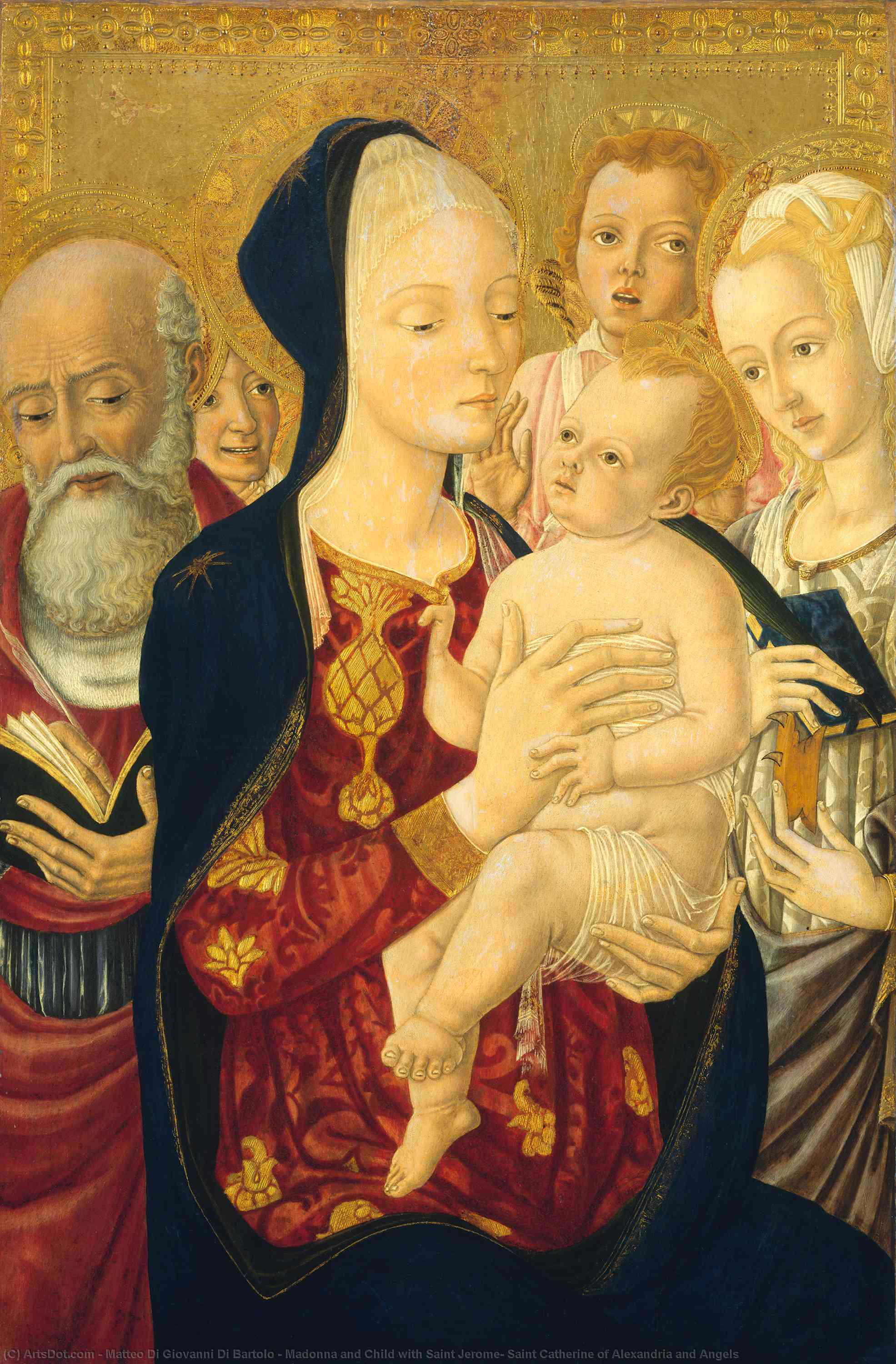
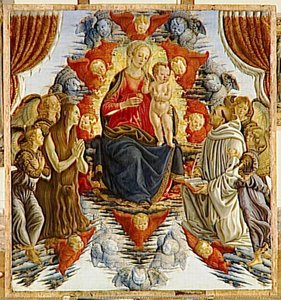
Madonna and Child with Saint Jerome, Saint Catherine of Alexandria and Angels
 1470
1470 66.0 x 44.0 cm
 Weiterlesen
Erwerben Sie ein hochauflösendes, optimiertes digitales Bild, das der Online-Vorschau weit überlegen ist.
Jede Datei wird von unseren hauseigenen Spezialisten mit modernsten Werkzeugen und fachmännischer manueller Retusche sorgfältig vorbereitet. Wir stellen sicher, dass jedes Bild eine außergewöhnliche Klarheit, präzise Farbgenauigkeit und feinste Details aufweist.
Die endgültige Datei wird innerhalb von 72 Stunden per E-Mail zugestellt und ist für den sofortigen Einsatz in professionellen, redaktionellen und Druckumgebungen optimiert. Es handelt sich um dieselbe Qualität, der führende Designstudios, Verlage und Galerien vertrauen.
Digitales Bild
Laden Sie eine hochauflösende Datei für die persönliche Präsentation, den Druck und kreative Projekte herunter. ( Druck bestellen Handgemalte Reproduktion bestellen)
In jeder Bestellung digitaler Bilder enthalten
Professionelle digitale Bereitstellung, garantiert
Wenn Sie sich für ArtsDot.com entscheiden, erhalten Sie nicht nur ein Bild – Sie erhalten ein professionell aufbereitetes digitales Kunstwerk, das mit höchster Präzision erstellt und durch eine Zufriedenheitsgarantie abgesichert wird. Hier ist alles, was automatisch mit Ihrer Bestellung geliefert wird:

Schnelle E-Mail-Zustellung
Ihre hochauflösende digitale Bilddatei wird Ihnen innerhalb von 72 Stunden nach der Bestellung per E-Mail zugestellt – bereit zur sofortigen Verwendung.

KI-optimierte digitale Datei
Ihre Kunstwerke werden professionell mithilfe fortschrittlicher KI-Tools und manueller Bearbeitung optimiert, um maximale Detailtreue, Klarheit und Farbgenauigkeit zu gewährleisten.

Lebenslanger kostenloser Neudruckservice
Datei versehentlich gelöscht oder verloren? Keine Sorge – wir senden sie Ihnen jederzeit kostenlos erneut zu.

Keine Einfuhrgebühren – jemals
Genießen Sie Ihr Kunstwerk sofort ohne Zollgebühren, Einfuhrabgaben oder Versandkosten – digitale Downloads sind immer steuerfrei.

Garantierte Farbtreue
Wir garantieren, dass Ihr digitales Bild mithilfe professioneller Werkzeuge und Farbmanagement die Originalfarben so präzise wie möglich wiedergibt.

60-Tage-Zufriedenheitsgarantie
Sollten Sie mit Ihrem digitalen Bild nicht zufrieden sein, werden wir es überarbeiten oder Ihnen innerhalb von 60 Tagen 100% erstatten – ohne Wenn und Aber.

100% Geld-zurück-Garantie
Nicht zufrieden? Erhalten Sie innerhalb von 60 Tagen nach Erhalt Ihrer digitalen Datei eine vollständige Rückerstattung – ohne Angabe von Gründen.

Rabatte bei Großbestellungen
3 Bilder kaufen, 10% sparen – 5 Bilder kaufen, 15% sparen – Ab 10 Bildern 20% sparen. Ideal für kreative Projekte, Galerien und Agenturen.
Ähnliche Kunstwerke
Biografie des Künstlers
A Sienese Master of Renaissance Grace: The Life and Art of Matteo di Giovanni
Matteo di Giovanni di Bartolo, born around 1430 in Borgo Sansepolcro, stands as a compelling figure within the vibrant tapestry of the Sienese School during the Italian Renaissance. Though his early life remains somewhat shrouded in mystery—details regarding his apprenticeship are scarce—his artistic journey quickly became inextricably linked with the city of Siena, where he firmly established himself as a painter of considerable renown. His family’s relocation to Siena marked not merely a change of address but an immersion into a rich artistic tradition that would profoundly shape his style and subject matter. Twice married, first to a noblewoman in 1463 and later to a wealthy widow, Matteo benefited from the financial stability these unions provided, allowing him to acquire property and raise a large family—a testament to his success both as an artist and a provider.Early Influences and Collaborative Beginnings
The artistic lineage of Matteo di Giovanni is fascinatingly complex, reflecting a synthesis of diverse influences. While speculation suggests training within the workshop of Lorenzo di Pietro, known as Vecchietta, it’s clear that he absorbed the stylistic nuances of Stefano di Giovanni, affectionately called Sassetta, and Domenico di Bartolo—cornerstones of Sienese painting. Beyond these local masters, Matteo demonstrated an awareness of broader artistic currents, notably the miniaturist Girolamo da Cremona and the Florentine painter Antonio del Pollaiuolo. This openness to external innovation would become a defining characteristic of his work. In 1452, he entered into partnership with Giovanni di Pietro, sharing living quarters in Siena’s San Salvatore neighborhood. This collaboration wasn't limited to shared space; they undertook joint projects, including the coloring and gilding of sculptures—a common practice for artists of the period—and contributed to the embellishment of organ shutters and chapels within the Siena Cathedral. This early phase reveals Matteo as a versatile craftsman eager to hone his skills through diverse artistic endeavors.The Pienza Commission and Stylistic Development
A pivotal moment in Matteo’s career arrived with his selection, alongside three other Sienese painters, to create altarpieces for the chapels of the newly constructed Pienza Cathedral during the urban renewal spearheaded by Pope Pius II. This prestigious commission, undertaken between 1460 and 1462, provided a crucial platform for Matteo to showcase his burgeoning talent and solidify his artistic identity. The three altarpieces he produced offer invaluable insight into his evolving style. The first, depicting the *Madonna and Saints*, reveals echoes of Sano di Pietro’s compositions and figure types, while the draperies bear the imprint of Vecchietta's influence. Notably, the Saint Catherine type draws inspiration from Domenico di Bartolo. Above this panel, a dramatic *Flagellation of Christ* scene introduces a new dynamism—violent action, anatomically correct bodies, and volumetric plasticity—suggesting an engagement with the progressive draftsmanship flourishing in Florence under Pollaiuolo’s guidance. This blending of local tradition with Florentine innovation became a hallmark of Matteo's artistic approach.Mature Works: The *Massacre of the Innocents* and Beyond
As Matteo matured, his work increasingly reflected a refined sensibility and a growing mastery of narrative detail. The altarpiece commissioned for the oratory of Santa Maria delle Nevi in Siena (1477) and the *Santa Barbara* altarpiece created for the baker’s guild's chapel in San Domenico (1478-79) demonstrate his continued exploration of religious themes. However, it is the *Massacre of the Innocents*, signed and dated 1482, that is widely considered his masterpiece. This powerful depiction of Herod’s decree—a scene fraught with anguish and brutality—showcases Matteo's ability to convey complex emotions through expressive figures and a carefully constructed composition. During this period, he also began incorporating idyllic and naturalistic landscape scenes into his paintings, characterized by delicate lyricism and subtle atmospheric effects.Historical Significance and Lasting Legacy
Matteo di Giovanni’s significance lies not in radical innovation but in his skillful synthesis of diverse artistic influences and his ability to imbue traditional Sienese painting with a renewed sense of vitality and emotional depth. He successfully navigated the shifting currents of Renaissance art, absorbing lessons from Florence while remaining deeply rooted in the aesthetic principles of his native Siena. His paintings—characterized by gracious figures, harmonious color palettes, and meticulous attention to detail—continue to captivate viewers today. His work represents a bridge between the late Gothic traditions of Sienese painting and the emerging Renaissance style, offering a unique perspective on the artistic landscape of 15th-century Italy. Matteo di Giovanni’s legacy endures as a testament to his talent, versatility, and enduring contribution to the rich cultural heritage of Siena.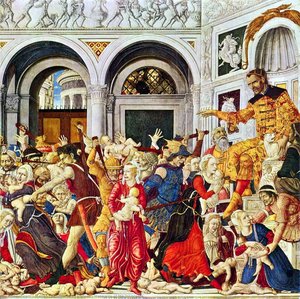
Matteo Di Giovanni Di Bartolo
1435 - 1495

