

 Vorschau anzeigen
 Versenden
 Teilen
 Details anzeigen

 Herunterladen
 Ähnliche Objekte
 Röntgenaufnahme
 Diashow
 Statistiken
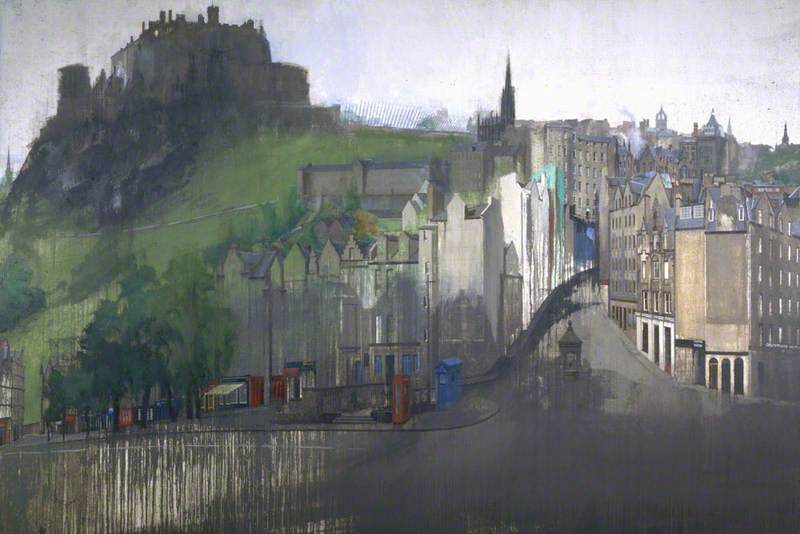
Edinburgh (Old Town)
 1993
1993 183.0 x 274.0 cm
 Weiterlesen
Handgefertigte Ölreproduktion
Handgemaltes Ölgemälde auf Leinwand in Ihrer Wunschgröße und mit Rahmen, auf Bestellung von unseren Künstlern angefertigt. ( Zu Druck wechseln Zum digitalen Bild wechseln)




































Wählen Sie aus unseren vordefinierten Formaten, die den ursprünglichen Proportionen des Kunstwerks entsprechen.

Sie können Ihre eigenen Maße eingeben, um einen bestimmten Rahmen oder Platz auszufüllen. Wenn die gewählte Größe nicht den Proportionen des Originalbildes entspricht, werden wir das Kunstwerk entweder beschneiden oder das Gemälde durch zusätzliche, handgemalte Elemente erweitern. Ein digitales Mockup wird Ihnen zur Genehmigung zugesandt, bevor die Produktion beginnt.
Bitte beachten Sie, dass die Bildschirmvorschau nicht die tatsächliche Beschneidung oder Erweiterung widerspiegelt. Nur das Mockup zeigt die endgültige Komposition exakt an.
Obwohl Sondermaße verfügbar sind, empfehlen wir, eine Größe aus der vordefinierten Liste zu wählen, um die ursprünglichen Proportionen beizubehalten.
Nach der Bestellung wird das ArtsDot.com-Team dem Kunden Anweisungen per E-Mail zusenden und eine Mockup-Vorschau bereitstellen.
Weltweiter Versand () in nur 3 bis 4 Wochen statt der üblichen 5 Wochen. (11 September). Keine Kompromisse bei der Qualität.

Kostenloser weltweiter Expressversand

Hochwertige Leinenleinwand

Umfassender Versicherungsschutz beim Versand

Zollgebühren-Rückerstattungsgarantie

Garantie für exakte Farbtreue

100-Tage-Rückgaberecht (nur bei Mängeln)

100% Geld-zurück-Garantie

Mengenrabatt verfügbar
 Die Glasoption ist nur für Größen unter 110 cm verfügbar.

Edinburgh (Old Town)
Art der Reproduktion
Format der Reproduktion
-


Gesamtpreis
$ 263
Ähnliche Kunstwerke








Über den Künstler
A Visionary of Light and Atmosphere
The art of Michael Andrews (1928–1995) exists in a delicate space between the tangible world and the ethereal realm of thought. A British painter of profound technical mastery, Andrews possessed a rare ability to infuse landscapes and social scenes with a sense of psychological depth and luminous energy. Born in Norwich, England, his early artistic sensibilities were nurtured within the halls of the Norwich School of Fine Art, where a natural talent began to coalesce into a sophisticated modernist vision. His formative years were defined by an engagement with the dynamic rhythms of Vorticism, which he would later soften with a lyrical, almost dreamlike approach to the natural world.
His education at the Slade School of Fine Art served as a crucible for his development, placing him alongside legendary figures such as Lucian Freud and William Coldstream. This period of intense study under masters like Lawrence Gowing and William Townsend provided him with a rigorous foundation in draughtsmanship and observation. However, it was perhaps his time spent in Egypt during his National Service that truly expanded his chromatic palette, introducing him to the vibrant textures and searing light of the desert—elements that would forever haunt the periphery of his compositions.
The Symbology of the Self and the City
As Andrews’ career progressed, his work moved away from the immediate social observations of London's nightlife toward more profound, symbolic explorations. He became deeply fascinated by the concept of the "skin-encapsulated ego," a psychological notion that found its visual manifestation in his celebrated Lights series. In these works, created between 1970 and 1974, Andrews utilized the motif of a balloon drifting through urban landscapes to represent the fragile, floating nature of human consciousness. Inspired by the Symbolist poetry of Arthur Rimbaud, specifically Les Illuminations, these paintings sought to capture a state of enlightenment and an objective, unselfconscious vision of the world.
The imagery within this series is both haunting and beautiful, often featuring balloons suspended over neon-lit streets or amidst vast, atmospheric vistas. This period of his work demonstrates a remarkable synthesis of realism and fantasy, where the boundaries between the physical environment—such as the bright lights of Toronto or the rural stretches of Gloucestershire—and the internal landscape of the mind begin to dissolve. His ability to manipulate light, making it appear both as a source of external illumination and an internal spiritual glow, remains one of his most enduring legacies.
Legacy and Artistic Significance
Throughout his decades-long career, Andrews remained a figure of immense respect among his peers, moving through various artistic circles including the Norwich Twenty Group and teaching at prestigious institutions like the Slade and Chelsea Schools of Art. His versatility allowed him to navigate diverse subject matters, from formal portraiture and intimate depictions of social gatherings to expansive, surrealist landscapes featuring tropical fish or the iconic Ayers Rock in Australia.
The historical significance of Michael Andrews lies in his refusal to be tethered to a single movement. Instead, he created a personal visual language that bridged the gap between the structured discipline of postwar British realism and a more fluid, emotive modernism. His contributions are preserved in some of the world's most esteemed collections, including the Tate Gallery, ensuring that his unique exploration of light, memory, and the human spirit continues to resonate with viewers long after his passing.
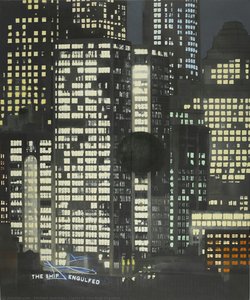
michael andrews
1928 - 1995
Kurzinfos
- Artistic Movement Or Style: Vorticism
- Artists Or Movements Influenced By This Artist: ['Eduardo Paolozzi']
- Artists Who Influenced This Artist:
- William Coldstream
- Lucian Freud
- Date Of Birth: October 30, 1928
- Date Of Death: July 19, 1995
- Full Name: Michael James Andrews
- Nationality: British
- Notable Artworks:
- A Man Who Suddenly Fell Over
- Sax Ad 832
- Place Of Birth: Norwich, England