 Vorschau anzeigen
 Versenden
 Teilen
 Details anzeigen

 Herunterladen
 Ähnliche Objekte
 Röntgenaufnahme
 Diashow
 Stats
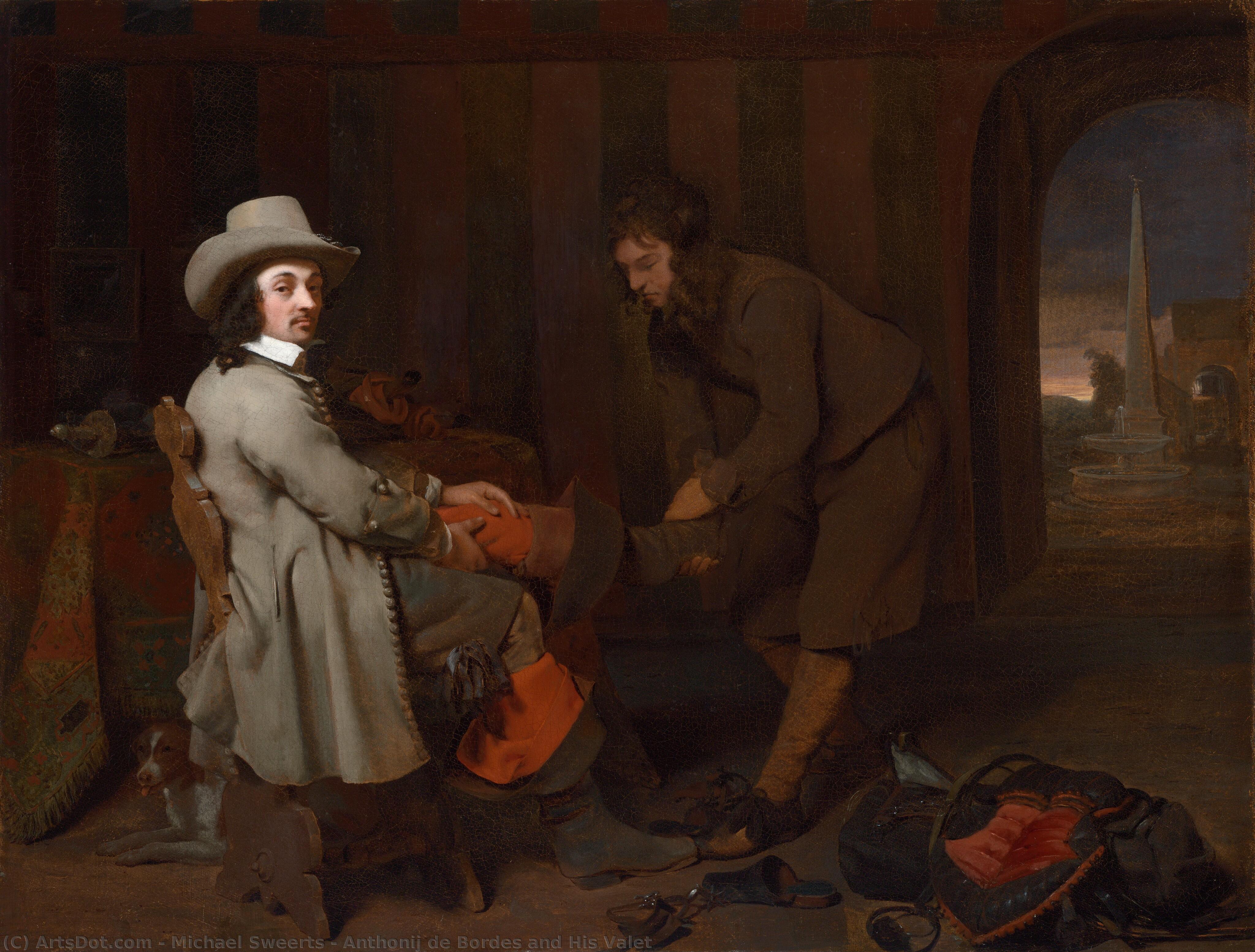
StatsAnthonij de Bordes and His Valet
 1648
1648 70.0 x 86.0 cm
 Weiterlesen
Erwerben Sie ein hochauflösendes, optimiertes digitales Bild, das der Online-Vorschau weit überlegen ist.
Jede Datei wird von unseren hauseigenen Spezialisten mit modernsten Werkzeugen und fachmännischer manueller Retusche sorgfältig vorbereitet. Wir stellen sicher, dass jedes Bild eine außergewöhnliche Klarheit, präzise Farbgenauigkeit und feinste Details aufweist.
Die endgültige Datei wird innerhalb von 72 Stunden per E-Mail zugestellt und ist für den sofortigen Einsatz in professionellen, redaktionellen und Druckumgebungen optimiert. Es handelt sich um dieselbe Qualität, der führende Designstudios, Verlage und Galerien vertrauen.
Digitales Bild
Laden Sie eine hochauflösende Datei für die persönliche Präsentation, den Druck und kreative Projekte herunter. ( Switch to Print Handgemalte Reproduktion bestellen)
In jeder Bestellung digitaler Bilder enthalten
Professionelle digitale Bereitstellung, garantiert
Wenn Sie sich für ArtsDot.com entscheiden, erhalten Sie nicht nur ein Bild – Sie erhalten ein professionell aufbereitetes digitales Kunstwerk, das mit höchster Präzision erstellt und durch eine Zufriedenheitsgarantie abgesichert wird. Hier ist alles, was automatisch mit Ihrer Bestellung geliefert wird:

Schnelle E-Mail-Zustellung
Ihre hochauflösende digitale Bilddatei wird Ihnen innerhalb von 72 Stunden nach der Bestellung per E-Mail zugestellt – bereit zur sofortigen Verwendung.

KI-optimierte digitale Datei
Ihre Kunstwerke werden professionell mithilfe fortschrittlicher KI-Tools und manueller Bearbeitung optimiert, um maximale Detailtreue, Klarheit und Farbgenauigkeit zu gewährleisten.

Lebenslanger kostenloser Neudruckservice
Datei versehentlich gelöscht oder verloren? Keine Sorge – wir senden sie Ihnen jederzeit kostenlos erneut zu.

Keine Einfuhrgebühren – jemals
Genießen Sie Ihr Kunstwerk sofort ohne Zollgebühren, Einfuhrabgaben oder Versandkosten – digitale Downloads sind immer steuerfrei.

Garantierte Farbtreue
Wir garantieren, dass Ihr digitales Bild mithilfe professioneller Werkzeuge und Farbmanagement die Originalfarben so präzise wie möglich wiedergibt.

100-Tage-Zufriedenheitsgarantie
Wenn Sie mit Ihrem digitalen Bild nicht zufrieden sind, werden wir es überarbeiten oder 100% innerhalb von 100 Tagen erstatten – ohne Wenn und Aber.

100% Geld-zurück-Garantie
Nicht zufrieden? Erhalten Sie innerhalb von 100 Tagen nach Erhalt Ihrer digitalen Datei eine vollständige Rückerstattung – ohne Wenn und Aber.

Rabatte bei Großbestellungen
3 Bilder kaufen, 10% sparen – 5 Bilder kaufen, 15% sparen – Ab 10 Bildern 20% sparen. Ideal für kreative Projekte, Galerien und Agenturen.
Ähnliche Kunstwerke





Biografie des Künstlers
The Enigmatic Vision of Michael Sweerts
Michael Sweerts, a name that resonates with quiet intensity in the annals of 17th-century painting, remains an artist shrouded in mystery. Born in Brussels around 1618, his life is documented sparsely, leaving much to be inferred from the compelling body of work he left behind. Unlike many of his contemporaries who enjoyed patronage and a well-trodden path through artistic circles, Sweerts appears to have deliberately cultivated a degree of isolation, choosing instead to forge an independent style deeply rooted in observation and imbued with a unique spiritual sensibility. He wasn't part of the established guilds or academies; rather, he seems to have operated on the periphery, attracting a small but devoted following who appreciated his unconventional approach. This independence allowed him to pursue his artistic vision without compromise, resulting in paintings that are both strikingly original and profoundly moving.A Life Less Ordinary: Travels and Artistic Formation
The details of Sweerts’ early training remain elusive. It is believed he initially studied under Hendrick van Balen I, a prominent painter known for his mythological and allegorical scenes. However, the influence of van Balen quickly faded as Sweerts embarked on an extraordinary series of travels that profoundly shaped his artistic development. He journeyed extensively throughout Europe – Rome being a pivotal destination where he spent considerable time between 1640 and 1650. This period was crucial in forming his distinctive style, absorbing the classical traditions of Italian Renaissance masters like Raphael and Caravaggio, but filtering them through his own intensely personal lens. He also travelled to Flanders, France, and possibly even further afield. These journeys weren’t merely about acquiring artistic skills; they were a quest for authentic experience, a desire to understand different cultures and ways of life which would later be reflected in the diverse subjects he chose to paint. His travels are documented through dated sketches and paintings depicting scenes from various locations, offering glimpses into his peripatetic existence.Themes of Humanity: Genre Scenes and Spiritual Inquiry
Sweerts’ oeuvre is remarkably focused, primarily consisting of genre scenes – depictions of everyday life, often featuring peasants engaged in simple activities like eating, drinking, or playing music. However, to categorize these paintings as mere “genre” would be a gross simplification. Sweerts elevates the mundane to the level of profound spiritual inquiry. His figures are not idealized; they are rendered with unflinching realism, their faces etched with character and dignity. He eschewed the opulent settings and dramatic narratives favored by many of his contemporaries, instead focusing on the quiet moments of human existence. His paintings often carry a subtle moralizing tone, but it’s not preachy or didactic; rather, it's an invitation to contemplate the virtues of simplicity, humility, and compassion. He frequently depicted scenes of children – playing, learning, or simply being present – imbuing them with a sense of innocence and vulnerability that is deeply affecting. These depictions are often interpreted as allegories for spiritual growth, suggesting that true wisdom can be found in the uncorrupted hearts of the young.A Unique Technique: Precision, Light, and Emotional Resonance
Sweerts’ technical mastery is evident in his meticulous attention to detail and his subtle use of light and shadow. He employed a precise, almost scientific approach to rendering form, carefully studying anatomy and perspective. However, this precision never feels cold or mechanical; it's always tempered by a deep sensitivity to the emotional life of his subjects. His palette is typically restrained, favoring earth tones and muted colors that create a sense of intimacy and realism. He was particularly adept at capturing the textures of everyday objects – rough fabrics, worn wood, simple pottery – adding another layer of authenticity to his scenes. His use of light is masterful, often illuminating specific areas of the composition to draw attention to key figures or details, while leaving others in shadow, creating a sense of mystery and depth. He wasn’t interested in flamboyant brushwork or dramatic effects; instead, he sought to create paintings that were quiet, contemplative, and deeply resonant with emotional truth.Historical Significance: A Precursor to Modernity
Despite his relative obscurity during his lifetime, Michael Sweerts is now recognized as a significant figure in the history of art. His emphasis on realism, his focus on everyday life, and his independent spirit anticipate many of the concerns of later artists, particularly those associated with the Realist movement of the 19th century.- He challenged the conventions of academic painting
- His work paved the way for a more democratic approach to subject matter
- His quiet intensity and spiritual sensibility continue to resonate with contemporary audiences.