 Vorschau anzeigen
 Versenden
 Teilen
 Details anzeigen

 Herunterladen
 Ähnliche Objekte
 Röntgenaufnahme
 Diashow
Die Pietà


 Weiterlesen
Handgefertigte Ölreproduktion
Handgemaltes Ölgemälde auf Leinwand in Ihrer Wunschgröße und mit Rahmen, auf Bestellung von unseren Künstlern angefertigt. ( Druck bestellen Bild kaufen)




P118B $10

P118H $10

P118W $10

P438Z $10

P508JH $12

P508YH $12

P805H $10

P805Z $10

P919BZ $10

P919G $10

P919XJ $10

P959ZH $10

P968JZ $12

W106C $8

W218G $10

W218JH $8

W218Y $10

W307PJ $10

W316G $10

W316PJ $8

W316Y $10

W398PJ $8

W4111J $10

W500HY $15

W500JH $15

W692G $12

W849H $8

W940BG $15

W953PJ $8




Wählen Sie aus unseren vordefinierten Formaten, die den ursprünglichen Proportionen des Kunstwerks entsprechen.

Sie können Ihre eigenen Maße eingeben, um einen bestimmten Rahmen oder Platz auszufüllen. Wenn die gewählte Größe nicht den Proportionen des Originalbildes entspricht, werden wir das Kunstwerk entweder beschneiden oder das Gemälde durch zusätzliche, handgemalte Elemente erweitern. Ein digitales Mockup wird Ihnen zur Genehmigung zugesandt, bevor die Produktion beginnt.
Bitte beachten Sie, dass die Bildschirmvorschau nicht die tatsächliche Beschneidung oder Erweiterung widerspiegelt. Nur das Mockup zeigt die endgültige Komposition exakt an.
Obwohl Sondermaße verfügbar sind, empfehlen wir, eine Größe aus der vordefinierten Liste zu wählen, um die ursprünglichen Proportionen beizubehalten.
Nach der Bestellung wird das ArtsDot.com-Team dem Kunden Anweisungen per E-Mail zusenden und eine Mockup-Vorschau bereitstellen.
Weltweiter Versand () in nur 3 bis 4 Wochen statt der üblichen 5 Wochen. (19 August). Keine Kompromisse bei der Qualität.

Kostenloser weltweiter Expressversand

Hochwertige Leinenleinwand

Umfassender Versicherungsschutz beim Versand

Zollgebühren-Rückerstattungsgarantie

Garantie für exakte Farbtreue

60 Tage Rückgaberecht (nur bei Mängeln)

100% Geld-zurück-Garantie

Mengenrabatt verfügbar
 Die Glasoption ist nur für Größen unter 110 cm verfügbar.

Die Pietà
Art der Reproduktion
Format der Reproduktion
-


Gesamtpreis
$ 263
Beschreibung des Kunstwerks
Michelangelo Buonarroti: Pietà – A Timeless Emblem of Sorrow and Divine Grace
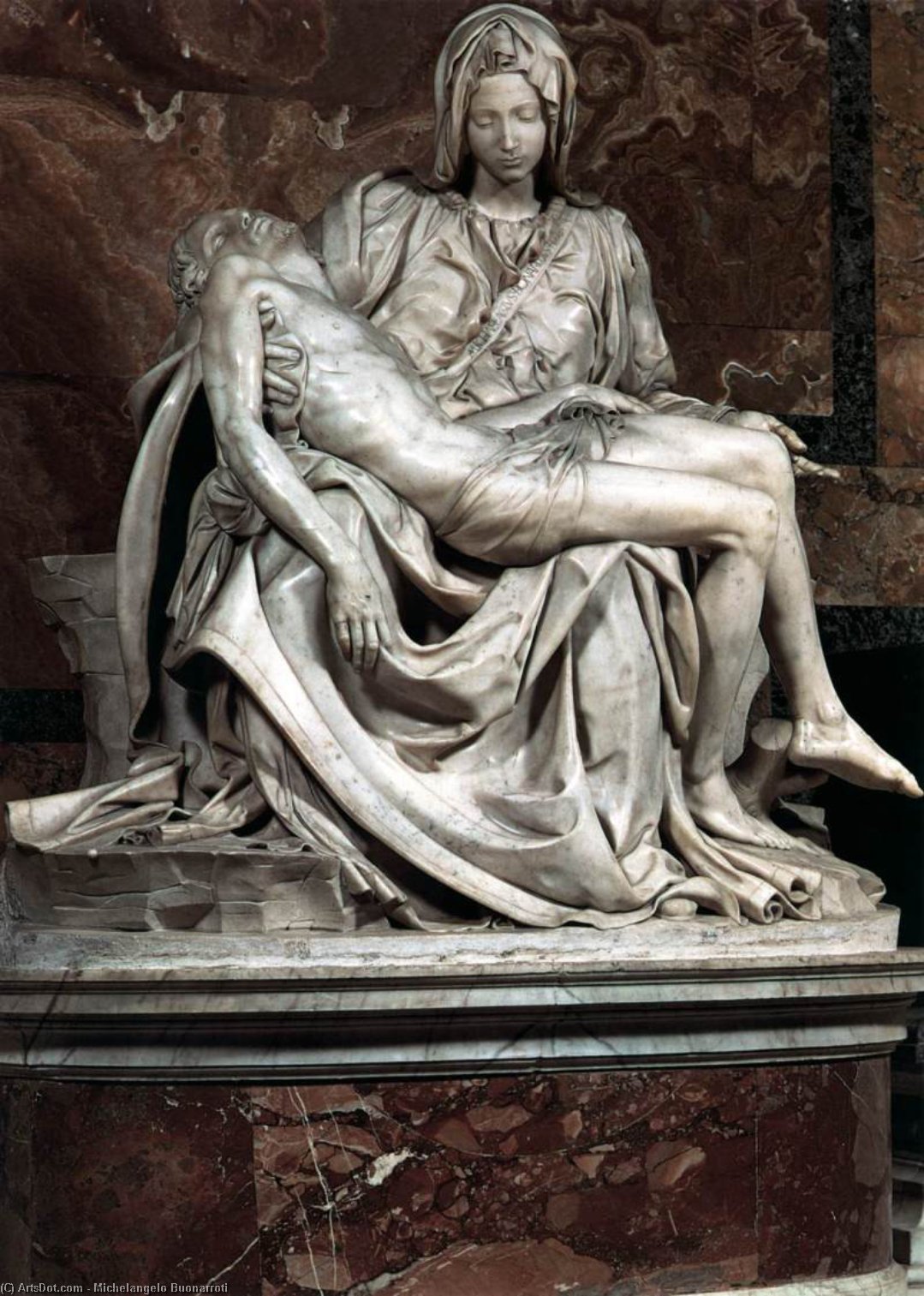
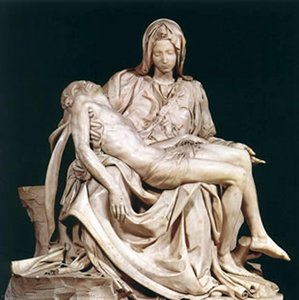
The Pietà by Michelangelo Buonarroti stands as arguably the most poignant sculpture born from the Renaissance, an artwork that transcends mere representation to embody profound spiritual contemplation. Located within the solemn grandeur of St. Peter’s Basilica in Vatican City, this masterpiece continues to captivate viewers centuries after its creation, cementing its place among the pinnacles of Western art history. It’s a testament to Michelangelo's unparalleled ability to capture not just form but also emotion—a feat rarely achieved in sculpture and one that resonates deeply with anyone who encounters it.The Artist's Vision and Inspiration
Michelangelo Buonarroti, a titan of his era—a sculptor, painter, architect, and poet—was profoundly influenced by Dante Alighieri’s *Divine Comedy*, specifically Virgil’s descent into Hell and Beatrice’s ascent to Paradise. This literary pilgrimage instilled in Michelangelo a fascination with the interplay between earthly suffering and divine compassion – themes that would permeate his artistic output. However, it was particularly Dante's depiction of Mary mourning Jesus after the crucifixion that ignited Michelangelo’s imagination. He envisioned Mary not merely as a grieving mother but as an embodiment of maternal grace and unwavering faith—a figure radiating serenity amidst unimaginable sorrow. This unique interpretation distinguishes Michelangelo’s Pietà from earlier depictions of the same scene, elevating it to a level of psychological depth rarely achieved in sculpture. He sought to portray Mary not as passively accepting her son’s death but as actively grieving—a powerful expression of compassion and devotion.A Synthesis of Classical Beauty and Naturalism
Executed between 1498 and 1499 during his formative years as an artist—a period marked by intense experimentation and stylistic evolution—the Pietà exemplifies Michelangelo’s masterful synthesis of classical ideals with humanist observation. He meticulously studied the anatomical precision of Greek sculptures, particularly those depicting idealized human forms, striving to achieve a level of realism that mirrored the beauty inherent in divine grace. The sculpture's drapery is rendered with astonishing subtlety, conveying movement and texture—a testament to Michelangelo’s unparalleled skill in manipulating marble. Notice how the folds of Mary’s robe cascade downwards, creating an illusion of depth and emphasizing her posture as she cradles Jesus’s lifeless body. This careful attention to detail underscores Michelangelo’s commitment to portraying human emotion with uncompromising honesty. The sculptor’s goal was to capture not just the physical likeness of Mary but also the profound psychological state of grief—a challenge he met with remarkable success.Historical Context: The Basilica of St. Peter’s and Papal Patronage
The Pietà’s commission by Jean Bilhères de Lagraulas, Cardinal of France, for his funerary chapel in Old St. Peter’s Basilica reflects the pervasive influence of papal patronage during the High Renaissance. Michelangelo was tasked with creating a monumental sculpture that would honor the deceased cardinal and serve as a powerful symbol of Christian faith—a project undertaken amidst the ambitious architectural endeavors of Bramante and Raphael to transform Rome into a new center of artistic splendor. The basilica itself, conceived as a testament to Christendom’s enduring power, became Michelangelo’s canvas for conveying spiritual contemplation and commemorating sacred narratives. This commission underscored the importance of religious iconography in shaping artistic expression during this era—a tradition that Michelangelo skillfully honored through his masterful execution.Symbolism: Grief, Compassion, and Divine Redemption
Beyond its aesthetic brilliance, the Pietà is laden with symbolic significance—a visual meditation on themes of grief, compassion, and divine redemption. Mary’s serene expression contrasts sharply with Jesus’s lifeless posture, representing not despair but acceptance—the ultimate triumph over suffering. The positioning of Mary’s hands—one gently supporting Jesus’s torso while the other cradling his feet—symbolizes her unwavering devotion to God and her selfless embrace of human sorrow. Michelangelo skillfully employs pyramidal composition—a technique borrowed from classical sculpture—to convey stability and grandeur, reinforcing the Pietà’s message of enduring faith and divine grace. The Pietà continues to resonate with audiences today because it speaks directly to the universal experience of loss and longing—a timeless reminder of humanity’s capacity for compassion and its yearning for spiritual solace. Its central pyramidal form embodies harmony and balance, mirroring the theological concept of divine order—a deliberate choice that elevates the sculpture beyond mere visual beauty.- Michelangelo Buonarroti: Pietà (detail)
A Renaissance Forged in Stone and Paint
Michelangelo Buonarroti, a name synonymous with the High Renaissance, resonates through centuries as a testament to human artistic potential. Born on March 6, 1475, in Caprese Michelangelo, nestled in the Tuscan hills of Italy, his life was an extraordinary convergence of talent, ambition, and divine inspiration. Though initially met with resistance from his father regarding an artistic path, young Michelangelo’s innate gift for drawing proved undeniable, setting him on a course to redefine the boundaries of sculpture, painting, and architecture. His early apprenticeship under Domenico Ghirlandaio provided foundational skills in fresco and draftsmanship, but it was within the Medici gardens—a haven of classical antiquity—that his artistic soul truly awakened. Immersed in the study of Greek and Roman sculptures, Michelangelo absorbed the principles of anatomy, proportion, and idealized beauty that would become hallmarksÄhnliche Kunstwerke
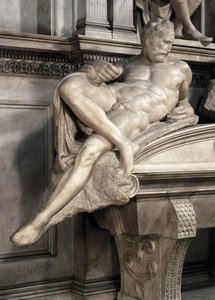
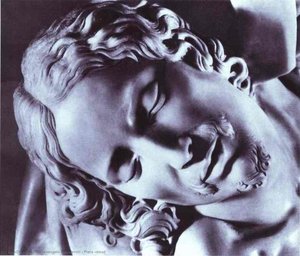
Über den Künstler
Michelangelo Buonarroti: Ein Renaissance-Titan
Frühes Leben und Ausbildung (1475–1496)
- Michelangelo di Lodovico Buonarroti Simoni wurde am 6. März 1475 in Caprese Michelangelo, Toskana, geboren.
- Anfangs lehnte sein Vater eine künstlerische Karriere ab, räumte aber seinem Sohn aufgrund seines außergewöhnlichen Talents im Zeichnen nach.
- Mit dreizehn Jahren machte er eine Lehre bei Domenico Ghirlandaio und lernte Freskomalerei und Zeichentechniken.
- Bald zog er sich der Bildhauerei zu, studierte klassische Werke in den Medici-Gärten – ein prägendes Einfluss.
Frühe Periode: Etablierung der Meisterschaft (1490–1505)
- Um 1496 erhielt er seine erste größere Auftragsarbeit: die Skulptur der Pietà, die 1499 fertiggestellt wurde.
- Die Pietà, die im Petersdom ausgestellt ist, zeigte seine Meisterschaft in der Marmorbearbeitung und seine emotionale Tiefe.
- Seine nächste bedeutende Arbeit war der kolossale Statue von David (1501–1504), der florentinischen Republikanismus symbolisierte.
- Der David, über 17 Fuß hoch, demonstrierte sein anatomisches Verständnis und seine Fähigkeit, Stein zum Leben zu erwecken.
Die Hochrenaissance: Fresken der Sixtinischen Kapelle (1505–1520)
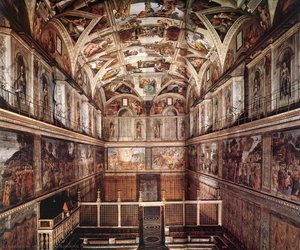
- Papst Julius II beauftragte Michelangelo 1508 mit dem Malen der Decke der Sixtinischen Kapelle.
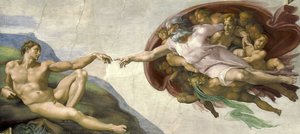
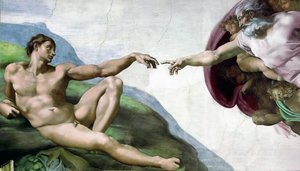
- Über vier Jahre malte er über 300 Figuren, die Szenen aus der Genesis darstellen, darunter Die Schöpfung Adams.
- Diese monumentale Freskenzyklus ist ein Meilenstein in der westlichen Kunst und demonstriert seine kompositorische Begabung und seine Erzählkraft.
- Er begann auch mit der Arbeit an Papst Julius II.s Grab – einem Projekt, das Jahrzehnte dauern sollte, aber ursprünglich nicht wie geplant fertiggestellt wurde.
Spätere Jahre: Architektur und das „Jüngste Gericht“ (1520–1564)
- Im Jahr 1520 wurde Michelangelo Architekt des Petersdoms in Rom und veränderte Bramantes Design erheblich.
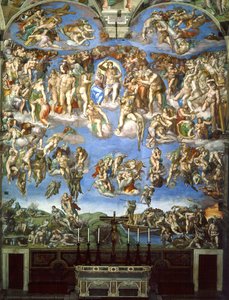
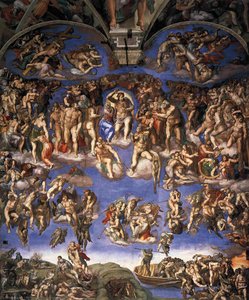
- Zwischen 1536 und 1541 malte er Das Jüngste Gericht an der Wandaltar der Sixtinischen Kapelle.
- Diese riesige Fresko zeigte die Wiederkunft Christi mit dramatischer Komposition und emotionaler Intensität, die eine Verschiebung hin zum Manierismus widerspiegelte.
Einflüsse und künstlerische Entwicklung
- Klassische Antike: Die Beschäftigung mit griechischen und römischen Skulpturen hatte tiefgreifenden Einfluss auf sein Verständnis von Anatomie und Proportionen.
- Renaissance-Humanismus: Der Schwerpunkt auf menschliches Potenzial ist in seiner Feier der menschlichen Form deutlich erkennbar.
- Florentinische Tradition: Er baute auf dem Werk von Künstlern wie Donatello und Masaccio auf.
- Sein Stil entwickelte sich von klassischer Idealität zu einer dynamischeren und ausdrucksstärkeren Manierismus.
Historische Bedeutung und Vermächtnis
- Michelangelo gilt als einer der größten Künstler aller Zeiten, der den „Renaissance-Mann“ verkörpert.
- Seine Skulpturen, Gemälde und Architektur haben Generationen inspiriert und werden die Zuschauer weltweit weiterhin fesseln.
- Er beeinflusste maßgeblich sowohl die Hochrenaissance- als auch die Manierismus-Bewegungen.
- Seine anatomische Genauigkeit, dramatischen Kompositionen und emotionale Tiefe setzten neue Maßstäbe für künstlerische Exzellenz.
Letzte Jahre
- Michelangelo starb am 18. Februar 1564 in Rom und hinterließ ein unvergleichliches Werk.
- Sein Vermächtnis prägt weiterhin unser Verständnis von Schönheit, Macht und menschlichem Potenzial.
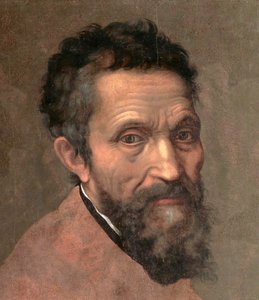
Michelangelo Buonarroti
1475 - 1564 , Italien
Kurzinfos
- Beeinflusste Künstler:
- Donatello
- Masaccio
- Bemerkenswerte Werke:
- Pietà
- David
- Sixtinische Kapelle
- Das Jüngste Gericht
- Geburtsdatum: 06. März 1475
- Geburtsort: Caprese Michelangelo, Italien
- Künstlerische Bewegung:
- Hochrenaissance
- Manierismus
- Nationalität: Italienisch
- Todatum: 18. Februar 1564
- Vollständiger Name: Michelangelo Buonarroti
- Von Künstlern Beeinflusst: ['Klassische Antike']
Ähnliche Artikel

Michelangelo Buonarroti: Die 25 Meisterwerke des Renaissance-Genies | ArtsDot
Entdecken Sie die 25 Meisterwerke von Michelangelo Buonarroti! Von David bis zur Sixtinischen Kapelle – erleben Sie Renaissance Kunst in ihrer ganzen Pracht. Hochwertige Kunstdrucke & Inspiration für Ihr Zuhause auf ArtsDot.com.

Bronze-Meisterwerke: Die 10 Skulpturen, die Kunstgeschichte schrieben | ArtsDot
Entdecken Sie die 10 legendärsten Bronze Skulpturen der Kunstgeschichte! Von Michelangelo bis Rodin – erfahren Sie die Geschichten hinter den Meisterwerken und lassen Sie sich von Wanddeko-Ideen inspirieren. Hochwertige Kunstdrucke auf ArtsDot.com.
The Enduring Allure of Marble in Art History: From Classical Sculpture to Modern Abstraction
Explore the captivating history of marble sculpture from ancient Greece to modern art. Discover renowned artists like Canova & Michelangelo, carving techniques, and investment insights at ArtsDot.

Die 10 legendärsten Bronzestatuen: Meisterwerke, die Kunstgeschichte schrieben | ArtsDot
Entdecken Sie die 10 legendärsten Bronzestatuen der Kunstgeschichte! Von Rodin bis Michelangelo – erfahren Sie die Geschichten hinter ikonischen Skulpturen und finden Sie hochwertige Reproduktionen für Ihr Zuhause. Jetzt bei ArtsDot entdecken!
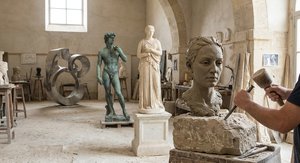
The Enduring Form: Sculpture Across History, Technique & Emotional Resonance
Explore the rich history of sculpture with ArtsDot. Discover key techniques, influential artists & investment potential for discerning collectors. Expert insights into valuing and collecting timeless masterpieces.