 Versenden
 Teilen
 Details anzeigen

 Herunterladen
 Ähnliche Objekte
 Diashow
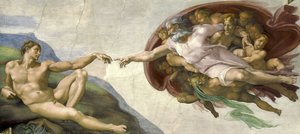
The Creation of Man


 Weiterlesen
Handgefertigte Ölreproduktion
Handgemaltes Ölgemälde auf Leinwand in Ihrer Wunschgröße und mit Rahmen, auf Bestellung von unseren Künstlern angefertigt. ( Druck bestellen Bild kaufen)




































Wählen Sie aus unseren vordefinierten Formaten, die den ursprünglichen Proportionen des Kunstwerks entsprechen.

Sie können Ihre eigenen Maße eingeben, um einen bestimmten Rahmen oder Platz auszufüllen. Wenn die gewählte Größe nicht den Proportionen des Originalbildes entspricht, werden wir das Kunstwerk entweder beschneiden oder das Gemälde durch zusätzliche, handgemalte Elemente erweitern. Ein digitales Mockup wird Ihnen zur Genehmigung zugesandt, bevor die Produktion beginnt.
Bitte beachten Sie, dass die Bildschirmvorschau nicht die tatsächliche Beschneidung oder Erweiterung widerspiegelt. Nur das Mockup zeigt die endgültige Komposition exakt an.
Obwohl Sondermaße verfügbar sind, empfehlen wir, eine Größe aus der vordefinierten Liste zu wählen, um die ursprünglichen Proportionen beizubehalten.
Nach der Bestellung wird das ArtsDot.com-Team dem Kunden Anweisungen per E-Mail zusenden und eine Mockup-Vorschau bereitstellen.
Weltweiter Versand () in nur 3 bis 4 Wochen statt der üblichen 5 Wochen. (28 August). Keine Kompromisse bei der Qualität.

Kostenloser weltweiter Expressversand

Hochwertige Leinenleinwand

Umfassender Versicherungsschutz beim Versand

Zollgebühren-Rückerstattungsgarantie

Garantie für exakte Farbtreue

60 Tage Rückgaberecht (nur bei Mängeln)

100% Geld-zurück-Garantie

Mengenrabatt verfügbar
 Die Glasoption ist nur für Größen unter 110 cm verfügbar.

The Creation of Man
Art der Reproduktion
Format der Reproduktion
-


Gesamtpreis
$ 263
The Divine Spark: A Moment Frozen in Eternity
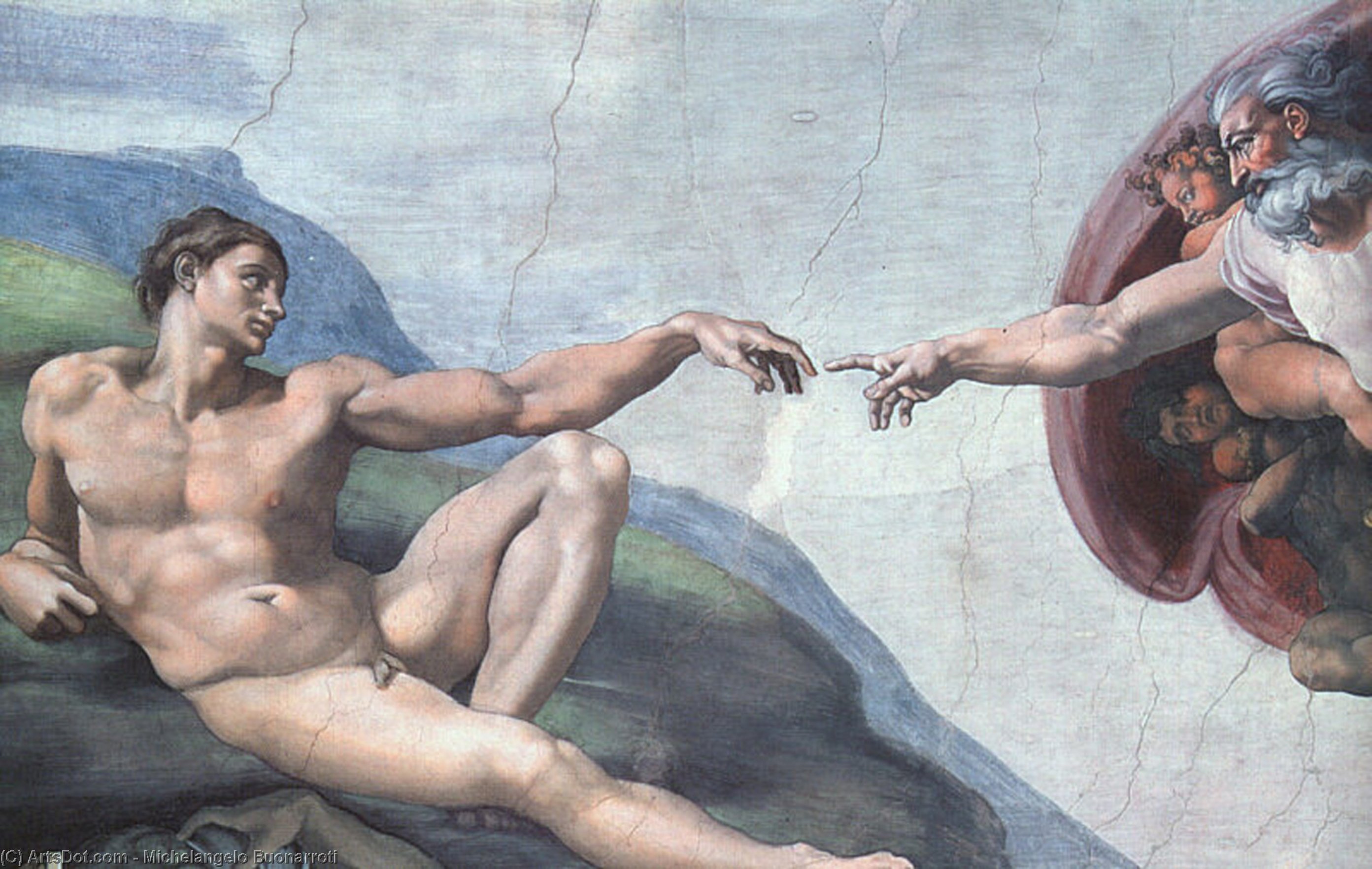
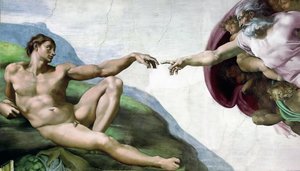
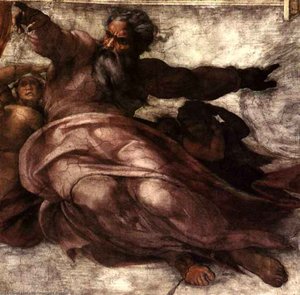
In the hallowed silence of the Sistine Chapel, one single gesture holds the weight of human history. Michelangelo Buonarroti’s “The Creation of Man” is not merely a fresco; it is a profound theological dialogue captured in pigment and plaster. At its heart lies the electric tension between two fingers—one belonging to the primordial Adam, resting heavy with new life, and the other to the divine, reaching out with an urgent, celestial energy. This infinitesimal gap, this near-touch, represents the very threshold of existence, capturing the precise moment when the spiritual essence is imparted to the physical form. To behold this masterpiece is to witness the breath of God entering the lungs of humanity, a scene that transcends its biblical origins to touch upon the universal human longing for connection and purpose.
The composition is a triumph of High Renaissance ideals, where anatomical precision meets spiritual grandeur. Michelangelo, a master who understood the architecture of the human body as intimately as a sculptor understands marble, renders Adam with a breathtaking muscularity. Every sinew and bone is articulated with a scientific rigor born from his studies of anatomy, yet these figures are far from mere biological specimens; they are idealized vessels of divine intent. The weight of Adam’s reclining form provides a grounded, earthly counterpoint to the dynamic, swirling movement of the Creator. This interplay between the heavy, terrestrial presence of man and the ethereal, weightless momentum of the divine creates a visual harmony that has captivated collectors and scholars for centuries.
A Masterclass in Fresco and Form
The technical brilliance of this work lies in Michelangelo’s unparalleled mastery of the fresco technique. Working on the vast, curved expanse of the Sistine ceiling, he applied pigments directly onto wet plaster, a demanding process that required both immense foresight and rapid execution. Through meticulous layering, he achieved a luminous quality that seems to emanate from within the figures themselves. The subtle glazes of color create a sculptural effect, making the painted flesh appear as though it possesses volume, warmth, and even a pulse. For the discerning eye, the brilliance of the work lies in how Michelangelo uses light not just to illuminate the scene, but to sculpt the very essence of life, casting shadows that define the profound depth of the human spirit.
Beyond its technical prowess, the painting serves as a monumental testament to the Humanist movement of the Renaissance. It reflects an era where the boundaries between the earthly and the divine were being reimagined through the lens of human dignity. The strength and nobility of Adam’s form echo the contemporary belief in the potential of mankind, a sentiment championed by thinkers like Pico della Mirandola. For those seeking to bring a piece of this historical majesty into their own spaces, a high-quality reproduction offers more than just decoration; it provides a window into an era of unparalleled intellectual and artistic rebirth.
An Enduring Legacy for the Modern Collector
Integrating a reproduction of “The Creation of Man” into a curated interior is an act of bringing profound narrative depth into a living space. Whether placed in a grand library, a sophisticated study, or a contemporary gallery-style room, the artwork acts as a focal point of contemplation and conversation. Its presence commands respect, offering a sense of timelessness that complements both classical and modern aesthetics. For interior designers, the piece provides a rich source of inspiration, its palette of earthy tones and celestial highlights capable of anchoring a room with both warmth and intellectual gravity.
Owning a tribute to Michelangelo’s genius is an opportunity to surround oneself with the very pinnacle of Western art history. It is an invitation to reflect on the themes of creation, vitality, and the eternal connection between the individual and the infinite. As a centerpiece for any collection, this work remains an undying symbol of the human capacity to reach for the divine, making it an essential acquisition for anyone who finds beauty in the intersection of strength, grace, and sacred history.
Ähnliche Kunstwerke
Über den Künstler
Michelangelo Buonarroti: Ein Renaissance-Titan
Frühes Leben und Ausbildung (1475–1496)
- Michelangelo di Lodovico Buonarroti Simoni wurde am 6. März 1475 in Caprese Michelangelo, Toskana, geboren.
- Anfangs lehnte sein Vater eine künstlerische Karriere ab, räumte aber seinem Sohn aufgrund seines außergewöhnlichen Talents im Zeichnen nach.
- Mit dreizehn Jahren machte er eine Lehre bei Domenico Ghirlandaio und lernte Freskomalerei und Zeichentechniken.
- Bald zog er sich der Bildhauerei zu, studierte klassische Werke in den Medici-Gärten – ein prägendes Einfluss.
Frühe Periode: Etablierung der Meisterschaft (1490–1505)
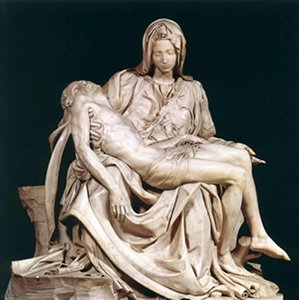
- Um 1496 erhielt er seine erste größere Auftragsarbeit: die Skulptur der Pietà, die 1499 fertiggestellt wurde.
- Die Pietà, die im Petersdom ausgestellt ist, zeigte seine Meisterschaft in der Marmorbearbeitung und seine emotionale Tiefe.
- Seine nächste bedeutende Arbeit war der kolossale Statue von David (1501–1504), der florentinischen Republikanismus symbolisierte.
- Der David, über 17 Fuß hoch, demonstrierte sein anatomisches Verständnis und seine Fähigkeit, Stein zum Leben zu erwecken.
Die Hochrenaissance: Fresken der Sixtinischen Kapelle (1505–1520)
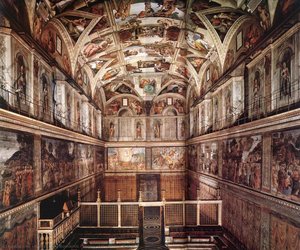
- Papst Julius II beauftragte Michelangelo 1508 mit dem Malen der Decke der Sixtinischen Kapelle.
- Über vier Jahre malte er über 300 Figuren, die Szenen aus der Genesis darstellen, darunter Die Schöpfung Adams.
- Diese monumentale Freskenzyklus ist ein Meilenstein in der westlichen Kunst und demonstriert seine kompositorische Begabung und seine Erzählkraft.
- Er begann auch mit der Arbeit an Papst Julius II.s Grab – einem Projekt, das Jahrzehnte dauern sollte, aber ursprünglich nicht wie geplant fertiggestellt wurde.
Spätere Jahre: Architektur und das „Jüngste Gericht“ (1520–1564)
- Im Jahr 1520 wurde Michelangelo Architekt des Petersdoms in Rom und veränderte Bramantes Design erheblich.
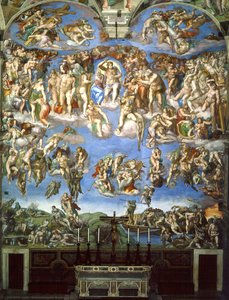
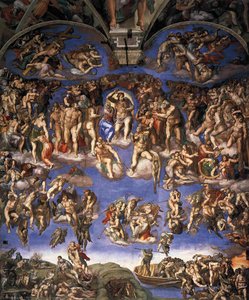
- Zwischen 1536 und 1541 malte er Das Jüngste Gericht an der Wandaltar der Sixtinischen Kapelle.
- Diese riesige Fresko zeigte die Wiederkunft Christi mit dramatischer Komposition und emotionaler Intensität, die eine Verschiebung hin zum Manierismus widerspiegelte.
Einflüsse und künstlerische Entwicklung
- Klassische Antike: Die Beschäftigung mit griechischen und römischen Skulpturen hatte tiefgreifenden Einfluss auf sein Verständnis von Anatomie und Proportionen.
- Renaissance-Humanismus: Der Schwerpunkt auf menschliches Potenzial ist in seiner Feier der menschlichen Form deutlich erkennbar.
- Florentinische Tradition: Er baute auf dem Werk von Künstlern wie Donatello und Masaccio auf.
- Sein Stil entwickelte sich von klassischer Idealität zu einer dynamischeren und ausdrucksstärkeren Manierismus.
Historische Bedeutung und Vermächtnis
- Michelangelo gilt als einer der größten Künstler aller Zeiten, der den „Renaissance-Mann“ verkörpert.
- Seine Skulpturen, Gemälde und Architektur haben Generationen inspiriert und werden die Zuschauer weltweit weiterhin fesseln.
- Er beeinflusste maßgeblich sowohl die Hochrenaissance- als auch die Manierismus-Bewegungen.
- Seine anatomische Genauigkeit, dramatischen Kompositionen und emotionale Tiefe setzten neue Maßstäbe für künstlerische Exzellenz.
Letzte Jahre
- Michelangelo starb am 18. Februar 1564 in Rom und hinterließ ein unvergleichliches Werk.
- Sein Vermächtnis prägt weiterhin unser Verständnis von Schönheit, Macht und menschlichem Potenzial.
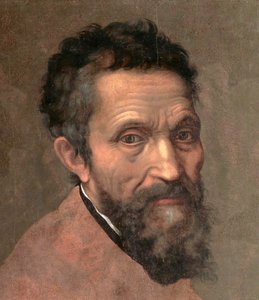
Michelangelo Buonarroti
1475 - 1564 , Italien
Kurzinfos
- Beeinflusste Künstler:
- Donatello
- Masaccio
- Bemerkenswerte Werke:
- Pietà
- David
- Sixtinische Kapelle
- Das Jüngste Gericht
- Geburtsdatum: 06. März 1475
- Geburtsort: Caprese Michelangelo, Italien
- Künstlerische Bewegung:
- Hochrenaissance
- Manierismus
- Nationalität: Italienisch
- Todatum: 18. Februar 1564
- Vollständiger Name: Michelangelo Buonarroti
- Von Künstlern Beeinflusst: ['Klassische Antike']
Ähnliche Artikel

Das Familienerbe an die Wand bringen: Wandgemälde als Generationenschatz
Verwandeln Sie Ihre Familiengeschichte in ein beeindruckendes Wandgemälde! Expertenrat & hochwertige Handwerkskunst für einzigartige Kunstwerke, die Generationen verbinden. Entdecken Sie jetzt!
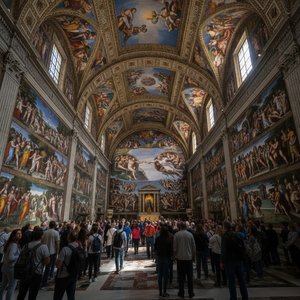
25 Must-See Masterpieces of the Sistine Chapel, Vatican City
Embark on a divine journey through the Sistine Chapel’s most iconic frescoes. Discover the genius of Michelangelo and the breathtaking beauty of Renaissance art. Find inspiration for museum-quality reproductions and elegant decor. Explore the full collection online at ArtsDot.com.

The Enduring Legacy of Fresco Painting: Techniques, History & Contemporary Relevance
Explore the rich history & enduring artistry of fresco painting – from Giotto to Michelangelo! Discover techniques, conservation efforts, & modern applications. Learn how ArtsDot brings this timeless art form to your home.

The Enduring Legacy of Fresco: Technique, History & Artistic Expression Across Cultures
Explore the rich history & enduring legacy of fresco painting! Discover ancient techniques, Giotto's masterpieces, and modern applications. Expert insights for art lovers & professionals.
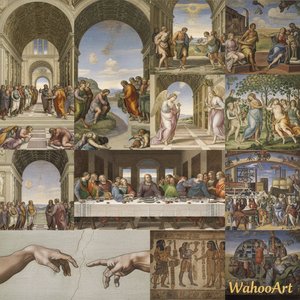
Meisterwerke der Fresko-Kunst: 10 Gemälde, die Kunstgeschichte schrieben | ArtsDot
Entdecken Sie die 10 legendärsten Fresken der Kunstgeschichte! Von Michelangelo bis Raffael – erfahren Sie die Geschichten hinter den Meisterwerken, Techniken & Farben. Hochwertige Kunstreproduktionen für Ihr Zuhause finden Sie auf ArtsDot.com.